Mirror Reflection Quiz
Answer the questions below to see how much you've learned about mirror symbolism and psychology. Each question has one correct answer.
Look into a mirror and what do you see? Your face, sure. But what else? That reflection isn’t just light bouncing off glass-it’s a silent witness to your moods, a portal to ancient beliefs, and a tool your brain uses to make sense of itself. Mirrors aren’t just decorative objects. They carry weight. They’ve shaped myths, triggered fears, and changed how we see who we are.
Why Do Mirrors Feel So Strange?
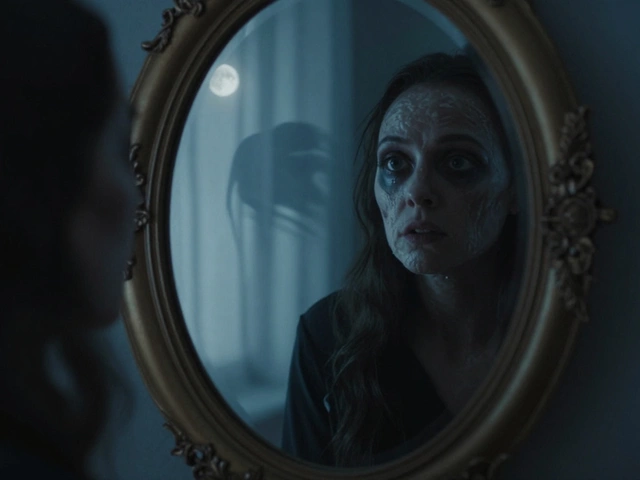
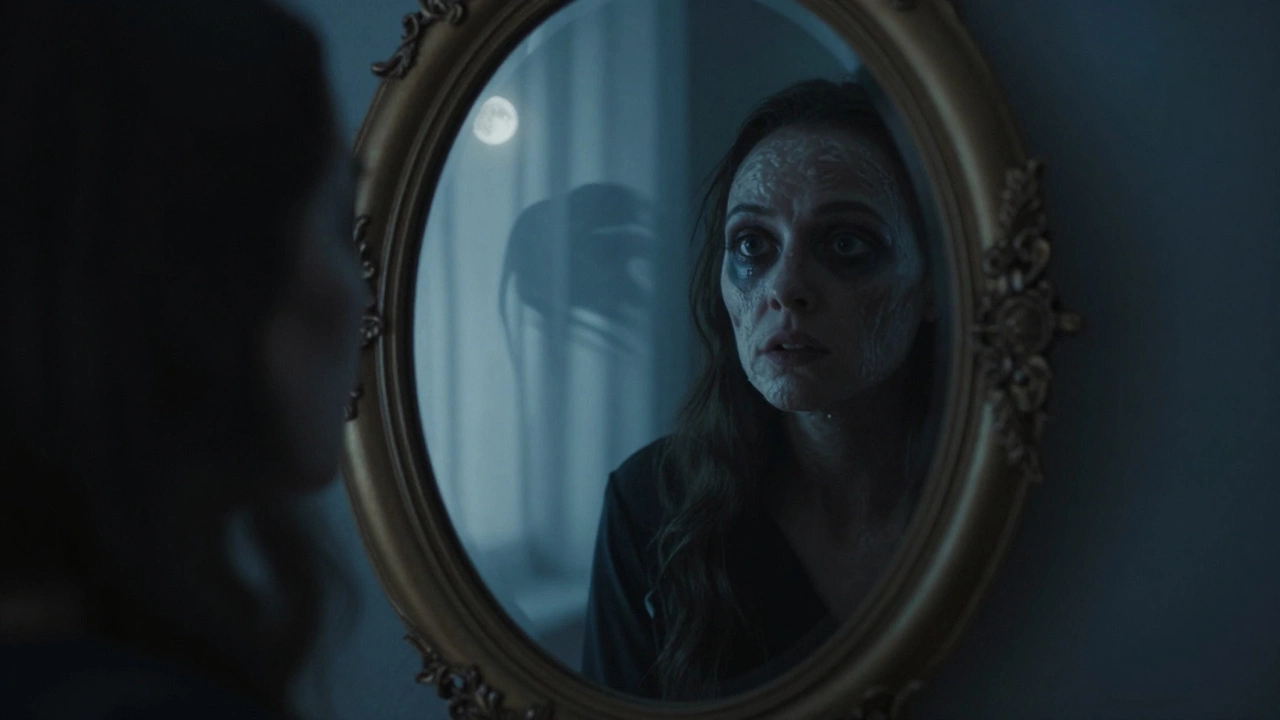
Try this: stare at your reflection for more than a minute in a dim room. Soon, your face might start to warp. Your eyes look different. Your skin seems unfamiliar. This isn’t a trick. It’s called the strange-face-in-the-mirror illusion, studied by psychologists at the University of Padua in 2016. People reported seeing monsters, deceased relatives, or even their own face melting. Why? Your brain gets tired of processing the same visual input. It starts filling gaps-creating illusions from boredom, fear, or expectation. The mirror doesn’t lie. Your mind does.
This isn’t just a lab curiosity. It’s why mirrors have haunted human culture for centuries. Ancient Greeks believed staring too long into a mirror could steal your soul. In medieval Europe, breaking a mirror meant seven years of bad luck-not because of glass, but because mirrors were thought to capture your essence. Even today, in some rural communities, people cover mirrors after a death, fearing the spirit might get trapped.
The Mirror as a Spiritual Portal
In Chinese tradition, mirrors were used to ward off evil spirits. Feng shui practitioners place mirrors strategically-not just to brighten a room, but to redirect energy. A mirror facing a bed? That’s bad. It’s believed to scatter your personal energy while you sleep, leading to restlessness. A mirror reflecting a window? That’s good. It pulls in natural light and positive qi.
Native American tribes used polished obsidian as mirrors-not to see their faces, but to see into the spirit world. Shamans would gaze into these dark, reflective stones to receive visions. The mirror wasn’t a tool of vanity. It was a doorway.
In Hinduism, the goddess Durga holds a mirror to show devotees their true selves-beyond ego, beyond illusion. The mirror here isn’t about appearance. It’s about truth. The reflection reveals what you’ve buried: fear, pride, denial. The spiritual meaning of a mirror isn’t beauty. It’s honesty.
How Mirrors Shape Your Self-Image
Modern psychology shows mirrors are deeply tied to self-awareness. The mirror test, developed in the 1970s by Gordon Gallup, measures whether an animal recognizes itself. Only a handful of species pass: humans, dolphins, elephants, orangutans, and magpies. If you put a red dot on a child’s forehead and they touch it after seeing themselves in a mirror, they’ve passed. They understand: that’s me.
But here’s the twist: the mirror doesn’t just show you. It changes you. Studies from the University of California found that people who see themselves in a mirror while eating eat less. Why? The reflection makes them more self-conscious. It brings their values into view-health, discipline, control. The mirror doesn’t judge. But it makes you judge yourself.
That’s why mirrors in bathrooms and dressing rooms are often placed at eye level. It’s not just convenience. It’s psychology. You’re meant to confront yourself. That’s why some people avoid mirrors after trauma. They’re not avoiding glass. They’re avoiding the truth it reflects.

Why Do We Put Mirrors in Our Homes?
Yes, mirrors make rooms look bigger. Yes, they reflect light. But that’s not why we hang them. We hang them because we need to see ourselves in the spaces we live.
Think about the hallway mirror. You check your coat, your hair, your expression before walking out the door. That mirror isn’t about decoration. It’s a ritual. It’s your final checkpoint before facing the world.
Bedroom mirrors? They’re tied to identity. You dress for yourself, but you also dress for the version of you that looks back. That’s why a cracked mirror in the bedroom can feel unsettling-not because of superstition, but because it breaks the continuity of self. You can’t trust the reflection anymore.
Even the size and shape matter. A tall, narrow mirror makes you feel taller, leaner. A round mirror feels softer, more welcoming. A gold-framed mirror says luxury. A black metal frame says modern minimalism. The mirror doesn’t just reflect light-it reflects your values.
The Dark Side: When Mirrors Become Traps
Not everyone finds comfort in mirrors. For people with body dysmorphia, eating disorders, or depression, mirrors become instruments of torture. A 2021 study in the Journal of Clinical Psychology found that 87% of women with anorexia spent more than 20 minutes a day staring at their reflection, fixating on perceived flaws that others couldn’t see. The mirror wasn’t showing them truth. It was amplifying their inner critic.
That’s why some therapists now recommend mirror exposure therapy-not to avoid mirrors, but to retrain the brain. Patients are asked to stand in front of a mirror for five minutes a day, describing what they see without judgment. Slowly, the mirror stops being a weapon. It becomes a neutral surface again.
There’s also the digital mirror: selfies, filters, apps that smooth skin and reshape faces. We’ve replaced glass with screens. But the effect is the same. We’re still searching for a version of ourselves that doesn’t exist. The hidden meaning hasn’t changed. We’re still asking: Do I look like who I think I am?

What Mirrors Reveal About Culture
Look at how different cultures treat mirrors, and you see their deepest fears and desires.
In Japan, mirrors are sacred objects. The Shinto goddess Amaterasu was lured out of hiding by her own reflection in a mirror. That mirror, the Yata no Kagami, is one of Japan’s three imperial regalia. It’s not just a tool. It’s divine.
In Victorian England, mirrors were draped after death-not just to keep spirits from escaping, but because the reflection of a dead person was considered a violation of privacy. The mirror was a boundary between life and death.
Today, in Western societies, mirrors are everywhere. But they’re often hidden in plain sight: in elevator doors, car windows, phone screens. We don’t think about them. We take them for granted. But their presence is constant. We check them before meetings, before dates, before posting online. We need to be seen. We need to be sure we’re still here.
What the Mirror Really Shows You
At its core, the mirror doesn’t show your face. It shows your relationship with yourself.
When you look into a mirror and feel pride, it means you’ve accepted your body. When you feel shame, it means you’ve been taught to see yourself as flawed. When you avoid it, it means you’re afraid of what you might find.
There’s no magic in the glass. No curse. No portal to another world. But the meaning? That’s all yours. The mirror reflects what you bring to it-your fears, your hopes, your memories, your stories.
So the next time you pass a mirror, don’t just glance. Pause. Ask: What am I really seeing? The answer isn’t in the glass. It’s in you.
Why do mirrors make rooms look bigger?
Mirrors create the illusion of space by reflecting light and images from one side of the room to the other. This tricks the eye into perceiving depth that isn’t physically there. A mirror opposite a window, for example, doubles the amount of natural light and extends the visual field, making the room feel more open and airy.
Is it bad luck to break a mirror?
The belief that breaking a mirror brings seven years of bad luck comes from ancient Roman culture. Romans believed that life renewed itself every seven years, and since mirrors were thought to hold a part of your soul, damaging one meant you’d have to wait for your soul to heal. It’s not based on science, but the superstition still lingers because it taps into deep fears about identity and damage to the self.
Why do some cultures cover mirrors after someone dies?
In many cultures, including parts of Eastern Europe, China, and among some Native American tribes, mirrors are covered after a death because it’s believed the soul might get trapped in the reflection. Others think the mirror could reflect the spirit back into the world, preventing it from moving on. It’s a way to protect the living from spiritual confusion and to honor the transition of death.
Can mirrors affect your mental health?
Yes. For people with body dysmorphic disorder, depression, or anxiety, mirrors can become triggers. Constantly checking your reflection can reinforce negative self-perceptions. Therapy often includes mirror exposure-learning to look without judgment-to help break that cycle. The mirror itself isn’t harmful. It’s how you use it that matters.
Do mirrors have any scientific purpose beyond reflection?
Absolutely. In physics, mirrors are essential in lasers, telescopes, and microscopes. In psychology, they’re used to study self-recognition and identity. In architecture, they’re used to control light and space. Even in medicine, mirrors help doctors examine hard-to-reach areas like the throat or ears. The mirror’s role goes far beyond decoration-it’s a tool for understanding both the world and ourselves.
If you’re thinking about buying or placing a mirror in your home, don’t just choose one for style. Think about what you want it to reflect-not just your face, but your mood, your energy, your sense of self. A mirror isn’t just glass and metal. It’s a silent conversation between you and the world.