Rug Size Calculator
Room Type Selection
Room Dimensions
Ever walked into a room and felt something was off-even though everything looked nice? More often than not, it’s the rug. Too small. Too big. Too close to the walls. Too far from the furniture. That’s where the rug rule comes in. It’s not a law, but it’s a proven formula used by interior designers to make spaces feel balanced, grounded, and intentionally designed.
What Exactly Is the Rug Rule?
The rug rule is a simple guideline: your rug should be large enough so that at least the front legs of all major furniture pieces sit on it. In a living room, that means your sofa and armchairs should have their front legs resting on the rug. In a dining room, all four legs of every chair should fit on the rug-even when pulled out. This creates a sense of cohesion. It tells your eyes, this space belongs together.
Why does this matter? Because rugs anchor a room. Without that anchor, furniture looks like it’s floating. The room feels disconnected, cheap, or unfinished. A rug that’s too small makes the space look smaller. A rug that’s too big can overwhelm it. The rug rule fixes both.
Living Room: The Most Common Mistake
Most people buy a rug that’s just big enough to fit under the coffee table. That’s the #1 mistake. A rug that only covers the coffee table and maybe a foot of floor around it looks like an afterthought. It doesn’t connect the furniture. It isolates it.
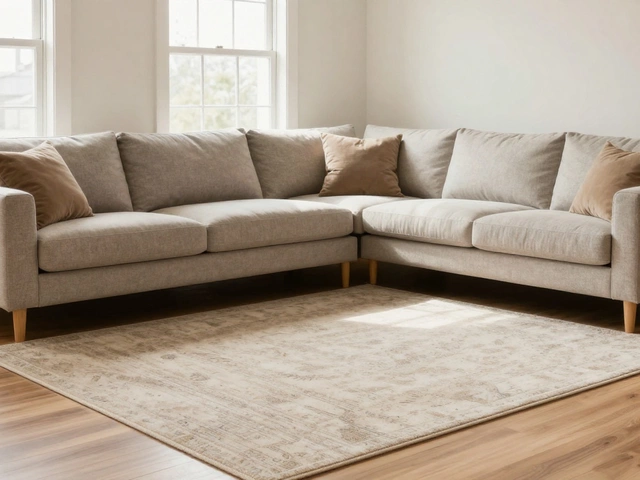
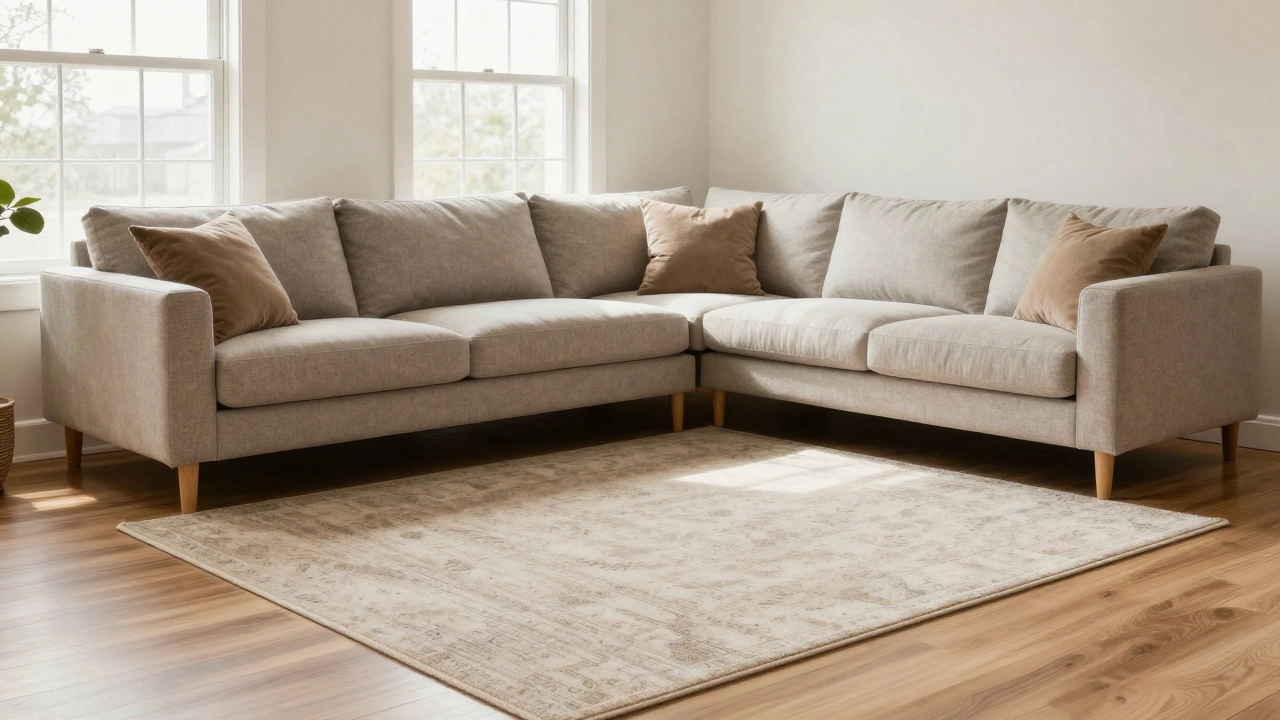
Here’s what works: measure your sofa. Add 12 to 18 inches on each side. That’s your minimum rug width. For length, make sure the rug extends at least 12 inches beyond the front of the sofa. If you have a large living room, go bigger. A 9x12 rug is often the sweet spot for standard living rooms in New Zealand homes.
Try this: Sit on your sofa. Look down. If you can see more than 12 inches of bare floor in front of the front legs of your chair, your rug is too small. Adjust it. Or buy a bigger one. It’s that simple.
Bedroom: The Forgotten Zone
Bedrooms are where the rug rule gets ignored-but it’s just as important here. The goal? Create a soft landing. You don’t want bare feet hitting cold wood or tile every morning.
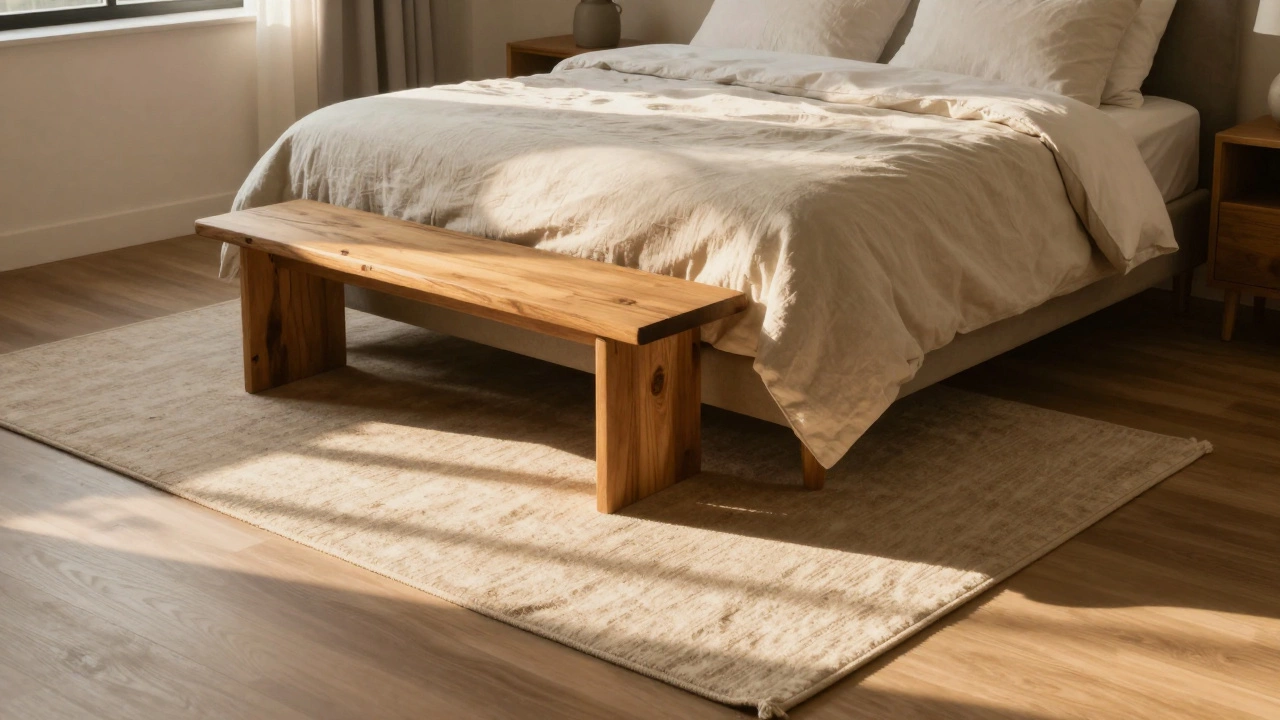
For a standard queen or king bed, place a rug so that it extends at least 18 to 24 inches beyond each side of the bed. If you have a bench at the foot of the bed, make sure the rug goes under it too. The rug should wrap around the bed like a hug.
Some people buy a small rug just under the bed. That’s fine if you have a tiny room. But if you have space, go bigger. A 8x10 rug under a queen bed with 20 inches on each side looks intentional. A 5x8 rug tucked under the bed looks like you ran out of money.
Dining Room: Don’t Let Chairs Hang Off
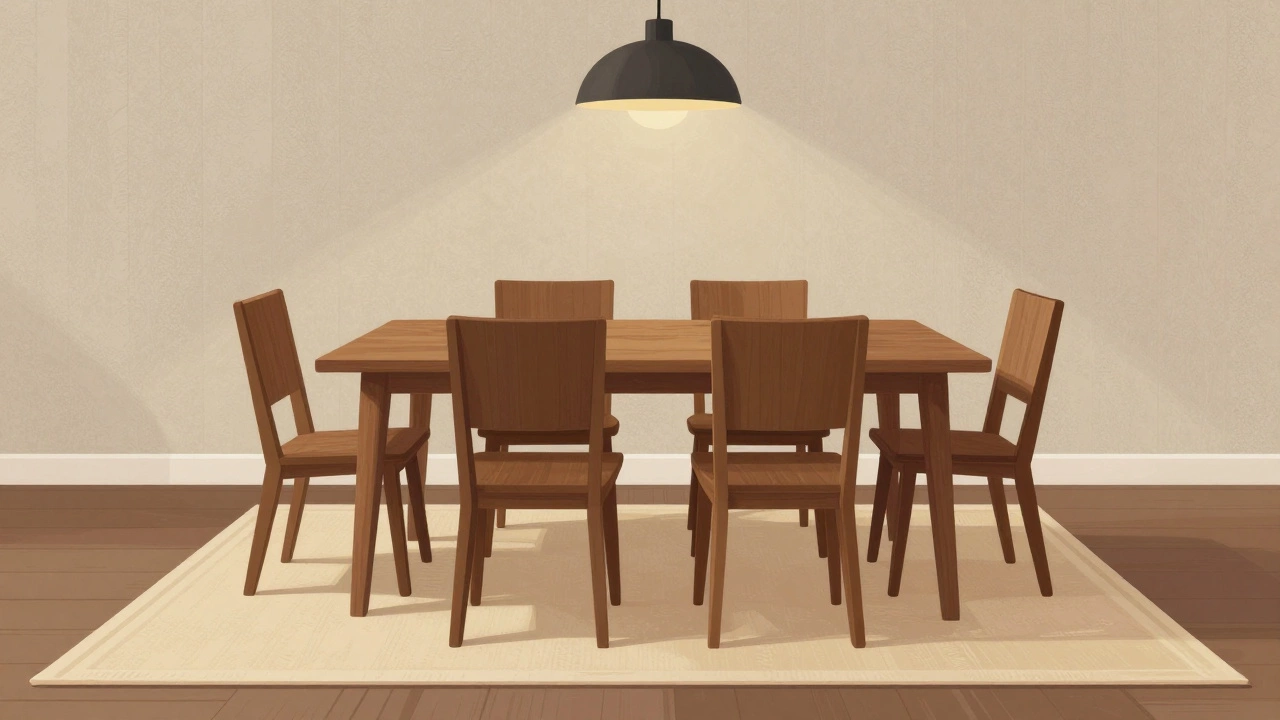
This one’s non-negotiable. Your dining rug must be large enough so that when chairs are pulled out-fully extended-they still sit on the rug. If they don’t, you get a mess. Chairs drag off the rug, snag the edge, or leave marks on the floor. It looks sloppy.
Measure your table. Add at least 24 inches on all sides. That’s your minimum rug size. So if your table is 6 feet long and 3 feet wide, you need a rug that’s at least 10 feet by 7 feet. That gives you 2 feet of rug on each end and side. When someone pulls out a chair to get up, the chair legs stay on the rug. No tripping. No slipping. No awkwardness.
Round tables? Same rule. Add 24 inches to the diameter. A 48-inch round table needs a 96-inch (8-foot) round rug.
Entryways and Hallways: Function Over Form
These aren’t living rooms. You don’t need a giant area rug here. But you still need the rug rule applied with purpose.
For entryways, the rug should be big enough to fit at least the front two-thirds of your front door’s swing. That means if your door opens inward, the rug should extend from the door to about 2 feet into the room. A 2x3 or 2x5 runner is perfect. It catches dirt, defines the space, and gives a warm welcome.
In hallways, use a runner. It should leave 6 to 12 inches of floor on each side. Too narrow? Feels like a tightrope. Too wide? Looks like you’re trying to cover the whole wall. A 2x8 runner in a 6-foot-wide hallway is ideal.
What If Your Room Is Weirdly Shaped?
Not every room is a perfect rectangle. Maybe you have a bay window. Or a fireplace that breaks up the space. Or an open-plan kitchen-living area.
Here’s how to handle it: zone your space. Don’t try to force one giant rug to cover everything. Use two rugs instead. Place one under the sofa group, another under the dining area. Keep them aligned-same color family, similar texture. This creates rhythm, not chaos.
For L-shaped rooms, lay the rug so it follows the natural flow of traffic. Don’t force it to fit a shape. Let the rug follow the function.
Rug Sizes That Actually Work
Here’s a quick cheat sheet based on real rooms in typical New Zealand homes:
- Small living room (10x12 ft): 5x8 rug
- Medium living room (12x15 ft): 8x10 rug
- Large living room (15x18 ft): 9x12 rug
- Queen bed: 8x10 rug
- King bed: 9x12 rug
- Dining table for 6: 8x10 rug (minimum)
- Entryway: 2x3 or 2x5 runner
- Long hallway: 2x8 runner
These aren’t magic numbers. They’re starting points. Adjust based on your furniture. But never go smaller than the minimum.
What About Rugs That Are Too Big?
Yes, you can have too much rug. If your rug spills into the kitchen, or covers the entire open-plan space without any floor showing, it feels heavy. It drowns the room.
Rule of thumb: leave at least 12 to 18 inches of bare floor around the edge of the rug. This creates breathing room. It frames the rug like a picture in a frame. It doesn’t overwhelm. It enhances.
Also, avoid oversized rugs in small rooms. A 9x12 rug in a 10x10 room will make the space feel cramped. Go smaller. Go lighter. Go simpler.
Material Matters Too
The rug rule isn’t just about size. It’s also about function. A wool rug in the living room? Perfect. Soft, durable, timeless. A silk rug in a high-traffic hallway? Bad idea. It’ll wear out fast.
Think about your life:
- Have kids or pets? Choose stain-resistant, low-pile rugs like polypropylene or nylon.
- Love bare feet? Go for wool or cotton.
- Live near the coast? Avoid natural fibers like jute-they hold salt and moisture.
- Want luxury? Go for hand-knotted wool or silk blends.
The right material makes the rug rule easier to follow. A rug that’s too delicate for your lifestyle will look great for six months-and then it’ll be ruined.
Final Check: Does Your Rug Pass the Test?
Before you buy or rearrange, ask yourself:
- Do all the front legs of my sofa and chairs sit on the rug?
- If I pull out a dining chair, do its legs still touch the rug?
- Is there at least 12 inches of floor showing around the edges?
- Does the rug feel like it belongs here-not like it was just dropped in?
- Would I still like this rug if I looked at it from across the room?
If you answered yes to all five, you’ve nailed it.
The rug rule isn’t about perfection. It’s about intention. It’s about making your space feel calm, connected, and cared for. A well-placed rug doesn’t shout. It whispers: this is home.
What if my furniture is too big for the rug?
If your sofa or armchair is extra large and won’t fit with front legs on a standard rug, go bigger. A 10x14 rug might be needed. Or, consider floating the rug under just the coffee table and side tables, and accept that the sofa legs will be off. This is a design choice, not a failure-but it’s not the classic rug rule.
Can I layer rugs to make a small one bigger?
Yes, but do it right. Place a neutral, flat-weave rug (like a jute or sisal) under a smaller patterned rug. The bottom rug should be slightly larger. Don’t layer two thick, plush rugs-that creates tripping hazards and uneven surfaces. Layering works best in living rooms and bedrooms, not in hallways or dining areas.
Should the rug match my sofa color?
No. The rug doesn’t need to match. It should complement. Pick a rug with a color that ties into your cushions, curtains, or artwork. A beige sofa? Try a rug with blue or green undertones to add depth. A gray sofa? A rug with warm browns or terracotta brings life. Contrast creates interest. Matching creates boredom.
Is it okay to put a rug over carpet?
Absolutely. Rugs over carpet add texture, define zones, and break up monotony. Use a non-slip pad underneath to prevent slipping. Avoid thick pile rugs over thick carpet-it can feel unstable. Flat-weave or low-pile rugs work best.
How often should I replace my rug?
A good quality wool rug lasts 15 to 20 years with proper care. Synthetic rugs last 5 to 10 years. Replace it when the pile is flattened, the edges are fraying, or stains won’t come out. Don’t wait until it looks shabby-replace it before it becomes a tripping hazard or eyesore.