Sofa Lifespan & Cost-Per-Year Calculator
1. Estimate Your Sofa's Life
Select your sofa type and daily usage to estimate remaining lifespan.
2. Repair vs. Replace Decision
Compare the cost of fixing your current sofa against buying a new one.
Analysis Results
Mid-RangeYou just spent three months saving for that gorgeous sectional. You brought it home, arranged the cushions, and sat down with a sigh of relief. But then the doubt creeps in: how long should a good sofa last? Is five years a success or a failure? Will this thing survive your kids, your dog, and your Netflix binge-watching marathon?
The truth is messy because "good" is subjective. A $200 flat-pack sofa from a big-box store isn't expected to last as long as a $3,000 hand-tied hardwood frame piece. Yet, many people buy cheap sofas expecting luxury durability, then feel cheated when they sag in year two. Conversely, some invest heavily but ruin their investment by placing it in direct sunlight or ignoring basic maintenance.
This guide breaks down exactly what you can expect from different types of sofas, why they fail, and how to spot a dud before you swipe your credit card. We aren't talking about theoretical maximums; we're talking about real-world usage in homes where life happens.
The Hard Numbers: What to Expect by Price Tier
Furniture manufacturers rarely advertise lifespan on the box, which is suspicious. If they knew their product would die in eighteen months, they'd hide it. Based on industry standards and repair shop data, here is the realistic breakdown. Note that these numbers assume normal household use-meaning daily sitting, occasional guests, and standard cleaning routines.
| Quality Tier | Price Range (USD) | Expected Lifespan | Common Failure Point |
|---|---|---|---|
| Budget / Fast Furniture | $200 - $600 | 1 - 3 Years | Sagging foam, broken particleboard frame |
| Mid-Range | $800 - $1,500 | 4 - 7 Years | Worn fabric, loose springs, cushion collapse |
| High-End / Heirloom | $2,000+ | 10 - 25+ Years | Cosmetic wear only; reupholstery needed |
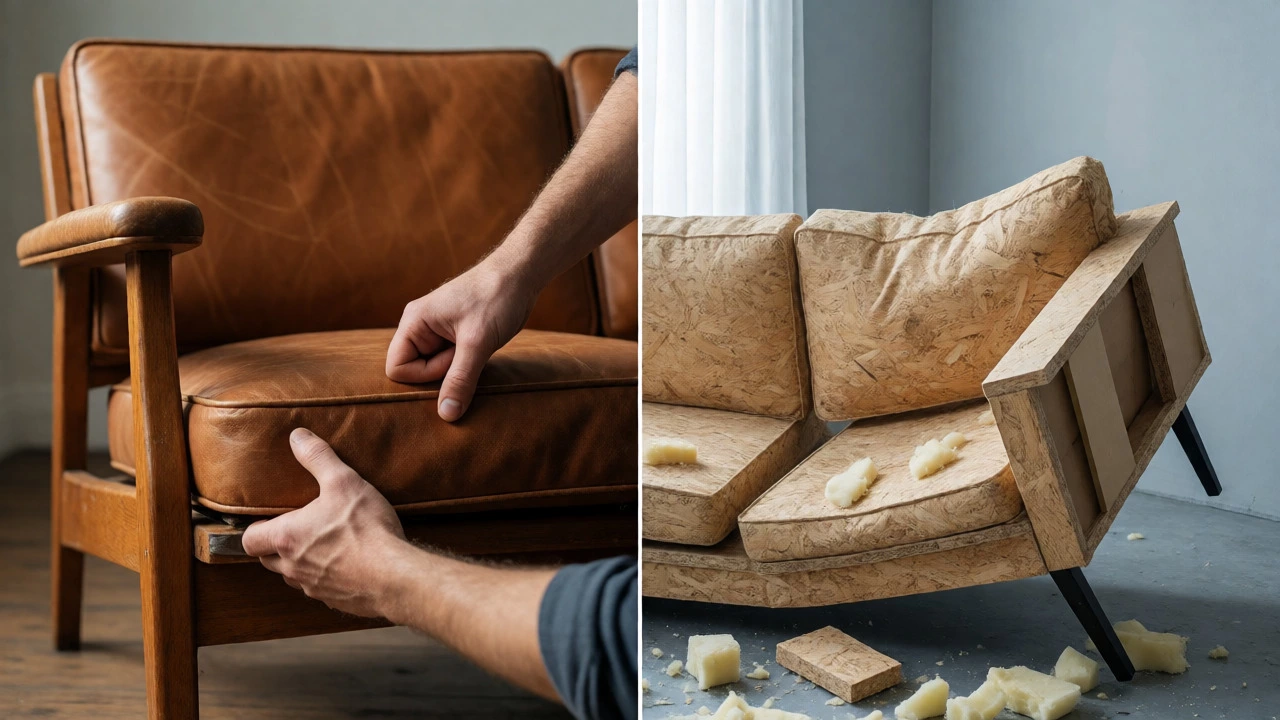
Notice the gap between Budget and Mid-Range. That jump isn't just branding. It's physics. Budget sofas often use engineered wood like particleboard or MDF (Medium-Density Fiberboard) for the frame. These materials lose structural integrity quickly under stress and humidity. High-end sofas use kiln-dried hardwoods like maple, oak, or ash, which resist warping and cracking for decades.
Why Sofas Die: The Anatomy of Failure
A sofa doesn't usually break all at once. It fails in layers. Understanding the components helps you diagnose problems early and decide whether to fix or replace.
The Frame: The Skeleton
Hardwood frames are the gold standard. They are dense, heavy, and joined with dowels, screws, and corner blocks. If you lift one end of a quality sofa and it feels solid and unified, the frame is likely intact. In contrast, particleboard frames are made from compressed wood chips and glue. They are lightweight and cheap but crumble under repeated stress. If your sofa creaks loudly or feels wobbly when you sit on an armrest, the frame is failing. This is almost always unrepairable for budget models.
The Suspension: The Shock Absorbers
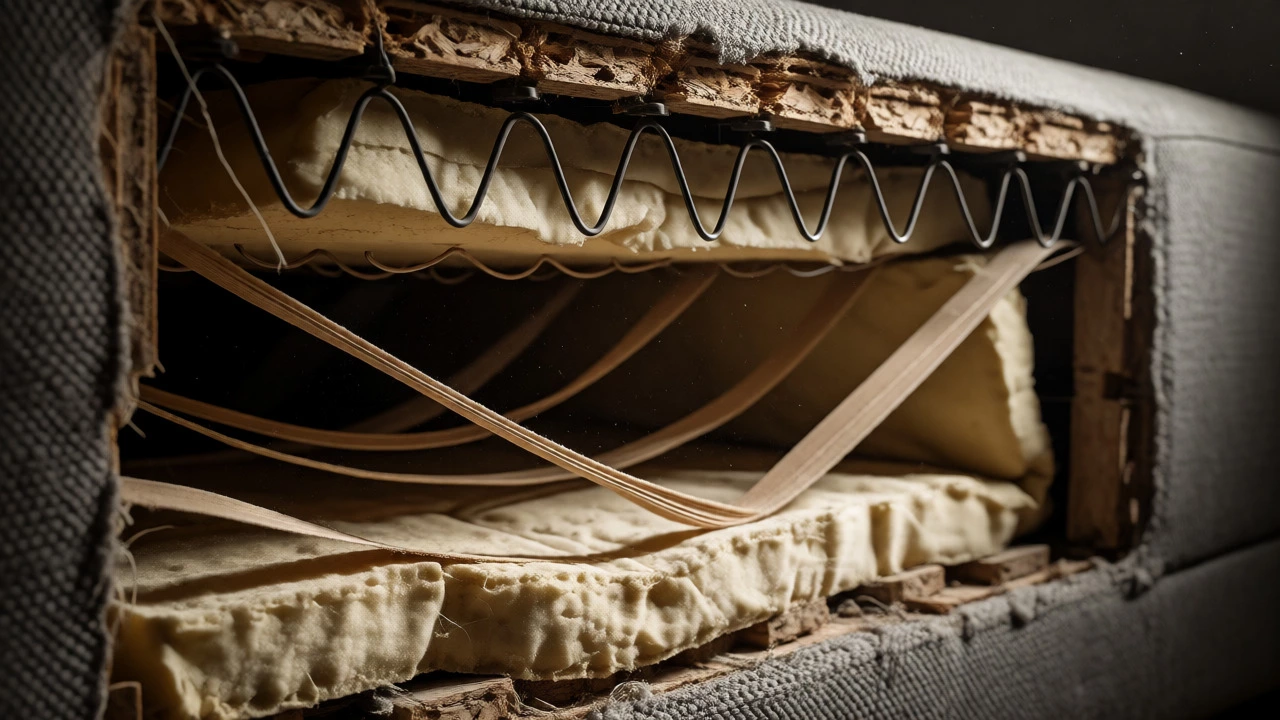
Under the cushions lies the support system. There are three main types:
- Eight-Way Hand-Tied Springs: Found in high-end sofas. Steel coils tied together in eight directions. They provide consistent support and rarely break. If one spring goes, the whole seat doesn't collapse.
- Serpentine Springs: Common in mid-range furniture. Zigzag steel wires attached to the frame. They offer decent support but can loosen over time, leading to squeaks and uneven seating.
- Elastic Webbing: Strips of rubberized fabric stretched across the frame. Used in budget sofas. They stretch out permanently after a few years, causing that dreaded "hammock effect" where you sink into the middle.
The Cushions: The Comfort Layer
This is where most comfort dies first. Foam density matters more than thickness. Low-density foam (under 1.8 lbs per cubic foot) collapses within two years. High-resilience (HR) foam lasts much longer. Down-filled cushions feel luxurious initially but require constant fluffing and eventually flatten if not blended with foam cores. A common mistake is buying all-down cushions for a family room; they look great in photos but become lumps in reality.
The Upholstery: The Skin
Fabric wear is measured in double rubs, a test indicating abrasion resistance. For residential use, aim for at least 15,000 double rubs. Heavy-duty fabrics exceed 30,000. Leather ages differently-it develops a patina rather than tearing, but it can crack if not conditioned or exposed to excessive heat.
Signs Your Sofa Is Nearing Its End
Don't wait until the springs poke through the fabric. Here are the red flags that signal replacement time:
- Visible Sagging: If you see a dip in the seat center when no one is sitting, the suspension has failed. Flipping cushions won't fix this.
- Persistent Odors: Dust mites, pet dander, and old spills embed deep in the foam and padding. Vacuuming removes surface dirt, but smells trapped inside the core are nearly impossible to eliminate completely.
- Frame Instability: Rocking side-to-side while seated indicates joint failure. Tightening bolts might help temporarily, but glued joints often need professional regluing.
- Fabric Thinning: When the weave becomes transparent or shiny patches appear, the fibers are breaking down. Reupholstering is possible, but compare the cost to a new sofa. If reupholstery costs 60% of a new sofa, buy new.
How to Extend Your Sofa’s Life
You can add years to any sofa, even a budget one, with proactive care. Think of it like changing the oil in your car. Neglect leads to breakdowns.
Rotate and Flip Cushions: Every week, rotate seat cushions and flip them if reversible. This distributes wear evenly. Most people sit in the same spot every day, compressing the same foam cells repeatedly. Rotation prevents permanent body impressions.
Vacuum Weekly: Use the upholstery attachment on your vacuum. Dust and grit act like sandpaper against fabric fibers. Removing debris weekly prevents abrasive damage. Pay attention to the crevices where crumbs and coins hide.
Keep It Out of Sunlight: UV rays fade fabric and dry out leather, causing cracks. Position your sofa away from direct windows or use sheer curtains. This simple step can double the aesthetic lifespan of colored fabrics.
No Eating on the Sofa: It sounds strict, but grease stains are permanent. Crumbs attract pests. If you must snack, use a tray. Better yet, keep food in the kitchen. The extra steps save you hours of stain removal later.
Professional Cleaning Annually: DIY steam cleaners often leave excess moisture, leading to mold or water rings. Professional cleaners use low-moisture methods that extract dirt without saturating the foam. One professional clean per year keeps allergens down and fabric looking fresh.
Repair vs. Replace: Making the Decision
When your sofa starts to fail, should you fix it or buy a new one? Run this quick calculation:
- Cost of Repair: Getting new foam cut ($100-$300) or reupholstering ($800-$1,500).
- Cost of New Sofa: Current market price for comparable quality.
- Rule of Thumb: If repairs cost less than 40% of a new sofa, fix it. If it's more, replace it.
Also consider sentimental value and environmental impact. Reupholstering a high-quality hardwood frame is often cheaper than buying a new high-end sofa and reduces landfill waste. However, repairing a particleboard frame is usually throwing money away because the underlying structure is already compromised.
What to Look For When Buying Next Time
If you're shopping now, use these checks to ensure longevity:
- Lift Test: Lift one front corner. If the back leg lifts off the ground easily, the frame is too flexible. A sturdy frame stays rigid.
- Kick the Legs: Solid wood legs are better than hollow plastic ones. Plastic legs snap under weight.
- Ask About Foam Density: Don't accept "high density" as an answer. Ask for the poundage. Anything below 1.8 lb/ft³ is weak. Above 2.0 lb/ft³ is excellent.
- Check the Fabric Code: W = Water-based cleaner, S = Solvent, WS = Both, X = Vacuum only. Avoid 'X' fabrics unless you never spill anything. They are hard to clean.
Do expensive sofas really last longer than cheap ones?
Yes, significantly. Expensive sofas typically use kiln-dried hardwood frames, high-density foam, and durable suspension systems like eight-way hand-tied springs. Cheap sofas use particleboard and low-density foam, which degrade structurally within 1-3 years. While the initial cost is higher, the cost-per-year of ownership is often lower for high-end pieces due to their longevity and repairability.
Can I fix a sagging sofa myself?
It depends on the cause. If the sagging is due to worn-out cushions, you can replace the foam inserts yourself or have them custom-cut by an upholsterer. This is a relatively inexpensive fix ($100-$300). However, if the sagging is caused by a broken frame or collapsed webbing/springs, DIY fixes are rarely effective long-term. Structural issues usually require professional repair or replacement.
How often should I professionally clean my sofa?
For households with pets, children, or allergies, professional cleaning once a year is recommended. For lighter use, every 18-24 months is sufficient. Regular vacuuming weekly helps extend the time between professional cleanings by removing abrasive dust and debris that degrade fabric fibers.
Is leather more durable than fabric?
Generally, yes. High-quality top-grain leather is extremely durable and resistant to punctures and tears compared to many fabrics. It also hides scratches well, developing a patina over time. However, leather requires conditioning to prevent drying and cracking, especially in dry climates or near heat sources. Fabric offers more variety in texture and color but may show wear patterns sooner.
What is the biggest enemy of sofa longevity?
Direct sunlight and neglect. UV rays fade colors and weaken fibers, causing brittleness. Lack of regular vacuuming allows dust and grit to accumulate, acting as an abrasive that wears down upholstery from the inside out. Keeping the sofa out of direct sun and maintaining a weekly cleaning routine addresses these two major threats.