Closet Space Optimizer
Maximize Your Closet Space
Calculate optimal storage solutions using your closet dimensions
Living in a small house doesn’t mean you have to live with clutter. The real issue isn’t the size of your home-it’s how you use every inch. I’ve seen too many people cram boxes into closets, pile clothes on chairs, or let storage become an afterthought. But in places like Auckland, where housing is tight and budgets are stretched, smart storage isn’t a luxury-it’s a necessity. The goal isn’t to hide everything. It’s to make every square foot work harder.
Start with vertical space
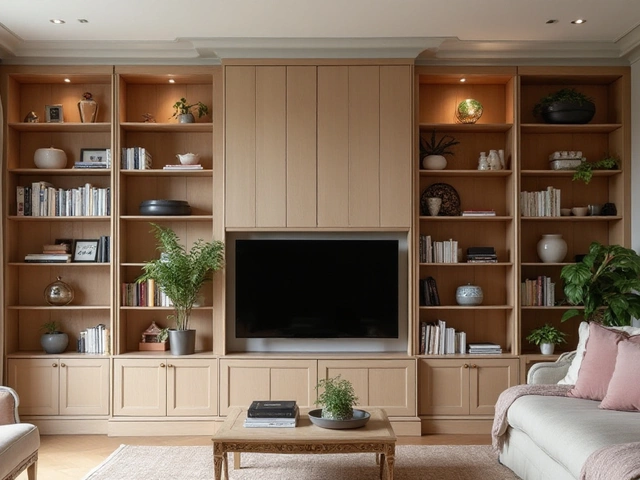
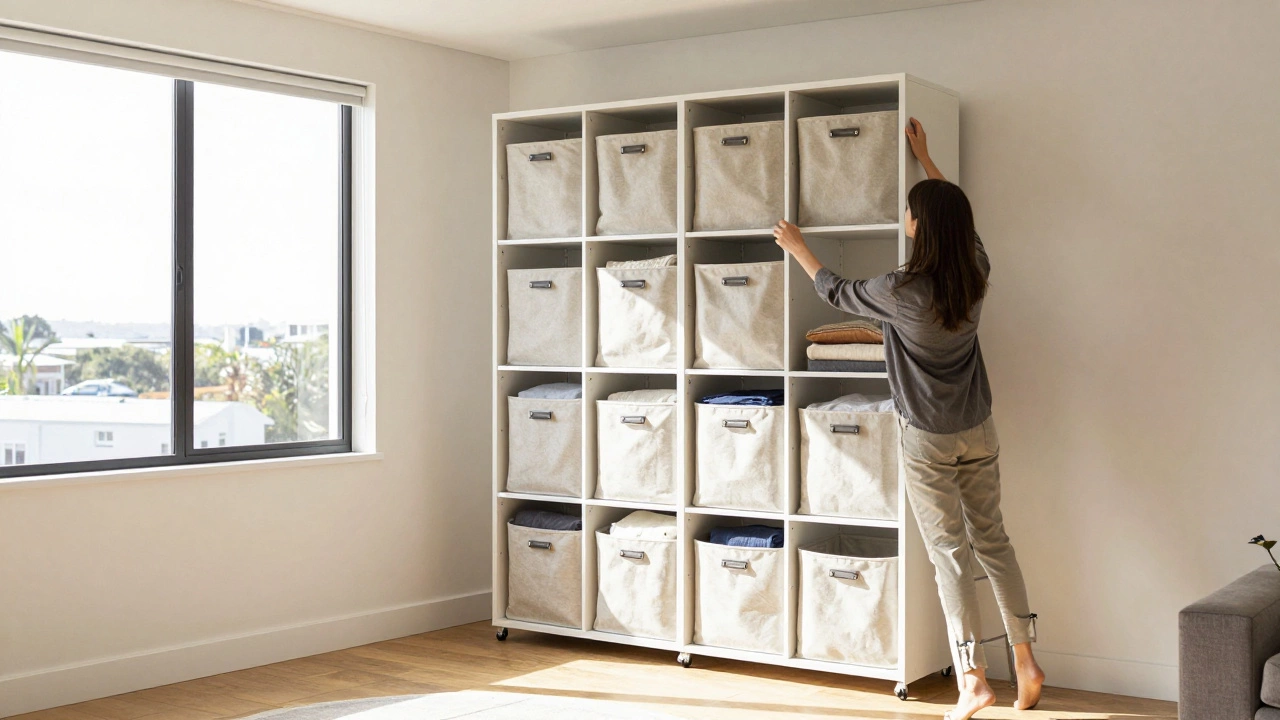
You’re not using your walls. Most people think of floor space when planning storage. That’s backwards. Walls are your best friend. Floor-to-ceiling shelves? Yes. But not just any shelves. Look for units with adjustable shelves so you can stack bins, books, or seasonal gear without wasting gaps. In a 2-bedroom apartment in Ponsonday, I saw someone install a 3-meter-tall unit with 12 bins. Each bin held folded sweaters, and the whole thing slid on rollers. No climbing needed. That’s the kind of thinking that changes everything.
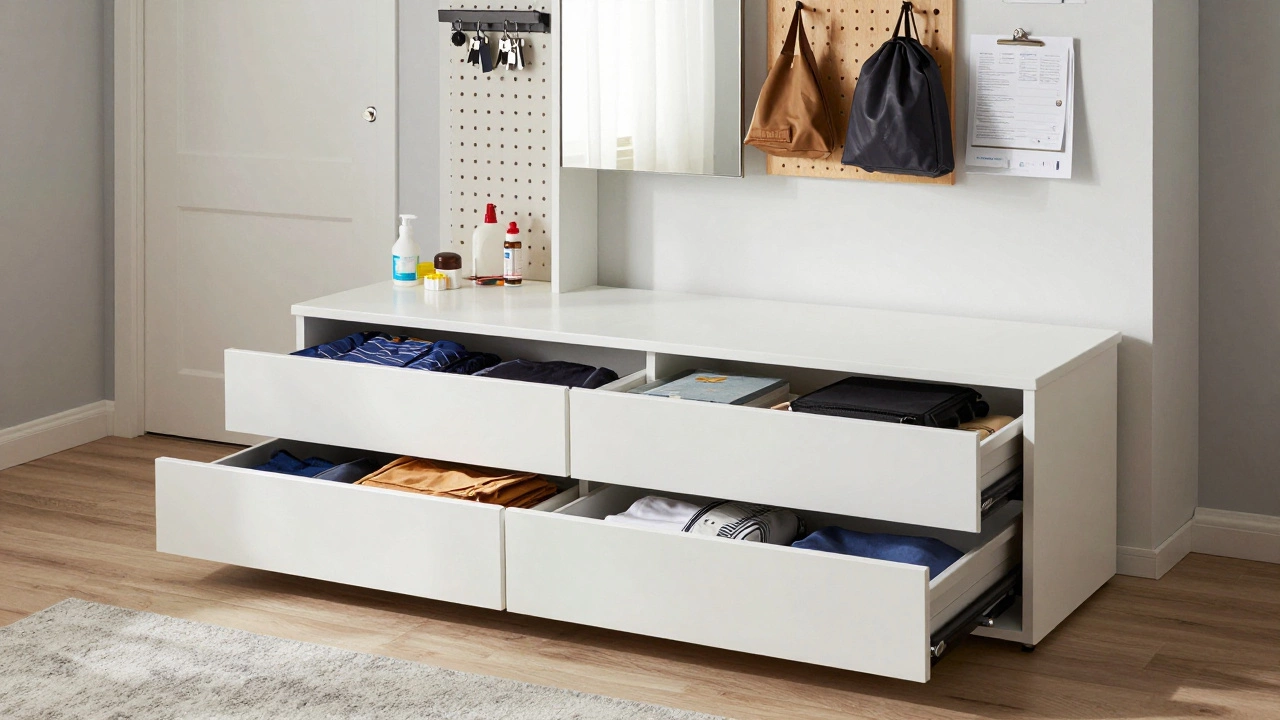
Don’t forget the space above doors and windows. A narrow shelf above a doorway can hold bins for linens or craft supplies. Mount a pegboard behind your front door for keys, bags, and mail. It’s not just storage-it’s order.
Use furniture that doubles as storage
Your couch, bed, and coffee table shouldn’t just sit there. They should be doing double duty. Ottomans with lift-top lids? Perfect for blankets or board games. Beds with built-in drawers? Essential. I’ve seen people pull out 4 large drawers from under their bed-enough for off-season clothes, shoes, even suitcases. No more under-bed clutter or dusty bins you forget about.
Choose a coffee table with a hidden compartment. Some even have charging ports inside. A dining bench with storage underneath? Ideal for kids’ toys or extra dinnerware. These aren’t fancy gadgets. They’re just furniture designed with purpose. Look for pieces labeled "storage" or "multifunctional"-they’re everywhere now, and prices have dropped.
Go vertical with closet systems
Your closet is probably underused. Standard closets have 2 rods and 1 shelf. That’s it. But with a few adjustable components, you can turn it into a 5-zone system. Start with a double-hang rod for shirts and pants. Add a shelf above for folded sweaters. Then install pull-out bins for socks and underwear. Hang a shoe rack on the door. Add a hanging organizer for accessories. That’s five storage zones in a space that used to feel empty.
Don’t buy expensive systems. IKEA’s PAX or KUNGSBACKA kits work just as well. You can build one for under $300. The key is measuring your space first. Use a tape measure. Write down the height, width, and depth. Then pick components that fit exactly. No gaps. No wasted space.
Turn unused corners into storage
Every house has corners that get ignored. The space between the fridge and the wall. The nook under the stairs. The gap beside the bathroom door. These aren’t dead zones-they’re opportunities.
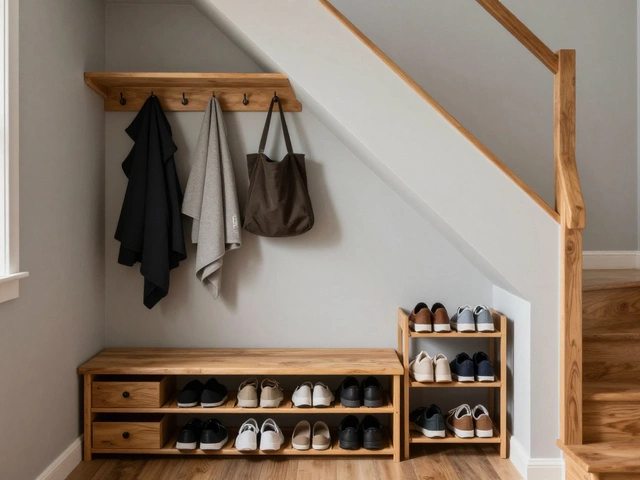
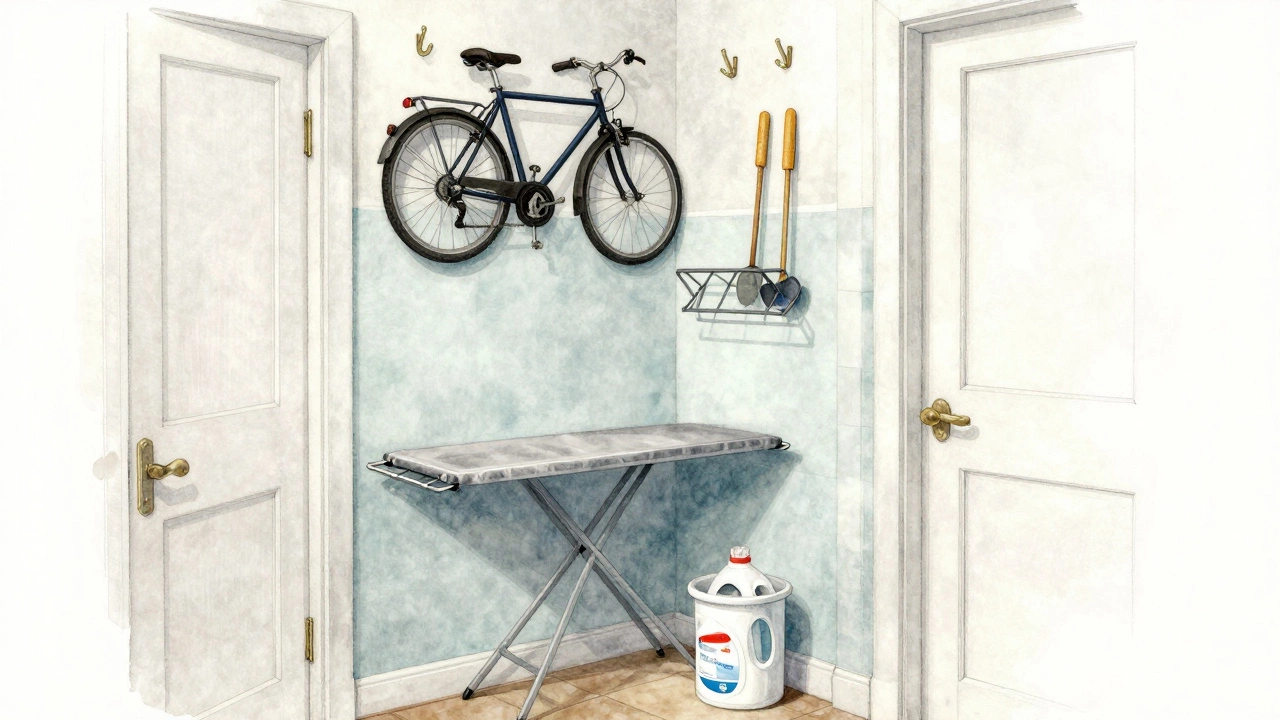
A corner shelf with a curved front can hold toiletries or spices. Under-stair storage? Install pull-out drawers or a mini pantry. I’ve seen people turn a narrow corner into a full laundry station with a folding table, hanging rack, and hidden detergent bin. All tucked into a space that used to collect dust.
Use corner carousels in pantries. They spin, so you don’t have to dig. They’re cheap, easy to install, and work in tight spots. Same with corner cabinets in bathrooms. They turn a wasted angle into usable shelf space.
Hide storage behind mirrors and panels
Why put storage where everyone can see it? Mirrors are more than decorative. A mirror cabinet with internal shelves hides toiletries, medications, and hair tools. Same with a wall panel that swings open to reveal a hidden closet. These aren’t just for luxury homes. DIY versions are simple. Buy a frame, attach hinges, and mount a shelf inside. Paint it to match the wall. Now you’ve got a secret storage nook.
In a tiny kitchen in Grey Lynn, someone mounted a mirrored panel over the sink. Behind it? A shallow cabinet for spices, tea bags, and cleaning wipes. The mirror reflects light, and the storage stays out of sight. No one even noticed it was there until they needed a spice.
Think about what you actually use
Storage isn’t about cramming more stuff in. It’s about keeping what matters, and letting go of what doesn’t. A study from the University of Auckland found that people in small homes who decluttered every 3 months reported 40% less stress. That’s not a coincidence.
Ask yourself: When was the last time you used this? Does it fit in your current life? If you haven’t worn it in a year, it’s not storage-it’s clutter. Use the one-year rule: If you haven’t used it in 12 months, donate it, sell it, or toss it. Keep only what you use, love, or need.
Store seasonal items in labeled, stackable bins. Put winter coats in a bin under the bed. Keep holiday decorations in a labeled box on the top shelf. Rotate them. Don’t just bury them. Label everything. You’ll thank yourself later.
Use clear bins and labels
Opaque bins are storage nightmares. You open one, find a mess, and close it again. Clear bins solve that. You see what’s inside. No guessing. No digging. Even better-add labels. Use a label maker, or print labels on paper and tape them on. Write what’s inside and when you last used it.
Stack clear bins on shelves, under beds, or in closets. Use the same size for uniform stacking. You’ll save time, reduce frustration, and make cleaning easier. I’ve watched people spend 20 minutes searching for a sweater. With clear bins, they found it in 10 seconds.
Don’t forget the ceiling
Yes, the ceiling. In garages, laundry rooms, and even kitchens, overhead storage is often ignored. Install ceiling-mounted racks for holiday lights, bulky items, or sports gear. Use hooks for bikes, ladders, or garden tools. A ceiling rack doesn’t take up floor space. It lifts it out of the way.
Just make sure it’s secure. Use wall anchors and check the weight limit. A ceiling rack holding 30kg of tools? Fine. One holding 80kg? Not unless it’s professionally installed. Safety first.
Small house storage doesn’t mean sacrifice
Maximizing storage in a small house isn’t about living like a monk. It’s about working smarter. You can still have books, clothes, gear, and memories-without the chaos. It’s about choosing the right tools, using every inch, and being honest about what you really need.
Start with one corner. One closet. One drawer. Fix that first. Then move to the next. You don’t need to overhaul everything at once. Progress beats perfection. And in a small home, every bit of space you reclaim is a win.
What’s the most space-saving furniture for small homes?
The most space-saving furniture includes beds with built-in drawers, ottomans with lift-top storage, and nesting tables that tuck away. Wall-mounted desks and fold-down dining tables also free up floor space. Look for pieces labeled "multifunctional"-they’re designed to serve more than one purpose without taking up extra room.
How do I organize clothes in a tiny closet?
Start by removing everything and sorting into keep, donate, and discard piles. Install a double-hang rod for shirts and pants, add shelves above for folded items, and use slim hangers to save space. Add pull-out bins for socks and underwear, and hang a shoe rack on the door. Use vertical space-don’t just rely on the floor. Label bins so you know what’s where.
Are clear bins better than opaque ones for storage?
Yes, clear bins are better because you can see what’s inside without opening them. This reduces time spent rummaging and prevents items from being forgotten. Pair them with labels for even better organization. Opaque bins are fine for items you use daily, but for seasonal or rarely used things, clear bins win.
Where should I store seasonal items in a small house?
Store seasonal items in labeled, stackable bins under the bed, on top of closet shelves, or in a dedicated storage nook like under the stairs. Use vacuum-sealed bags for bulky items like winter coats or bedding. Rotate them every 3-4 months so you don’t forget what’s there. Keep them away from damp areas like basements or garages if possible.
Can I add storage without renovating?
Absolutely. You don’t need to tear down walls. Use over-the-door organizers, wall-mounted shelves, adhesive hooks, and furniture with hidden storage. Add a pegboard in the kitchen or entryway. Use stackable bins under the sofa. These are low-cost, non-permanent, and reversible. They add storage without a renovation.