Mirror Quality Checker
Not all mirrors are created equal. You’ve probably seen one that makes your face look stretched, or one that starts fogging up after a few months, or worse - one that develops dark spots along the edges. A cheap mirror doesn’t just look bad; it can ruin the whole feel of a room. So how do you know you’re getting a good one? It’s not about price tags or fancy branding. It’s about what’s inside.
Check the glass thickness
A good mirror uses glass that’s thick enough to stay flat and not warp over time. For standard wall mirrors, look for at least 4mm thickness. Anything thinner - like 2mm or 3mm - will flex when you touch it, and over time, that flex causes the reflective layer to crack or peel. You can test this by holding the mirror up to a light and looking for slight bends or ripples in the reflection. If the lines in your room look curved, the glass isn’t flat enough.
For full-length mirrors or those over 3 feet wide, go for 6mm or thicker. These are heavier, yes, but they won’t sag or bow. I’ve seen cheap mirrors in rental apartments that started leaning forward after a year - not because the frame broke, but because the glass bent under its own weight.
Look at the silver backing
The reflective layer on the back of the mirror is usually made of aluminum or silver. High-quality mirrors use real silver coating, which lasts longer and reflects light more accurately. Cheaper ones use aluminum, which dulls faster and can turn yellowish over time.
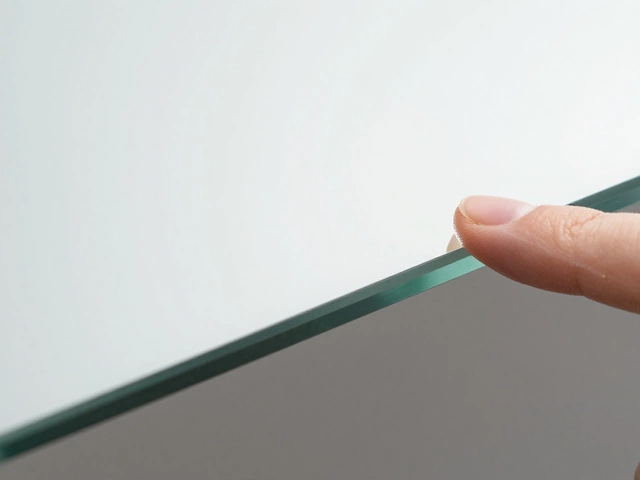
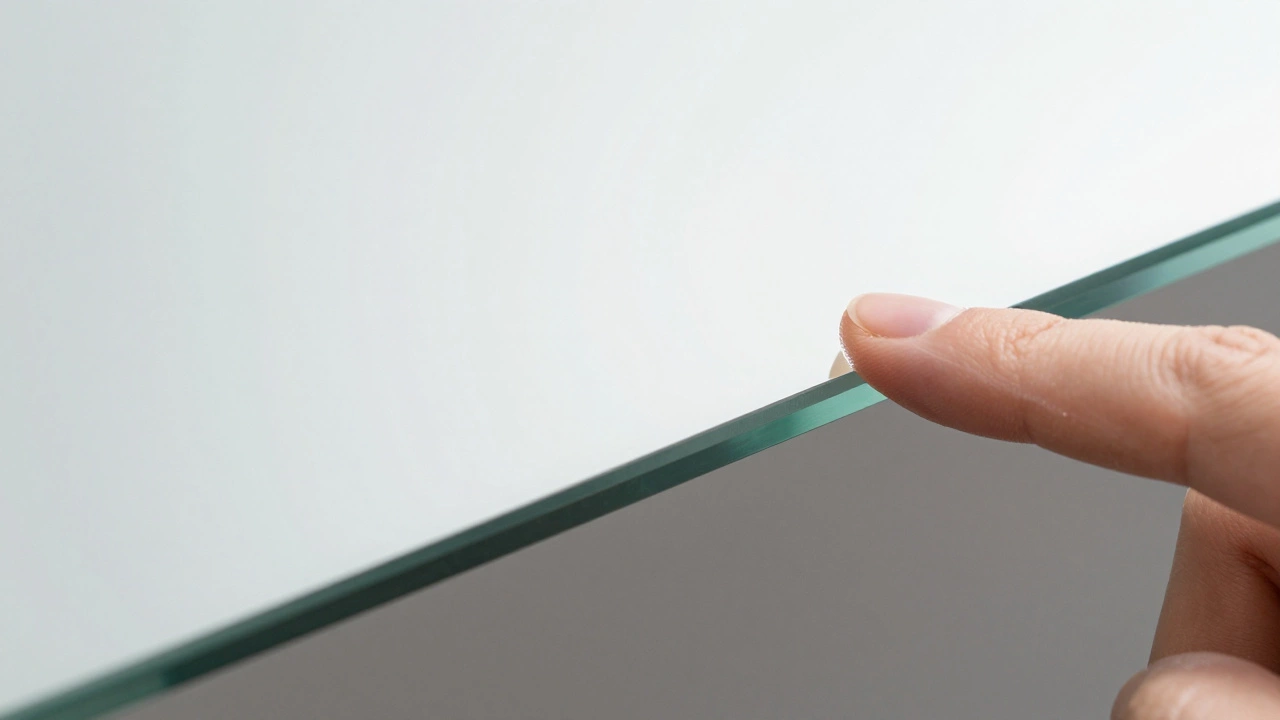
Here’s how to tell the difference: hold the mirror up to a bright window or lamp. Look closely at the edge of the glass. If you see a thin, silvery layer that’s shiny and even, that’s good. If it looks dull, cloudy, or has a faint blue or green tint, it’s probably aluminum. You can also tap the back lightly with your fingernail. A good silver backing gives a clear, ringing sound. A cheap aluminum backing sounds dull and flat.
Examine the reflection for distortion
Hold the mirror at arm’s length and look at your face. Then move it closer. A good mirror shows your face exactly as it is - no stretching, no shrinking, no wavy lines. If your nose looks wider, your forehead looks taller, or your eyes seem uneven, the mirror is flawed.
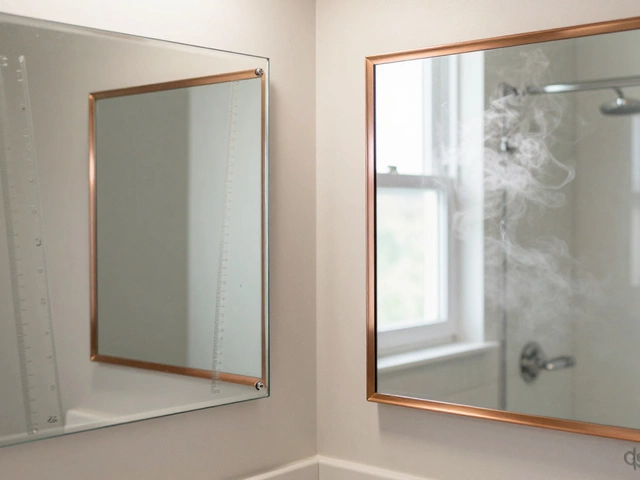
Try this trick: place a straight-edged object like a ruler or a door frame next to the mirror. Look at how the edge lines up in the reflection. If it curves or bends, the glass is warped. Even slight warping can make a room feel off-kilter. High-quality mirrors are made with optical-grade glass that’s polished to be perfectly flat. That’s why professional studios and salons use them - because accuracy matters.
Inspect the frame and mounting
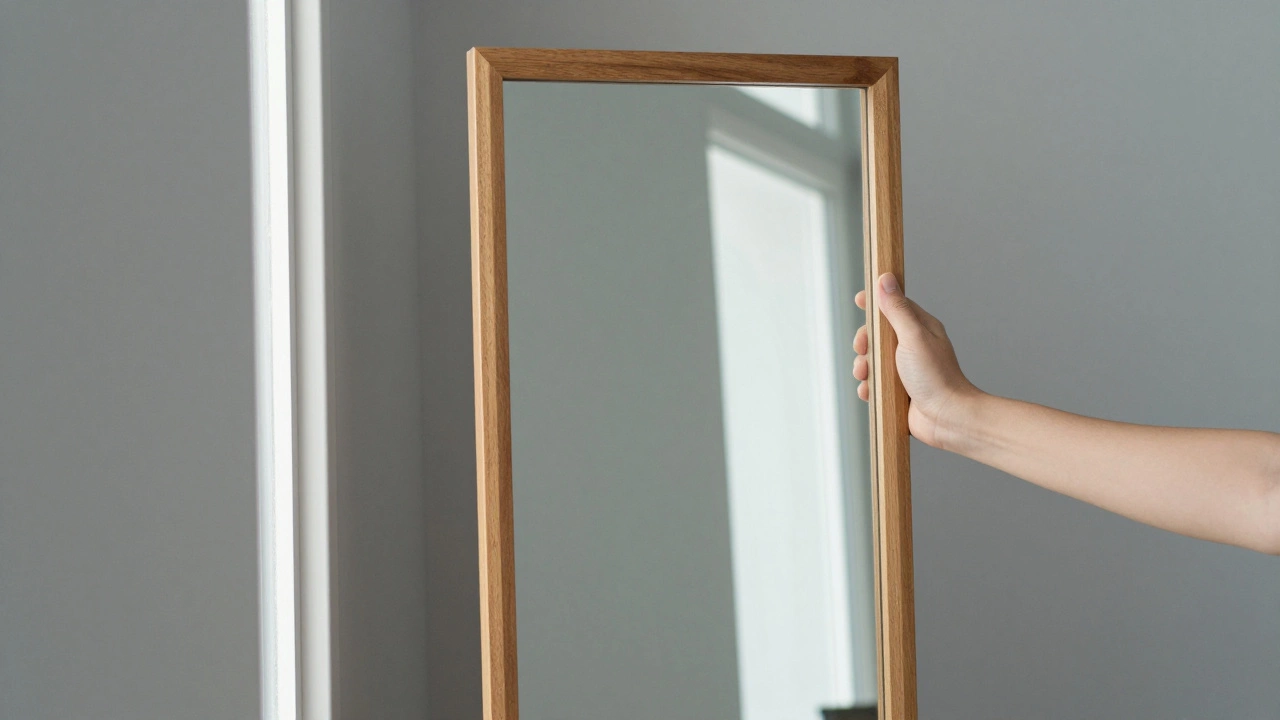
The frame doesn’t affect the reflection, but it tells you about the mirror’s overall build. A well-made mirror has a frame that’s securely attached - not glued on with a thin line of silicone. Look for corner brackets, screws, or a routed groove that holds the glass in place. Cheap mirrors often use adhesive alone, which fails over time, especially in humid places like bathrooms.
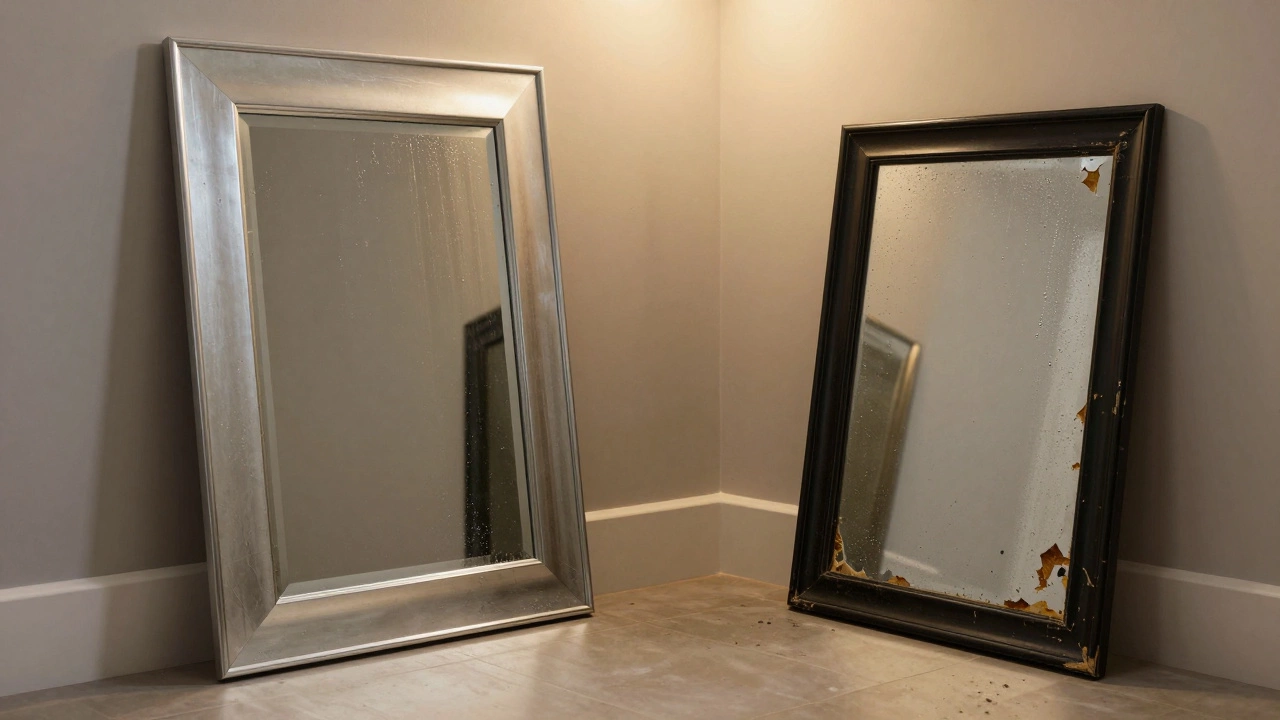
Also check the back. A good mirror has a protective sealant around the edges to prevent moisture from seeping in. Moisture is the enemy of silver backing. If you see white spots, black edges, or a cloudy haze forming near the border, that’s corrosion. It starts small but spreads. In New Zealand’s damp climate, this is a common problem with low-end mirrors bought from big-box stores.
Feel the weight
Weight matters. A mirror that feels surprisingly light for its size is usually a red flag. Glass is heavy. A 24x36 inch mirror with 4mm glass should weigh around 8 to 10 kilograms. If it feels like it’s made of plastic or thin cardboard, it’s not real glass. Some knockoffs use acrylic or plastic with a metallic coating - they look shiny at first, but scratch easily and yellow in sunlight.
Don’t be fooled by thick frames hiding thin glass. Lift the mirror and compare it to another one you know is good. If it feels like it could be lifted with one hand while a similar-sized mirror needs two, the glass is too thin.
Check the manufacturer’s reputation
Brands like Robern, Kohler, and Restoration Hardware don’t always cost more, but they have standards. They test their mirrors for reflectivity, flatness, and durability. Look for labels that say “premium glass,” “silver-coated,” or “optical grade.” If the packaging says “mirrored acrylic” or “decorative mirror,” walk away. Those aren’t meant for daily use.
Some local artisans in New Zealand make hand-finished mirrors using traditional methods. These often come with a certificate of authenticity and use thicker glass and real silver. They cost more upfront, but they last decades. A mirror you buy today should still look sharp in 10 years - not fade, warp, or peel.
Test it in the right light
Buy mirrors in daylight if you can. Artificial lighting can hide flaws. A mirror that looks fine under a warm bulb might show streaks, spots, or uneven reflection in natural light. Take it near a window before you buy. Look at your eyes - are they sharp? Are the whites of your eyes clear? If they look grayish or washed out, the mirror is filtering light poorly.
Also, check for green or blue tints. Real silver mirrors reflect true color. Cheap ones add a tint to make the reflection look brighter - but it distorts skin tones and colors in your room. You might think your walls look nice in the mirror, but in real life, they’re actually off.
What to avoid at all costs
- Mirrors with visible bubbles or cloudiness in the glass
- Frames that feel flimsy or wobble when you touch them
- Prices that are too good to be true - under $50 for a 30-inch mirror
- Mirrors sold without any manufacturer info or care instructions
- Those with plastic backing or a plastic edge seal
If you’re replacing a mirror in a bathroom, don’t just grab the cheapest one on sale. Moisture, steam, and temperature changes eat away at poor-quality mirrors. A good one will last 20+ years. A bad one might start failing in 2.
Final checklist before you buy
- Is the glass at least 4mm thick? (6mm for large mirrors)
- Does the reflection show straight lines and true colors?
- Is the backing silver, not aluminum?
- Are the edges sealed to prevent moisture?
- Does the frame feel sturdy and securely attached?
- Does the mirror feel heavy for its size?
- Is there a brand name or quality label?
If you can answer yes to all of these, you’ve got a mirror that will serve you well. Don’t settle for something that looks good in the store but fails in your home. A mirror isn’t just a decorative piece - it’s a tool. And like any tool, quality matters.
How do I know if a mirror is made with real silver?
Hold the mirror up to a bright light and look at the edge of the glass. Real silver backing appears as a bright, shiny, even layer with a slight gray tint. Aluminum backing looks duller, often with a blue or greenish hue. You can also tap the back lightly - silver gives a clear, ringing sound, while aluminum sounds flat and dull.
Can a mirror get worse over time?
Yes. Poor-quality mirrors with aluminum backing or unsealed edges can develop black spots, cloudy patches, or peeling over time, especially in humid areas like bathrooms. Moisture seeps in and corrodes the reflective layer. A good mirror with sealed edges and real silver can last 20 years or more without showing signs of wear.
Why does my mirror look different in natural light?
Cheap mirrors often have a tinted coating to make the reflection appear brighter under artificial light. In natural daylight, this tint becomes obvious - skin tones look off, colors appear washed out, and the glass may show green or blue hues. A high-quality mirror reflects light accurately without adding color, so everything looks true to life.
Is a heavier mirror always better?
Generally, yes. Heavier mirrors usually mean thicker, higher-quality glass. A 24x36 inch mirror made with 4mm glass should weigh 8-10 kg. If it feels unusually light, it might be made of thin glass or even plastic with a metallic coating. Weight is a reliable indicator of durability.
What’s the best way to clean a high-quality mirror?
Use a microfiber cloth and a mix of water and white vinegar, or a glass cleaner without ammonia. Never spray cleaner directly on the mirror - spray it on the cloth first. Avoid abrasive pads or paper towels, which can scratch the surface. For the frame, use a dry cloth. Keeping it clean helps preserve the reflective layer and prevents buildup that can obscure clarity.