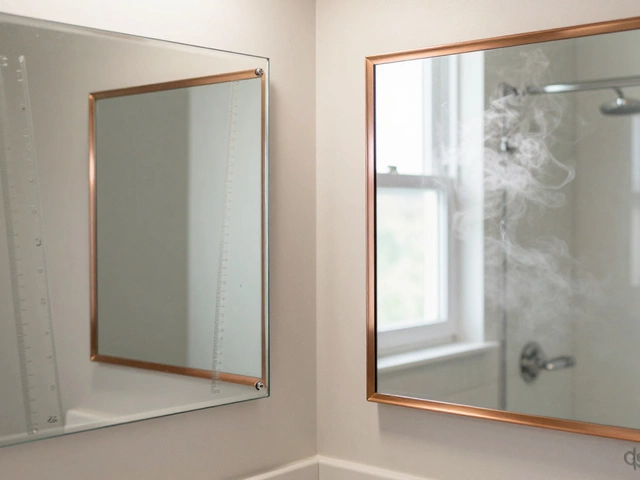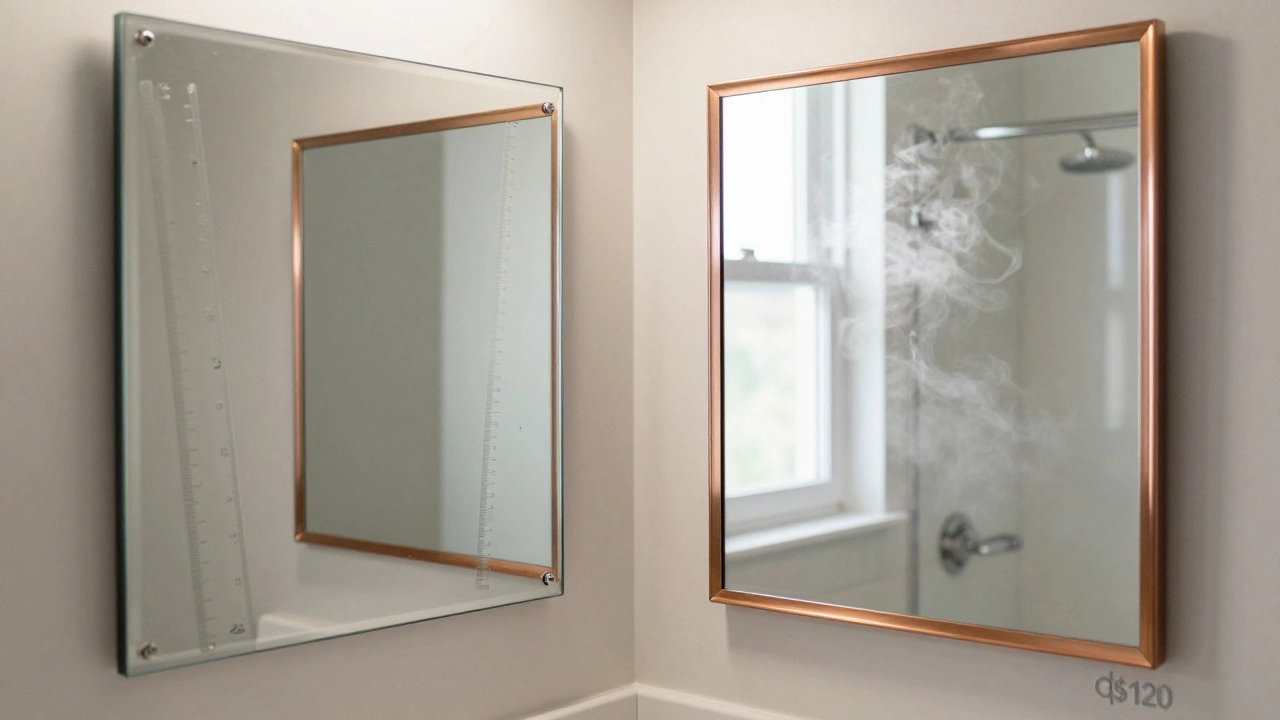
You walk into a store and see two mirrors side by side. One costs $15. The other, $120. Both look the same from a distance. You think: Is the expensive one really worth it? The truth? Cheap mirrors can work-just not the way you might expect.
What makes a mirror actually good?
A mirror isn’t just glass with a backing. It’s a layered product. The glass itself should be flat, not warped. If it’s bent even slightly, your reflection looks like a funhouse version of yourself. That’s why cheap mirrors often look off-you’re not seeing your true shape.
Beneath the glass is the reflective coating. Most mirrors use silver or aluminum. Silver gives a warmer, more accurate reflection. Aluminum is cheaper and brighter, but can look a little cold. Budget mirrors often use thin aluminum coatings that fade faster. After a year or two, you might notice dull spots, especially near the edges.
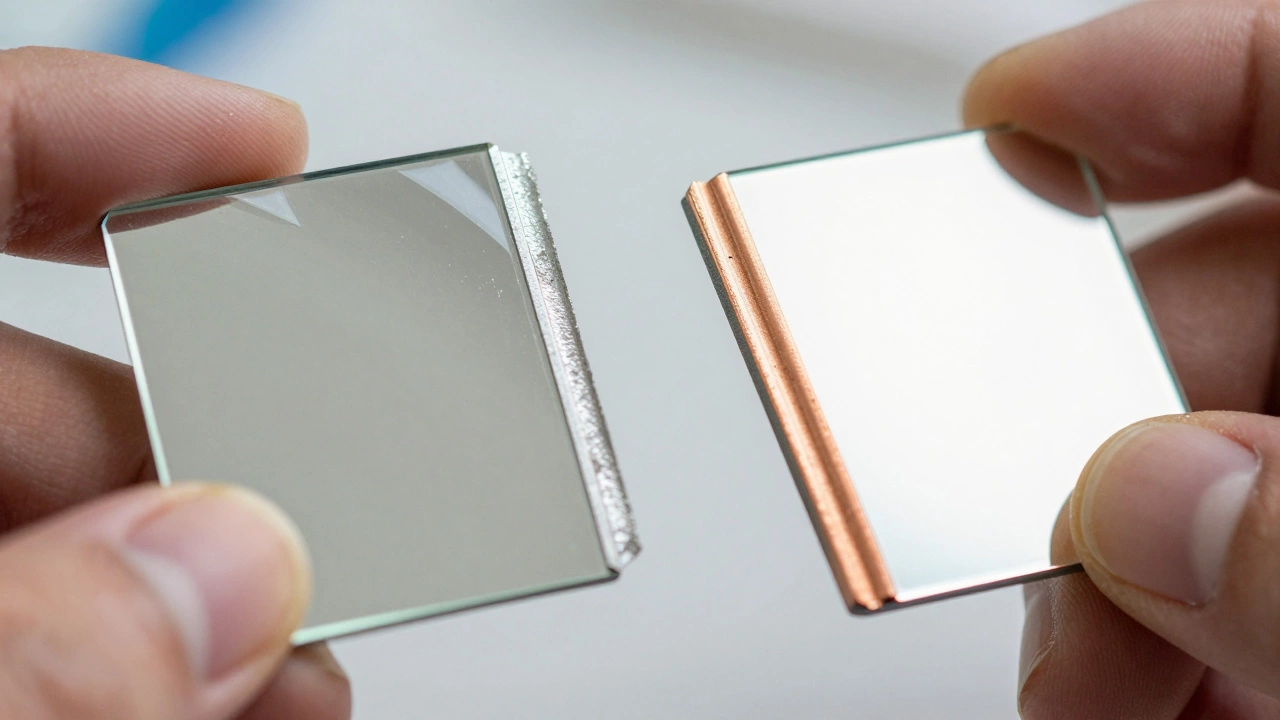
The backing layer protects the coating. Cheap mirrors skip proper sealants. Moisture gets in. Humidity from your bathroom? That’s the killer. You’ll see black spots or cloudiness forming over time. A good mirror has a copper or epoxy seal around the edges. You won’t see it unless you look closely-but it makes all the difference.
Frame matters more than you think
Most people focus on the glass. But the frame? That’s where cheap mirrors cut corners-and where they fail fastest.
Plastic frames? They crack in cold rooms. Wood frames on budget mirrors are often made from particleboard, not solid wood. They swell when damp. You’ll see warping, peeling paint, or gaps opening up between the frame and glass. Solid wood or metal frames last decades. Plastic and MDF? Maybe five years, if you’re lucky.
Also, watch the mounting. Cheap mirrors often come with flimsy hanging hardware-plastic anchors, thin wire, or adhesive strips. Hang a 10-pound mirror with those? It’ll fall. Real mirrors need wall anchors rated for their weight. If the mirror doesn’t include proper hardware, assume you’ll need to buy it yourself.
Where cheap mirrors work (and where they don’t)
Not all mirrors need to be high-end. Here’s where budget options are fine:
- Decorative accents in low-traffic areas like a hallway or bedroom-where you glance at yourself, not inspect your hairline.
- Secondary mirrors in a bathroom, like one above a vanity you don’t use daily.
- Outdoor or garage mirrors for checking your car before backing up. Weather and dust will get to them anyway.
Here’s where you should skip the bargain:
- Main bathroom mirror-you use it every morning. You need clarity, durability, and resistance to steam.
- Full-length mirror in a bedroom. If it’s warped, you’ll never know if that outfit really fits.
- Entryway mirror-it gets touched, bumped, and exposed to rain or snow on coats. A weak frame won’t last.
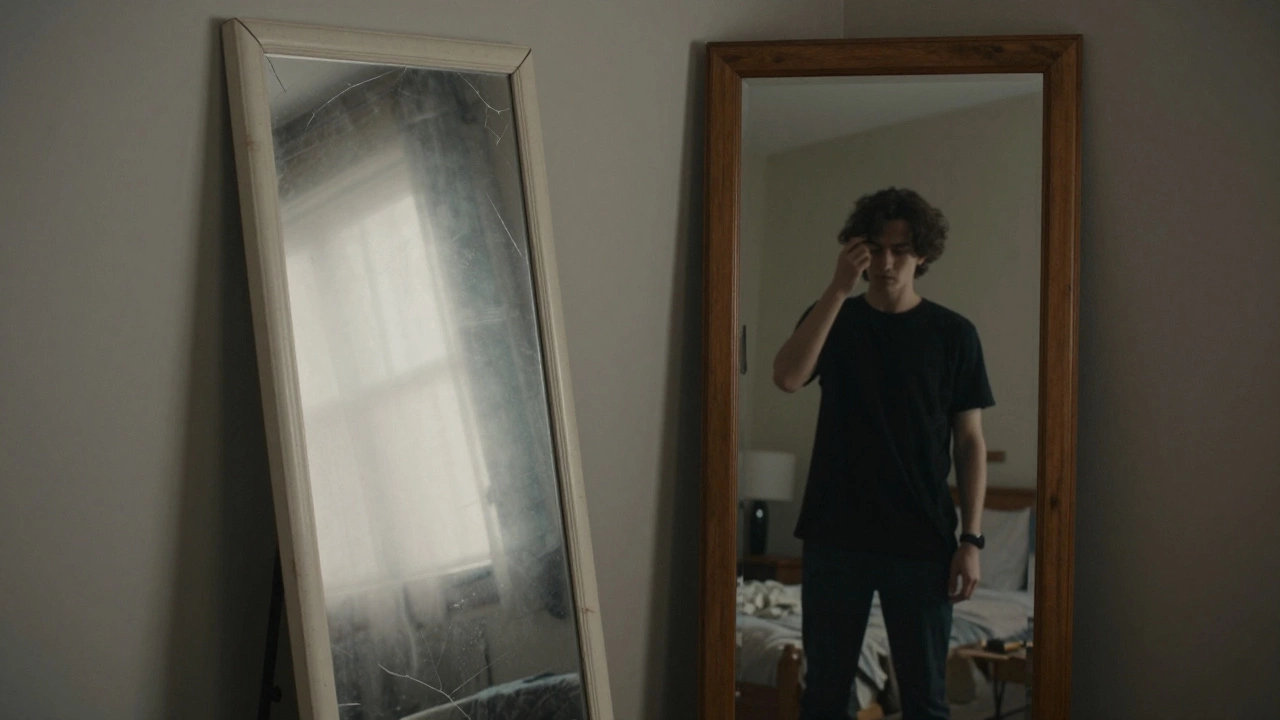
How to test a mirror before buying
You don’t need to be an expert to spot a bad mirror. Try this quick test before you pay:
- Look at the edge. Is there a visible seal? Silver or copper around the glass? If it’s just bare glass or a rough white edge, skip it.
- Check for distortion. Hold a straight object-like a ruler or phone charger-up to the mirror. Does it look bent? Even slightly? That’s warped glass.
- Tap it. Lightly tap the center with your knuckle. A good mirror gives a solid, ringing sound. A hollow or dull thud means the backing is thin or uneven.
- Look for spots. Turn it sideways under bright light. Any dark patches or cloudy areas? That’s oxidation. It’ll only get worse.
- Read the weight. A 24-inch mirror should feel heavy. If it feels light for its size, the glass is thin. Thin glass = poor reflection and more breakage risk.
Price range breakdown: What you’re really paying for
Let’s break down what you get at different price points:
| Price Range | Typical Use | Glass Quality | Coating | Frame Material | Expected Lifespan |
|---|---|---|---|---|---|
| $10-$25 | Decor, temporary use | Thin, may warp | Aluminum, thin layer | Plastic, MDF | 1-3 years |
| $30-$75 | Secondary bathroom, bedroom | Standard float glass | Aluminum with light seal | Engineered wood | 5-8 years |
| $80-$200 | Main bathroom, full-length | Thick, optical-grade | Silver, sealed edges | Solid wood or metal | 15+ years |
Notice something? The jump from $25 to $75 gets you 90% of the quality. The $200 mirror? It’s for people who want museum-grade reflection or heirloom durability. You don’t need that unless you’re hanging it in a historic home or a luxury spa.
Real-world failure stories
I once bought a $19 mirror from a big-box store for my bathroom. It looked perfect. Six months later, the corners turned black. Steam had eaten through the coating. I replaced it with a $65 mirror from a local hardware store. That one’s still going strong three years later.
A friend bought a $12 full-length mirror for her closet. The frame cracked after a year. She tried gluing it back. Then the glass fogged up permanently. She ended up spending $140 on a new one-and wasted $12 in the process.
These aren’t rare cases. Consumer Reports tested 12 budget mirrors in 2024. Half showed visible distortion within 12 months. Three had coatings that peeled off after just 6 months of normal bathroom use.
Bottom line: Cheap mirrors aren’t always a bad buy
They’re not magic. But they’re not always trash either. The trick is knowing where to use them-and where to pay a little more.
If you need a mirror for quick glances, temporary decor, or a space where moisture isn’t a problem? Go cheap. But if you’re using it daily, in a humid room, or need to see your reflection clearly? Don’t risk it. Spend the extra $40. You’ll save money in the long run-and avoid the frustration of a mirror that looks like a funhouse.
Think of it like buying shoes. You can wear $20 sneakers for walking the dog. But if you’re running marathons? You need support, durability, and proper cushioning. Mirrors are the same.
Are cheap mirrors safe to use in bathrooms?
Only if they’re sealed properly. Most cheap mirrors aren’t. Moisture causes the reflective coating to peel, leading to black spots and cloudy glass. If you must use one in a bathroom, choose one with a copper or epoxy edge seal and avoid hanging it directly above the shower.
Can you fix a mirror with black spots?
No. Once the silver or aluminum coating oxidizes, it can’t be repaired. Sanding, cleaning, or applying sealant won’t restore the reflection. The only fix is replacement.
Do more expensive mirrors give a truer reflection?
Yes. Higher-end mirrors use optical-grade glass that’s flat to within 0.001 inches. This means your reflection isn’t stretched, bent, or distorted. Cheap mirrors often have slight warps that make you look heavier, taller, or skewed-especially around the edges.
How long should a mirror last?
A good mirror with proper sealing lasts 15-25 years. Budget mirrors with thin coatings and no edge seal last 1-5 years, especially in humid areas. The frame might last longer, but the reflection won’t.
Is it worth buying a mirror with LED lighting?
Only if you need it. LED mirrors are great for makeup or grooming, but they add $50-$150 to the price. For most people, a good mirror with natural light from a window is better. Save the LED version for a vanity where you do detailed tasks daily.
What to do next
Don’t just buy the cheapest mirror on the shelf. Don’t assume the most expensive one is best. Know your use case.
If you’re replacing a broken mirror, take the old one with you. Compare the weight, edge seal, and thickness. If you’re buying for a new space, measure the wall. Bring a ruler to test for warping. And always check the return policy-some stores won’t accept returns on mirrors once they’re taken out of the box.
For most people, spending $50-$80 on a mirror is the sweet spot. You get clarity, durability, and a frame that won’t fall apart. That’s the real value-not the sticker price.