Rug Over Carpet Compatibility Checker
Answer these questions to get personalized recommendations for placing a rug over your existing carpet.
You just bought the perfect vintage Persian rug. It’s bold, it’s textured, and it ties your living room together. But then you look down at your beige wall-to-wall carpet and panic. Does putting that beautiful piece on top of existing flooring make sense? Or is it a design faux pas waiting to happen?
Here is the short answer: No, it is not dumb. In fact, placing an area rug over carpet is one of the most effective ways to define space, add warmth, and protect high-traffic zones in a home. However, doing it wrong can lead to tripping hazards, ruined floors, or a messy tangle of fibers. The key lies in understanding why you are doing it and how to secure it properly.
Why Layer Rugs Works (And Why You Should Consider It)
Many people assume that if you have wall-to-wall carpeting, you don’t need another rug. This is a common misconception. Wall-to-wall carpeting serves as general floor covering, but it rarely defines specific functional areas. An area rug placed on top acts as a visual anchor.
In open-plan living spaces, which are standard in modern homes, furniture can float aimlessly without boundaries. A layered rug tells your eye where the conversation area ends and the walkway begins. It creates a "room within a room." If you have large windows letting in harsh sunlight, a thick wool or synthetic rug adds a buffer against cold drafts, significantly improving thermal comfort in Auckland’s changeable weather.
There is also the practical angle. Wall-to-wall carpet takes years to replace. Area rugs are cheap by comparison. If you spill red wine, drop a heavy vase, or have pets with muddy paws, the damage stays on the replaceable top layer. Think of the area rug as a sacrificial shield for your permanent flooring.
The Risks: When It Becomes a Bad Idea
While the benefits are clear, there are scenarios where this setup fails. The biggest issue is stability. If the rug slides around every time you take a step, it becomes a tripping hazard. This is especially dangerous for elderly family members or small children.
Another risk involves moisture. If you live in a humid climate or have a basement apartment, trapping moisture between two layers of fabric can lead to mold or mildew growth. You need airflow. Placing a solid rubber mat directly on plush carpet might trap dampness if the underlying carpet gets wet from a leak.
Finally, consider the height difference. If you stack a thick shag rug on top of a high-pile carpet, you create a significant lip at the edges. This isn’t just annoying; it can damage vacuum cleaners and cause ankles to twist. The goal is a seamless transition, not a speed bump.
Choosing the Right Rug for Your Carpet
Not all rugs are created equal when it comes to layering. The texture and material matter more than the pattern. Here is what you should look for:
- Flatweave Rugs are rugs with no pile, woven tightly like fabric. These are ideal because they lay flat and don’t add excessive bulk. Cotton flatweaves breathe well, reducing moisture buildup.
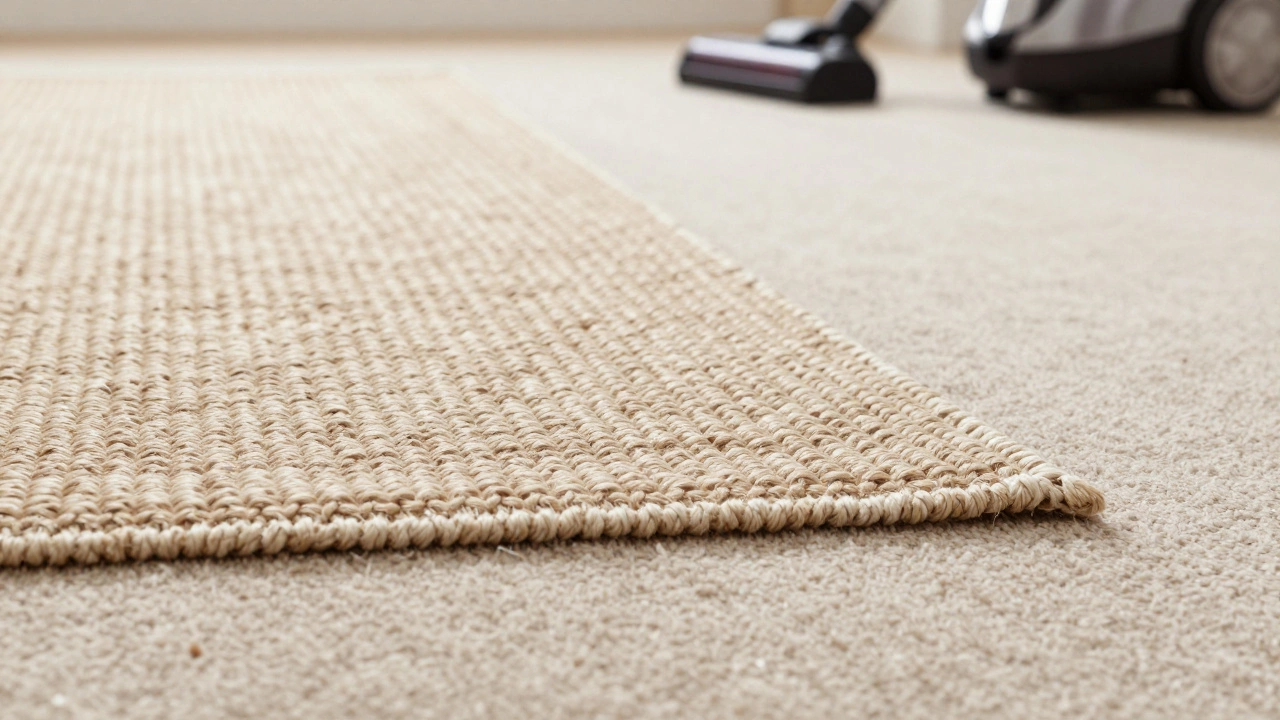
- Jute or Sisal Rugs are natural fiber rugs known for their durability and texture. These provide great contrast against soft synthetic carpets. They are rougher, which helps them grip the underlying carpet slightly better than smooth silk.
- Low-Pile Wool Rugs are wool rugs with a short, dense surface. Wool is naturally resilient and temperature-regulating. Choose a low pile to keep the profile thin.
Avoid high-shag rugs or those with long, loose fringes unless you plan to trim the fringe. Long fibers will get tangled in the carpet below, making cleaning a nightmare. When you vacuum, the suction pulls the bottom rug up into the cleaner, potentially clogging the machine.
The Secret Weapon: Rug Pads
If you skip this step, you are setting yourself up for failure. A Rug Pad is a cushioned layer placed between the rug and the floor. On hard floors, pads prevent slipping and extend rug life. On carpet, they serve a different purpose: separation and grip.
You cannot use standard rubber-backed mats meant for tile or wood. Rubber can stain certain carpets and doesn't breathe. Instead, look for a dual-sided carpet gripper or a felt-based pad. These materials allow air circulation while providing enough friction to keep the top rug from sliding.
Some experts recommend using double-sided carpet tape along the perimeter of the rug. This is a temporary solution that works well for lightweight rugs. For heavier pieces, a dedicated non-slip rug pad designed specifically for carpet-on-carpet applications is safer. It prevents the dreaded "bubble" effect where the rug wrinkles underfoot.
| Material | Breathability | Grip Level | Best Use Case |
|---|---|---|---|
| Cotton Flatweave | High | Medium | Living rooms, bedrooms |
| Jute/Sisal | Very High | High | High-traffic areas, entryways |
| Synthetic Shag | Low | Low | Bedrooms (low traffic only) |
| Wool Low-Pile | Medium | Medium | Families with kids/pets |
Design Rules for a Polished Look
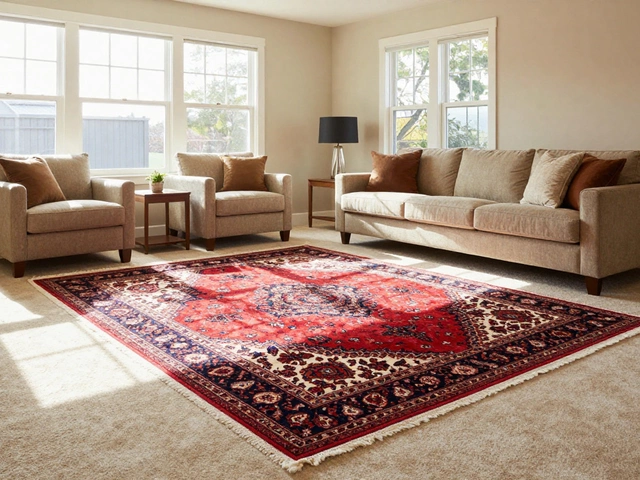
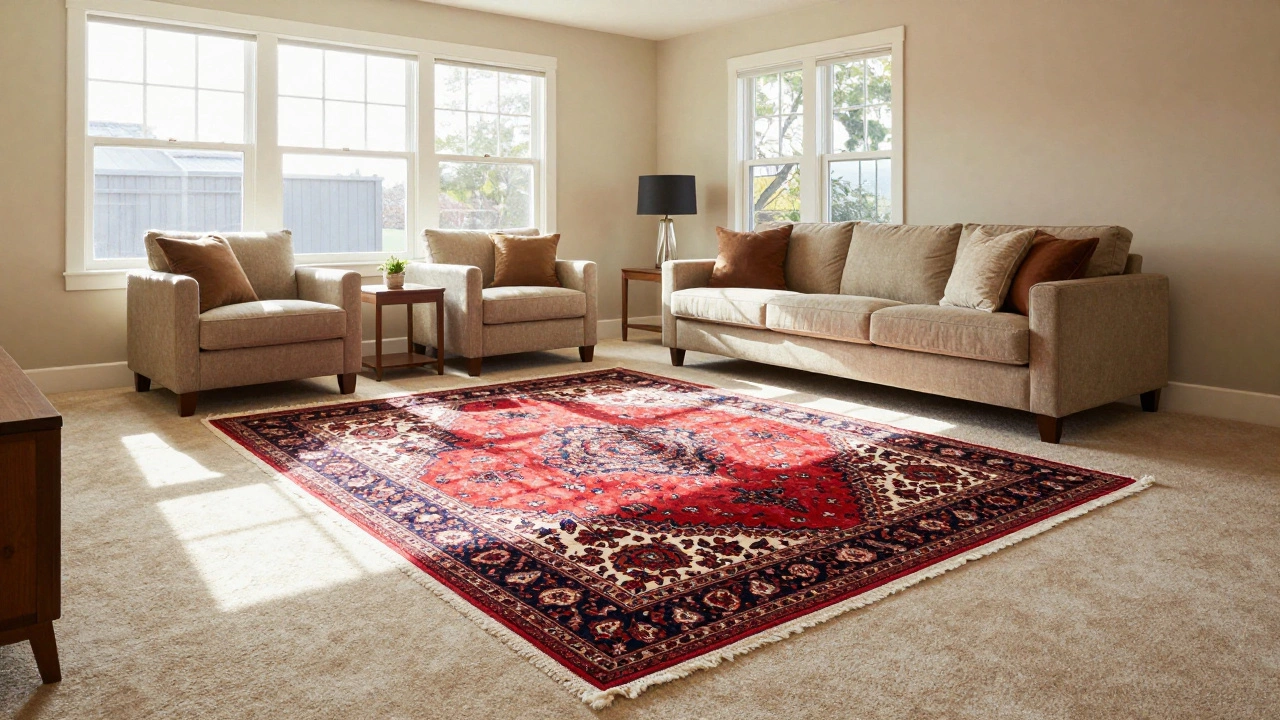
Putting a rug over carpet isn’t just about function; it needs to look intentional. Randomly throwing a small rug in the middle of a large carpeted room looks accidental. To avoid this, follow the "all legs" rule. Ideally, all furniture legs in the seating area should sit on the area rug. This anchors the group and makes the rug feel like a foundation rather than an afterthought.
If your rug is too small for all legs, ensure at least the front legs of sofas and chairs are on it. Never place a rug so small that it floats in the center with nothing touching it. That creates a visual disconnect.
Contrast is your friend. If your wall-to-wall carpet is neutral beige or gray, choose a rug with color or pattern. If the base carpet is dark, go lighter. The eye needs to distinguish between the two layers. Monochromatic layering can look sophisticated if the textures differ wildly-for example, a nubby jute over a smooth nylon carpet-but it requires precision.
Maintenance and Cleaning Tips
Cleaning a layered rug setup requires a bit more effort. Standard upright vacuums often struggle because the brush roll can get caught between the two layers. Switch to a hard-floor attachment or a handheld vacuum for regular maintenance. This allows you to clean the surface of the top rug without pulling it up.
Every few months, lift the corners of the area rug to vacuum the carpet underneath. Dust and pet hair accumulate in the gap between the layers, leading to odors if left unchecked. Shake out the area rug outdoors regularly to remove deep-seated dirt. If you have pets, consider using an enzyme cleaner on the area rug immediately after accidents to prevent smells from seeping into the permanent carpet below.
When to Remove the Rug
There are times when removing the area rug is necessary. If you notice the underlying carpet developing permanent indentations from the rug's weight, it’s time to rotate or remove the rug. Heavy antique rugs can crush delicate wall-to-wall fibers over time.
Also, monitor for signs of wear. If the backing of the area rug starts to disintegrate, it can leave residue on the carpet. Replace worn-out rugs promptly. Finally, if you plan to sell your home, consider removing the area rug during staging. Buyers prefer to see the full extent of the flooring. You can always put it back once the house is sold.
Can I put a rug over carpet without a pad?
You technically can, but it is not recommended. Without a pad, the rug will slide easily, creating a tripping hazard. Additionally, the friction between the two fabrics can cause both to wear out faster. A thin, breathable pad provides necessary grip and protection.
Will putting a rug over carpet damage my walls-to-wall flooring?
Generally, no. However, if the area rug has a latex or rubber backing, it may discolor certain synthetic carpets over time due to chemical reactions. Always use a natural fiber pad or a felt-based separator to prevent staining and allow airflow.
What is the best type of rug to put on top of carpet?
Flatweave cotton, jute, sisal, and low-pile wool are the best options. These materials are relatively thin, breathable, and provide good texture contrast. Avoid high-shag or thick plush rugs as they create excessive height and trap dust.
How do I stop my rug from sliding on carpet?
Use a non-slip rug pad designed for carpet-on-carpet use. Alternatively, apply double-sided carpet tape around the edges of the rug. Ensure the rug fits snugly in the room; if it's too small, it will bunch up more easily.
Is it okay to put a rug over carpet in a bedroom?
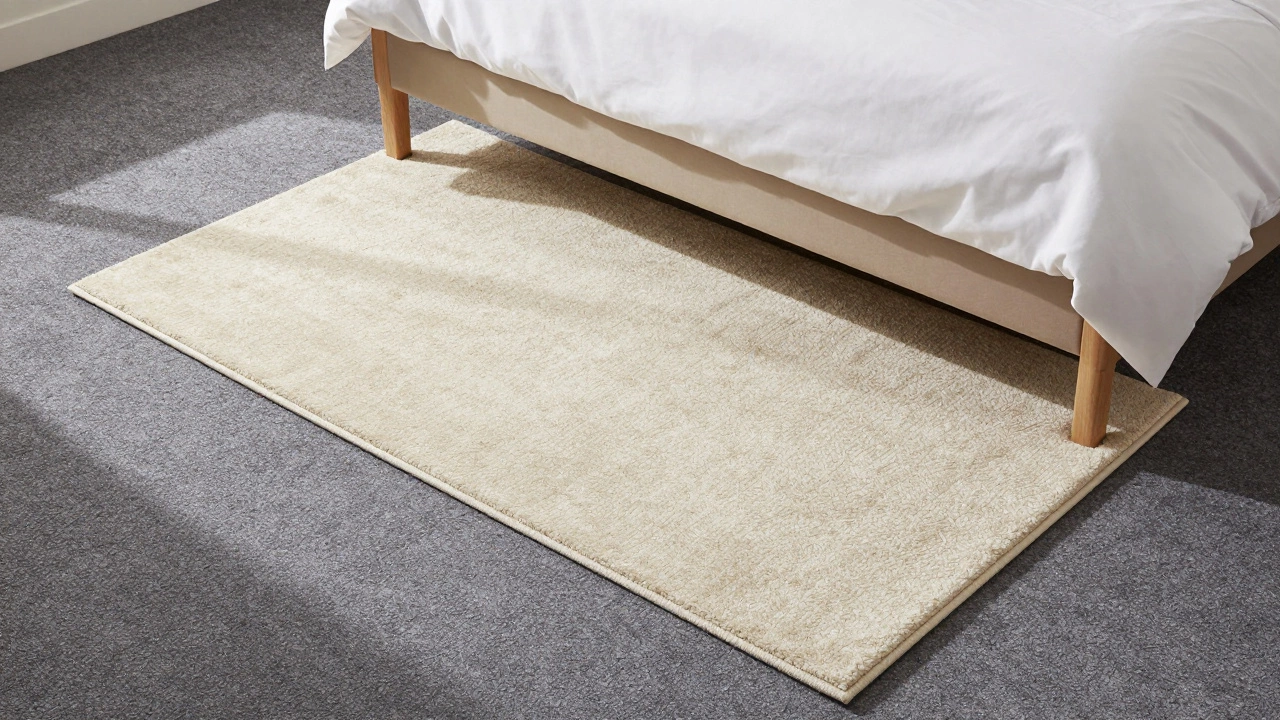
Yes, it is very common in bedrooms. It adds warmth and softness underfoot, which is nice when getting out of bed. Just ensure the rug is large enough to cover the area beside the bed where you step, and use a secure pad to prevent slipping in the dark.