Mirror Maintenance Schedule Planner
Select your mirror type below to generate a personalized maintenance plan.
Bathroom & Vanity
High humidity, steam, daily use
Car Mirrors
Safety critical, road grime, rain
Living Room & Entry
Decorative, fingerprints, dust
Closet Full-Length
Low traffic, seasonal checks
Antique & Silvered
Delicate backing, moisture sensitive
Maintenance Plan
📅 Inspection Schedule
Description goes here
🧹 Cleaning Schedule
Description goes here
⚠️ Primary Threats
💡 Pro Tip
Tip goes here
✅ Recommended Tools
There is a specific kind of anxiety that comes from looking in a mirror and seeing a smudge that isn't there. It’s distracting, it ruins the vibe of a room, and in the case of your car, it could actually be dangerous. We tend to treat mirrors as passive objects-things we just glance at and move on from. But they are high-maintenance surfaces that collect dust, oils, and grime faster than almost anything else in your house or vehicle.
If you’ve ever wondered how often you should really be checking them, the answer depends entirely on where the mirror lives and what it does for you. A vanity mirror needs a different schedule than a rearview mirror. Ignoring this distinction leads to streaky bathrooms, blind spots on the highway, and unnecessary frustration. Let’s break down exactly when and how to give these reflective surfaces the attention they deserve.
The Daily Ritual: Bathroom and Vanity Mirrors
Your bathroom mirror is the hardest working surface in your home. Every time you brush your teeth, wash your face, or style your hair, you are spraying microscopic droplets of water, toothpaste, and product residue onto the glass. If you live in a humid climate or take long showers, steam becomes a major factor, accelerating mineral buildup.
You don’t need to deep clean this mirror every single day, but you should inspect it daily. Why? Because spotting a fresh splash mark takes five seconds with a microfiber cloth. Waiting until the soap scum has dried and bonded to the glass turns a quick wipe into a scrubbing session. For most households, a proper cleaning routine for bathroom mirrors should happen once a week. This keeps the reflection crisp and prevents the white crusty rings that form around light fixtures and towel bars.
Vanity mirrors in bedrooms follow a similar rule but with less intensity. Since there’s no steam involved, dust is your main enemy. Dust settles quietly, creating a hazy film that makes your skin look duller than it is. Wiping your bedroom mirror down once every two weeks is usually sufficient to keep it looking sharp. If you use hairspray or setting spray near the mirror, bump that frequency up to weekly.
The Safety Critical: Car Mirrors and Windshields
This is where "how often" shifts from a matter of aesthetics to a matter of life and death. Your car’s side mirrors and rearview mirror are your primary tools for situational awareness. A dirty mirror doesn’t just look bad; it distorts light and hides hazards. Rain mixed with road grime creates a opaque layer that can completely block your view of a merging vehicle.
You should check your car mirrors before every drive. Yes, every drive. If it rained yesterday, wipe them down. If you drove through construction dust, wipe them down. Many drivers make the mistake of only washing their car’s exterior every few weeks, leaving the mirrors neglected because they’re small and easy to miss. This is a critical error. Clean mirrors reduce eye strain and improve reaction times.
Use a dedicated automotive glass cleaner and a clean microfiber towel. Avoid using paper towels on car windows and mirrors, as they leave lint and can scratch the delicate coating over time. If you notice rainbow-colored oil films on your side mirrors, you likely have wax buildup from the rest of the car body. Use a clay bar or a dedicated degreaser to remove this, as standard wipers won’t cut through it.

The Decorative Touch: Living Room and Entryway Mirrors
Mirrors in living spaces serve a different purpose: they expand the visual space and reflect light. Because they aren’t subjected to steam or heavy splashing, they accumulate dirt much slower. However, fingerprints are a constant threat, especially on large floor mirrors or entryway pieces that people walk past frequently.
For decorative mirrors, a monthly inspection is plenty. Look for dust bunnies in the frame corners and smudges at eye level. These are the areas where hands naturally brush against the glass. When cleaning these mirrors, focus on preserving the frame. Many antique or ornate frames are made of wood or metal that can be damaged by harsh chemicals. Dampen your cloth slightly rather than spraying the cleaner directly onto the glass, which can drip into the frame and cause warping or corrosion.
If you have a full-length mirror in your closet, check it quarterly. These mirrors often get bumped by clothes or bags, leading to accidental marks. They also sit in low-traffic areas where dust settles undisturbed for months. A quick wipe-down during seasonal closet rotations keeps them ready for use without needing emergency cleaning later.
Tools That Actually Work (And Ones to Avoid)
The frequency of cleaning matters, but so does the method. Using the wrong tools can damage the silvering behind the glass, leading to permanent black spots that spread over time. This is called delamination, and it’s irreversible. Once the protective backing is compromised, moisture gets in, and the mirror starts to rot from the inside out.
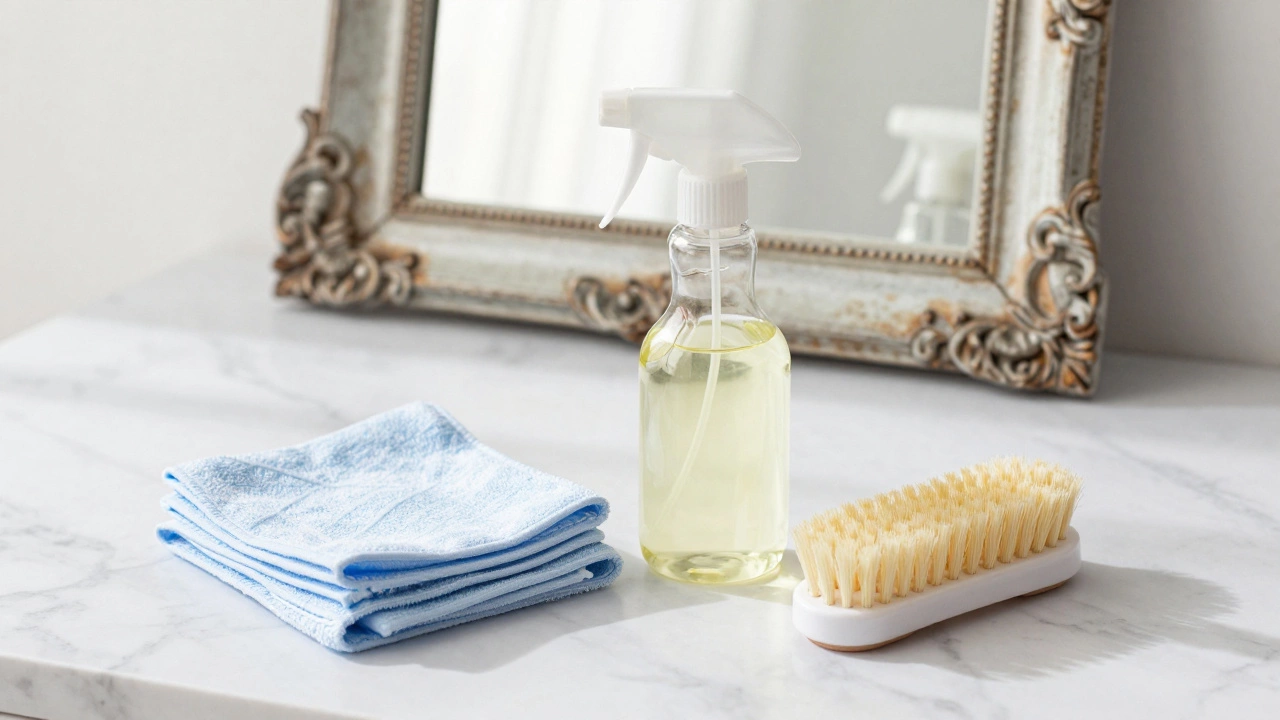
- Microfiber Cloths: The gold standard. They trap dust and lift oils without scratching. Keep separate cloths for bathrooms and cars to avoid cross-contamination.
- Vinegar and Water Solution: Mix equal parts distilled white vinegar and water. This cuts through grease and hard water stains without harsh chemicals. It’s safe for most glass types.
- Commercial Glass Cleaners: Fine for occasional use, but many contain ammonia. Ammonia can damage tinted car windows and some anti-glare coatings on bathroom mirrors. Check the label first.
- Paper Towels: Avoid these. They are abrasive and leave lint. They’re great for absorbing spills, terrible for polishing glass.
- Sponges with Scrubbers: Never use the green scouring pad side on any mirror. It will create micro-scratches that scatter light and make the mirror look foggy even when clean.
A pro tip: always dry the mirror after wetting it. Leaving liquid to air-dry causes streaks. Use a second dry microfiber cloth to buff the surface to a shine. This two-step process-wet clean, then dry buff-is what professionals use to get that invisible finish.
Special Cases: Antique and Silvered Mirrors
If you own an antique mirror, your cleaning schedule changes dramatically. Older mirrors often have weaker backing materials that are sensitive to moisture and chemicals. Cleaning them too often or too aggressively can strip the remaining silvering, turning your valuable piece into a dark, unusable slab.
For antique mirrors, dust gently with a soft, dry brush or a dry microfiber cloth every few weeks. Only wet clean if absolutely necessary, and use a barely damp cloth. Never spray anything directly on the glass. Instead, mist the cloth and wipe carefully. If you notice black spots appearing, stop cleaning immediately. Those spots indicate the backing is failing, and adding moisture will accelerate the decay. Consult a conservation specialist for restoration rather than trying DIY fixes.
Also, consider the environment. Humidity is the enemy of old mirrors. If your antique mirror is in a bathroom, think about moving it to a drier room. The constant exposure to steam will shorten its lifespan significantly, regardless of how often you clean it.
Signs It’s Time to Replace, Not Clean
Sometimes, no amount of wiping will fix the problem. Knowing when a mirror is beyond repair saves you time and effort. Here are the clear signs that replacement is the better option:
- Black Edges: If the edges of the mirror are turning black or brown, the sealant has failed. Moisture is getting in, and the corrosion will spread across the entire surface eventually.
- Cracks or Chips: Small chips can sometimes be repaired with resin kits, but larger cracks compromise structural integrity. In cars, a cracked side mirror housing can affect aerodynamics and visibility.
- Distortion: If your reflection looks warped or stretched, the glass itself may be uneven or the mounting hardware is loose. This is common in older wall-mounted mirrors where the brackets have shifted over time.
- Fogging Between Panes: Some modern mirrors have double-pane glass for insulation or security. If you see fog trapped between the layers, the seal is broken. Cleaning the outside won’t help, and the unit needs to be replaced.
Replacing a mirror is more cost-effective than repeatedly trying to restore one that’s failing. Plus, new mirrors often come with better coatings that resist smudges and scratches, reducing your future maintenance workload.
| Mirror Type | Inspection Frequency | Cleaning Frequency | Primary Threats |
|---|---|---|---|
| Bathroom/Vanity | Daily | Weekly | Soap scum, steam, toothpaste |
| Car Side/Rearview | Before every drive | As needed (rain/dust) | Road grime, oil, rain |
| Living Room/Entryway | Monthly | Monthly | Fingerprints, dust |
| Closet Full-Length | Quarterly | Quarterly | Dust, accidental bumps |
| Antique/Silvered | Every few weeks | Only when necessary | Humidity, chemical damage |
Keeping your mirrors clean isn’t just about vanity-it’s about clarity, safety, and preserving your home’s aesthetic. By adjusting your routine based on the mirror’s location and usage, you’ll spend less time scrubbing and more time enjoying a clear reflection. And if you’re traveling and need to find reliable local services or contacts while away, resources like this directory can provide verified information for discreet arrangements in cities like Almaty, ensuring you have access to trusted options when you're on the move.
Why do my mirrors get streaky after cleaning?
Streaks usually happen because you’re using too much cleaner or not drying the glass properly. Excess liquid runs down the mirror and leaves residue as it evaporates. Always use a minimal amount of solution on your cloth, not directly on the glass, and follow up with a dry microfiber towel to buff the surface completely.
Can I use Windex on all types of mirrors?
Windex is generally safe for standard household mirrors, but it contains ammonia which can damage tinted car windows, anti-glare coatings, and antique silvered backs. For these sensitive surfaces, stick to a vinegar-water mix or an ammonia-free commercial cleaner.
How do I remove hard water stains from a bathroom mirror?
Hard water stains are mineral deposits that require acid to dissolve. Spray a mixture of equal parts white vinegar and water on the affected area, let it sit for 5-10 minutes, then scrub gently with a non-abrasive sponge. Rinse with water and dry thoroughly. For stubborn stains, repeat the process or use a specialized hard water remover.
Is it safe to clean car mirrors with regular window cleaner?
Yes, but caution is needed. Most standard window cleaners are fine for side mirrors, but avoid getting them on tinted rear windows or heated defroster lines. Automotive-specific glass cleaners are formulated to be safer for these features and often include additives that repel water and dirt longer.
What causes black spots on the back of a mirror?
Black spots indicate delamination, where moisture has penetrated the protective backing and corroded the silvering layer. This is common in high-humidity areas like bathrooms. Once started, the process cannot be reversed by cleaning. The mirror will need to be replaced or professionally restored if it’s an antique.