Curtain & Sofa Color Harmony Tool
Live Preview
Designer's Recommendation:
Select your sofa style and colors to see personalized recommendations based on professional interior design principles.
Walk into most modern living rooms, and you’ll see the same safe choice: beige curtains hanging next to a beige sofa. It’s clean, it’s tidy, and frankly, it’s a bit boring. For years, interior design advice screamed that everything needed to coordinate perfectly. If your couch was grey, your drapes had to be grey. But here in Auckland, where we blend indoor comfort with outdoor views, rigid matching feels outdated. So, should your curtains match your sofa? The short answer is no. They don’t have to. In fact, they probably shouldn't.
Matching doesn't mean identical. It means creating a visual conversation between your window treatments and your seating. When you get this right, your room feels curated, expensive, and intentionally designed. When you get it wrong, it looks like you bought a furniture set from a catalog and forgot to open the box. Let’s break down how to style these two major elements without falling into the trap of monotony.
The Problem with Exact Matching
Why do we feel compelled to match? Because it’s easy. You buy a fabric swatch for your sofa, take it to the curtain store, and ask for the exact same bolt. Done. But visually, this creates a "block" effect. Your eye stops at the sofa, hits the wall, and then sees the same color again at the window. There is no journey for your gaze to take. The room loses depth.
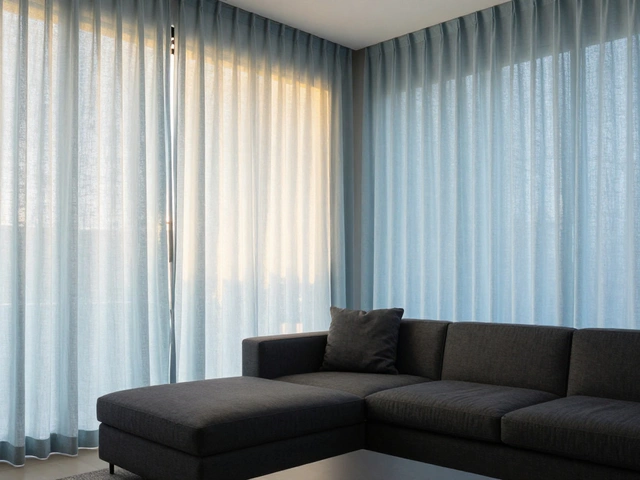
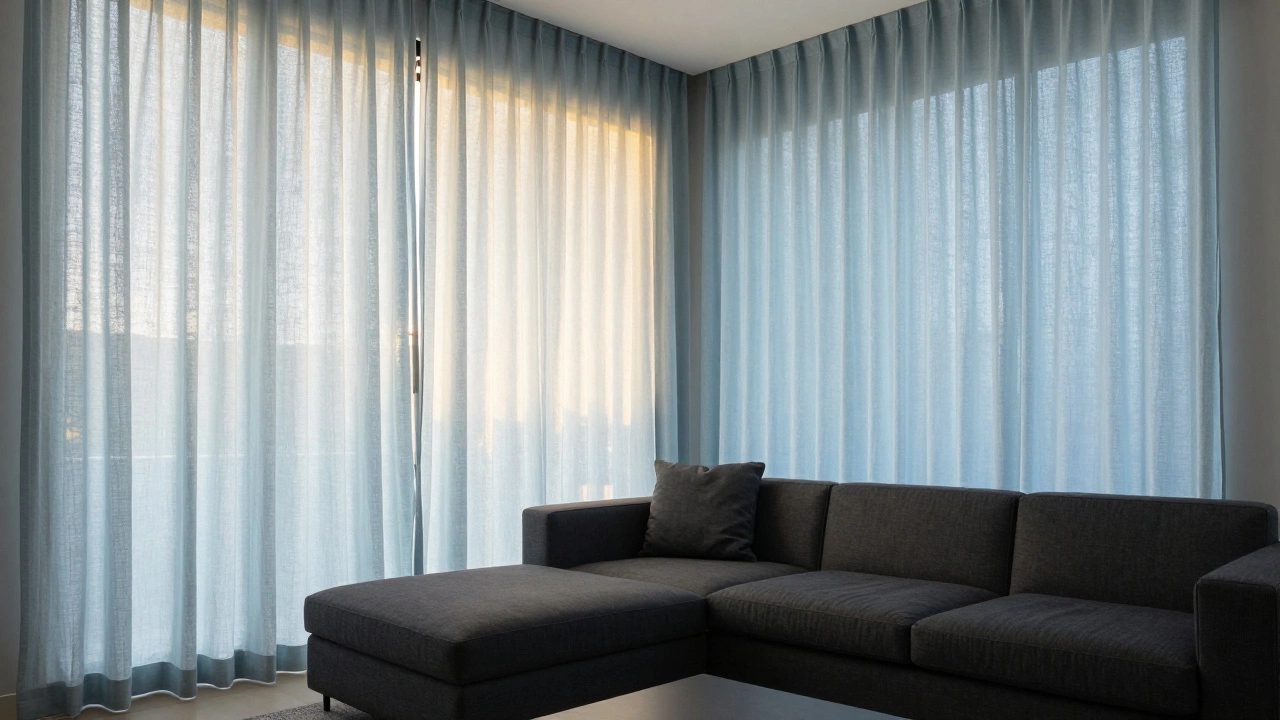
Consider a large L-shaped sectional in a deep charcoal fabric. If you hang floor-to-ceiling charcoal curtains, the entire side of your room disappears into one dark mass. It can make the space feel smaller and heavier than it is. Designers avoid this because it kills the architectural interest of the room. Instead of blending into the background, your window treatments should frame the view or highlight the light, while the sofa anchors the seating area.
Is it bad to have curtains that are the exact same color as my sofa?
It isn't "bad," but it can be visually flat. Exact matching removes contrast, which makes a room look less dynamic. Unless you are going for a very specific minimalist monochrome look, adding texture or a slight shade difference usually yields a more inviting result.
Rule #1: Coordinate by Tone, Not Just Hue
If you love the idea of harmony, stick to coordinating tones. This is where the magic happens. You keep the same color family-let’s say blue-but you play with value (lightness vs. darkness) and saturation (intensity).
Imagine you have a vibrant navy blue velvet sofa. It’s bold and takes up a lot of visual weight. If you pair it with pale sky-blue linen curtains, you create a beautiful gradient. The light curtains draw the eye upward toward the ceiling, making the room feel taller, while the dark sofa grounds the space. This technique, often called tonal layering, adds sophistication without introducing a clashing third color.
Conversely, if your sofa is a soft, dusty pastel pink, try pairing it with a deeper rose or mauve curtain. The darker fabric frames the window dramatically, preventing the light sofa from looking washed out against bright daylight. The key is ensuring there is enough contrast so the two pieces don’t merge into one indistinct blob.
Rule #2: Texture is Your Best Friend
In New Zealand homes, natural light is abundant, especially in summer. This means texture becomes just as important as color. A smooth leather sofa reflects light differently than a nubby wool throw. Your curtains should respond to this.
If your sofa is sleek and modern-think Italian leather or tight-weave microfiber-choose curtains with heavy texture. Linen, cotton blends, or even sheer voiles add softness and movement. The roughness of the linen contrasts with the smoothness of the leather, creating tactile interest. On the other hand, if your sofa is plush, chunky knit, or heavily tufted velvet, go for smoother curtain fabrics like silk blends or high-thread-count cottons. This balance prevents the room from feeling too "busy" or too "soft."
Linen Curtains are a versatile fabric choice that offers a relaxed, organic aesthetic perfect for balancing structured furniture. They wrinkle naturally, which adds character rather than detracting from it, making them ideal for casual living spaces.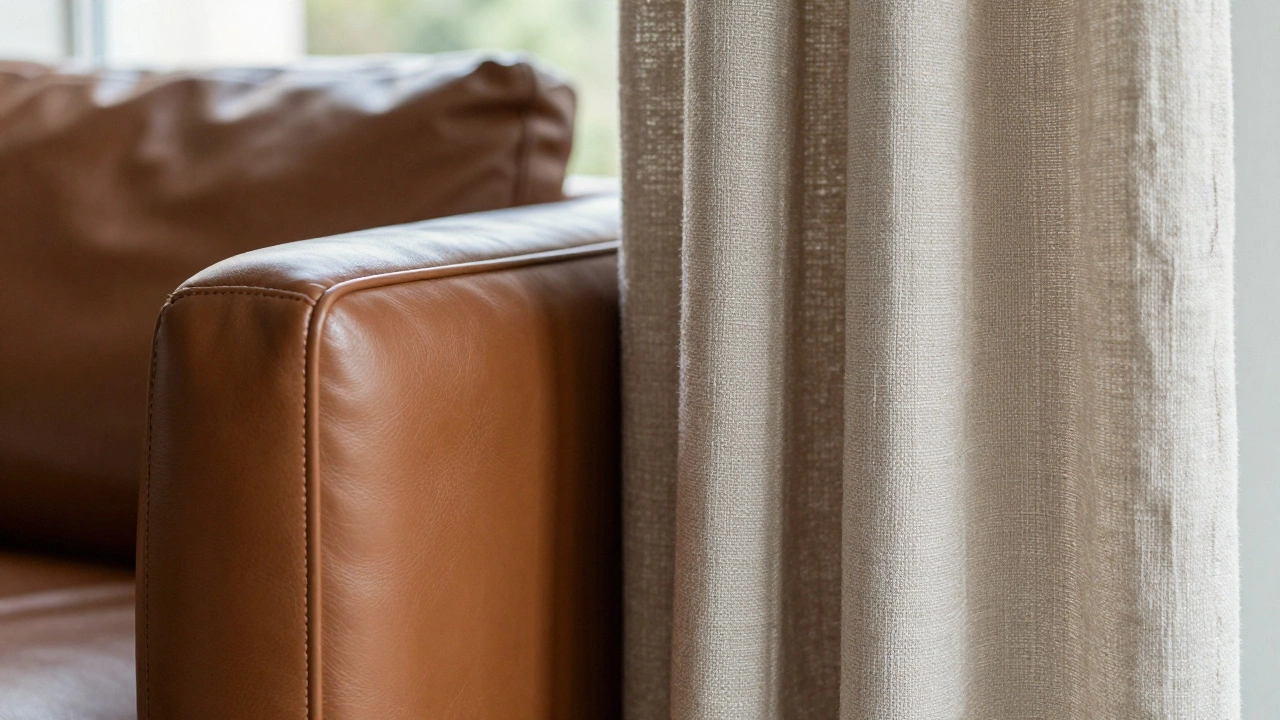
Rule #3: Pull Colors from the Room, Not Just the Couch
Your sofa is a big piece, but it’s not the only thing in the room. Look at your rug, your artwork, or even the cushions on the sofa itself. Often, the best curtain color comes from a secondary element in the room.
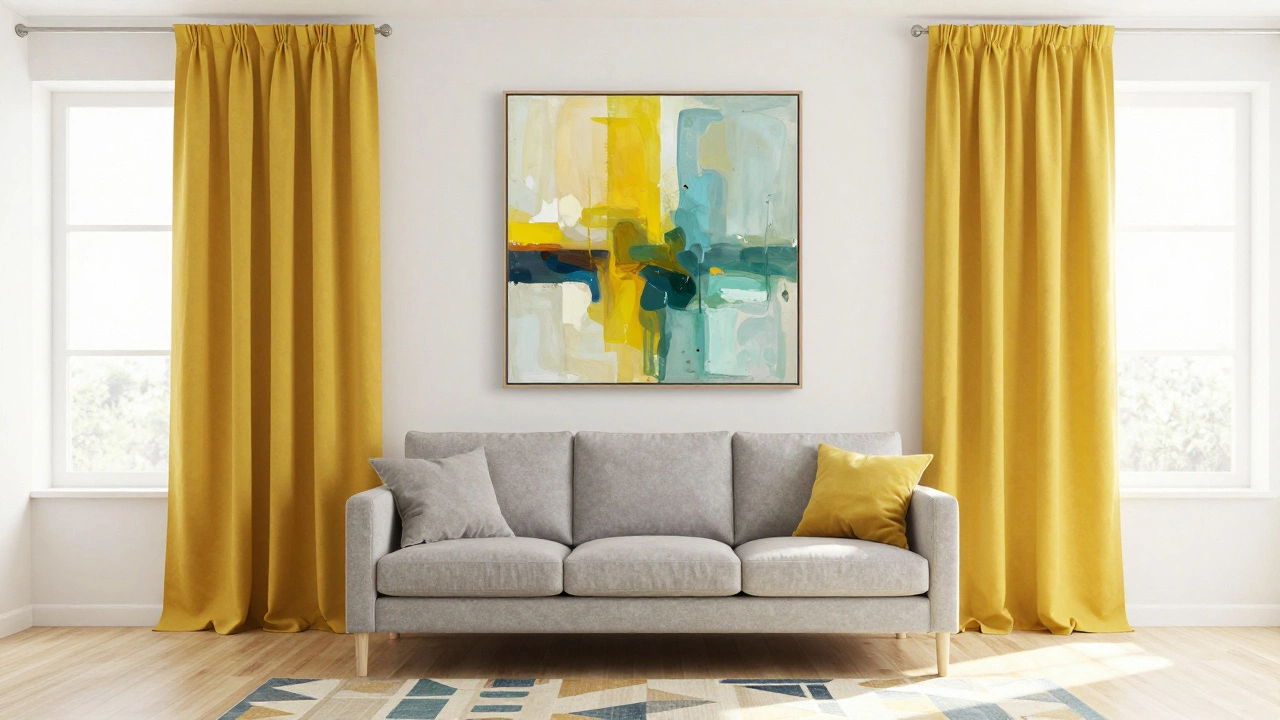
Let’s say you have a neutral grey sofa. Boring, right? Not if you have a colorful abstract painting above it with splashes of mustard yellow and teal. Or perhaps you have a patterned rug with geometric shapes in those same colors. By choosing curtains in a solid mustard or teal, you tie the whole room together. The sofa acts as a neutral canvas, allowing the curtains and the art/rug to sing. This approach is far more engaging than matching the grey sofa with grey curtains.
| Sofa Style/Color | Curtain Strategy | Visual Effect |
|---|---|---|
| Neutral (Beige/Grey) | Bold Accent Color | Adds personality and focal points |
| Bold/Dark (Navy/Black) | Light/Tonal (Cream/Light Blue) | Brightens the room and opens up space |
| Patterned (Floral/Geometric) | Solid Neutral | Calms the visual noise |
| Textured (Velvet/Wool) | Smooth Fabric (Silk/Cotton) | Creates tactile contrast |
Handling Patterns Without Chaos
What if your sofa has a pattern? A floral print, a houndstooth, or a striped weave? The golden rule here is: if the sofa is loud, the curtains should be quiet. Never match a patterned sofa with patterned curtains unless you are an expert designer with a very large room. It will look chaotic and overwhelming.
Instead, pick one dominant color from the sofa’s pattern and use it as a solid color for your curtains. If your sofa is green with white stripes, choose solid sage green curtains. This creates cohesion without competition. The eye rests on the simplicity of the curtains before exploring the complexity of the sofa. This balance is crucial for maintaining a calm atmosphere in your living space.
The Role of Natural Light and Window Size
Don’t forget the architecture of your home. In Auckland, many homes feature large windows to capture the ocean breeze and sunlight. If you have massive floor-to-ceiling windows, heavy, dark curtains that match a dark sofa can block out the light and make the room feel cave-like during the day.
Consider using layered window treatments. Sheer white or off-white curtains can be hung behind heavier decorative drapes. During the day, the sheers let light filter through, keeping the connection to the outdoors alive, regardless of what color your sofa is. At night, you draw the heavier drapes for privacy and warmth. This setup allows you to have a bold curtain color that complements the sofa without sacrificing daytime brightness.
Practical Tips for Buying and Hanging
When you’re ready to shop, bring samples. Take a cushion from your sofa or a photo of the room to the fabric store. Hold the curtain swatches next to the sofa sample in natural light, not under the harsh fluorescent lights of the showroom. Colors shift dramatically depending on the light source.
- Measure twice: Ensure your curtains are wide enough. A common mistake is buying curtains that are too narrow when closed. They should overlap in the middle by at least 4-6 inches to prevent light gaps.
- Hang high: Install the curtain rod close to the ceiling, not just above the window frame. This draws the eye up and makes the room feel grander, complementing the substantial presence of the sofa.
- Test the fabric: Sit on your sofa and look at the curtain fabric from that angle. Does it clash? Does it harmonize? Your perspective from the couch is the most important one.
Final Thoughts on Breaking the Rules
Design rules exist to help beginners avoid disasters, but they aren’t laws. If you absolutely love the idea of matching your curtains to your sofa, go for it. Just ensure you introduce texture or a different material to keep it interesting. Maybe a linen curtain next to a linen sofa works beautifully because of the weave differences.
Ultimately, your living room should reflect your taste, not a textbook. Whether you choose contrasting colors, tonal layers, or complementary patterns, the goal is a space that feels cohesive and comfortable. Step away from the "matchy-matchy" mindset, embrace contrast and texture, and watch your living room transform from ordinary to extraordinary.
Can I use two different colors for curtains and sofas?
Yes, absolutely. Using different colors is often recommended to create depth. Choose colors that share a similar undertone (warm or cool) to ensure they work well together, even if they are distinct hues.
What if my sofa is multi-colored?
Pick the most dominant color or the most calming color from the sofa's palette for your curtains. Avoid picking a minor accent color unless you want the curtains to be a bold statement piece.
Do white curtains go with any sofa color?
White or off-white curtains are a universal neutral. They work with almost any sofa color, providing a crisp, clean backdrop that lets the sofa stand out. They are particularly good for small rooms or rooms with limited natural light.
How do I match curtains to a sofa in a small room?
In small rooms, lighter colored curtains help expand the space visually. If your sofa is dark, keep the curtains light to prevent the room from feeling cramped. Hang them high and wide to maximize the sense of height and width.
Is it okay to mix patterns on curtains and sofas?
Mixing patterns is advanced but possible. If both have patterns, ensure they are of different scales (e.g., a large floral sofa with a small striped curtain) and share at least one common color to tie them together.