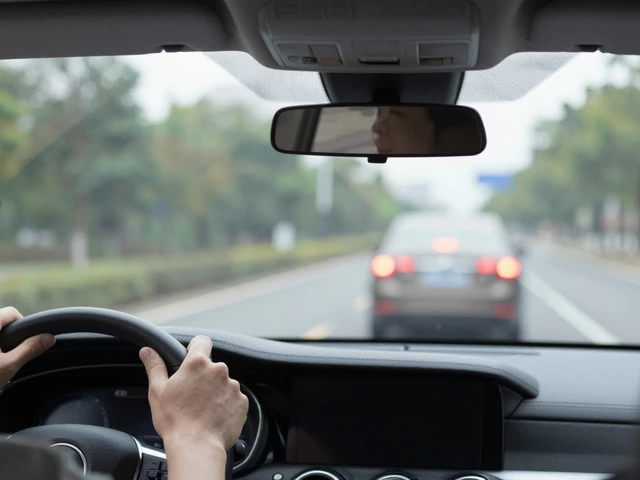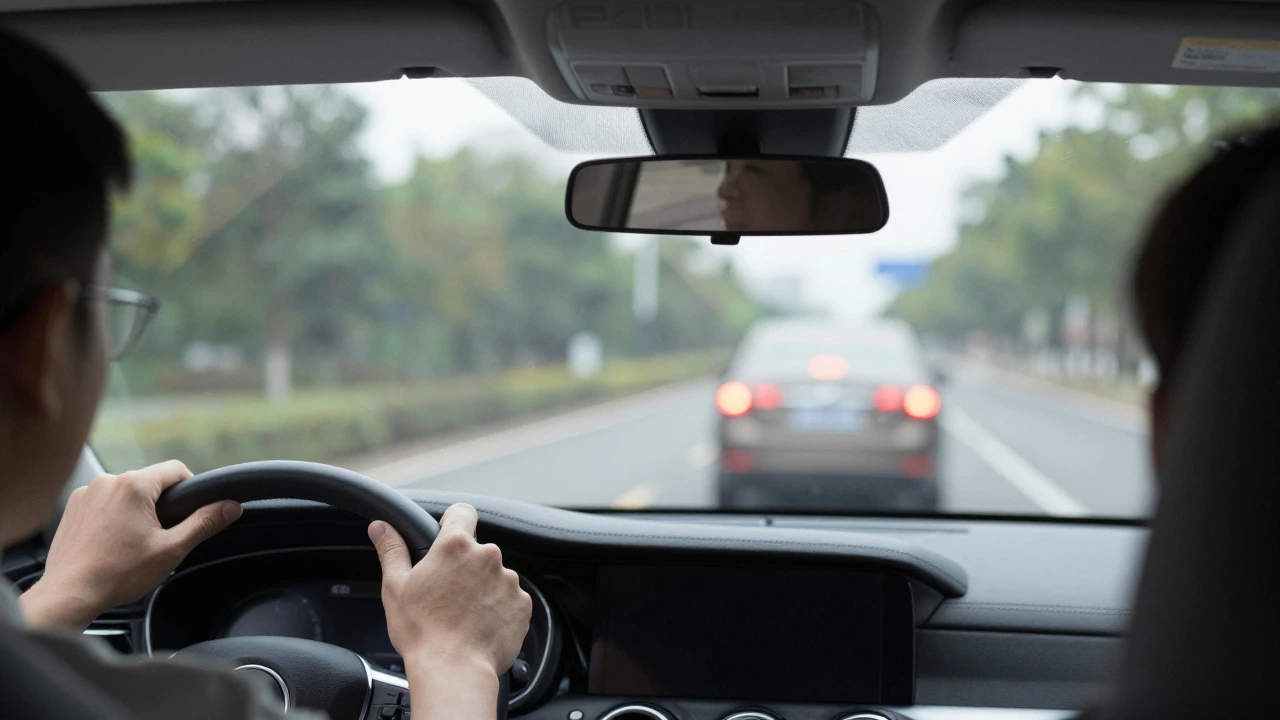
Defensive Driving Simulator: The Mirror Check
Instructions: You are approaching a stop light. A car is behind you. Choose your action to see if you can avoid being rear-ended.
Imagine this: you are cruising down the highway, music playing, mind wandering. A red light ahead forces you to brake. Instinctively, your foot hits the pedal. But wait-did you actually look around? Most drivers don't. They stare straight ahead until they stop. This tiny habit is a massive safety risk. Checking your mirrors before you stop isn't just a suggestion from the driver's ed manual; it is the single most effective way to prevent rear-end collisions and understand what is happening behind you.
We often think of mirrors as tools for changing lanes or merging. We glance at them when we need to move sideways. But when we need to stop, our eyes lock onto the car in front of us. We forget that the world behind us is moving fast, too. By looking in your mirrors *before* you apply the brakes, you gain critical information that could save your life-or at least your bumper.
The Physics of Surprise: Why Rear-End Collisions Happen
Rear-end collisions are one of the most common types of traffic accidents. In New Zealand alone, thousands of these incidents occur every year. Why? Because the driver behind has no idea you are stopping until it is too late. If you slam on your brakes without warning, the person behind you might be distracted, texting, or simply following too closely. They won't react in time.
When you check your mirrors early, you see if someone is tailgating you. If you see headlights looming large in your rearview mirror, you know they are close. This knowledge changes how you brake. Instead of slamming the pedal, you tap it gently. This triggers your brake lights earlier and gives the tailgater more time to react. It turns a potential crash into a smooth stop.
Think about it like walking down a crowded street. If you suddenly stop without looking back, someone running behind you might trip over your heels. If you glance back and see someone coming fast, you step aside or slow down gradually. Driving works the same way. Your mirrors are your eyes to the past tense of the road-the traffic that has already passed you but hasn't passed you yet.
Reading the Room: What Your Mirrors Tell You
Your mirrors provide three key pieces of data before you stop:
- Proximity: How close is the car behind you? Is it a safe distance away, or are they breathing down your neck?
- Speed: Is the car behind you maintaining speed, slowing down, or speeding up? If they are speeding up while you approach a stop, they are likely not paying attention.
- Intent: Are they preparing to change lanes? Do they have their indicator on? Knowing this helps you decide whether to let them pass or hold your lane.
For example, imagine you are approaching a busy intersection in Auckland during rush hour. Traffic is dense. You look in your side mirror and see a delivery van creeping up quickly. You also notice their brake lights aren't on yet. This tells you they haven't reacted to the traffic ahead. If you brake hard now, they will hit you. Instead, you ease off the accelerator, letting the gap widen slightly, then brake softly. The van driver sees your brake lights, reacts, and stops safely. Crisis averted.
The Blind Spot Trap: Don't Forget the Sides
Many drivers only check their rearview mirror. That’s a mistake. The rearview mirror shows what is directly behind you, but it misses the cars in your blind spots. These are the areas alongside your vehicle where mirrors can’t reach. When you stop, especially in urban environments with cyclists and motorbikes, these vehicles can slip into your blind spot and then try to squeeze past you on the right or left.
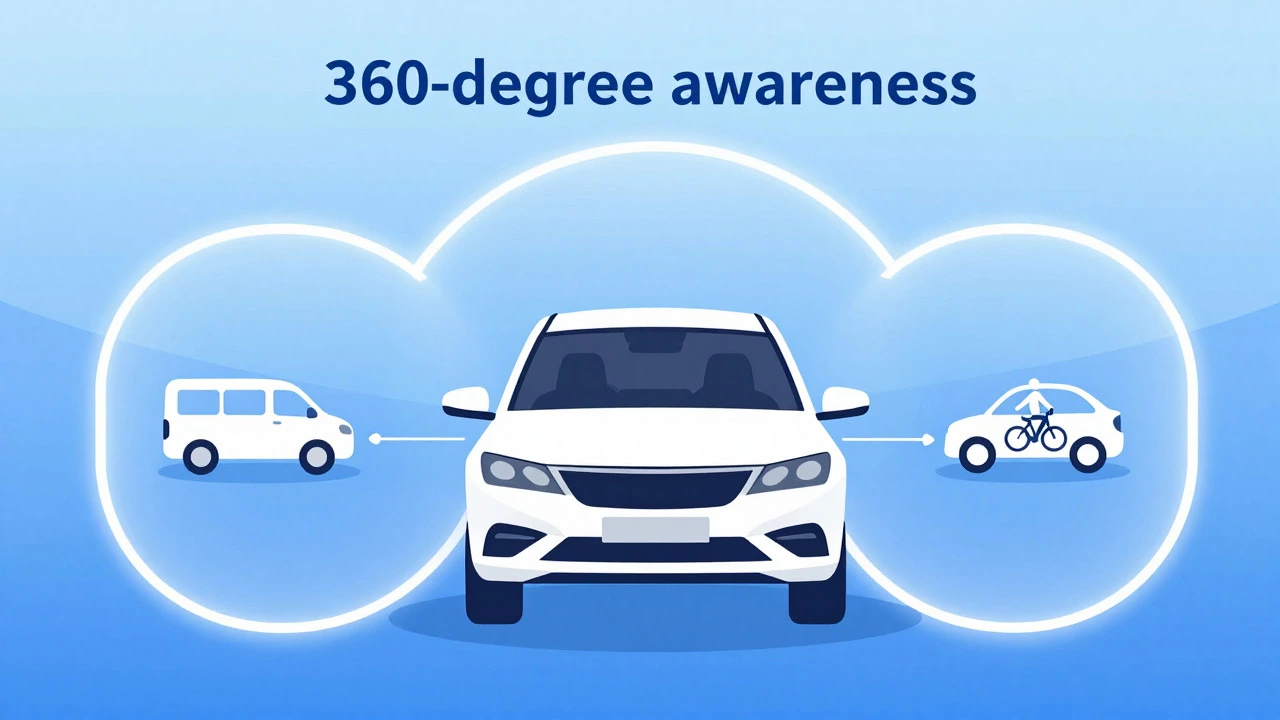
In New Zealand, we drive on the left. Cyclists often filter through traffic on the right side of cars. If you stop without checking your right-side mirror and doing a quick shoulder check, you might miss a cyclist who is overtaking you. When you come to a halt, they might be forced to brake hard or swerve, leading to a collision. Always sweep your gaze across all three mirrors: center, left, and right. This 360-degree awareness is what separates cautious drivers from careless ones.
How to Build the Habit: Practical Steps
Changing ingrained habits takes practice. Here is how to make mirror-checking automatic:
- The "Scan-Brake" Routine: Make a rule: never touch the brake pedal until your eyes have visited the mirrors. Start with low-speed situations, like stopping at a supermarket entrance. Look left, center, right, then brake.
- Use Auditory Cues: Some drivers use a verbal cue like "Mirrors, then stop." Saying it out loud reinforces the neural pathway. Over time, you won’t need to say it, but the action will remain.
- Practice in Safe Zones: Find an empty parking lot. Drive slowly, stop frequently, and consciously check your mirrors each time. Feel the difference in awareness. Notice how much more control you feel when you know what is behind you.
- Adjust Your Mirrors Correctly: Many people adjust their mirrors to see their own car. This is wrong. Adjust them so you barely see your own vehicle. This maximizes the view of the road behind you and reduces blind spots. If you can see your side panel clearly, you are missing too much of the adjacent lanes.
What If Someone Is Tailgating You?
Let’s say you check your mirror and see a car aggressively close behind. You’re worried they’ll hit you if you brake. What do you do? Panic braking makes it worse. Instead, follow these steps:
- Flash Your Brake Lights: Tap the brake pedal lightly once or twice. This flashes your brake lights, alerting the driver behind that you are slowing down. It’s a non-verbal signal that says, "Hey, I’m stopping!"
- Change Lanes if Possible: If there is space, move over and let them pass. Removing the threat is better than managing it.
- Pull Over Safely: If they keep pushing, pull over to the side of the road (if legal and safe) and let them go by. Don’t engage. Don’t argue. Just create space.
Remember, you cannot control other drivers. You can only control your own actions. Checking your mirrors gives you the information needed to make smart choices. It shifts you from being a passive participant in traffic to an active manager of your safety.
The Psychological Aspect: Reducing Road Rage
Have you ever been cut off or nearly rear-ended? It spikes your adrenaline. It makes you angry. But part of that anger comes from surprise. If you had seen the danger coming, you would have prepared mentally. Checking your mirrors reduces surprise. It keeps you calm. When you know what is happening behind you, you feel less vulnerable. This mental clarity helps you drive more smoothly and react more rationally.
Defensive driving isn’t about blaming others. It’s about assuming mistakes will happen-and preparing for them. Every time you check your mirrors before stopping, you are practicing defensive driving. You are saying, "I expect the unexpected." And in traffic, the unexpected happens constantly.
Common Mistakes to Avoid
Even experienced drivers fall into traps. Watch out for these:
- Gazing, Not Glancing: Don’t stare at your mirrors for seconds. Quick, sharp glances are enough. You want to gather data, not get hypnotized by the reflection.
- Ignoring Side Mirrors: As mentioned, the rearview mirror is limited. Always include side mirrors in your scan.
- Checking Too Late: If you check your mirrors after you’ve already started braking, you’ve lost valuable reaction time. Check *before* you commit to stopping.
- Assuming Everyone Else Is Paying Attention:
This is the biggest myth in driving. People text. People eat. People argue with passengers. Never assume the driver behind you is focused. Assume they are distracted until proven otherwise. Your mirror check is your insurance policy against their negligence.
Real-World Scenarios Where This Saves You
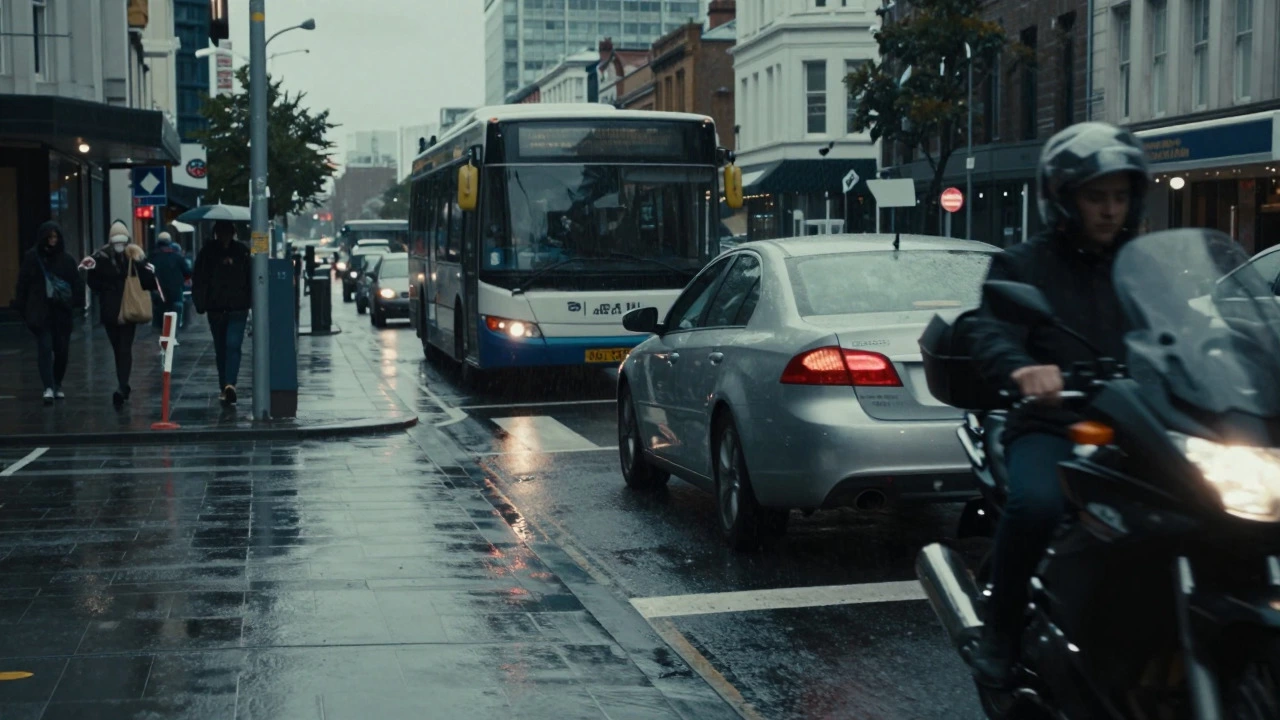
Consider a rainy day in Auckland. Visibility is poor. Roads are slippery. You approach a pedestrian crossing. A bus stops ahead. You look in your mirror and see a motorcycle filtering through traffic behind you. Without the mirror check, you might brake hard, causing the biker to slide out from under you. With the mirror check, you brake gently, allowing the biker to pass safely. Simple. Effective. Life-saving.
Or think about highway exits. You need to exit soon. Cars behind you are speeding. You check your mirrors, see a gap forming, and brake early. The cars behind adjust. No sudden stops. No chain-reaction crashes. Smooth flow. That’s the power of anticipation.
How far in advance should I check my mirrors before stopping?
You should check your mirrors at least 5-10 seconds before you intend to stop. At city speeds (50 km/h), this means starting your scan about 70-140 meters before the stop point. On highways, increase this to 10-15 seconds due to higher speeds and longer stopping distances.
What if my mirrors are dirty or foggy?
Clean your mirrors regularly, especially in wet weather. Use a microfiber cloth and glass cleaner. For fogging, consider anti-fog sprays or coatings. If visibility is compromised, reduce your speed and increase following distance to compensate for reduced awareness.
Do electric vehicles require different mirror-checking habits?
No, the physics of stopping remain the same. However, EVs accelerate faster and quieter, which may affect how other drivers perceive your presence. Still, checking mirrors before stopping is equally critical. Some newer EVs have camera-based mirror systems-ensure you understand how those work and calibrate them properly.
Is checking mirrors legally required in New Zealand?
While not explicitly codified as "check mirrors before stopping," the NZ Road User Rulebook requires drivers to ensure maneuvers are safe. Failing to check surroundings can lead to charges of careless driving if an accident occurs. Defensive driving practices like mirror checks help prove due diligence.
Can technology replace manual mirror checks?
Radar and cameras assist, but they don’t replace human judgment. Sensors can fail, lag, or misinterpret objects. Always verify sensor alerts with visual confirmation via mirrors. Technology enhances safety; it doesn’t eliminate the need for vigilance.