
Gray Couch Curtain Color Finder
Answer a few questions about your gray couch and living space to get personalized curtain color recommendations.
Hold a white piece of paper next to your couch. Does it look more...?
Your Perfect Curtain Colors
So you bought that sleek gray couch. It looked amazing in the showroom, but now it’s sitting in your living room, and suddenly you’re staring at a blank wall wondering, "What on earth do I hang here?". A gray sofa is the ultimate chameleon-it can be modern, cozy, industrial, or classic depending on what you pair it with. But if you pick the wrong curtains, the whole room can feel flat, cold, or just… unfinished.
The good news? You have more freedom than you think. Gray is a neutral powerhouse. It doesn’t scream for attention; it asks for balance. Whether you want a moody, dramatic vibe or an airy, bright sanctuary, the right curtain color can make or break the look. Let’s cut through the noise and figure out exactly which shades will make your gray couch pop.
Know Your Gray: Cool vs. Warm Undertones
Before you rush to buy anything, take a closer look at your couch. Not all grays are created equal. This is the step most people skip, and it’s the reason why some color combos clash while others sing.
Hold a pure white piece of paper next to your couch fabric. Does the gray look bluish, greenish, or silvery? That’s a cool-toned gray. These shades often have hints of blue or green and feel crisp and modern. If the gray looks brownish, beige-ish, or taupe-like, that’s a warm-toned gray. These have undertones of yellow, red, or orange and feel cozier and more traditional.
| Undertone Type | Visual Clues | Best Curtain Pairings |
|---|---|---|
| Cool-Toned | Looks blue, green, or silver against white | Navy, Charcoal, Bright White, Teal |
| Warm-Toned | Looks brown, beige, or taupe against white | Cream, Terracotta, Mustard, Sage Green |
If you get this wrong, your curtains might look muddy or dirty instead of intentional. Matching the undertone is rule number one for a cohesive look.
The Safe Bet: Monochromatic Magic
If you love the couch but aren’t sure about taking risks, go monochromatic. This means choosing curtains in a different shade of gray. It sounds boring until you see it done right. The key here is texture, not just color.
Pair a smooth, matte gray couch with sheer, light-filtering gray linen curtains. Or contrast a plush velvet gray sofa with structured, heavy wool-gray drapes. Because the fabrics catch the light differently, your eye sees depth and interest even though the color is technically the same. Add a few pops of metallic hardware-brass or gold curtain rods-and suddenly the room feels expensive and curated.
This approach works especially well in smaller rooms. Keeping the color palette tight makes the space feel larger and less cluttered. Just make sure there’s enough contrast between the couch and the curtains so they don’t blend into a single gray blob.
High Contrast: Black, White, and Navy
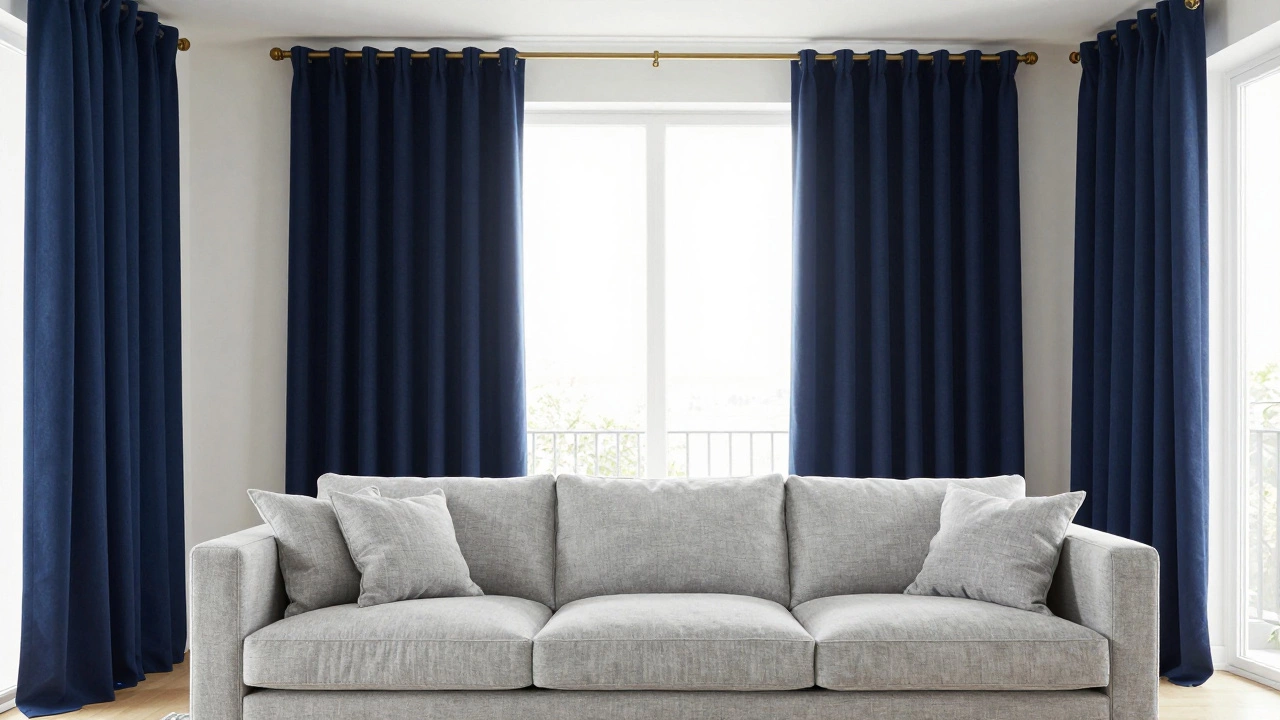
Want drama? Go high contrast. A light gray couch paired with stark black or deep navy curtains creates a sharp, graphic look that’s very popular in contemporary interiors. Black isn’t as harsh as you might think-it adds sophistication and frames the window like a picture frame.
White curtains are another classic choice, but skip the clinical hospital white. Opt for off-white, ivory, or cream. These softer whites add warmth without overwhelming the space. They reflect natural light beautifully, making the room feel airier. If your couch is dark charcoal, white curtains will brighten the entire corner instantly.
Navy blue is arguably the best friend of gray. Blue and gray share cool undertones, so they naturally harmonize. Navy provides enough darkness to ground the room without feeling heavy. Try textured navy linen or a subtle geometric pattern in navy and white for added visual interest.
Adding Warmth: Earth Tones and Naturals
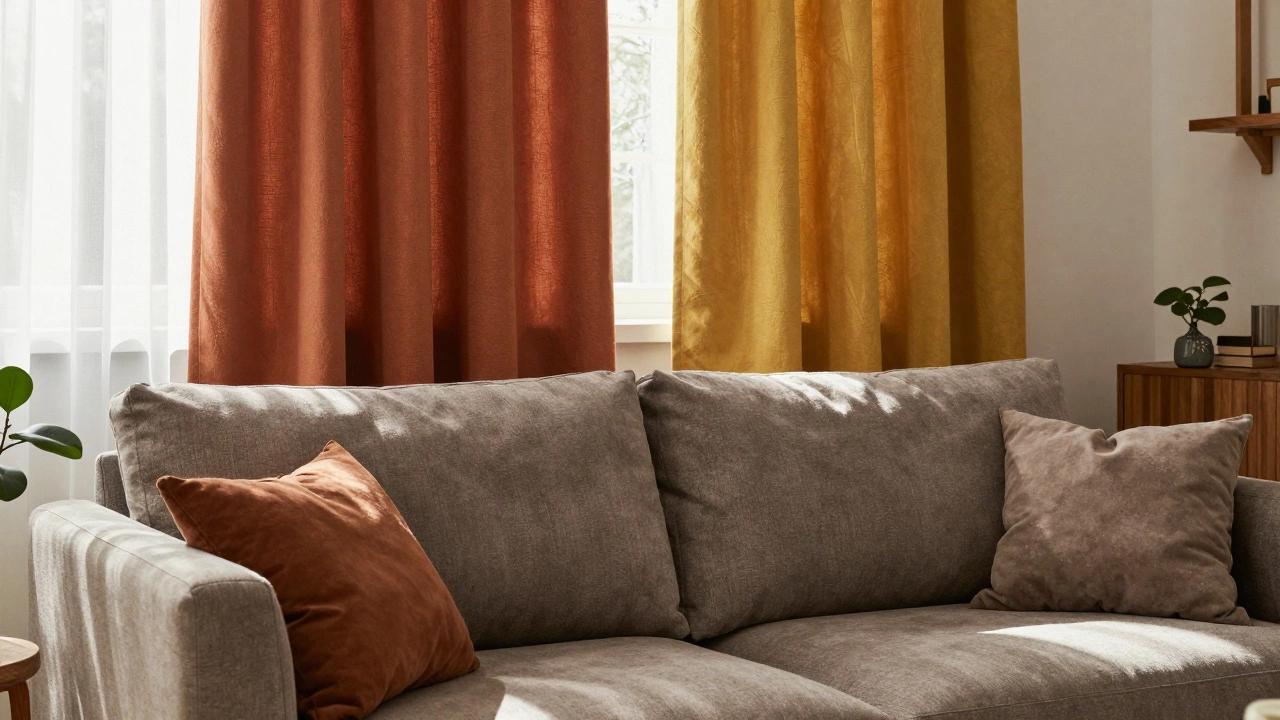
Gray can sometimes feel a bit sterile, especially in apartments with north-facing windows where natural light is cooler. To counteract this, introduce warm earth tones. Think terracotta, mustard yellow, burnt orange, or olive green.
A warm-toned gray couch pairs exceptionally well with sage green or olive curtains. Green brings nature indoors and softens the industrial edge of gray. Mustard yellow adds a cheerful, retro-modern vibe that’s perfect for eclectic spaces. These colors work because they sit opposite gray on the emotional spectrum-where gray is calm and reserved, these hues are energetic and inviting.
Don’t go too saturated unless you’re confident. Muted, dusty versions of these colors tend to blend better with gray than bright primary shades. A dusty rose curtain, for example, adds a touch of romance and softness without clashing.
Patterns and Textures: Beyond Solid Colors
Solid colors are safe, but patterns can add personality. When choosing patterned curtains for a gray couch, keep the base color neutral. Look for patterns where gray is one of the dominant colors, mixed with complementary hues.
Botanical prints with green leaves on a white background bring freshness and life. Geometric patterns in black and white create a modern, architectural feel. Stripes can elongate the room vertically, making ceilings appear higher. Just remember: if your couch has a texture (like tweed or bouclé), keep the curtains simpler. If the couch is smooth leather or microfiber, you can afford busier curtain patterns.
Texture matters just as much as color. Sheer curtains layered over heavier drapes allow you to control light and privacy while adding dimension. Velvet curtains add luxury and sound absorption, which is great for noisy open-plan living areas.
Lighting and Room Size Considerations
Your room’s lighting plays a huge role in how curtain colors appear. South-facing rooms get plenty of warm sunlight, so almost any color works. North-facing rooms benefit from warmer curtain tones to counteract the cool light. East and west-facing rooms change dramatically throughout the day, so test samples at different times.
In small rooms, lighter curtains make the space feel bigger. Dark curtains can make a large room feel cozier and more intimate. Don’t be afraid of dark curtains in small spaces if you balance them with light walls and reflective surfaces like mirrors.
Common Mistakes to Avoid
- Ignoring undertones: Pairing a cool gray couch with warm orange curtains usually results in a muddy look.
- Matching too perfectly: Trying to match the curtain color exactly to the couch often fails due to lighting differences. Aim for harmony, not perfection.
- Forgetting scale: Large-scale patterns can overwhelm a small room or a delicate couch. Scale the pattern to your furniture size.
- Skip testing: Always order fabric swatches. Hold them up next to your couch in natural and artificial light before committing.
Finding the right curtain color for your gray couch isn’t about following rigid rules. It’s about creating a mood. Do you want your living room to feel like a serene retreat or a vibrant social hub? Your answer should guide your color choice. Start with the undertone, play with texture, and don’t be afraid to experiment. After all, curtains are easier to change than sofas.
What is the best curtain color for a light gray couch?
For a light gray couch, navy blue, charcoal, or crisp white curtains provide excellent contrast. If you prefer warmth, try cream, beige, or soft sage green. Light gray is versatile, so bold colors like mustard or terracotta also work well if you want a statement look.
Can I use black curtains with a gray couch?
Yes, black curtains create a striking, modern contrast with both light and dark gray couches. They add drama and sophistication. To prevent the room from feeling too dark, balance with light walls, reflective accessories, or ample lighting.
Do gray and blue go together?
Absolutely. Gray and blue are a classic combination because they often share cool undertones. Navy, teal, sky blue, and denim all complement gray beautifully. This pairing is timeless and works in various styles from coastal to industrial.
How do I choose between warm and cool gray curtains?
Match the curtain undertone to your couch. Use a white paper trick: hold white paper next to the couch. If the couch looks blue/green, choose cool-toned curtains. If it looks brown/beige, choose warm-toned curtains. Mixing warm and cool grays can result in a mismatched, muddy appearance.
Are sheer curtains good for a gray couch?
Sheer curtains are excellent for adding softness and diffusing light. They work particularly well with darker gray couches to lighten the room. For privacy, layer sheers over heavier blackout curtains in a complementary color like white, cream, or a muted tone.