357 Rule Cushion Planner
Use this planner to structure your cushion arrangement. The 357 rule suggests 3 base items, 5 accent items, and 7 detail items for a balanced look.
Large, neutral cushions that anchor the space.
Medium cushions introducing color, pattern, or texture.
Small touches like tassels, embroidery, piping, or nearby objects.
Your Design Analysis
Adjust the quantities above and click "Generate Plan" to see how your arrangement aligns with the 357 rule.
Ever sit down on a sofa that looks like it was dressed by someone who couldn't decide if they liked modern minimalism or bohemian chaos? You know the look: five different patterns clashing, colors bleeding into each other without any harmony, and textures fighting for attention. It’s overwhelming, isn’t it? That’s usually what happens when we try to mix too many elements without a plan.
Enter the 357 rule, also known as the rule of three, five, and seven. This is a simple framework used by interior designers to create balanced, visually appealing spaces-especially when arranging cushions on sofas, beds, or chairs.
The 357 rule helps you layer your decor intentionally. Instead of guessing how many pillows to add or which fabrics work together, you follow a structured approach that ensures every piece has a purpose. Let’s break down exactly how this works so you can style your living room with confidence.
How the 357 Rule Works
The 357 rule divides your decorative elements into three categories based on quantity and function:
- Three base items: These are your foundation pieces-usually large, neutral-toned cushions that match or complement your main furniture.
- Five accent items: These introduce color, pattern, or texture. They’re smaller than the base items but still substantial enough to draw the eye.
- Seven detail items: These are small touches like tassels, embroidery, piping, or tiny decorative objects placed around the space.
This structure keeps your arrangement from feeling cluttered while still allowing for personality and creativity. Think of it like building a house: the base is the frame, the accents are the paint and fixtures, and the details are the artwork and plants.
Why Use the 357 Rule?
Designers use the 357 rule because it creates visual balance without requiring advanced skills. When you stick to these numbers, you avoid common mistakes like overcrowding your sofa or choosing mismatched tones that confuse the eye.
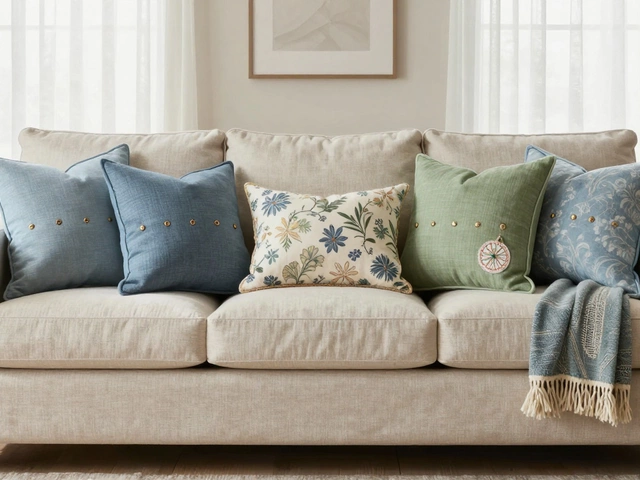
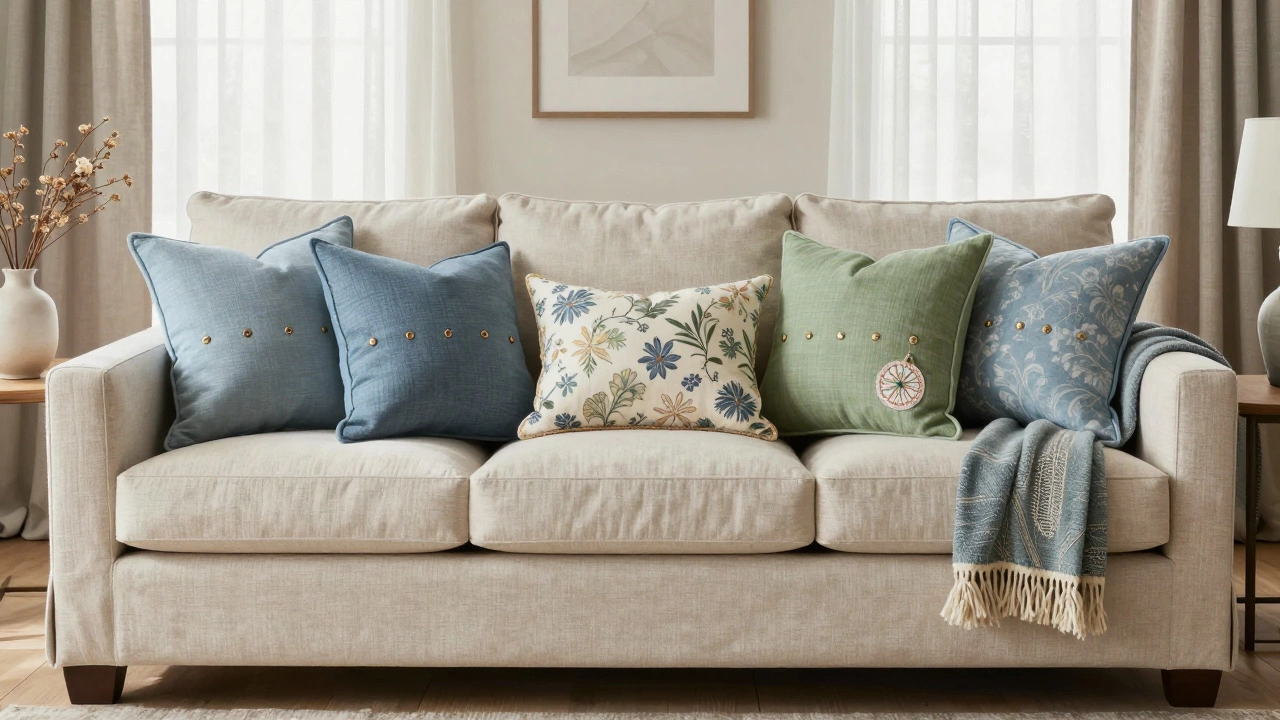
For example, imagine a beige linen sofa. If you throw eight brightly colored cushions at random, the result will likely feel chaotic. But if you apply the 357 rule, you might choose:
- Three large beige or cream cushions (base)
- Five medium-sized cushions in soft blues, greens, or muted florals (accents)
- Seven small details like metallic buttons, woven trim, or embroidered patches (details)
Now your sofa feels cohesive yet interesting. Each layer builds on the last, creating depth instead of noise.
Choosing Your Base Items
Your base items should anchor the entire arrangement. For cushions, this means selecting sizes that fit comfortably on your seating area. Standard square cushions range from 18"x18" to 24"x24", depending on the size of your sofa.
If your couch is wide, go for larger bases-maybe two 24" squares and one rectangular lumbar pillow. Stick to solid colors or very subtle textures here. Solid neutrals like ivory, taupe, or light gray work best because they don’t compete with the other layers.
Avoid using bold prints or bright hues in your base layer. Save those for the next stage. The goal is to give your eyes a place to rest before moving to more complex designs.
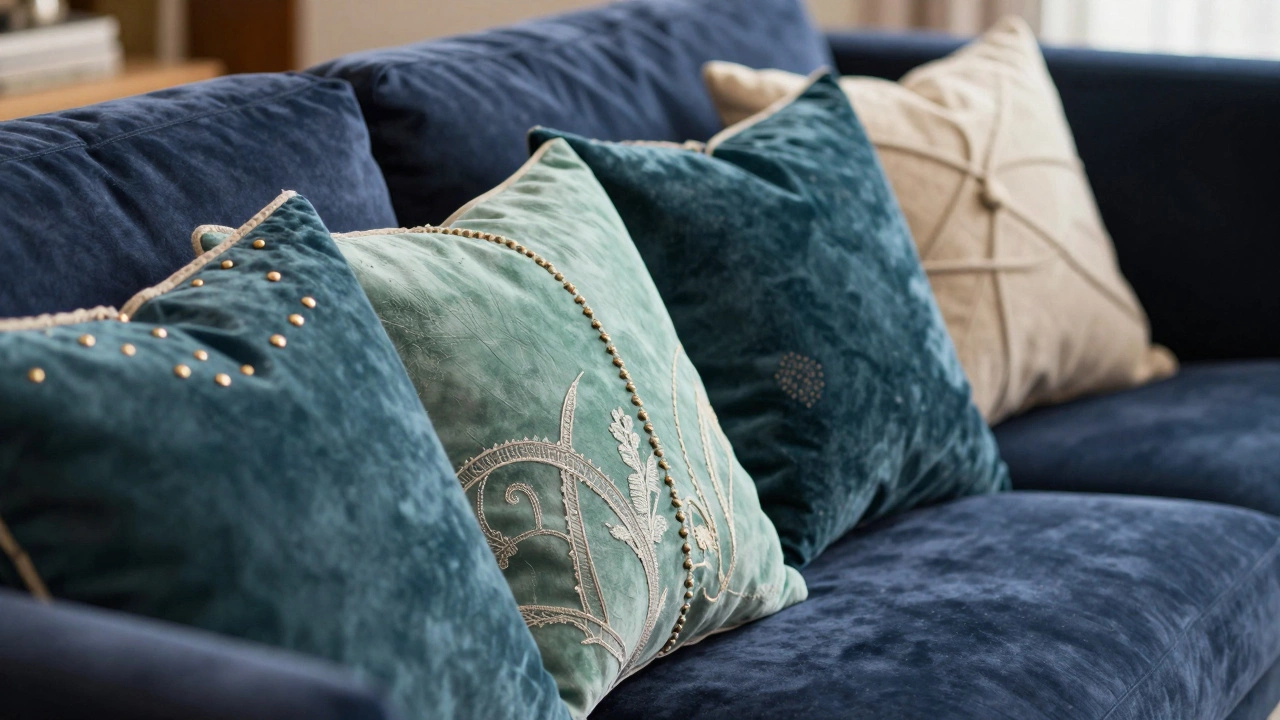
Selecting Accent Pieces
Accents bring life to your setup. Here’s where you get creative with patterns, colors, and materials. Since you’ll have five of them, variety becomes key-but not randomness.
Try combining:
- Two floral prints
- Two geometric shapes
- One textured fabric like velvet or bouclé
Keep the palette consistent. Pick two dominant colors from your base layer and build your accents around them. If your base is warm beige, lean toward earthy tones like terracotta, olive green, or mustard yellow.
Size matters too. Make sure your accent cushions aren’t much smaller than the base ones. A good ratio is about 60-70% the width of your largest base cushion. So if your biggest base is 24", aim for 14-16" accents.
Adding Detail Touches
Details make all the difference. Seven may sound like a lot, but remember-they’re meant to be subtle. Think of things like:
- Tassels hanging off throw blankets
- Embroidered initials on one corner cushion
- Piping along edges of certain pillows
- Metallic studs or buttons sewn onto fabric
- Small ceramic vases nearby holding dried flowers
You don’t need all seven to come directly from the cushions themselves. Some can live in surrounding areas-like side tables, shelves, or even floor rugs near the seating zone.
The trick is repetition. Repeat one type of detail across multiple spots. Maybe every third cushion has a gold button, or each row includes a touch of fringe. Consistency ties everything together.
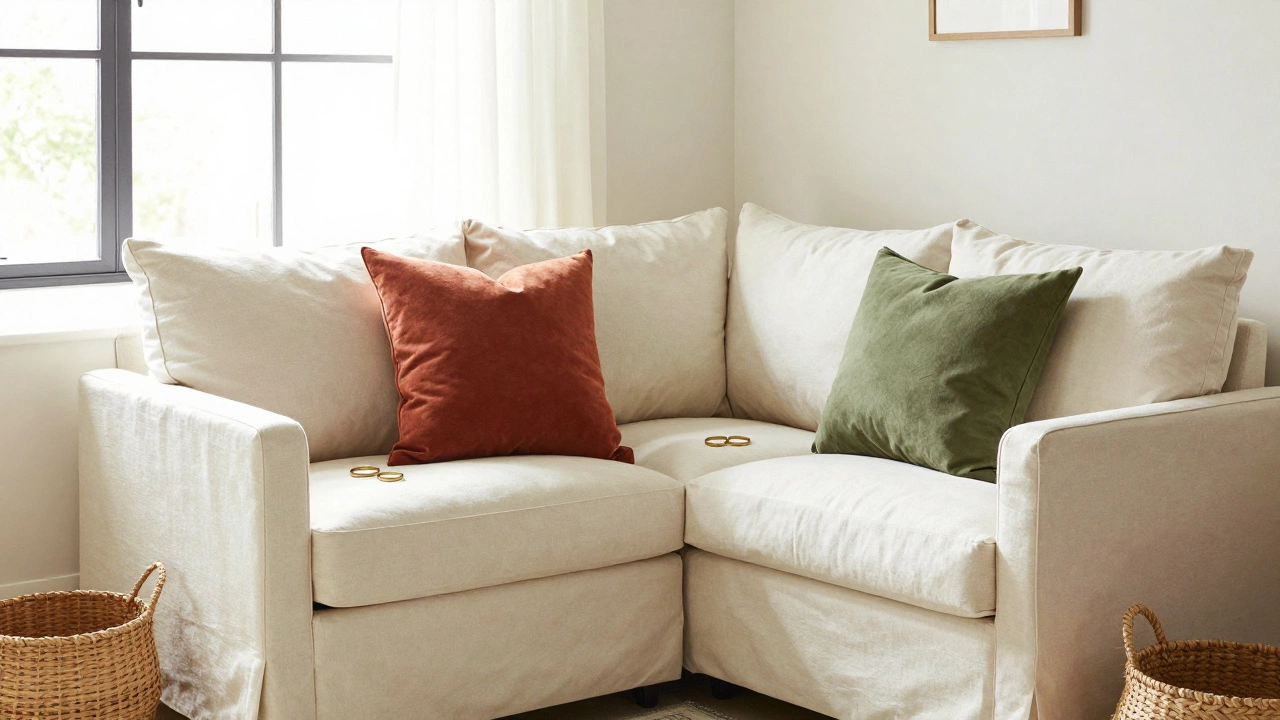
Common Mistakes to Avoid
Even with a clear system, people sometimes mess up the 357 rule. Here’s what to watch out for:
- Too many similar items: Don’t pick five identical-looking accent cushions. Variety prevents boredom.
- Ignoring scale: Large base cushions paired with tiny details lose impact. Keep proportions balanced.
- Overcomplicating colors: More than three main shades in one grouping overwhelms the eye. Limit yourself to a tight palette.
- Skipping symmetry: While perfect mirroring isn’t required, some form of visual weight distribution keeps things grounded.
Also, resist the urge to change everything seasonally unless you really want to. Rotating only the accent and detail layers lets you refresh your space without starting over completely.
Real-Life Example
Let’s say you’ve got a navy blue sectional. You love coastal vibes but hate anything too nautical. How do you pull this off?
- Base: Three oversized white cotton cushions. Simple, clean, easy to clean.
- Accents: Five cushions featuring seafoam green stripes, coral polka dots, sandy beige linen, aqua lace overlay, and a single deep teal velvet square.
- Details: Seven touches including rope ties, shell-shaped charms, stitched wave patterns, brass rings, seagrass baskets beside the sofa, a driftwood candle holder, and a framed print of ocean waves above the mantel.
Suddenly, your navy sofa doesn’t just sit there-it tells a story. And thanks to the 357 rule, none of it feels forced or messy.
When Not to Follow the Rule
Rules exist to help, not restrict. There are times when breaking the 357 guideline makes sense:
- Minimalist styles: Sometimes less is more. One perfectly chosen cushion might say more than ten poorly arranged ones.
- Eclectic collections: If you collect vintage textiles globally, strict numbering could limit expression. Trust your instincts.
- Temporary setups: Hosting guests for a weekend? Throw whatever feels cozy. Perfection isn’t always necessary.
Use the 357 rule as a starting point, not a law. Once you understand its logic, you’ll naturally adapt it to suit your taste.
Can I use fewer than seven detail items?
Yes! The number seven is flexible. Focus on quality over quantity. Even three well-placed details can elevate your arrangement significantly.
Do I need to buy new cushions to follow the 357 rule?
Not necessarily. Rearrange what you already own first. Often, simply repositioning existing pieces according to the 357 structure improves appearance dramatically.
Is the 357 rule applicable beyond cushions?
Absolutely. Designers apply variations of this principle to wall art groupings, bookshelf arrangements, and even kitchen countertop displays.
What if my sofa is small?
Scale down accordingly. Use smaller base cushions (e.g., 16" squares) and reduce accent counts slightly. Maintain proportionality rather than exact numbers.
How often should I rotate my cushion arrangement?
Every few months or during seasonal changes works well. Swapping just the accent and detail layers gives fresh energy without full replacement costs.
Where can I find affordable accent cushions?
Check local thrift stores, online marketplaces like eBay or Facebook Marketplace, and discount retailers such as IKEA or Target. Thrift shops especially offer unique finds at low prices.
Does the 357 rule apply to outdoor furniture?
Yes, though durability concerns mean focusing more on weather-resistant fabrics. Apply the same layering logic with UV-stable dyes and quick-dry fills.
Can children participate in applying the 357 rule?
Definitely! Involve kids in picking accent colors or placing detail items. Their input adds charm and teaches basic design principles early on.
Are there digital tools to visualize the 357 rule?
Some apps allow drag-and-drop placement of virtual cushions. Try free versions of RoomSketcher or Planner 5D to experiment before purchasing physical items.