Quick Summary: What's actually happening
- Carbonized Grease: Oil that spills and bakes onto the metal at high heat.
- Polymerized Oil: A sticky film that turns hard and black over time.
- Heat Tint: Oxidation that happens to stainless steel from overheating.
- The Fix: Degreasers, baking soda, or specialized abrasive cleaners.
What exactly is that black gunk?
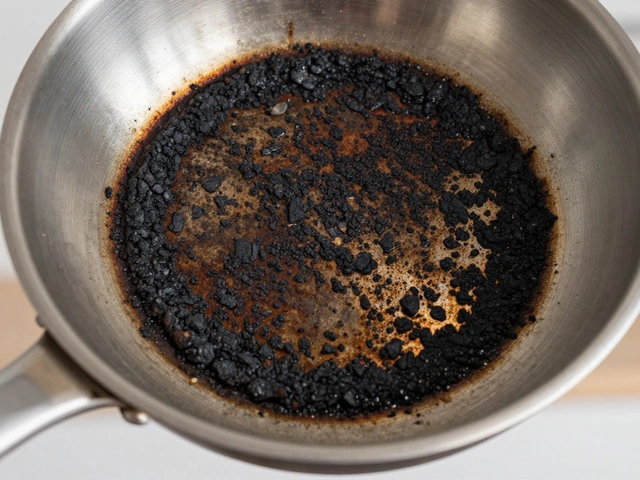
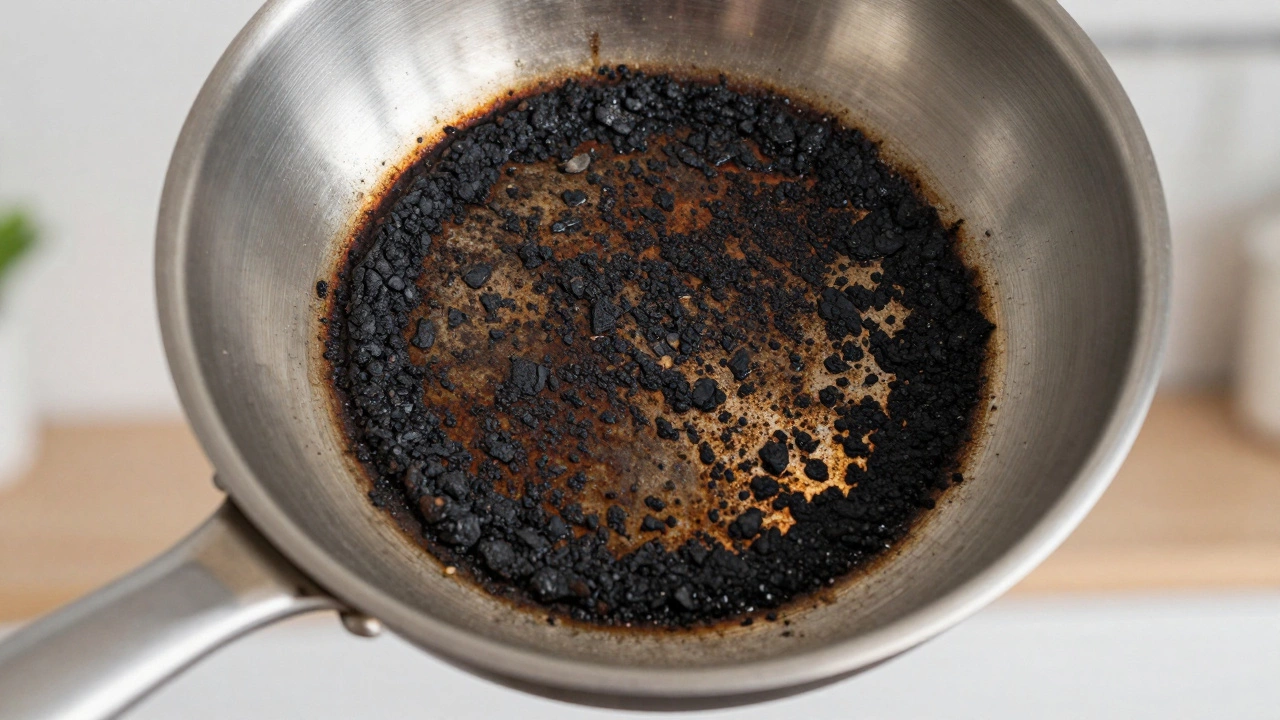
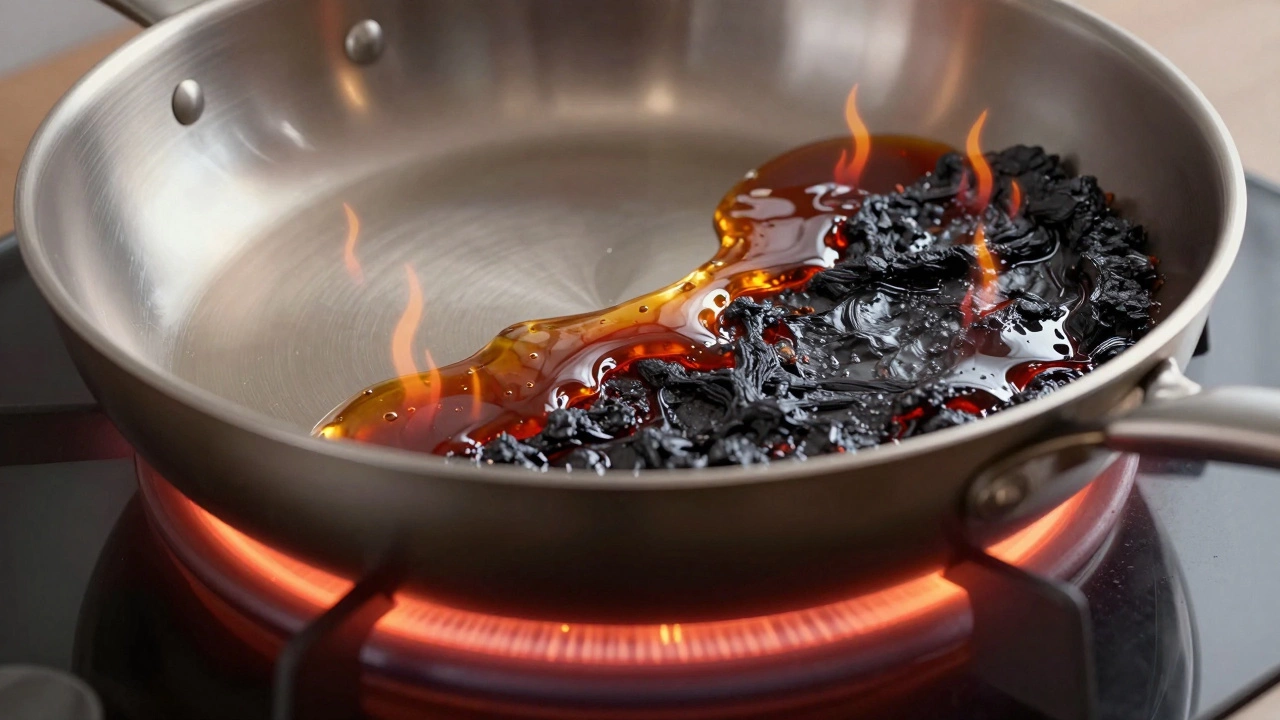
Depending on your cookware, that mystery residue is usually one of three things. First, let's look at Carbon Buildup the result of organic material, like oil or food particles, being heated to the point where it chemically breaks down into pure carbon. If you've ever seen a campfire log turn into a black ember, that's the same process. When a drop of oil hits the bottom of your pan and sits there while you sear a steak, it doesn't just evaporate; it burns into a hard, plastic-like shell.
Then there is Polymerization a process where liquid fats are transformed into a hard, odorless polymer through heat. This is actually what happens when you "season" a cast iron skillet. However, when it happens on the outside bottom of a stainless steel pan, it creates a sticky, amber-colored layer that eventually attracts dust and soot, turning deep black. It's essentially a layer of accidental plastic glue holding onto kitchen grime.
Finally, if you have a high-end stainless steel pot and see a rainbow-like or dark blue-grey tint, you're looking at Oxidation a chemical reaction between the metal surface and oxygen at high temperatures. This isn't "dirt" in the traditional sense, but a change in the metal's protective chromium oxide layer. This happens most often when you heat a pan without oil or use a burner that's too powerful for the cookware's thickness.
How different materials react to heat
Not every pan accumulates this black stuff the same way. The chemistry changes based on what the pan is made of. For instance, Stainless Steel an alloy consisting primarily of iron, chromium, and nickel is prone to both carbon buildup and heat tint because it's often used for high-heat searing. In contrast, Aluminum a lightweight, silvery-white metal known for its excellent thermal conductivity tends to oxidize and pit, which can make the black carbon residue "grip" the surface even tighter, making it harder to scrub off.
| Material | Primary Cause | Texture | Difficulty to Remove |
|---|---|---|---|
| Stainless Steel | Polymerized oil/Heat tint | Smooth to flaky | Medium |
| Cast Iron | Intentional seasoning/Soot | Waxy or powdery | Low (usually desired) |
| Aluminum | Carbonized grease | Rough/Pitted | High |
The danger of the "Black Stuff"
Is it actually dangerous to leave that carbon on your pan? In most cases, it's just an eyesore. However, there is a practical performance hit. Carbon is an insulator. When you have a thick layer of burnt grease on the bottom of your pan, it creates a barrier between the heat source and the metal. This means your pan takes longer to heat up and, more importantly, it doesn't heat evenly. You might find that your eggs stick in some spots but not others because the "black stuff" is blocking the heat flow.
If you use an Induction Cooktop an electric stove that uses magnetic currents to heat the cookware directly, this buildup can be even more problematic. Induction relies on a clean, flat contact point between the pan and the glass. A layer of carbonized grease can cause the pan to wobble or, in extreme cases, create hotspots on the glass surface that can lead to permanent damage to the stove.
Step-by-step: How to get rid of it
You can't just scrub this off with a soft sponge. You need chemistry and a bit of elbow grease. Depending on how bad the buildup is, choose one of these three methods:
Method 1: The Baking Soda Paste (For light to medium buildup)
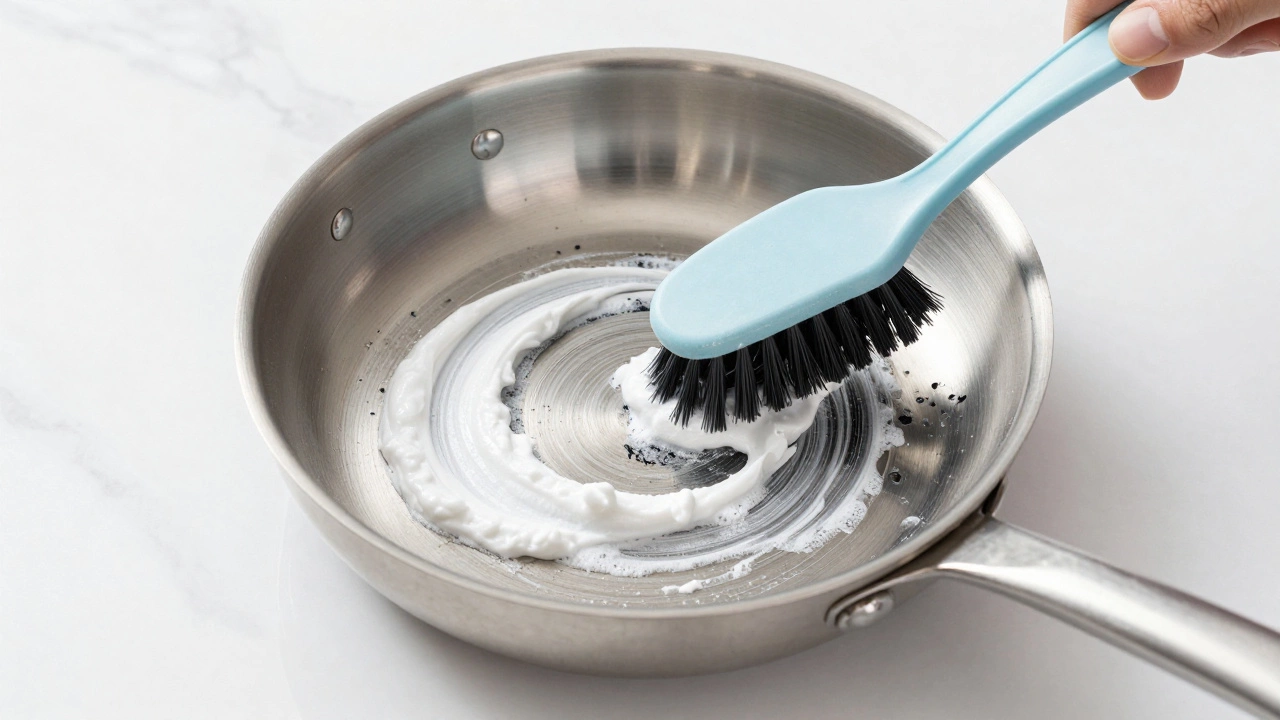
- Mix Baking Soda sodium bicarbonate, a chemical compound used as a mild abrasive and cleaner with a small amount of water to create a thick paste.
- Apply the paste liberally to the black areas on the bottom of the pan.
- Let it sit for at least 30 minutes. The alkalinity of the soda helps break down the acidic components of the burnt oil.
- Scrub with a scouring pad or a stiff brush.
Method 2: The Vinegar Soak (For heavy carbonization)
- Fill a large pot or sink with water and add a cup of White Vinegar a diluted acetic acid solution commonly used for cleaning and cooking.
- Boil the mixture (if using a pot) and place the dirty pan inside.
- Simmer for 15-20 minutes. The acid in the vinegar works to loosen the bond between the carbon and the metal.
- While the pan is still warm, scrub the residue away.
Method 3: The Heavy Duty Chemical Approach (For the "unsolvable" pans)
- Use a dedicated Degreaser a chemical agent designed to emulsify and remove grease and oil or a product like Bar Keepers Friend.
- Apply the cleaner to the dry bottom of the pan.
- Use a steel wool pad to aggressively scrub the surface.
- Rinse thoroughly with soap and water to ensure no chemical residue remains.
How to prevent it from coming back
Once your pan is shining again, the goal is to stop that carbon cycle. The most effective way is to manage your oil. Most people pour oil directly into the pan, which often leads to drips running down the side and pooling on the bottom. Instead, use a brush or a spray to apply oil only where it's needed. If you do spill oil on the exterior, wipe it off immediately with a paper towel before you turn on the burner.
Also, be mindful of your heat settings. If you're using a stainless steel pan and the oil starts smoking violently, you've exceeded the Smoke Point the temperature at which an oil begins to break down and produce visible smoke of your fat. This is the exact moment polymerization and carbonization begin. Switch to an oil with a higher smoke point, like avocado oil or grapeseed oil, if you're doing high-heat searing.
Is the black stuff toxic?
Generally, no. It's mostly just burnt carbon and oil. However, if the residue starts to flake off into your food, it's unpleasant. The bigger risk is when you use harsh chemical cleaners to remove it; if those aren't rinsed off properly, they can be harmful. The carbon itself won't poison you, but it does affect how your food cooks.
Can I use steel wool on all pans?
Be careful. Steel wool is great for the bottom of a stainless steel or cast iron pan, but never use it on the inside of a Non-stick Pan cookware coated with a fluoropolymer like PTFE to prevent food from sticking. It will shred the coating, making the pan useless and potentially releasing chemicals into your food.
Why does my pan turn rainbow-colored?
This is called heat tint. It happens when the chromium in stainless steel reacts with oxygen at high temperatures, creating a thin film that refracts light. It's completely harmless and can usually be removed with a splash of vinegar or a specialized stainless steel cleaner.
How often should I clean the bottom of my pans?
Every few months, or whenever you notice the pan isn't sitting flat on the burner. If you wait too long, the carbon layer becomes so thick that it requires industrial-strength chemicals to remove, which can sometimes scratch the metal.
Does dishwasher cleaning prevent this?
Actually, dishwashers are often terrible at removing polymerized oil from the bottom of pans. The water jets aren't abrasive enough to break through that "plastic" layer of oil. Hand-scrubbing with an abrasive is almost always necessary for the exterior bottom.
What to do next
If you've tried the vinegar and baking soda methods and the black crust is still there, you might be dealing with extreme carbonization. In this case, avoid using a hammer or metal scraper, as you can warp the bottom of the pan. A warped pan is a dead pan-it will never heat evenly again. Instead, look for a professional cookware restoration service or try a commercial-grade oven cleaner (applied only to the bottom) and let it sit overnight.
For those who want to avoid this entirely, consider switching to a Ceramic Cookware pans made from minerals and coated with a ceramic layer, often free of PFAS set, which handles heat differently, though the rules about not overheating the pan still apply. Keep your heat levels reasonable, wipe your spills immediately, and your cookware will stay efficient for years.