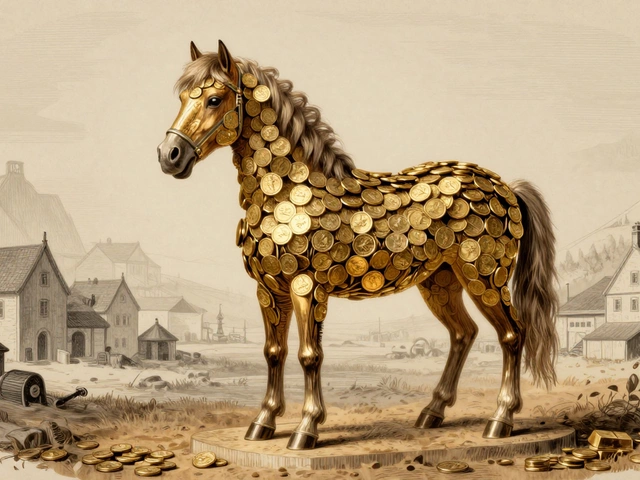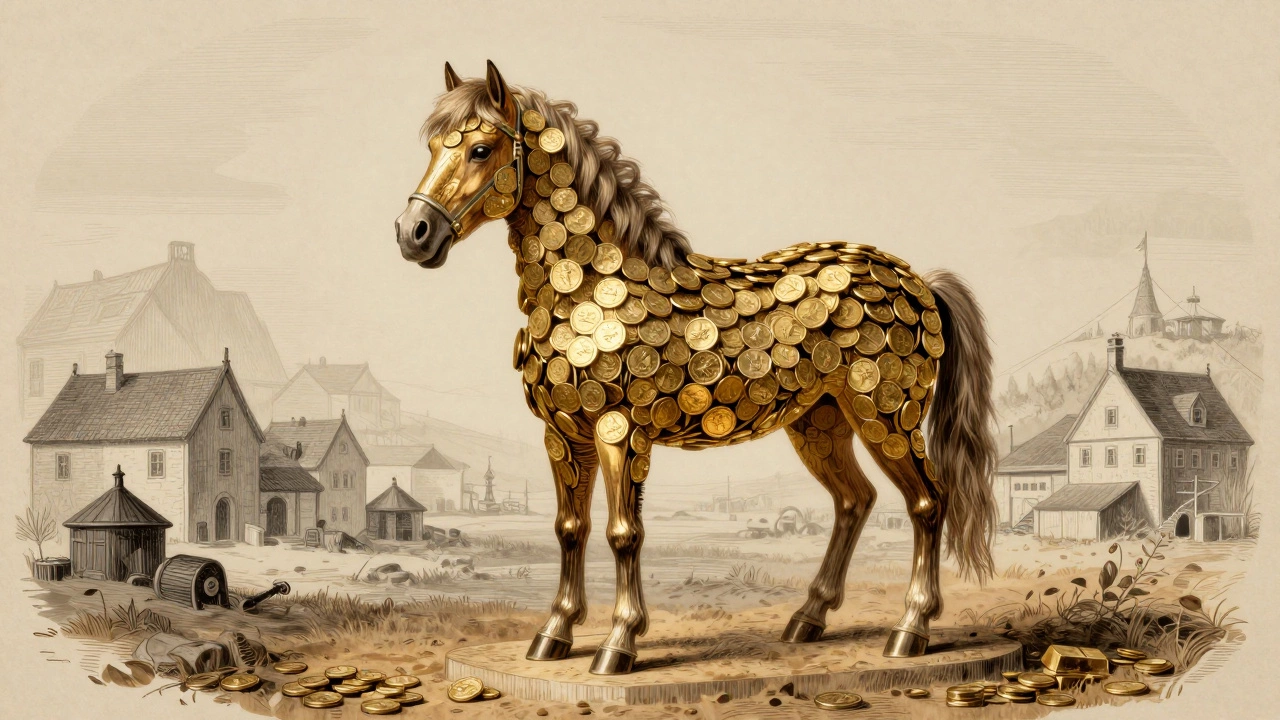
Money Slang Explorer & Origin Simulator
Popular Money Slang
The "Pony" Mystery: Which Theory?
Explore the leading theories behind why £25 is called a "pony." Click a theory to reveal the details.
The Gold Standard Theory
This theory links "pony" to physical gold bullion weights. Before fiat currency, money was backed by gold. A "pony" may have referred to a specific weight of gold worth exactly £25, representing a manageable chunk for transactions in mining towns or colonial outposts.
You might have heard someone mention needing a "pony" to cover a bill. If you’re not familiar with British or Australian slang, it sounds like they are asking for a small horse. In reality, they are talking about 25 pounds. It’s a quirky phrase that sticks in your head, but where did it come from? Did it have anything to do with animals? Probably not.
The term "pony" for £25 has been around for decades, mostly in the UK and Australia. It’s part of a larger family of money slang that includes "grand" for $1,000 and "smacker" for a single pound or dollar. But while some terms make sense-like "buck" for a dollar because of the buckskin coats worn by frontiersmen-the origin of "pony" is much fuzzier. There isn’t one definitive answer, but there are several strong theories that help us piece together the puzzle.
The Gold Standard Theory
One of the most popular explanations links back to the gold standard. Before fiat currency became the norm, money was often backed by physical gold. A "pony" might have referred to a specific weight of gold bullion. Some historians suggest that a "pony" was worth 25 pounds because that amount represented a manageable chunk of gold for everyday transactions among certain groups, possibly in mining towns or colonial outposts.
This theory holds water if you look at how other money terms evolved. Words like "sovereign" (a gold coin worth one pound) were literal descriptions of value. If "pony" started as a unit of weight or value in gold, it makes sense that it would stick around even after the gold standard was abandoned. The number 25 is specific enough that it likely had a practical root, rather than being random.
Criminal Slang and Prison Life
Another strong contender comes from the world of criminal slang. Many British money terms originated in prisons or among thieves. In this context, "pony" could be related to the word "pony," meaning a small amount or a light load. Think of it like carrying a "pony share" of goods. Over time, this vague notion of a "small amount" might have standardized to £25, perhaps because it was a common fine, bribe, or payout in certain eras.
Prison slang often uses animal names for things. You have "rats" for informants and "birds" for sentences. Using "pony" for money fits this pattern. It’s discreet, easy to say, and doesn’t give away the exact value to outsiders. If you’re in a cell and need to pass a message about money, saying "I need a pony" is safer than shouting "I need twenty-five quid."

The Australian Connection
Australia also claims the term. In Aussie slang, a "pony" is firmly established as $25 AUD. Some believe it came from the early days of the colony, where horses were essential for transport and work. A "pony" was a smaller, cheaper horse compared to a full-sized draft horse. Maybe £25 was the average price of a pony in the 19th century? If so, the term would have stuck because it was a tangible reference point for people buying and selling livestock.
This theory is appealing because it ties the word to something concrete. We see similar patterns with "horsepower" or "tonnage." If £25 bought you a pony, then calling that amount of money a "pony" is logical. It’s a direct exchange rate between currency and commodity. As prices changed, the slang remained frozen in time, just like we still call a "six-footer" a tall person, even though heights have increased.
Other Money Slang: A Quick Comparison
| Slang Term | Value | Likely Origin |
|---|---|---|
| Pony | £25 / $25 | Gold weight or horse price |
| Grand | $1,000 | "Grand" meaning large or impressive |
| Buck | $1 | Buckskin coats traded for dollars |
| Smacker | £1 / $1 | Unclear, possibly from "smack" as a hit |
| Dollar | $1 | Joachimsthaler (Thaler) from Joachimsthal valley |
Notice how most of these terms have roots in trade, geography, or physical objects. "Dollar" comes from a German silver mine. "Buck" comes from fur trading. "Pony" likely follows the same pattern. It’s rare for money slang to be purely abstract. Usually, there’s a story behind it, even if that story gets lost over time.

Why Does This Matter?
You might wonder why anyone cares about the origin of "pony." After all, it’s just a word. But language reflects culture. The way we talk about money tells us what we value. When we use slang, we’re creating an in-group. Saying "I’ll lend you a pony" signals that you’re comfortable with informal, friendly interactions. It’s different from saying "I will transfer twenty-five pounds via bank app."
Understanding these origins helps us appreciate the history of everyday speech. It shows how language evolves from practical needs-like hiding wealth from guards or pricing livestock-to become casual conversation. Next time you hear someone ask for a pony, you can smile knowing you’re participating in a centuries-old tradition of clever talk.
Is "Pony" Still Used Today?
In the UK and Australia, yes. You’ll hear it in pubs, at markets, and in casual chats. It’s less common among younger generations who prefer digital payment terms like "transfer" or "send." But it hasn’t disappeared. It’s part of the living lexicon, passed down through families and media. Movies and TV shows keep it alive by having characters use old-school slang to sound authentic or tough.
If you travel to London or Sydney, don’t be confused when someone mentions a pony. They aren’t looking for a ride. They’re just talking about cash. And now, you know exactly why.
Is a pony always 25 pounds?
In the UK, yes, a pony typically refers to £25. In Australia, it usually means $25 AUD. The value is consistent within each region, but don’t use it in the US unless you want confusion.
Where did the term "pony" for money originate?
There is no single proven origin. Theories include gold bullion weights, the price of a young horse in the 19th century, or criminal slang for a small amount of cash. The gold and horse theories are the most widely accepted.
What other money slang is similar to "pony"?
Other common terms include "grand" for $1,000, "buck" for $1, "quid" for £1, and "smacker" for £1 or $1. These terms often come from historical trades or cultural references.
Do Americans use the term "pony" for money?
No, "pony" is not commonly used in American English for money. Americans might use "twenty-five" or "quarter" (for 25 cents), but not "pony." Using it in the US could lead to misunderstandings.
Why do people use money slang instead of numbers?
Money slang creates social bonds and can be discreet. Historically, it helped people hide their wealth from authorities or criminals. Today, it’s mostly about sounding casual, friendly, or part of a specific cultural group.