Curtain Clearance Calculator
Enter your measurements to see if your curtains are safely positioned.
Baseboard heaters are common in older homes and apartments because they’re quiet, reliable, and don’t take up floor space. But if you love the look of floor-to-ceiling curtains, you might be wondering: how far do curtains need to be from baseboard heaters? The answer isn’t just about aesthetics-it’s about safety, energy efficiency, and even your insurance policy.
Why Distance Matters
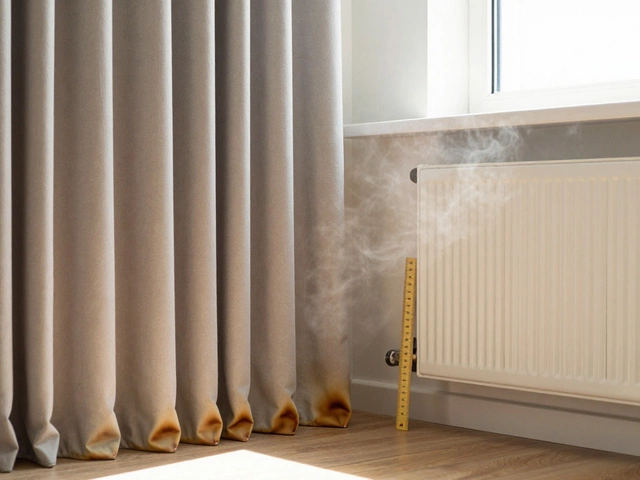
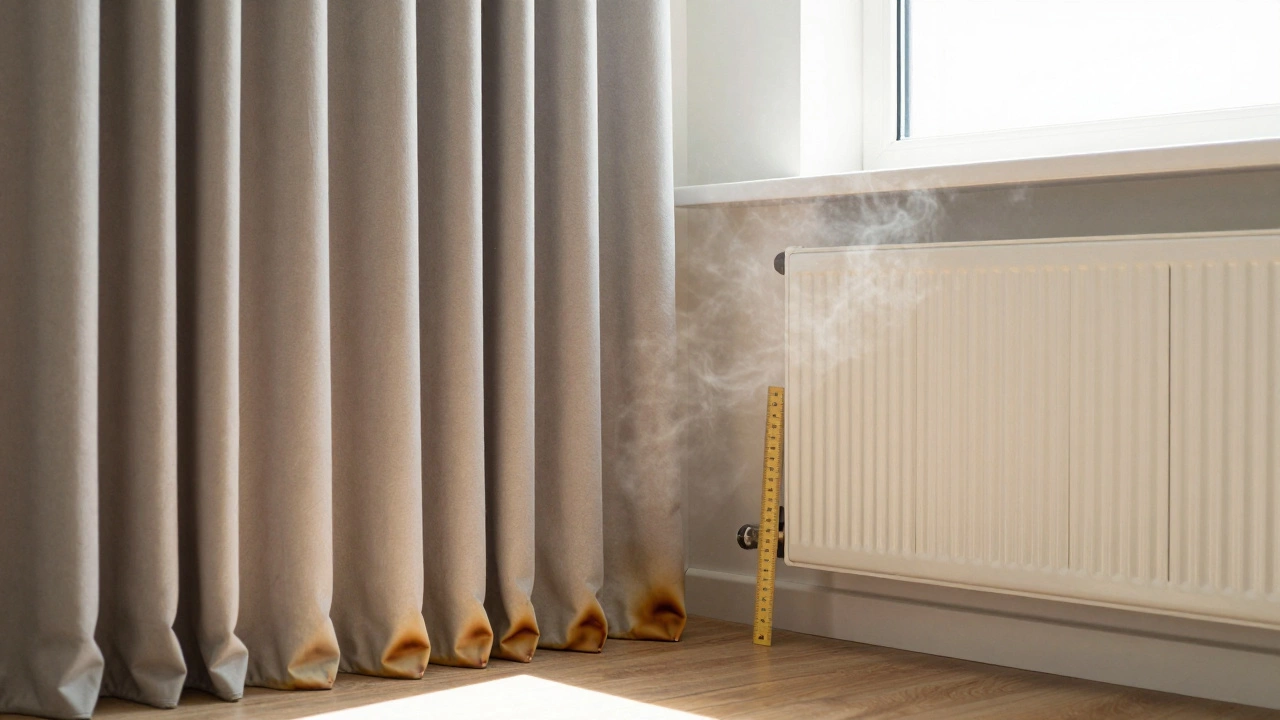
Baseboard heaters work by warming the air near the floor, which then rises and circulates through the room. This means the area right in front of the heater gets hot-sometimes over 180°F (82°C). If your curtains hang too low, they can touch or come dangerously close to that heat. Fabric can scorch, melt, or even catch fire if it stays in contact with the heater for too long.
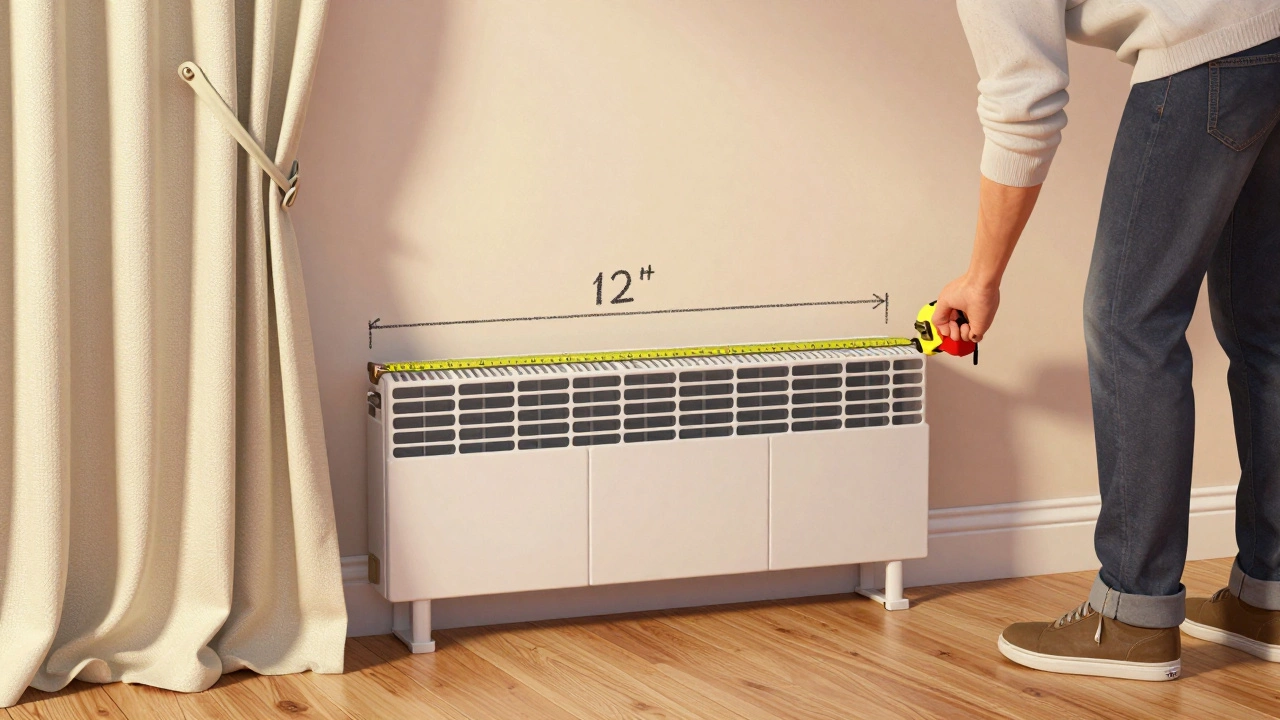
The National Fire Protection Association (NFPA) and most heater manufacturers recommend a minimum clearance of at least 12 inches (30 cm) between the top of the baseboard heater and any combustible material-including curtains, furniture, or rugs. This isn’t a suggestion; it’s a safety standard backed by real fire reports.
One 2023 study from the U.S. Fire Administration found that nearly 1,200 home fires each year are linked to heating equipment, and about 15% of those involved drapery or fabric too close to heat sources. Most of these fires happened in homes with older baseboard heaters and long, flowing curtains.
What Happens If Curtains Are Too Close?
If your curtains hang within 6 inches of the heater, you’re already in risky territory. Here’s what can go wrong:
- Scorching and discoloration: Even if the fabric doesn’t catch fire, prolonged heat exposure can cause yellowing, shrinking, or brittle fibers.
- Reduced heating efficiency: Curtains blocking the heater trap warm air before it can rise into the room. That forces the heater to run longer, raising your electric bill.
- Fire hazard: Synthetic fabrics like polyester or nylon can melt and drip, while natural fibers like cotton or linen can ignite if they reach their ignition temperature (around 400°F/204°C).
- Insurance issues: If a fire starts because curtains were too close to a heater, your homeowner’s insurance might deny the claim. Most policies require compliance with manufacturer guidelines.
How to Measure and Adjust
Start by measuring the height of your baseboard heater. Most are 6 to 8 inches tall. Then measure from the floor up to the bottom of your curtain. You want at least 12 inches of clearance above the heater’s top surface.
Here’s a simple way to check:
- Turn on the heater and let it run for 15 minutes.
- Place a ruler or tape measure vertically next to the heater, starting from the floor.
- Find the top edge of the heater-this is your reference point.
- Measure up 12 inches from that point. That’s where the bottom of your curtain should be.
- If your curtain hangs lower, either shorten it or raise the curtain rod.
If you have a decorative rod mounted high on the wall, you might need to install a second, lower rod just for the heater zone. Or use a tension rod that sits above the heater without drilling holes.
Best Curtain Styles for Baseboard Heaters
Not all curtains are created equal when it comes to heater safety. Here’s what works best:
- Short curtains (café length): These end just above the heater, usually 6-8 inches off the floor. They look clean and leave plenty of room for airflow.
- Roller or Roman shades: These can be pulled up completely during heating hours and lowered at night for privacy. No risk of contact.
- Sheer panels: Lightweight and airy, they don’t trap heat as much as heavy drapes. Ideal for rooms where you want light but not bulk.
- Layered curtains: Use a lightweight sheer under a heavier drape. Keep the sheer open during the day to let heat rise, and close the outer layer at night.
Avoid heavy, floor-length velvet or thermal curtains directly over baseboard heaters. They’re great for insulation-but only if they’re not blocking the heat source.
What About Heat-Resistant Curtains?
You might see products labeled “fire-resistant curtains” or “heat-safe drapes.” These are usually treated with flame-retardant chemicals. While they’re safer than regular fabric, they’re not foolproof. The NFPA still advises maintaining the 12-inch clearance even with treated materials.
Also, flame-retardant treatments wear off over time with washing and sun exposure. Don’t rely on them as your only safety layer.
What If You Can’t Raise the Curtains?
Some homes have low window sills or fixed furniture that makes raising the curtain rod impossible. Here are practical fixes:
- Use tie-backs: Keep curtains pinned to the sides when the heater is on. This opens up the center and lets heat flow freely.
- Install a decorative valance: A short, rigid valance above the window can hide the curtain rod while letting curtains hang below the heater.
- Switch to blinds or shutters: Hard-surface window coverings don’t pose a fire risk. Wood or faux wood blinds are safe and stylish.
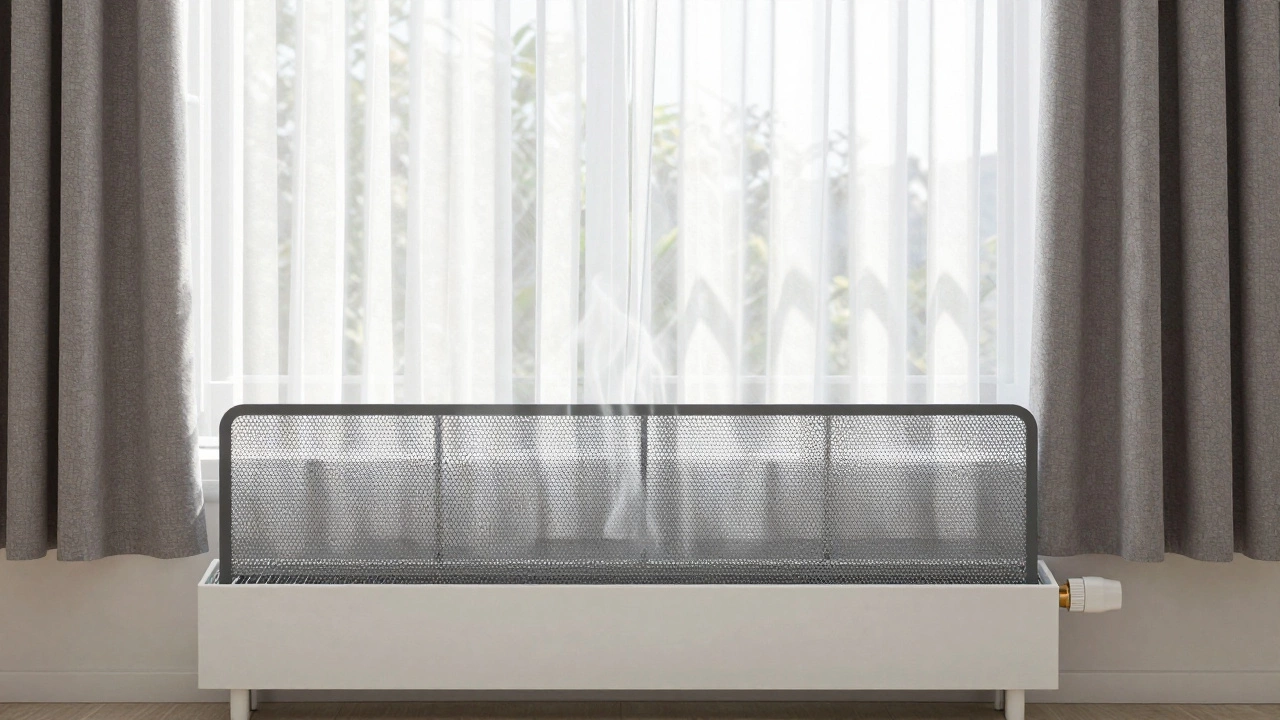
- Use a heater guard: Metal mesh screens designed for baseboard heaters create a physical barrier. They’re inexpensive and easy to install.
Seasonal Adjustments
In colder months, you’ll want the heater running constantly. That means curtains should stay clear year-round. But in spring or fall, when you turn off the heater, you might be tempted to let curtains hang lower for privacy or aesthetics.
Don’t. Even when the heater is off, dust and debris can build up on the heating element. If you turn it back on without cleaning, a spark could ignite accumulated lint or fabric fibers. Always keep curtains at least 12 inches away-even in summer.
Real-Life Example
A homeowner in Portland, Oregon, installed floor-to-ceiling linen curtains in her living room. She didn’t realize the baseboard heater ran hot enough to scorch the fabric. After three winters, the bottom third of her curtains turned brittle and yellowed. When she replaced them, she measured the clearance and found the curtains were hanging just 4 inches above the heater. She switched to café-length curtains and added a simple metal guard. Her electric bill dropped 18% in the next winter.
Final Rule of Thumb
Remember: 12 inches is the minimum. More is better. If you can give the heater 15 or 18 inches of space, you’ll get better heat circulation, less wear on your curtains, and peace of mind. Always check your heater’s manual-some models require 18 inches. When in doubt, go higher.
It’s not just about looks-it’s about safety. A few extra inches of space can mean the difference between a cozy home and a preventable fire.
Can I use heat-resistant curtains to get closer to the heater?
Heat-resistant curtains reduce risk but don’t eliminate it. Manufacturers and fire safety experts still recommend keeping curtains at least 12 inches away. Flame-retardant treatments can degrade over time, and fabric can still trap heat or ignite from prolonged exposure. Always follow the 12-inch rule regardless of curtain type.
What if my curtains are slightly below the 12-inch mark?
If your curtains are only 1-3 inches too low, you’re at moderate risk. Monitor them for signs of heat damage like discoloration, shrinking, or a burnt smell. In the meantime, use tie-backs to keep them pulled away during heating hours. Long-term, adjust the curtain length or raise the rod. Don’t wait for a fire to act.
Do I need to worry about curtains on windows above baseboard heaters?
No-if the heater is mounted on the wall below the window, curtains above it are fine. The issue is only when curtains hang directly over or too close to the heater unit itself. If the heater is under the window and the curtain hangs down from the window frame, you’re safe as long as the bottom of the curtain is 12 inches above the heater’s top.
Can I use a fan to blow heat away from the curtains?
Adding a fan isn’t recommended. It can create uneven heating, stir up dust near the heater element, and increase fire risk if the fan’s motor or cord gets too hot. The best solution is physical clearance-not forced airflow.
Is it safe to install curtains on both sides of a baseboard heater?
Yes, as long as the curtains don’t hang over the heater itself. If the heater runs along the center of the wall, and curtains are mounted on the left and right sides-stopping at least 12 inches away from the heater-you’re fine. The key is leaving the front of the heater completely open for airflow.