Storage Solution Finder
Select your primary challenge to get a tailored recommendation:
Select an option above to see your personalized storage strategy.
Walking into a bedroom with no closet feels like walking into a room that forgot its purpose. Clothes pile up on chairs. Shoes line the hallway floor. It’s messy, it’s stressful, and frankly, it looks bad. But here’s the good news: houses without closets are common, especially in older builds or minimalist designs, and they don’t have to stay chaotic. You can create functional, stylish storage from scratch.
The key isn't just buying more bins; it's rethinking how you use vertical space, hidden corners, and multi-functional furniture. Whether you’re renting and can’t drill holes, or you own the place and want permanent solutions, there is a strategy for every situation. Let’s look at how to turn empty walls and awkward nooks into serious storage powerhouses.
Mastering Vertical Space with Built-In Shelving
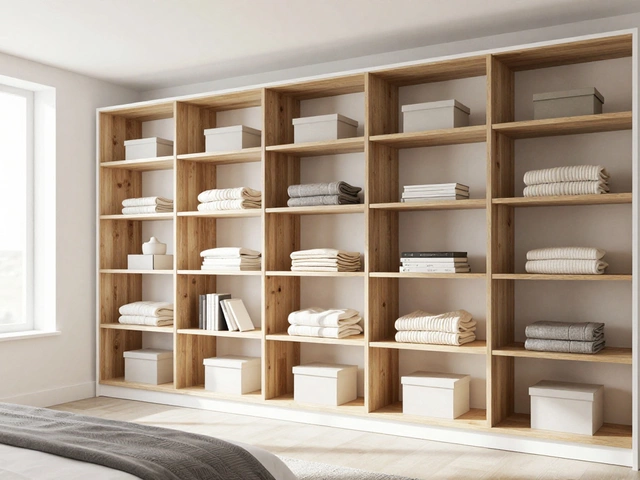
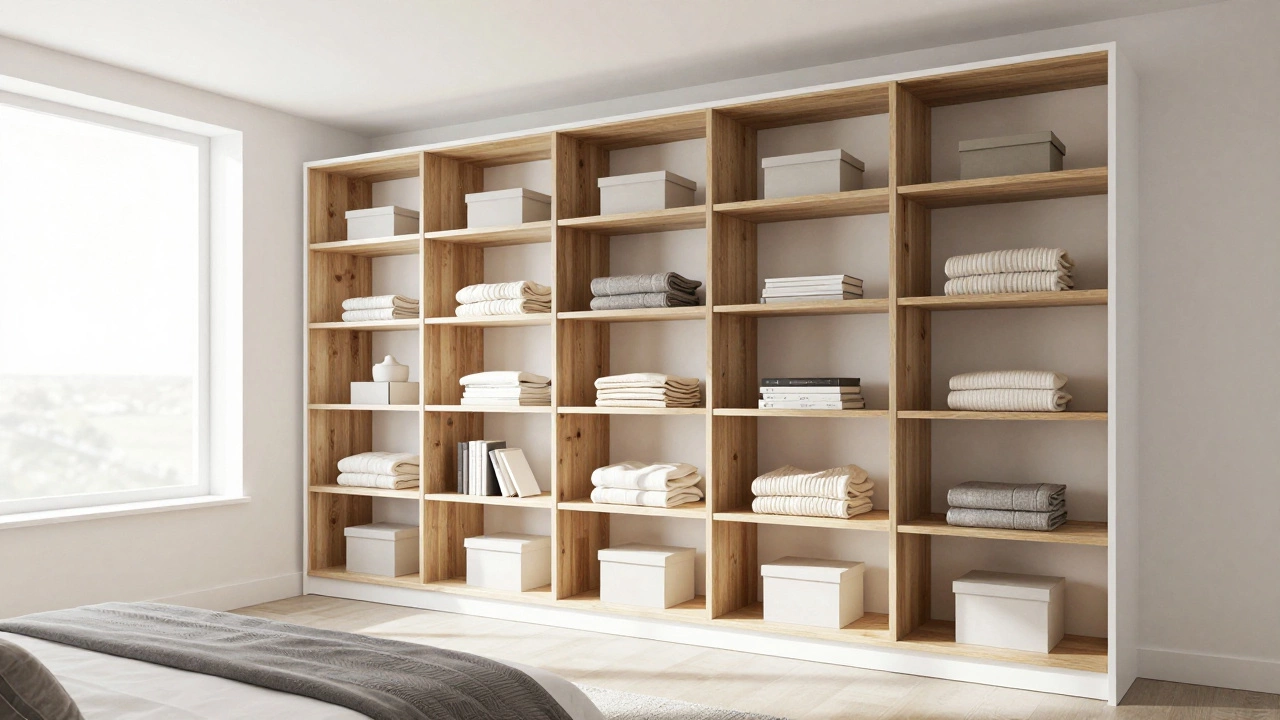
When you lack horizontal depth (like a standard closet), you need to go up. Walls are your biggest asset. Installing Built-in shelving is custom cabinetry attached directly to wall studs to maximize vertical storage capacity transforms an empty wall into a library of storage. Unlike freestanding units that wobble and take up floor space, built-ins feel part of the architecture.
You don’t need a contractor for this. If you have basic DIY skills, you can mount heavy-duty floating shelves using hidden brackets. For heavier items like books or media equipment, ensure you anchor into wall studs, not just drywall. A single wall unit can hold the equivalent of three standard wardrobes if designed correctly.
- Floating Shelves: Best for lightweight decor and folded sweaters. Use 1x6 lumber for strength.
- Tall Bookcases: Floor-to-ceiling units create visual height and store bulkier items.
- Pegboards: Perfect for hanging accessories, bags, and tools without taking up shelf space.
If you rent, look into tension-rod shelving systems that press between the floor and ceiling. They require zero screws but can support surprising weight if installed on smooth surfaces.
Furniture That Doubles as Storage
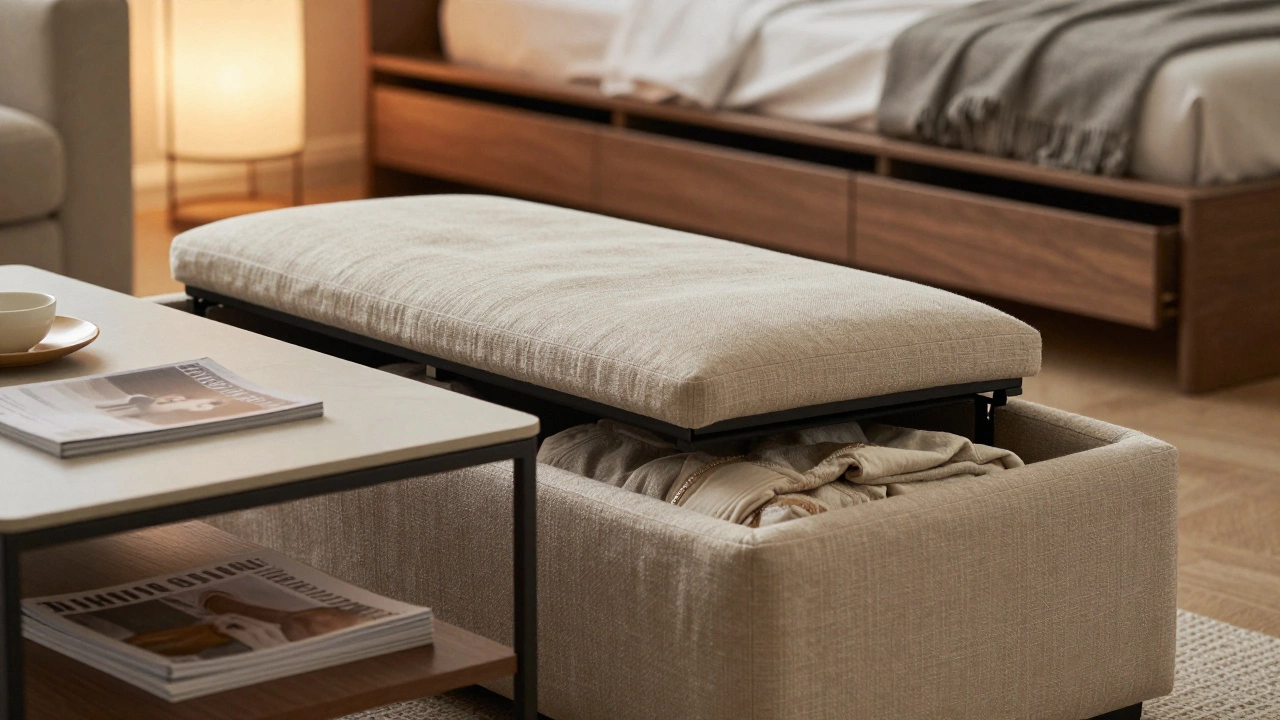
In a house without closets, every piece of furniture should earn its keep by storing something. This is where Storage ottomans are upholstered seating furniture with hollow interiors designed to hide blankets, toys, or seasonal clothing become essential. They replace coffee tables or extra chairs while hiding clutter inside.
Consider these high-impact swaps:
- Bed Frames with Drawers: Under-bed space is wasted potential. Buy a platform bed with deep drawers or install rolling bins underneath. This alone can free up a dresser’s worth of space.
- Lift-Top Coffee Tables: These allow you to store remotes, magazines, and snacks out of sight, keeping the living room tidy.
- Bench Seating with Lids: Place one at the foot of the bed or entryway. It provides seating for putting on shoes and stores off-season boots or coats.
Look for modular furniture systems. Brands like IKEA offer cube organizers that can be configured as bookshelves, room dividers, or enclosed cabinets depending on whether you add doors or fabric bins. Flexibility is crucial when you don’t have fixed closet infrastructure.
Utilizing Hidden and Awkward Spaces
We often ignore spaces because they seem too small or odd-shaped. In a closetless home, these nooks are gold mines. Think about the area above door frames, the corner behind a bathroom sink, or the dead space under stairs.
Over-the-Door Organizers are the unsung heroes of rental-friendly storage. Originally designed for shoes, modern versions work for pantry items, cleaning supplies, and even jewelry. Hang one on the back of your bedroom door for belts, scarves, and hats. It keeps them accessible but off the floor.
Another trick is using the inside of cabinet doors. Adhesive hooks or magnetic strips can hold spices in the kitchen, makeup in the bathroom, or office supplies in a study. This utilizes vertical surface area that usually goes unused.
| Solution | Best For | Installation Difficulty | Renter-Friendly? |
|---|---|---|---|
| Over-the-Door Hooks | Clothes, Accessories | Easy | Yes |
| Under-Bed Rollers | Seasonal Items, Shoes | Medium | Yes |
| Wall-Mounted Cabinets | Kitchen/Bathroom Supplies | Hard | No (Drilling Required) |
| Tension Rod Bins | Toys, Linens | Easy | Yes |
The Power of Open Wardrobes and Racks
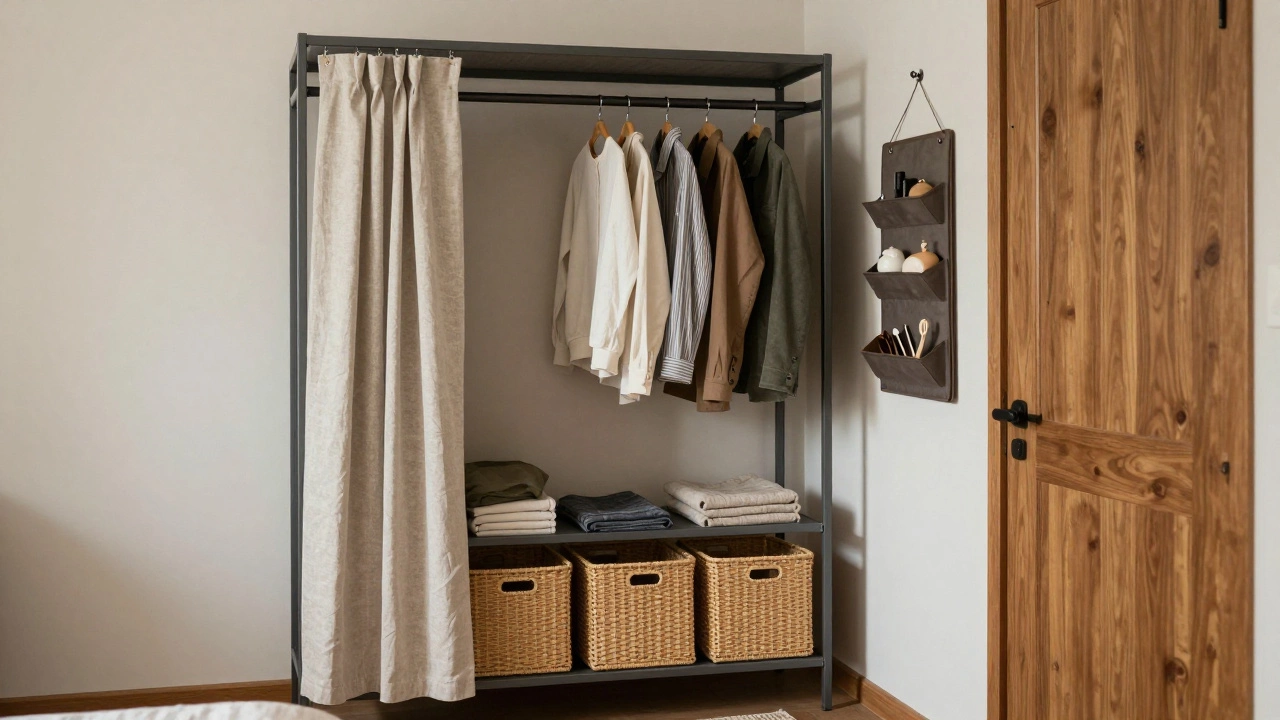
If you miss having a closet, build one. An open wardrobe system mimics the function of a closet without the doors. Using a sturdy garment rack or a dedicated clothing rod mounted to the wall, you can hang shirts, dresses, and pants visibly.
This approach works best if you embrace a capsule wardrobe. When everything is visible, you’re less likely to buy duplicates or lose items. Add baskets below the hanging rod for folded items like jeans and t-shirts. To prevent it from looking messy, stick to a consistent color palette or fold clothes uniformly.
For privacy, drape a simple curtain across the front of the rack. It’s cheaper than building doors and adds a soft, decorative touch to the room. This solution is particularly effective in bedrooms where floor space is limited.
Organizational Systems That Keep Clutter at Bay
Having storage space is only half the battle. The other half is maintaining order. Without defined compartments, items tend to spill over. Use uniform containers to create visual calm. Clear plastic bins allow you to see contents quickly, while opaque boxes with labels look neater.
Label everything. It sounds obvious, but in a house without closets, you won’t remember what’s in the third bin down unless it’s marked. Use a label maker or clean handwritten tags. Group similar items together: all electronics in one zone, all linens in another.
Regularly audit your belongings. Every six months, ask yourself if you’ve used an item. If not, donate or sell it. In a closetless environment, hoarding has immediate visual consequences. Keeping volume low makes any storage solution look intentional rather than desperate.
DIY vs. Professional Installation
Deciding whether to DIY or hire help depends on your budget and skill level. Simple solutions like tension rods, adhesive hooks, and freestanding racks are easy weekend projects. However, installing heavy built-in shelves or wall-mounted cabinets requires precision.
If you choose DIY, invest in good tools. A stud finder, level, and power drill are non-negotiable for secure installations. Measure twice, cut once. Mistakes in mounting hardware can lead to falling shelves, which is dangerous and costly to fix.
Hiring a carpenter is worth it for permanent fixtures. They can customize dimensions to fit awkward angles or narrow gaps perfectly. While it costs more upfront, professional installation ensures longevity and safety, especially in homes with uneven floors or old walls.
Can I install shelves without drilling holes?
Yes, you can use tension-rod shelving systems or command strips rated for heavy loads. Tension rods press between the floor and ceiling, providing sturdy support for light to medium items. Command strips work well for lightweight decor but may fail with heavy books or electronics.
What is the best furniture for small rooms without closets?
Multi-functional furniture like storage ottomans, lift-top coffee tables, and beds with under-storage drawers are ideal. They maximize utility per square foot, reducing the need for separate dressers or wardrobes.
How do I organize clothes without a wardrobe?
Use a combination of open garment racks for hanging items and labeled bins for folded clothes. Keep frequently worn items easily accessible and store seasonal clothing in under-bed containers or high shelves.
Is it expensive to add storage to a closetless room?
It varies widely. DIY solutions like tension rods and second-hand furniture can cost under $100. Custom built-ins or professional installation can range from $500 to several thousand dollars depending on materials and labor.
Where can I find inspiration for closetless storage?
Pinterest and Instagram are great for visual ideas. Search terms like "open wardrobe hack," "small bedroom storage," or "renter-friendly organization." Look for real-life examples rather than staged photos to gauge practicality.