Find Your Japanese Pan
Select a category below to find the perfect pan for your kitchen.
By Dish
I want to make a specific meal.
By Technique
I need a specific cooking method.
By Material
I prefer a specific build quality.
By Shape
I know what it looks like.
Please select an option above.
The Result
Best For:
Key Features:
Ever stood in front of a kitchen store or scrolled through an online shop, saw a sleek, flat-bottomed skillet with low sides, and wondered what it’s actually called? If you’ve ever tried making perfect okonomiyaki or fluffy tamagoyaki (Japanese rolled omelet), you know that the right tool matters. But here’s the twist: there isn’t just one "Japanese pan." There are several, each designed for a specific dish, cooking method, and cultural tradition.
In Japan, cookware is deeply tied to cuisine. You won’t find a single universal pan name because the culture values precision in cooking. Whether you’re frying tempura, grilling yakitori, or simmering nimono (stewed dishes), the vessel changes. So, what is a Japanese pan called? The short answer: it depends on what you’re cooking. Let’s break down the most common types, their names, and why they matter.
The Fry Pan: Furai Pan (The All-Purpose Skillet)
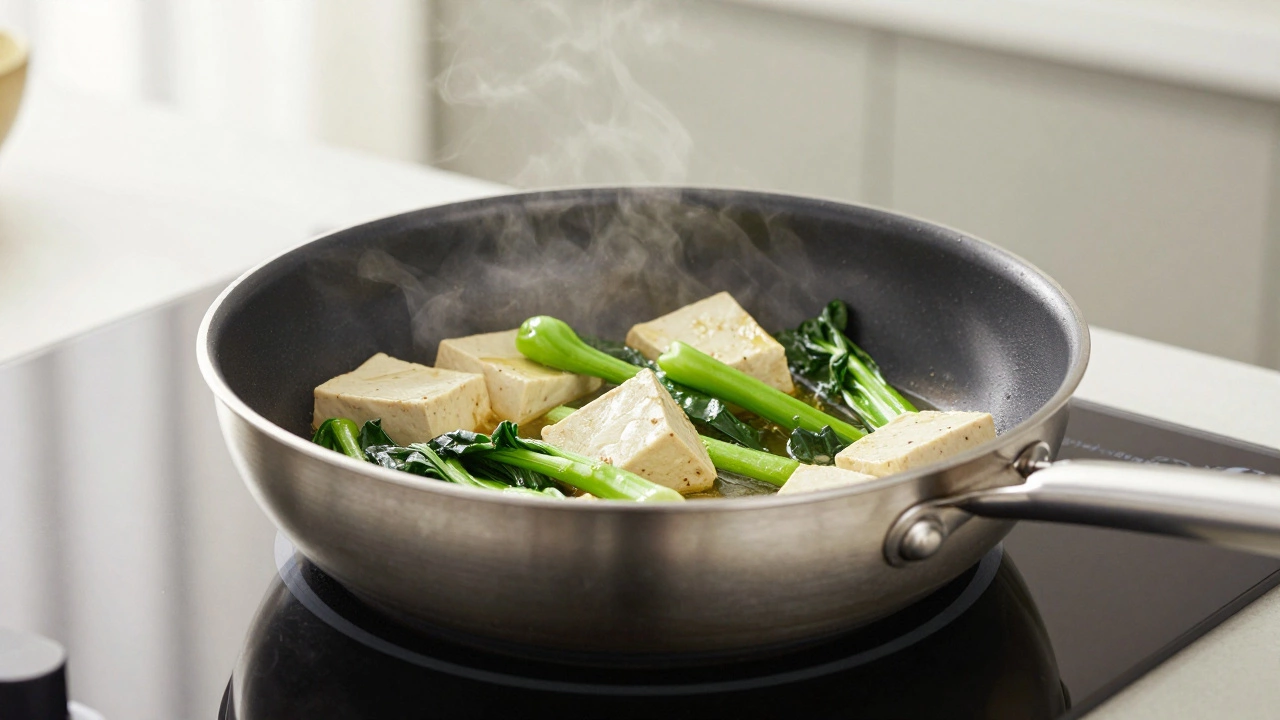
If you’re looking for the closest equivalent to a Western frying pan, it’s called a furai pan (フライパン). This is the go-to pan for everyday cooking in Japanese households. It’s used for sautéing vegetables, frying eggs, searing meat, and even making quick stir-fries.
Unlike some Western skillets that have high sloped sides, many traditional furai pans have straighter, lower walls. This design makes it easier to flip food, especially when working with delicate items like fish fillets or tofu. Modern versions often come with non-stick coatings, but older models were made from cast iron or stainless steel.
Why does this matter? Because if you’re trying to replicate home-style Japanese cooking-like miso-glazed salmon or simple shokupan (bread) toast-you need a pan that heats evenly and responds quickly to temperature changes. A good furai pan delivers exactly that.
- Material: Often aluminum, stainless steel, or cast iron
- Best for: Everyday frying, searing, light sautéing
- Common size: 18-26 cm diameter
- Pro tip: Look for a heavy base for better heat distribution
The Omelet Pan: Tamagoyaki Pan (Rectangular Rolled Omelet Maker)
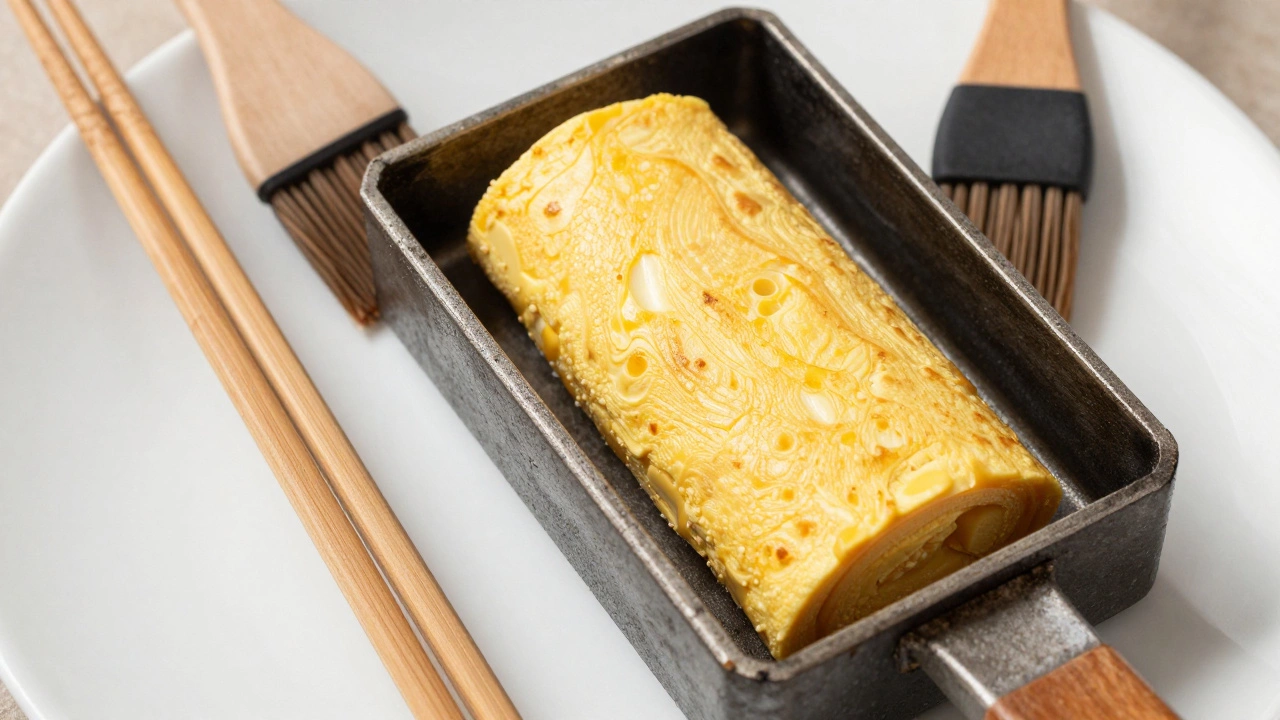
Now we get into something uniquely Japanese: the tamagoyaki pan (卵焼き器). This rectangular, shallow pan is specifically designed for making tamagoyaki-the layered, sweet-savory rolled omelet served at breakfasts, bento boxes, and izakayas.
Its shape is no accident. The long, narrow form allows you to pour thin layers of beaten egg, roll them neatly, and repeat until you build up a compact log. Using a regular square or round pan would make rolling nearly impossible without breaking the structure.
You might see these pans made from carbon steel, enameled iron, or coated aluminum. Some even have slightly raised edges on two sides to help guide the rolling motion. They’re small-usually around 10 x 7 cm-but incredibly effective.
Fun fact: In professional kitchens, chefs use chopsticks and a spatula together to manipulate the egg inside the tamagoyaki pan. At home, many people use a silicone brush to oil the surface between layers. Either way, the pan itself is essential.
- Shape: Rectangular, shallow
- Size: Typically 10 x 7 cm
- Use case: Only for tamagoyaki
- Alternative: Can substitute with a small rectangular baking dish if desperate
The Griddle: Hobanbei (Flat Griddle for Okonomiyaki)
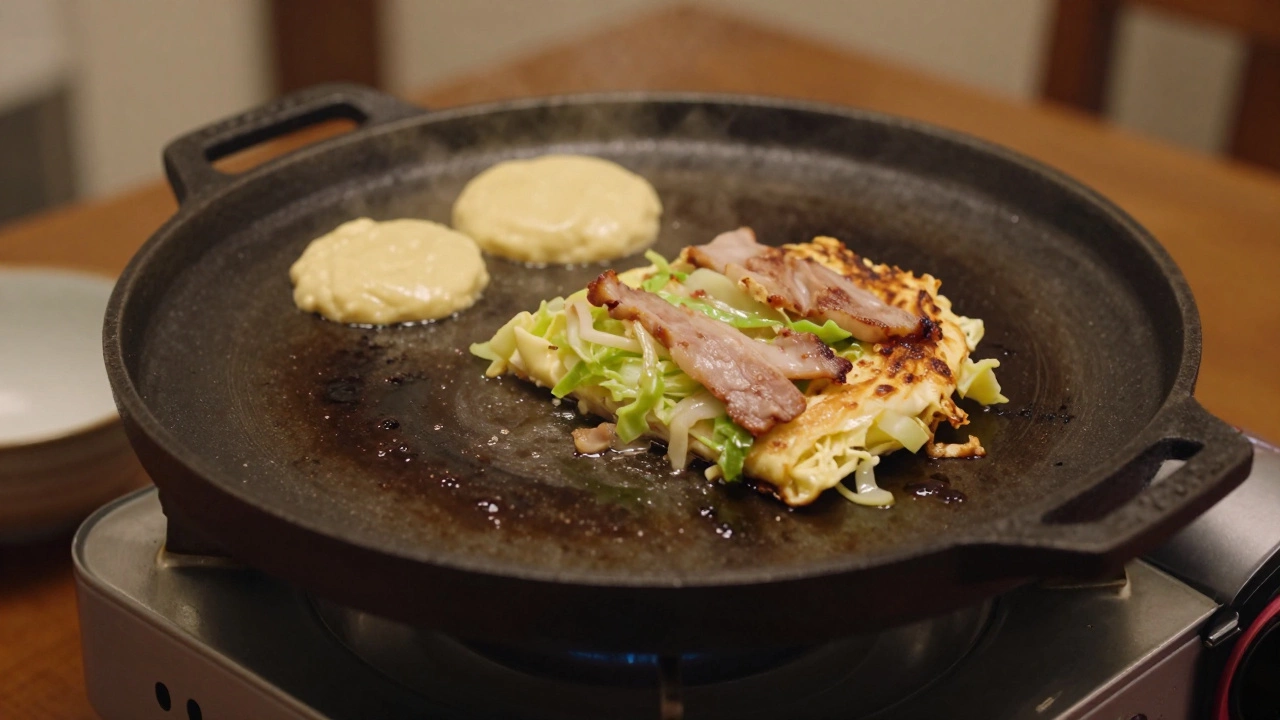
Next up is the hobanbei (鉄板), also known as a teppan or flat griddle. This large, flat metal surface is used primarily for okonomiyaki (“as-you-like-it pancake”) and monjayaki (a runnier version popular in Tokyo).
Think of it as a hybrid between a frying pan and a grill. Unlike a standard skillet, the hobanbei has almost no rim, which lets you spread batter thinly across its entire surface. That’s crucial for achieving the crispy bottom and tender interior that define great okonomiyaki.
In restaurants, these griddles are built into tables so diners can cook their own meals. At home, you’ll find portable electric versions or stovetop-compatible ones. Cast iron is still preferred by purists because it retains heat beautifully and develops a natural non-stick patina over time.
Here’s where things get interesting: while Western cooks might use a crepe maker for similar results, the hobanbei offers more control over thickness and texture. Plus, it doubles as a platform for assembling toppings before serving.
- Surface area: Usually 30-40 cm wide
- Heat retention: Excellent due to mass
- Cleaning note: Season regularly to prevent rust
- Dish pairing: Okonomiyaki, monjayaki, yakisoba
The Iron Skillet: Aburaage Pan / Tetsubin (Cast Iron Cookware)
Wait-did I say “aburaage pan”? Not quite. What I meant was tetsubin (鉄瓶), though technically that refers to a kettle. For actual cast iron skillets, Japanese call them tetsu nabe (鉄鍋) or simply refer to them by material rather than function.
These heavy-duty pans excel at slow-cooking techniques like braising, stewing, and deep-frying. One famous example is the donabe (土鍋), a clay pot often mistaken for a pan but actually used for rice, soups, and simmered dishes.
But back to iron: traditional Japanese blacksmiths craft shichirin (七輪)-compatible grills too-small charcoal braziers paired with iron plates for tabletop grilling. These aren’t strictly “pans,” but they serve overlapping purposes.
The key takeaway? When someone says “Japanese iron pan,” they likely mean either a tetsu nabe (for general use) or a specialized griddle setup. Both prioritize durability and even heating over convenience.
| Pan Name | Type | Primary Use | Material Options |
|---|---|---|---|
| Furai Pan | Saute Pan | Everyday frying, searing | Aluminum, Stainless Steel, Cast Iron |
| Tamagoyaki Pan | Specialty Omelet Pan | Rolled omelets only | Carbon Steel, Enameled Iron |
| Hobanbei | Flat Griddle | Okonomiyaki, Monjayaki | Cast Iron, Electric Heating Element |
| Tetsu Nabe | Heavy Skillet/Pot | Braising, Stewing | Cast Iron, Enamel-Coated |
Why Do Names Matter?
Because knowing the correct term helps you search smarter. If you type “Japanese frying pan” into Amazon, you’ll get mixed results-including random woks and generic skillets. But searching for “furai pan” or “tamagoyaki pan” narrows your options dramatically.
It also connects you to authentic recipes. Many English-language blogs translate everything loosely, leading to confusion. By using original terms, you tap directly into Japanese culinary resources, YouTube tutorials, and community forums where real practitioners share tips.
Plus, understanding naming conventions reveals deeper insights about Japanese cooking philosophy: respect for ingredients, attention to detail, and adaptation of tools to tasks. Each pan exists not just to hold food-it enhances flavor, texture, and presentation.
Buying Tips & Maintenance
Before buying any Japanese pan, consider three factors:
- Compatibility: Will it work on your stove? Induction-ready models usually have magnetic bases labeled clearly.
- Weight: Heavier pans retain heat better but require stronger arms. Lighter ones respond faster but may warp under high temps.
- Maintenance: Non-stick coatings degrade faster; bare metals need seasoning. Choose based on how much effort you want to put in.
For cleaning, avoid abrasive sponges unless dealing with stubborn residue. Hand-wash whenever possible, dry immediately, and apply a thin layer of oil after washing cast iron pieces.
Is there one word for all Japanese pans?
No. Just like English uses “skillet,” “wok,” and “griddle,” Japanese distinguishes between furai pan (fry pan), tamagoyaki pan (omelet pan), and hobanbei (griddle). There’s no umbrella term covering all types.
Can I use a regular frying pan instead of a tamagoyaki pan?
Technically yes, but expect uneven rolls and broken layers. The rectangular shape of a tamagoyaki pan ensures consistent thickness and easy folding. Substitutes include mini loaf pans or small rectangular baking dishes.
Are Japanese pans safer than Western ones?
Safety depends on materials, not origin. Traditional Japanese cast iron contains minimal additives compared to some imported alloys. Always check certifications (e.g., FDA compliance) regardless of brand.
Where can I buy authentic Japanese pans?
Look for retailers specializing in Asian imports, such as Sur La Table, Williams Sonoma, or dedicated sites like Japan Centre. Local Japanese markets sometimes carry handmade varieties.
Do Japanese pans last longer?
Often, yes. Brands like Tojiro, Miyabi, and Shun emphasize craftsmanship and longevity. Proper care extends lifespan significantly-even budget-friendly options perform well for years.