Medicare & Chairlift Cost Estimator
Use this tool to estimate your specific chairlift installation costs based on staircase type and calculate potential tax benefits. Remember: Medicare typically does not cover standard installed chairlifts.
Enter details to see estimates.
Total Project Cost
$0
Medicare Coverage Status
Not CoveredPotential Tax Deduction
$0
Based on 7.5% AGI threshold rule. Consult a tax professional.You stare at the stairs. They look like a mountain range you can’t climb anymore. Maybe your knees are shot, maybe it’s balance issues from a stroke, or maybe you’re just tired of the daily struggle. So you think: "I need a chairlift." Then comes the sticker shock. A decent one costs thousands. Your first thought? "Doesn't Medicare cover this?"
Here is the hard truth that catches most people off guard: Medicare does not cover standard residential chairlifts.
It sounds unfair, especially when you know Medicare covers wheelchairs and scooters. But there is a specific logic behind this rule, and understanding it might save you from a denied claim later. Let’s break down exactly why this happens, what exceptions exist, and where you can actually find money to get those stairs conquered.
Why Medicare Says No to Stair Lifts
To understand the denial, you have to look at how Medicare defines medical equipment. They split items into two buckets: Durable Medical Equipment (DME) and Assistive Devices for Activities of Daily Living.
Medicare Part B covers DME if it meets three strict criteria:
- Durability: It must last at least three years.
- Medical Necessity: It must be used for a medical reason, not just convenience.
- Home Use: It must be prescribed by a doctor for use in your home.
So, isn’t a chairlift durable? Yes. Is it medically necessary? Often, yes. So why the rejection?
The issue lies in the definition of "medical necessity." The Centers for Medicare & Medicaid Services (CMS) views stair lifts as structural modifications to your home, similar to installing an elevator or widening doorways. Medicare generally pays for devices that help with mobility *within* the home once you are already inside, or devices that replace body function (like a wheelchair replacing leg function). They argue that a stair lift is primarily for accessing different floors, which they categorize under housing improvements rather than direct medical treatment.
Think of it this way: Medicare will pay for your wheelchair so you can move around your living room. They won’t pay for the ramp or the lift that gets you from the street to the living room if it requires permanent installation into the building structure.
The Rare Exceptions: When You Might Get Coverage
Just because the general rule is "no," doesn't mean it's impossible. There are narrow loopholes. If you fall into these categories, you might get partial or full coverage.
1. The "Primary Residence" and Medical Necessity Proof
If a stair lift is the only way you can access essential areas of your home (like the bathroom or bedroom), and moving to a single-story home is not feasible, some local Medicare Administrative Contractors (MACs) may approve it. This is rare and highly dependent on your region. You need rock-solid documentation from your physician stating that without the lift, you cannot perform basic activities of daily living (ADLs).
2. Portable vs. Installed Units
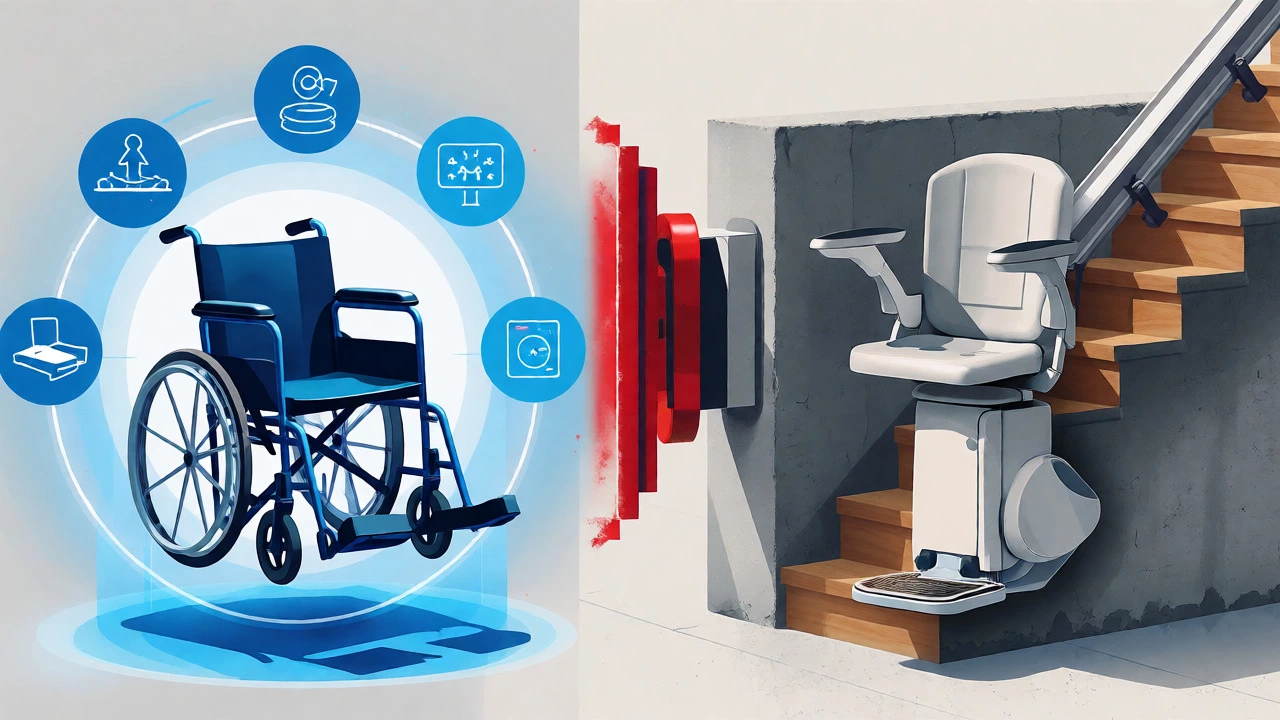
This is a big distinction. Standard rail-mounted chairlifts are installed permanently. However, portable lifting devices-like ceiling lifts or floor-based patient lifts-are often covered as DME. If you can use a portable lift system instead of a fixed stair track, Medicare is much more likely to pay. These units don’t require drilling into your staircase structure, keeping them in the "equipment" bucket rather than the "construction" bucket.
3. Medicaid Waivers
If you qualify for Medicaid (not just Medicare), many states offer Home and Community-Based Services (HCBS) waivers. These waivers specifically fund home modifications to keep seniors out of nursing homes. In states like California, New York, or Texas, Medicaid might cover up to $50,000 or more for home modifications, including stair lifts. Check your state’s specific HCBS program guidelines.
Medicare Advantage Plans: The Wild Card
If you have Medicare Advantage (Part C) instead of Original Medicare, your luck might change. Unlike Original Medicare, which has federal rules, Medicare Advantage plans are offered by private companies like UnitedHealthcare, Humana, or Aetna. These companies compete on benefits.
Many newer Advantage plans include "over-the-counter" allowances or specific home modification benefits. Some plans offer a credit (e.g., $500-$1,000 per year) toward fitness programs, hearing aids, or home safety modifications. While they rarely cover the full cost of a $4,000 chairlift, they might subsidize part of it. Always call your plan provider directly and ask: "Do you have any home modification benefits or DME riders that apply to stair lifts?"
Real-World Costs: What Will You Actually Pay?
Since you’re likely paying out of pocket, let’s look at the numbers. Prices vary wildly based on whether your staircase is straight or curved.
| Staircase Type | Equipment Cost | Installation Cost | Total Estimated Range |
|---|---|---|---|
| Straight Staircase | $2,000 - $3,500 | $500 - $800 | $2,500 - $4,300 |
| Curved Staircase | $8,000 - $12,000 | $1,000 - $2,000 | $9,000 - $14,000 |
| Outdoor Lift | $4,000 - $7,000 | $1,000 - $1,500 | $5,000 - $8,500 |
| Rental (Monthly) | N/A | Includes Install/Maint | $150 - $300/month |
Straight lifts are cheap because the rails are mass-produced. Curved lifts are expensive because every inch of the rail is custom-fabricated to match your specific staircase geometry. If you have a landing or a turn, brace yourself for the higher end of the price spectrum.
Alternative Funding Sources That Actually Work
Since Medicare usually says no, where do people find the cash? Here are four proven strategies.
Department of Veterans Affairs (VA)
If you served in the military, the VA is your best friend. Under the Specially Adapted Housing (SAH) grant, veterans with service-connected disabilities can receive up to $106,676 (as of recent adjustments) for home modifications. This includes stair lifts. Even if you don’t qualify for SAH, the Special Housing Adaptation (SHA) grant offers smaller amounts. Apply through your local VA office; the paperwork takes time, but the payoff is huge.
Tax Deductions for Medical Expenses
You can’t deduct the whole cost, but you might deduct the portion that exceeds the increase in your home’s value. IRS Publication 502 allows you to deduct medical expenses that exceed 7.5% of your Adjusted Gross Income (AGI). If the lift costs $5,000 but only increases your home value by $2,000, you might be able to deduct $3,000. Keep all receipts and consult a tax pro.
Long-Term Care Insurance
If you bought long-term care insurance decades ago, check your policy. Many policies cover "home health aides" and sometimes equipment rentals. Read the fine print for "mobility aids." Some modern hybrid life/LTC policies allow you to tap into the death benefit early for home modifications.
State and Local Grants
Agencies on Aging often have discretionary funds. Call your local Area Agency on Aging (AAA). Ask about "Assistive Technology Lending Libraries" or "Home Modification Grants." These are often overlooked but can provide hundreds or thousands in aid for low-to-moderate income seniors.
Should You Rent Instead of Buy?
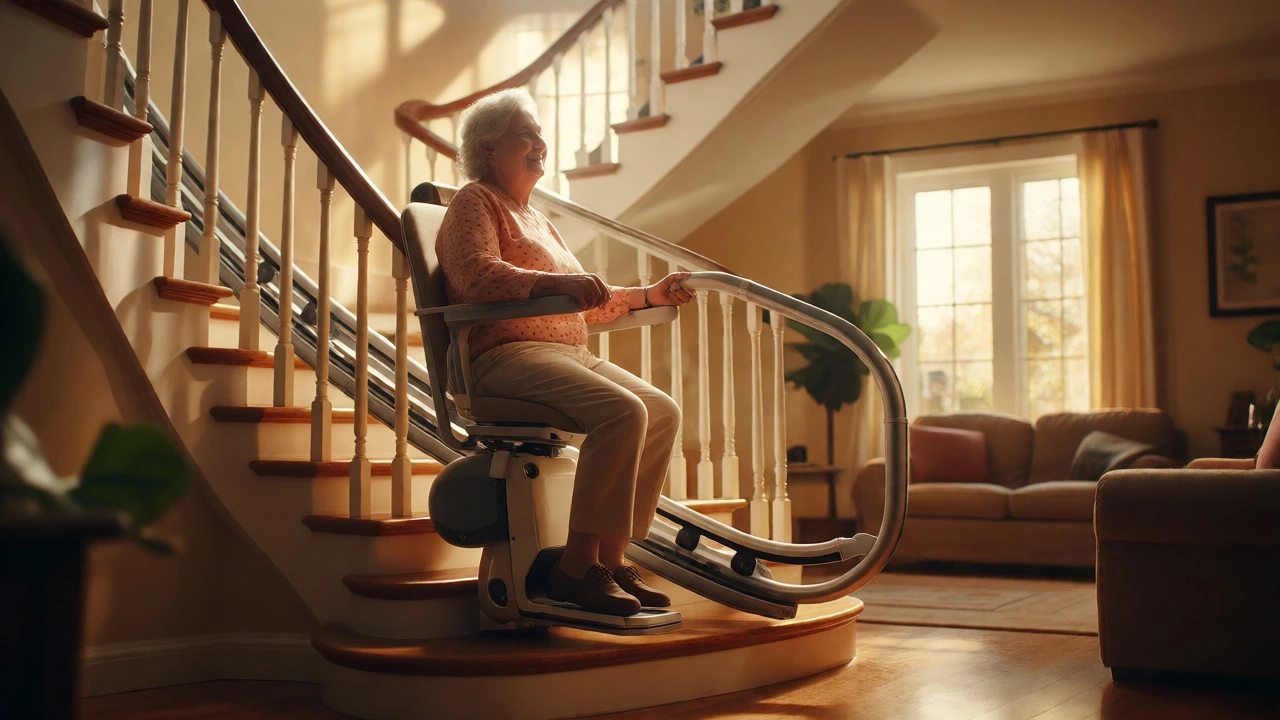
If you aren’t sure you’ll stay in the house, or if you’re recovering from surgery temporarily, renting makes sense. Monthly rentals range from $150 to $300. This usually includes maintenance and installation. Over five years, buying is cheaper. Over six months, renting wins. Calculate your break-even point before signing a contract.
Final Checklist Before You Buy
Don’t just order online. Follow these steps to avoid mistakes:
- Get a Doctor’s Letter: Even if Medicare denies it, having a note helps with other grants or tax deductions.
- Measure Twice: Measure the width of your stairs, the height of the bottom step, and the depth of the top landing. Narrow stairs (<30 inches) might not fit a standard seat.
- Check Power Source: Most lifts run on AC power with battery backup. Ensure you have an outlet nearby or budget for electrician fees.
- Ask About Warranties: Look for a minimum 2-year warranty on parts and labor. Cheap imports often lack support.
Living with limited mobility is tough enough without worrying about stairs. While Medicare won’t write the check, your state, your veteran status, or your tax strategy might. Do the research, call the agencies, and get those stairs solved.
Does Medicare cover stair lifts for seniors?
Generally, no. Medicare considers stair lifts to be home modifications rather than durable medical equipment (DME). However, exceptions exist for portable lifts or under specific Medicaid waiver programs.
Can I deduct a stair lift on my taxes?
Yes, partially. You can deduct the cost of a stair lift as a medical expense if it exceeds 7.5% of your adjusted gross income. However, you must subtract the amount the lift increased your home's resale value from the deductible total.
How much does a curved stair lift cost?
A curved stair lift typically costs between $9,000 and $14,000, including installation. This is significantly more than straight models ($2,500-$4,300) due to the custom fabrication required for the rail.
Does Medicaid pay for chairlifts?
Often, yes. Many state Medicaid programs have Home and Community-Based Services (HCBS) waivers that cover home modifications, including stair lifts, to help individuals remain in their homes rather than entering nursing facilities.
Is it better to rent or buy a stair lift?
Renting is better for temporary needs (under 2 years) or if you plan to move soon. Buying is more cost-effective for long-term residents (over 3-5 years). Rentals usually include maintenance, while purchases require separate service contracts.