Sofa Size Calculator
Measure Your Space
Calculate the perfect sofa size for your room based on room dimensions and TV distance.
Your Ideal Sofa Dimensions
Choosing the right sofa isn’t about picking the shiniest one in the showroom. It’s about finding something that fits your space, your lifestyle, and your body. Too many people walk away with a sofa that looks great in photos but leaves them sinking in after ten minutes. Or worse-they buy something too big and now their living room feels like a hallway. You don’t need to spend thousands. You just need to know what to look for.
Start with your space, not your style
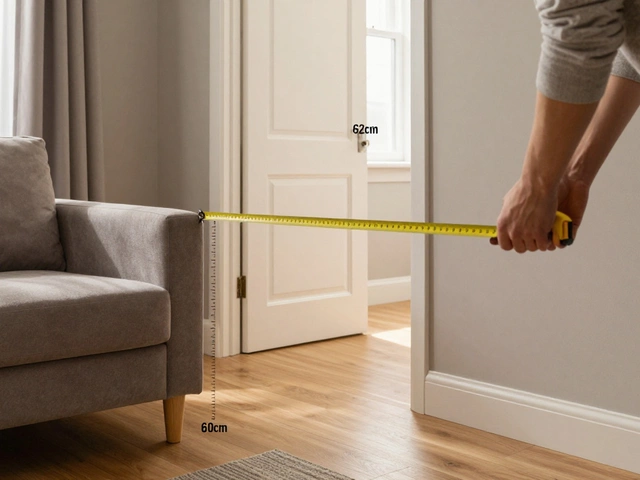
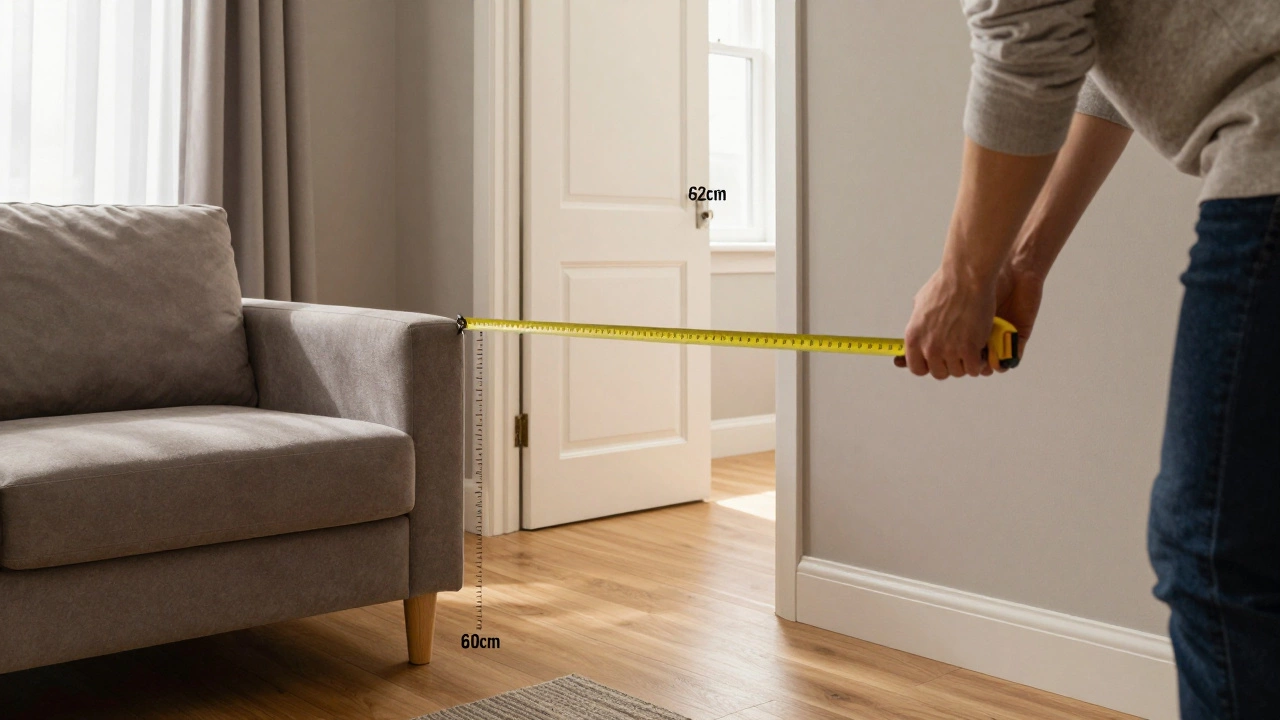
Before you fall in love with a velvet Chesterfield or a sleek mid-century modern piece, measure your room. Not just the wall. Measure the door, the hallway, the stairs. I’ve seen people order sofas that never made it past the landing. A standard interior door in New Zealand is 82 cm wide. Most sofas need at least 85 cm to slide through sideways. If your door is tight, look for models with removable legs or modular sections.
Now, measure the floor space. Leave at least 60 cm of walking room around the sofa. If you have a TV across the room, sit where you’ll watch and check if your knees are at a natural angle. If you’re leaning forward, the sofa is too far. If you’re craning your neck, it’s too close. A good rule? The distance from your sofa to the TV should be 1.5 times the screen size. So for a 55-inch TV, sit about 2.1 meters away.
Test the frame, not just the cushion
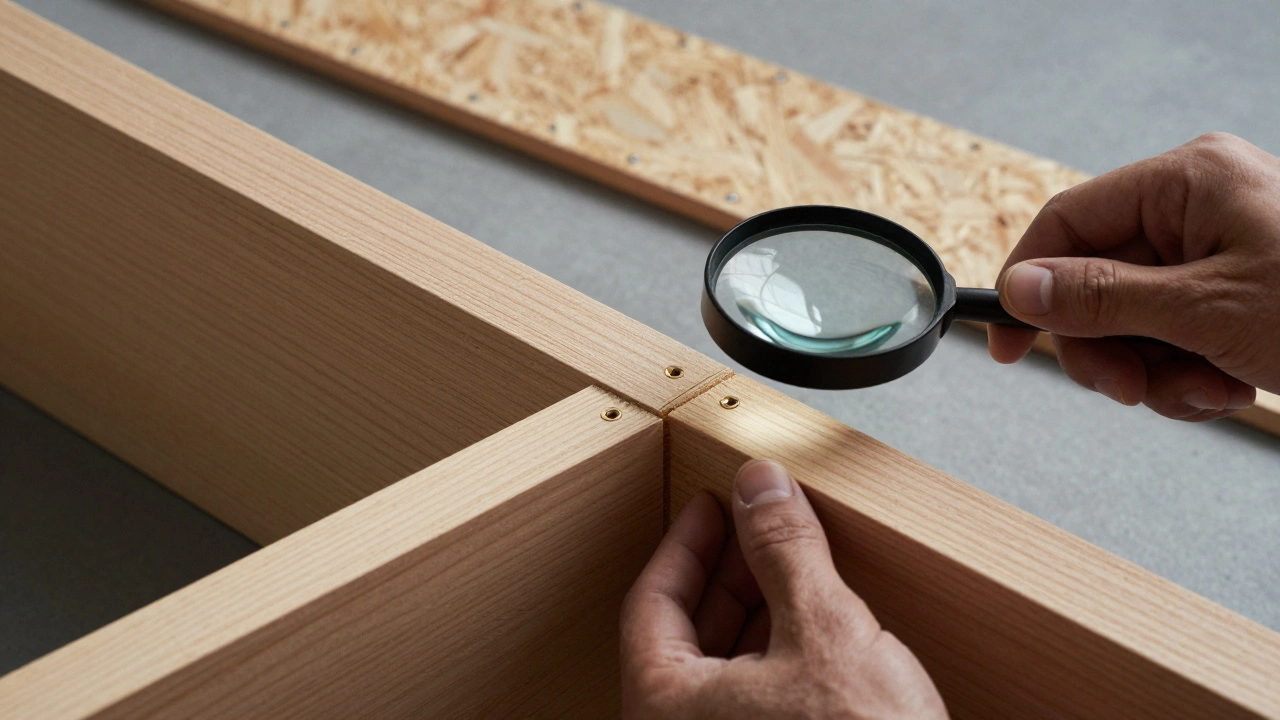
Most sofas last 7-10 years. The frame is what holds up-literally. A cheap frame will sag, creak, or crack long before the fabric wears out. Look for hardwood frames: kiln-dried birch, beech, or oak. Avoid particleboard or plywood. If you can, lift one end of the sofa. A solid frame won’t twist or flex. If it does, walk away.
Check the joints. They should be glued and screwed, not just stapled. Turn the sofa over if you can. You’ll see the construction. If you see nails or staples holding the frame together, it’s a red flag. High-end brands use double-doweled joints. You won’t see that on a $1,200 sofa from a big-box store, but you’ll see it in a well-made one from a local craftsman.
Comfort isn’t about softness-it’s about support
Here’s the myth: the softer the sofa, the more comfortable it is. That’s wrong. A sofa that sinks too deep puts pressure on your lower back and makes it hard to get up. You want a balance. Sit down. Press your hand into the cushion. It should give slightly, then push back. If it feels like you’re sinking into a beanbag, skip it.
Look at the cushion fill. High-density foam (35 kg/m³ or higher) lasts longer than low-density foam. Some sofas mix foam with down or feathers. That feels luxurious at first, but it flattens fast. You’ll be fluffing it every week. If you want that plush feel, go for foam with a down wrap-foam core with a thin layer of feathers on top. It gives softness without the maintenance.
Try sitting in different positions. Lean back. Cross your legs. Lie down if you can. A good sofa supports your spine whether you’re upright or sprawled. If your lower back feels unsupported, it won’t get better with time.
Choose fabric that lives with your life
Do you have kids? Pets? Coffee spills? Then skip the white linen. It’s beautiful, but it’s a time bomb. Stick with performance fabrics. Look for labels like Crypton, Sunbrella, or Revolution. These are stain-resistant, fade-resistant, and easy to clean with a damp cloth. You can even scrub them with mild soap.
Microfiber is another solid choice. It’s durable, soft, and hides pet hair well. Avoid velvet if you have claws-it shows every scratch. Leather is great if you’re okay with the price and the upkeep. Real leather gets better with age, but it needs conditioning every 6 months. Fake leather peels and cracks after a couple of years.
Color matters too. Darker tones hide dirt. Mid-tone greys and taupes are the sweet spot. They don’t scream "I bought this yesterday," but they also don’t look like a coal mine exploded. If you want color, go for a pattern. A subtle stripe or geometric weave breaks up the surface and hides wear.
Size matters more than you think
A three-seater might look perfect in a catalog. But in your room? It might eat up half the floor. In Auckland homes, especially older ones, space is tight. A standard three-seater is 210-240 cm wide. That’s huge. Consider a two-seater with a matching ottoman. It gives flexibility. You can push the ottoman out for extra seating, tuck it under for a footrest, or move it to the bedroom as a bench.
If you’re buying for a small apartment, look for sofas with slim arms. Traditional arms can add 15-20 cm to the width. Slim arms mean more room for movement. Modular sofas are great here too. You can start with a base unit and add pieces later as your needs change.
Depth is just as important as width. A deep sofa (90 cm+) is great for lounging. But if you’re shorter than 170 cm, you’ll feel buried. For average height, aim for 80-88 cm depth. For taller people, 90-95 cm works. Measure your inseam. Your knee should be slightly below the sofa’s seat height.

Don’t ignore the legs
Legs aren’t just decoration. They affect airflow, cleaning, and even the vibe of the room. Low-profile legs (5-10 cm) make a sofa look grounded and modern. They’re great for small spaces because they let light flow underneath.
High legs (15-20 cm) lift the sofa off the floor, making the room feel airier. They’re ideal if you have rugs or if you vacuum often. But if you have pets or kids, avoid legs that are too thin. They can wobble or get knocked over.
Wood legs are classic. Metal legs feel contemporary. Plastic legs? Skip them. They look cheap and don’t last.
Think long-term
The best sofas are designed to last. Look for ones with replaceable cushions. Some brands let you order new foam inserts for half the price of a new sofa. That’s smart. If the fabric is worn but the frame is solid, reupholster it. A good upholsterer can transform a tired sofa for $400-$800. That’s cheaper than buying new.
Warranty matters. A 5-year frame warranty is standard. Anything less? Red flag. A 10-year warranty on the frame means the maker believes in their work. Some companies even offer 25-year warranties on high-end models.
And don’t rush. Wait for sales. The biggest discounts happen in January and July in New Zealand. That’s when retailers clear out old stock. You’ll find 30-40% off without sacrificing quality.
What you’re really buying
When you buy a sofa, you’re not buying furniture. You’re buying comfort. You’re buying years of movie nights, late-night chats, and quiet mornings with coffee. It’s the anchor of your living space. Don’t let marketing tricks or a pretty photo sway you. Go in with your measurements, your priorities, and your eyes open. The perfect sofa isn’t the one everyone else wants. It’s the one that fits your life.
How do I know if a sofa is too big for my room?
Measure your room and leave at least 60 cm of walking space around the sofa. If the sofa blocks doorways, covers more than half the floor, or makes it hard to move furniture, it’s too big. A good test: walk around the room with a tape measure. If you can’t move freely without bumping into things, scale down.
Is leather or fabric better for a sofa?
Leather lasts longer and looks richer, but it’s pricier and needs conditioning. Fabric is more affordable and comes in endless colors and textures. For homes with kids or pets, performance fabrics like Crypton or microfiber are easier to clean and more durable than leather. Choose leather if you want timeless elegance. Choose fabric if you want flexibility and ease.
Should I buy a sectional or a regular sofa?
Sectionals are great for large living rooms or open-plan spaces where you need lots of seating. If you have a small apartment or a narrow room, a regular sofa with a matching ottoman gives you the same flexibility without overwhelming the space. Sectionals are harder to move and more expensive to reupholster.
How long should a sofa last?
A well-made sofa with a hardwood frame and high-density foam lasts 7-12 years. Cheaper models with particleboard frames and low-density foam may start sagging in 3-5 years. If you care for it-rotate cushions, clean spills quickly, and avoid direct sunlight-it can last even longer.
Can I reupholster an old sofa instead of buying new?
Yes, if the frame is solid. Reupholstering costs $400-$800 depending on fabric and complexity. That’s often half the price of a new sofa. It’s a great option if you love the shape and structure but hate the fabric. Just make sure the frame is free of cracks, wobbles, or loose joints before you start.