Deglazing Liquid Calculator
Recommended Deglazing Liquid
Optimal for FondAdd your chosen liquid to the hot pan, then scrape the bottom vigorously to dissolve the fond. Let it simmer for 1-2 minutes to develop flavor.
Pro Tip: Use a cold liquid (not hot) to create that satisfying sizzle when deglazing. This helps release the fond more effectively.
Ever scraped the bottom of your pan after searing steak, sautéing onions, or browning chicken and wondered what those sticky, dark brown bits are? You’re not alone. Millions of home cooks see them every week but don’t know what to call them-or how to use them. Those brown bits aren’t burnt garbage. They’re not a mistake. They’re fond, and they’re the secret behind deep, rich flavors in almost every great dish you’ve ever tasted.
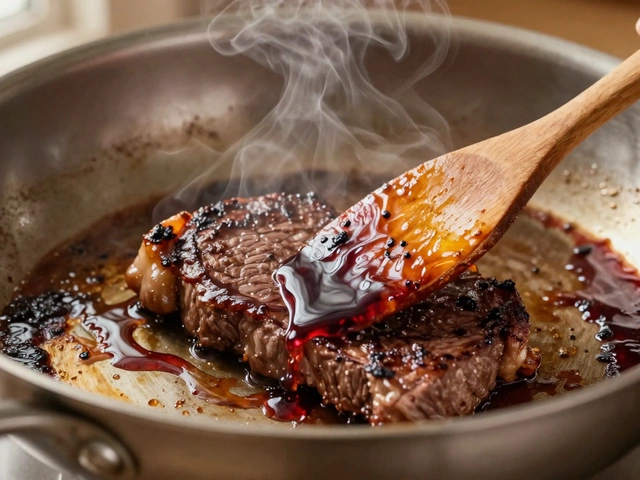
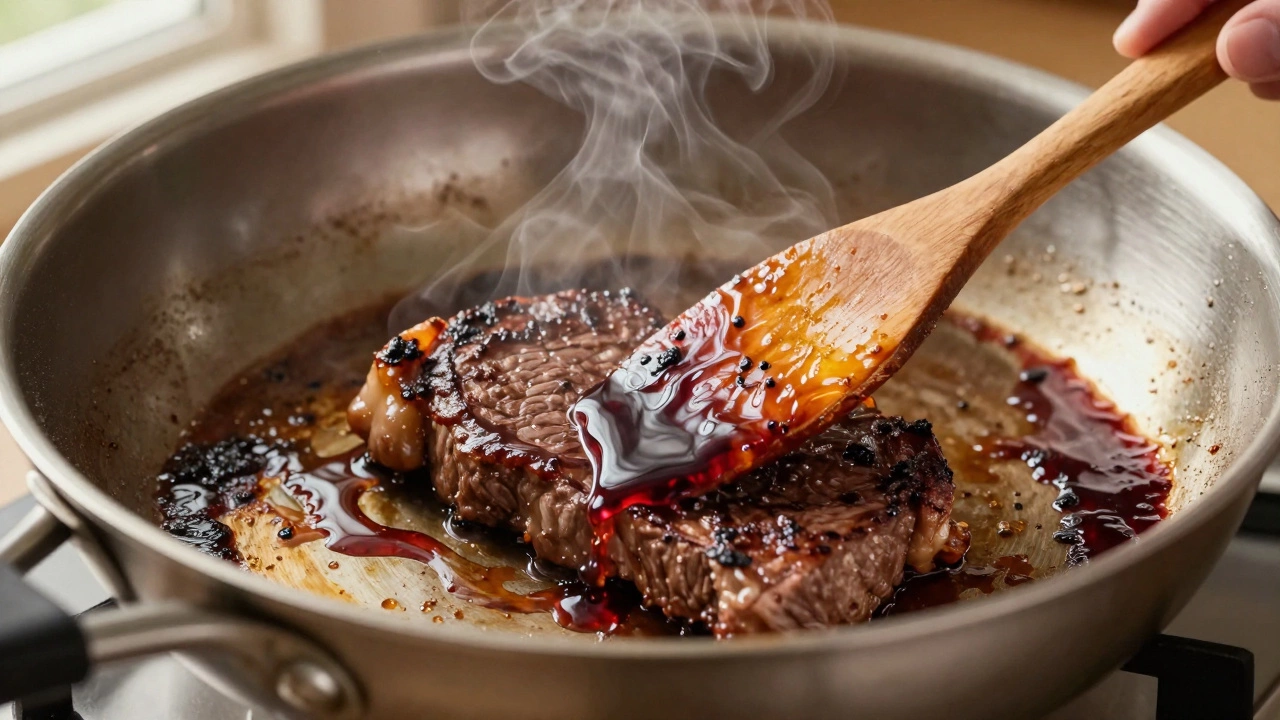
What exactly is fond?
It looks dark, almost black in places. It sticks. It’s stubborn. But that’s the point. The stickiness means it’s packed with flavor compounds that dissolve when you add liquid-wine, stock, water, even vinegar-and transform into the soul of a sauce.
Why fond matters more than you think
Think about why restaurant sauces taste so much deeper than your home versions. It’s not because they use fancy ingredients. It’s because they start with fond. When you skip browning your meat properly, or you scrape the pan too early, you’re leaving flavor on the table. Literally.
Take a simple beef stew. If you dump raw beef chunks into a pot with broth and simmer, you get... beef-flavored water. But if you sear that same beef in batches until deeply browned, then add onions and garlic to the same pan, let them caramelize, and finally pour in a splash of red wine to deglaze? You get a sauce with layers-earthy, sweet, umami, and rich. That’s the fond speaking.
Same goes for chicken thighs. If you brown them skin-side down until golden, then remove them and sauté mushrooms in the same pan, the fond you’ve built becomes the backbone of a creamy mushroom sauce. No extra herbs, no fancy stock needed. Just fond + liquid = magic.
How to build fond properly
Not all browning is equal. You can’t rush it. You can’t crowd the pan. And you definitely can’t turn the heat down.
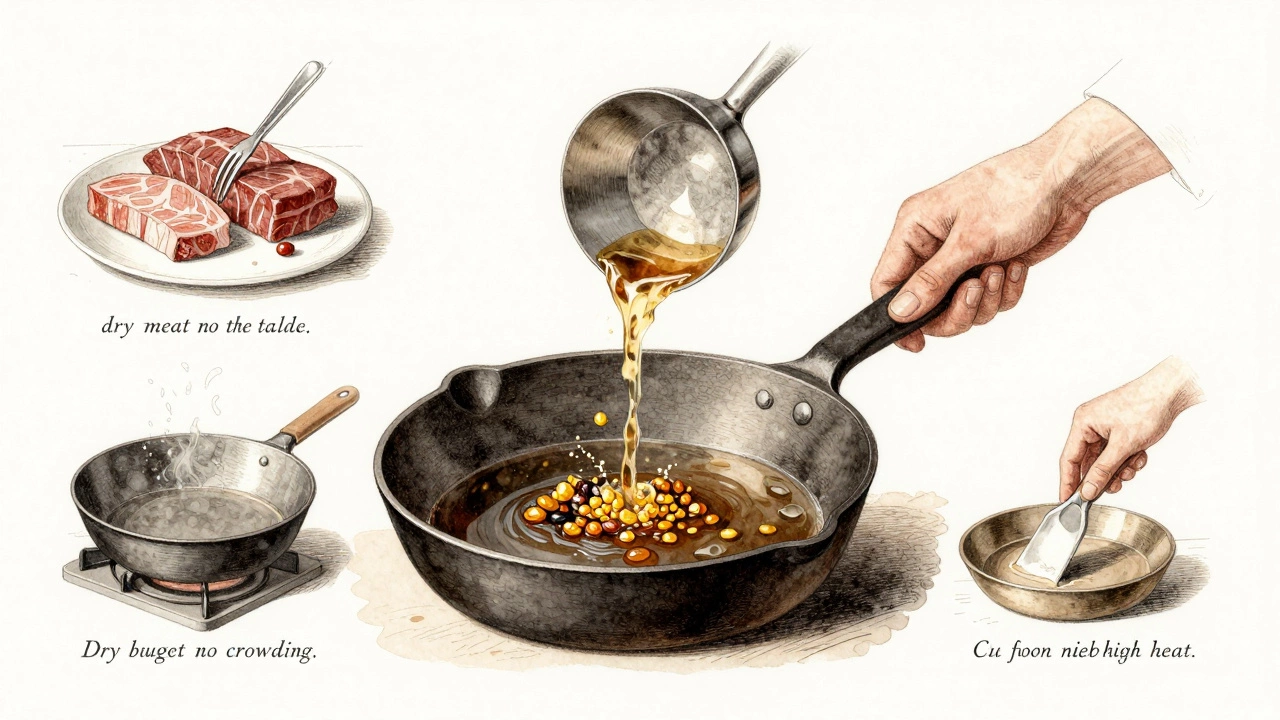
- Use a heavy-bottomed pan-stainless steel or cast iron work best. Nonstick? Avoid it. Fond needs to stick to form.
- Pat your meat dry. Water is the enemy of browning. Wet meat steams instead of sears.
- Don’t move the meat. Let it sit. Let it crust. If it sticks, it’s not ready to flip. When it releases easily, it’s browned.
- Use medium-high to high heat. You need that intense surface heat to trigger the Maillard reaction.
- Don’t salt too early. Salt draws out moisture. Wait until after browning to season.
Once your meat is browned, remove it. Add a little oil if needed, then toss in onions, garlic, or other veggies. Let them soften and brown too. That’s more fond. More flavor. More depth.
How to use fond: deglazing explained
Now that you’ve built it, you need to unlock it. That’s where deglazing comes in.
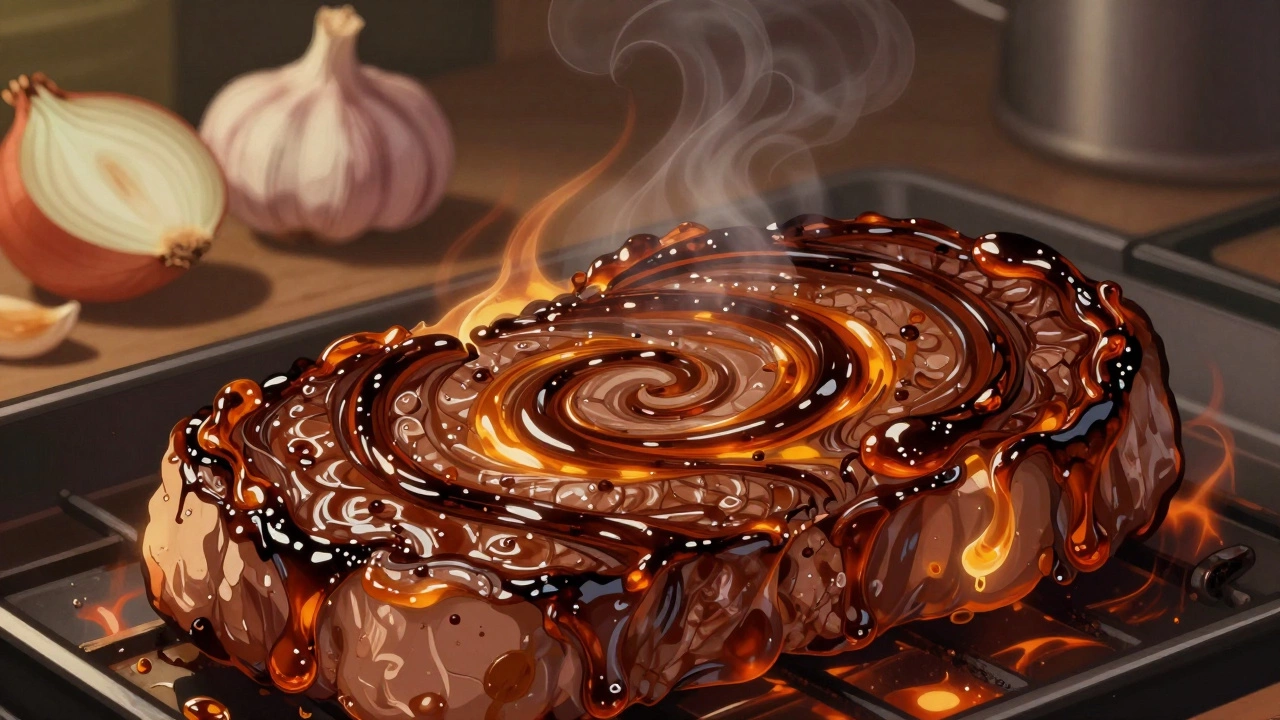
After you’ve browned everything, turn the heat to medium. Pour in a cold liquid-wine, broth, beer, vinegar, even water. It should hiss and steam violently. That’s good. Use a wooden spoon to scrape the bottom. Those brown bits will lift right off. That’s the fond dissolving into your liquid.
Let it bubble for a minute or two. Let the alcohol cook off if you’re using wine. Reduce it until it’s syrupy. That’s your sauce base. Add butter, herbs, cream, or more stock. Done.
Pro tip: If you’re using wine, choose one you’d drink. If it’s not good enough to sip, it’s not good enough to cook with. You don’t need expensive bottles, but avoid cooking wine-it’s salted and full of preservatives.
What pans work best for fond?
Not all pans are created equal when it comes to building fond.
- Stainless steel: The gold standard. It heats evenly, browns aggressively, and lets fond stick just enough to be scraped up later. It’s what professional chefs use.
- Cast iron: Excellent for searing. Retains heat like crazy, so you get deep browning. Just be careful not to let it get too hot and burn the fond before you’re ready.
- Copper: Rare in home kitchens, but fantastic for control. Responds quickly to heat changes. Great for delicate sauces.
- Nonstick: Avoid. Fond won’t form. The surface is too slippery. You’ll get steam, not sear.
If you’re serious about flavor, invest in one good stainless steel pan. It’s the most versatile tool you’ll own for building fond.
Common mistakes that kill fond
You don’t need fancy tools. You just need to avoid these traps:
- Crowding the pan: Too much meat = steam = no browning. Cook in batches.
- Turning too soon: If it sticks, leave it. It’ll release when it’s ready. Forcing it tears the crust.
- Using low heat: Low heat = slow cooking, not browning. You want that sizzle.
- Scraping too early: If you scrape before the fond has formed, you’re just stirring raw bits around.
- Adding liquid while the pan’s too hot: Too hot = violent evaporation. Wait until the pan cools slightly, or the liquid will evaporate before it deglazes.
Real-world examples of fond in action
Here’s how fond shows up in everyday cooking:
- Beef bourguignon: The deep red sauce? Built on fond from seared beef, bacon, and onions.
- Chicken Marsala: That rich, glossy sauce? Deglazed with Marsala wine after browning chicken.
- Vegetarian mushroom risotto: Mushrooms browned in butter create fond that becomes the base for the entire dish.
- Gravy for roast chicken: After roasting, pour off fat, add a splash of broth, scrape the pan-boom, instant gravy.
Even in quick weeknight meals, fond makes a difference. Sear a pork chop. Add a splash of apple cider vinegar. Scrape. Pour over the chop. Instant restaurant-quality finish.
What about burnt bits? Is there a line?
Yes. There’s a difference between fond and burnt.
Fond is dark brown, almost caramel-colored. It smells sweet, nutty, meaty. Burnt is black. It smells bitter, acrid. If you see black char, if it flakes off in hard pieces, if it smells like smoke-that’s burnt. You can’t salvage it. Start over.
That said, a little dark speckling is normal. It’s not a disaster. If it’s sticky and smells good, it’s fond. If it’s flaky and smells bad, it’s burnt. Trust your nose more than your eyes.
Final thought: Flavor is built, not added
Most home cooks think flavor comes from salt, herbs, spices, or fancy sauces. But the real flavor-the kind that lingers on your tongue-comes from the pan. From the browning. From the patience. From the fond.
You don’t need to be a chef. You just need to stop rushing. Let the pan get hot. Let the meat sit. Let the bits stick. And when you add that splash of liquid? Scrape hard. You’re not cleaning the pan. You’re unlocking flavor.
Are the brown bits in my pan burnt?
Not necessarily. Brown, sticky bits are fond-the good stuff. Burnt bits are black, flaky, and smell bitter. If your pan looks dark but smells nutty or meaty, you’ve got fond. If it smells like smoke or flakes off like charcoal, that’s burnt. Start over.
Can I make fond in a nonstick pan?
Not really. Nonstick surfaces prevent the Maillard reaction from forming properly. The bits won’t stick, so you won’t build flavor. If you want fond, use stainless steel or cast iron. Nonstick is great for eggs or delicate fish, but not for searing.
Do I need wine to deglaze?
No. Wine is popular because it adds acidity and complexity, but you can use broth, water, beer, vinegar, or even fruit juice. The goal is to dissolve the fond. Alcohol helps lift it, but water works fine too. Just don’t skip deglazing altogether.
Why does my fond stick so much?
That’s how it’s supposed to work. Fond sticks because it’s made of proteins and sugars that caramelize and bond to the metal. The stickiness means it’s flavorful. When you add liquid and scrape, it releases. If it won’t release after deglazing, your pan wasn’t hot enough, or you added liquid while it was still too hot.
Can I save fond for later?
Not really. Fond is best used immediately after deglazing. If you let it cool and harden, it becomes difficult to re-liquefy. Some cooks make a "pan scrapings" stock by adding water to a hot pan after cooking and simmering it-but that’s not the same as using fond fresh. Best to build and use it right away.