Sofa Value & Price Estimator
Estimate the fair market price for your desired sofa configuration in 2026 and see how much it costs per year of use.
Configure Your Sofa
Price Estimate & Value Analysis
Select options and click calculate to see estimated prices.
Cost Breakdown
Long-Term Value Calculator
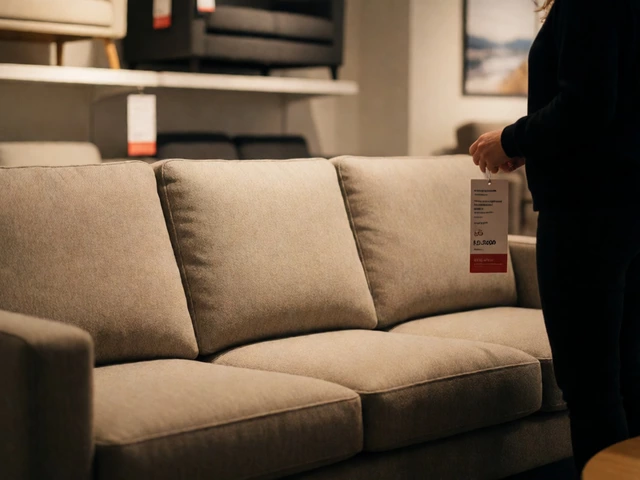
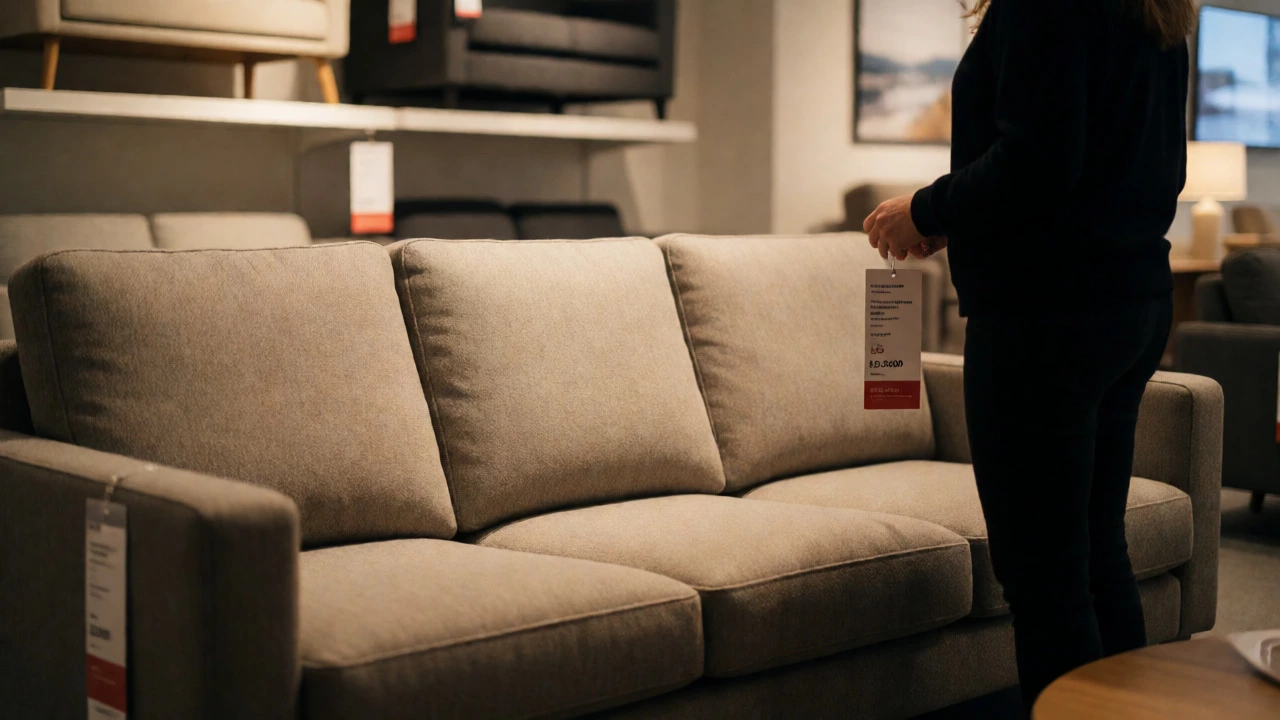
You’re standing in the showroom, staring at a three-seater that looks exactly like the one you want. The tag says $2,500. Your friend bought one last year for $800 and it’s already sagging. Your cousin spent $6,000 on his and swears by it. So, what is the average price of a good quality sofa? The truth is, there isn’t one single number, but there is a clear range where quality meets value. If you are shopping in New Zealand or similar markets in 2026, expect to pay between NZD $1,800 and $3,500 for a durable, well-made three-seater fabric sofa. Anything below $1,200 usually cuts corners on the frame or foam. Anything above $4,500 often pays for brand names, exotic leathers, or complex modular designs rather than just basic longevity.
Why does this matter? Because overpaying hurts your wallet, but underpaying hurts your back. A "good" sofa isn't about flashy aesthetics; it's about construction that survives five years of kids jumping on it and dogs sleeping on it. Let’s break down exactly where your money goes so you can spot a bargain from a rip-off.
Defining "Good Quality" Before You Look at Prices
You cannot judge price without defining quality. A $2,000 sofa made with particleboard frames and low-density foam will feel cheap after eighteen months. A $1,500 sofa with hardwood frames and high-resilience foam might outlast a $3,000 designer piece. When experts talk about durability, they look at specific components. If these are missing, the price is likely inflated by marketing, not materials.
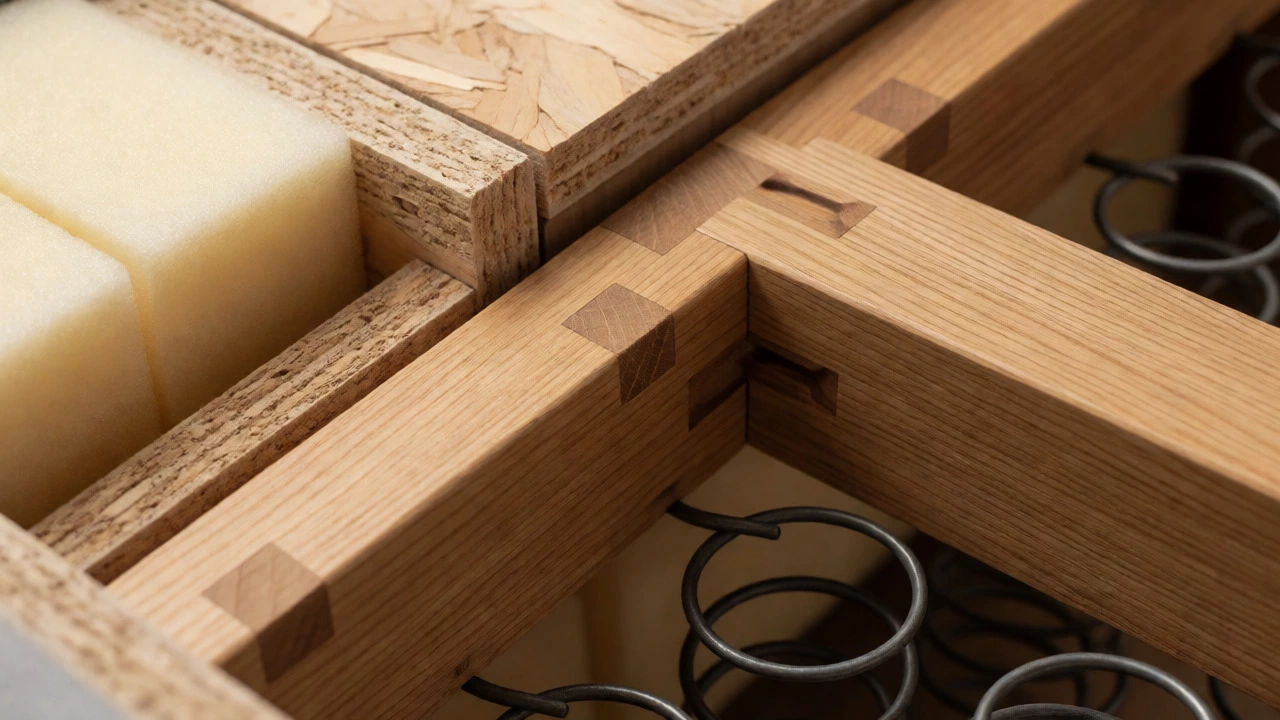
Sofa Construction is the primary driver of lifespan. It refers to the internal framework, suspension system, and cushion density that determine how long a sofa retains its shape and comfort. In 2026, the industry standard for entry-level premium sofas has shifted slightly due to material costs. You need to check three things immediately when assessing value:
- The Frame: Kiln-dried hardwood (like oak, ash, or maple) is non-negotiable for longevity. Plywood is acceptable if it’s thick and layered. Particleboard or softwoods like pine are red flags. They warp with humidity changes common in Auckland homes.
- The Suspension: Eight-way hand-tied springs are the gold standard but rare in mid-range prices. Sinuous springs (zigzag metal wires) are standard for good quality. Webbing alone is too bouncy and sags quickly.
- The Foam: High-density foam (at least 1.8 lb/ft³ density) resists sinking. Low-density foam feels fluffy in the store but turns into a pancake within two years.
If a salesperson can’t answer questions about the frame wood type or foam density, walk away. That ambiguity usually hides cheaper manufacturing.
Price Tiers: Where Does Your Money Go?
Furniture pricing isn't linear. Doubling the price doesn't double the comfort. It often doubles the aesthetic complexity or brand prestige. Here is how the market segments itself in 2026.
| Tier | Price Range (NZD) | Typical Materials | Expected Lifespan | Best For |
|---|---|---|---|---|
| Budget | $800 - $1,400 | Particleboard, polyester fiber fill, thin foam | 2-4 years | Rentals, guest rooms, temporary setups |
| Mid-Range (Value Sweet Spot) | $1,800 - $3,500 | Hardwood/Plywood mix, sinuous springs, high-density foam | 7-10 years | Main living rooms, daily use families |
| Premium | $3,500 - $6,000 | Solid hardwood, down-blend cushions, top-grain leather or performance fabric | 10-15+ years | Long-term homeowners, design-conscious buyers |
| Luxury/Designer | $6,000+ | Exotic woods, full-aniline leather, custom tailoring, imported labor | 15+ years | Status symbols, bespoke interiors |
Notice the jump between Budget and Mid-Range. This is where quality control kicks in. Below $1,500, manufacturers often hide flaws in upholstery patterns. Above $3,500, you start paying for things like track arms versus rolled arms, or specific designer collaborations. For most people asking about a "good quality" sofa, the $1,800-$3,500 bracket is the honest answer.
Fabric vs. Leather: How Material Swings the Price
The covering material can add 30% to 50% to the base price of the same frame. This is why two sofas with identical dimensions and frames might have wildly different tags.
Performance Fabric is a synthetic textile treated to resist stains, moisture, and abrasion, often used as a durable alternative to traditional cotton or linen. Brands like Crypton or Sunbrella dominate this space. In 2026, performance fabrics are no longer considered "cheap alternatives." They are engineered tech. A good quality performance fabric sofa sits firmly in the $2,200-$3,000 range. It’s ideal for households with pets because you can wipe off wine spills without panic.
Leather is trickier. There are three main types, and the price difference is massive:
- Bonded Leather ($1,500 - $2,200): Made from scraps glued together. It peels. Avoid if you want longevity.
- Top-Grain Leather ($3,000 - $4,500): Durable, develops a patina, resists scratches better than bonded. This is the sweet spot for leather lovers.
- Full-Aniline Leather ($5,000+): Untreated, natural hide. Shows every scratch and stain. Beautiful, but high maintenance.
If you see a leather sofa for under $2,000, ask specifically if it is genuine top-grain. If the label says "leather match" or "bonded," it is not a long-term investment unless you plan to replace it in three years.
Size and Configuration Impact on Cost
A standard three-seater is the baseline. But many readers actually need an L-shaped sectional or a recliner. These configurations increase the average price significantly because they require more material and complex engineering.
Here is a quick rule of thumb for 2026 pricing adjustments based on size:
- Two-Seater Loveseat: Subtract 30-40% from the three-seater price. Expect $1,200 - $2,200 for good quality.
- Three-Seater Standard: The benchmark. $1,800 - $3,500.
- Sectional (L-Shape): Add 50-70%. Expect $2,800 - $5,500. Modular sectionals allow you to buy pieces separately, which can help spread costs over time.
- Power Recliners: Add $500 - $1,000 per seat mechanism. Mechanical parts fail faster than static frames, so warranty coverage becomes critical here.
Be careful with "modular" claims. Some cheap modularity uses weak connectors that loosen over time. Check the connection hardware. Metal brackets are better than plastic clips.
Hidden Costs: Delivery, Assembly, and Returns
The sticker price is rarely the final price. In New Zealand, delivery fees can range from $150 for local Auckland drops to $500+ for rural areas. Many stores charge extra for "white glove" service (bringing it inside, removing packaging, and assembling). This can add another $200-$300.
Also, consider the return policy. A sofa is hard to assess in a showroom. You sit on it for two minutes. At home, you sleep on it, eat on it, and watch TV on it. If it’s uncomfortable, returning it is a logistical nightmare. Some retailers charge a 10-15% restocking fee plus return shipping. Factor this risk into your budget. Buying online saves money upfront but increases the risk of a costly mistake. Buying locally allows testing but often carries higher overheads reflected in the price.

How to Spot Overpriced Sofas
Not all expensive sofas are good sofas. Marketing budgets skew perception. Here is how to tell if you are being ripped off:
- Vague Specifications: If the website says "high-quality fabric" instead of naming the blend (e.g., 100% polyester, 50% wool), assume it’s cheap.
- No Weight Limit: Good manufacturers test weight limits. If they don’t publish them, the frame might be weak.
- Too-Good-To-Be-True Sales: A $4,000 sofa marked down to $1,900 permanently? It was probably never worth $4,000. Look for consistent discounting patterns.
- Ignoring the Legs: Solid wood legs are a sign of care. Plastic caps hiding hollow tubes suggest mass-produced shortcuts.
Conversely, don't dismiss a sofa just because it looks simple. Minimalist designs with exposed solid wood frames often offer better value than heavily upholstered, ornate styles that hide cheaper internals.
Final Verdict: What Should You Pay?
So, what is the bottom line? For a good quality, durable three-seater sofa in 2026, aim for NZD $2,200. This is the median point where you get hardwood frames, decent foam, and reliable fabric without paying for luxury branding.
If your budget is tight, wait for end-of-financial-year sales (March/April) or Black Friday. You might snag a mid-range model for closer to $1,800. If you have a larger budget, spend the extra on superior fabric technology (performance weave) rather than bigger size. A smaller, tougher sofa lasts longer than a large, fragile one.
Remember, a sofa is a decade-long commitment. Spending an extra $500 now to upgrade from particleboard to plywood, or from low-density to high-density foam, saves you from replacing the whole unit in four years. Do the math: a $2,500 sofa lasting 10 years costs $250/year. A $1,200 sofa lasting 3 years costs $400/year. Cheap is expensive.
Is it worth buying an expensive sofa?
Yes, if you use it daily. Expensive sofas typically use kiln-dried hardwood frames and high-resilience foam, which maintain structural integrity for 10-15 years. Cheaper sofas often use particleboard and low-density foam, leading to sagging and squeaking within 3-5 years. Over a decade, the expensive option is often cheaper due to fewer replacements.
What is the cheapest good quality sofa available?
The absolute floor for "good quality" is around NZD $1,500 for a loveseat or small two-seater. For a standard three-seater, anything under $1,800 usually compromises on frame stability or cushion density. However, during major sales events, you might find quality brands dipping to $1,600-$1,700.
Does leather cost more than fabric?
Generally, yes. Genuine top-grain leather adds 30-50% to the cost compared to standard fabric. However, high-end performance fabrics can rival the price of lower-grade leather. Bonded leather is cheaper but lacks durability. Always compare apples to apples: top-grain leather vs. high-performance synthetic fabric.
How long should a good sofa last?
A good quality sofa with proper care should last between 7 and 10 years before significant wear appears. Premium sofas can last 15+ years. Signs of failure include permanent sagging in seating areas, broken spring mechanisms, or fabric tearing at seams.
Are modular sofas more expensive?
Modular sofas often have a higher upfront cost per square foot due to complex joinery and multiple shipping boxes. However, they offer flexibility. If you move houses, you can reconfigure them. This versatility can justify the extra 10-20% cost over fixed-frame sectionals.