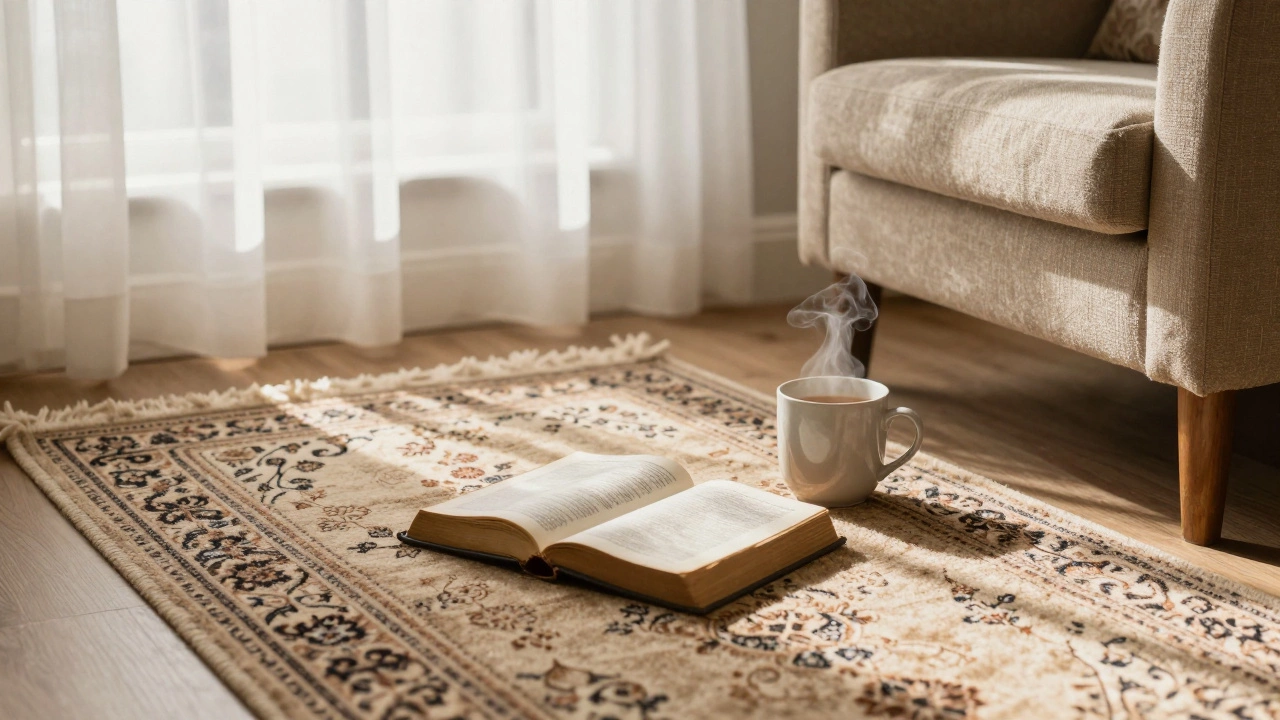
Prayer Rug Selection Guide
Find Your Perfect Prayer Rug
Based on your needs and preferences, we'll suggest prayer rugs that help you connect with God without compromising your faith.
Key Insight: The most important factor isn't the rug itself, but how it helps you focus on prayer. God cares about your heart, not the mat beneath your knees.
How can we help you today?
Many Christians wonder if it’s okay to use a prayer rug. After all, these soft, often beautifully patterned mats are strongly tied to Islamic prayer traditions. But the question isn’t about copying a practice-it’s about what helps you connect with God. And the answer is simpler than you think: yes, Christians can use prayer rugs.
Prayer rugs aren’t religious property
There’s no rule in the Bible that says only Muslims can use rugs during prayer. Prayer rugs are tools, not sacraments. They don’t carry magic, holiness, or divine authority. They’re just fabric, designed to give you a clean, quiet space to kneel, bow, or sit. Think of them like a Bible, a journal, or a candle-objects that support your worship, not replace it.Jesus taught that true worship happens in spirit and truth (John 4:24). He didn’t care if people prayed standing, kneeling, or lying down. He didn’t care if their floor was stone, wood, or wool. What mattered was their heart. That’s why a Christian using a prayer rug isn’t adopting Islam-it’s adopting comfort, focus, or tradition that helps them pray better.
Why do people use prayer rugs in the first place?
Prayer rugs became common in Muslim cultures for practical reasons. Many Muslims pray five times a day, often on floors that aren’t clean or comfortable. The rug keeps the forehead and hands clean during prostration. It also creates a visual boundary-a sacred little space-between the person and the world.Christians don’t have the same ritual requirements. But many still find value in having a dedicated spot for prayer. Maybe your home is noisy. Maybe your floor is cold. Maybe you’ve tried praying on the couch and keep getting distracted. A rug gives you a physical anchor. It says, This is where I meet God.
Does using a prayer rug mean you’re copying Islam?
No. Using something because it works doesn’t mean you’re adopting someone else’s religion. Christians have been using kneelers, pews, and prayer benches for centuries. Monks used straw mats. Early Christians prayed on the ground in catacombs. Even today, many Catholic churches have cushioned kneelers for communion or confession.It’s the same idea. A prayer rug is just the modern, portable version. If you see a Muslim prayer rug with a small arch design (a mihrab), you’re not required to avoid it. That symbol points to Mecca. You don’t need to face Mecca to pray as a Christian. You can face your window, your altar, or just close your eyes. The rug’s design doesn’t change your faith-it’s just decoration.
What kinds of prayer rugs work for Christians?
You don’t need to buy a rug labeled "Christian prayer rug"-those are rare and often overpriced. Any rug will do. Here are a few options:- Simple wool rugs with no symbols-great for quiet focus.
- Textured mats like jute or cotton-natural, earthy, grounding.
- Small area rugs (2x3 feet)-just big enough for kneeling.
- Custom-printed rugs with Bible verses or crosses-if that helps you feel connected.
Some Christians choose rugs with subtle Christian symbols: a cross, an ichthys (fish), or even a verse like "Pray without ceasing" (1 Thessalonians 5:17). Others avoid symbols entirely. Both are fine. What matters is whether the rug helps you pray, not what’s printed on it.
Real stories: Christians who use prayer rugs
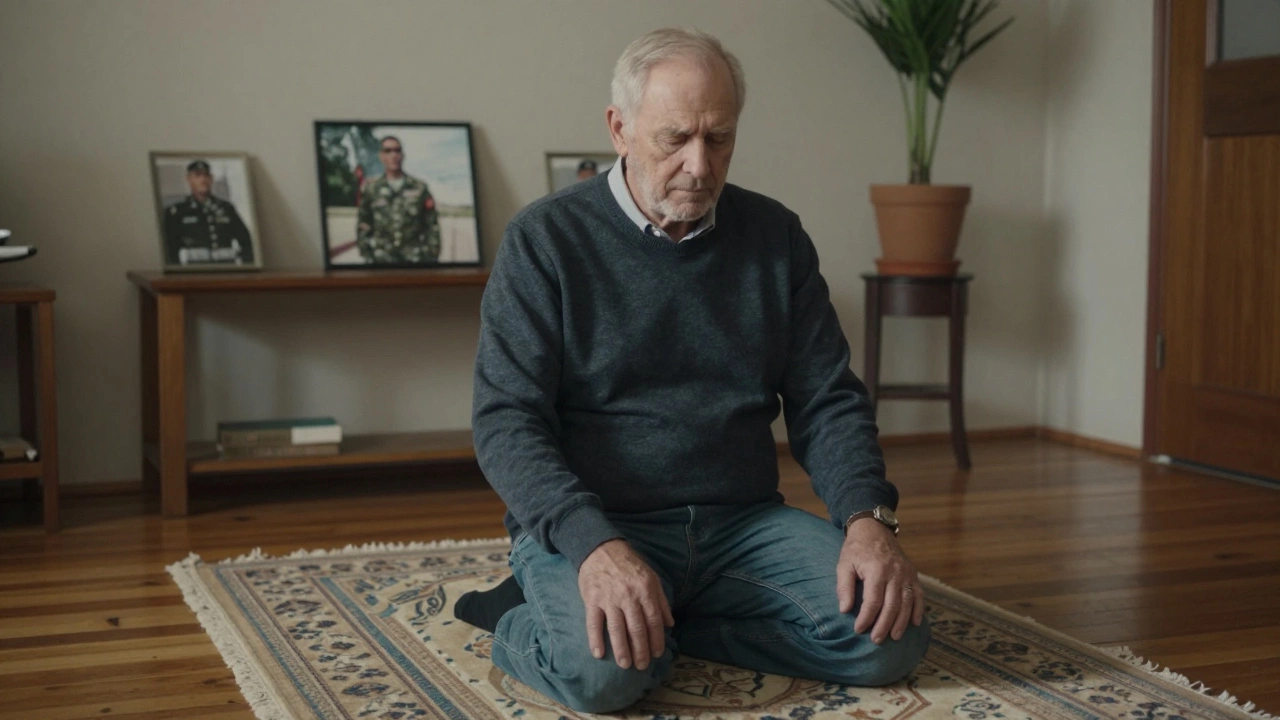
Sarah, a teacher from Nashville, started using a plain gray rug after her back pain made kneeling on hardwood unbearable. "I didn’t think about religion at all," she says. "I just needed a soft spot. Now I sit there every morning with my coffee and my Bible. It’s become my quiet place." Mark, a veteran in Ohio, found a small prayer rug in a thrift store after returning from deployment. "I used to pray on the floor of my barracks," he says. "That rug reminded me of that peace. I don’t know where it came from, but it helped me come home." These aren’t exceptions. They’re normal. People use objects to create sacred space. A rug is no different than a rosary, a hymnbook, or a stained-glass window.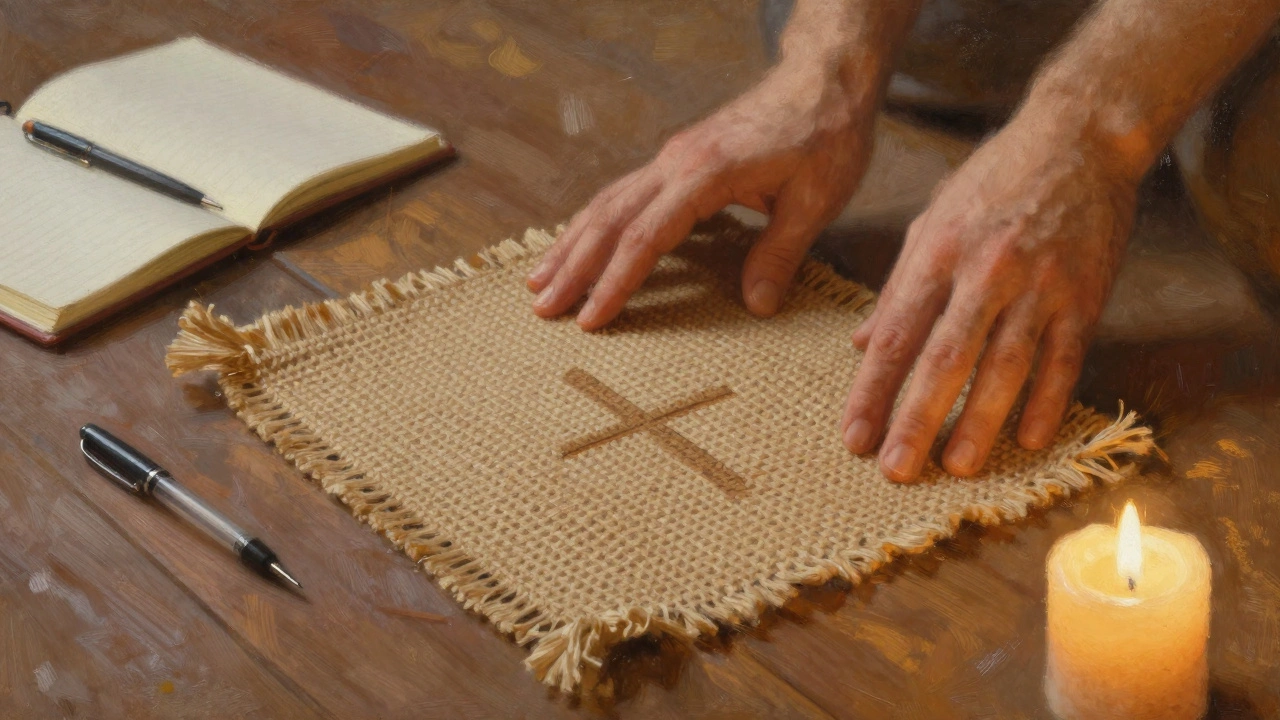
What about cultural sensitivity?
It’s good to be respectful. If you’re in a Muslim home, don’t walk on their prayer rug without asking. If you’re buying a rug made by Muslim artisans, support them fairly. But don’t assume that using a similar object means you’re disrespecting their faith.Christianity has borrowed from many cultures over 2,000 years. We use candles (Roman), Christmas trees (German), hymns (Greek), and even the word "Amen" (Hebrew). We didn’t steal them-we adapted them to worship God. The same applies here.
Prayer rugs and personal worship
If you’re struggling to pray regularly, a rug might be the small change you need. It doesn’t make your prayer more powerful. But it can make it more consistent. It can turn a rushed moment into a ritual. It can help you slow down.Try this: place the rug near your favorite chair. Use it only for prayer. Don’t sit on it to scroll through your phone. Don’t let your dog nap on it. Treat it like a quiet corner of your heart. Over time, just seeing it might remind you to pause, breathe, and talk to God.
Bottom line: It’s about your heart, not the mat
A prayer rug doesn’t make you more Christian. It doesn’t make you less Christian. It’s just a tool. Like a pen, a cup, or a pair of shoes. If it helps you pray with more focus, peace, or presence-then it’s a gift.God doesn’t care if your prayer space has a mihrab or a cross. He cares if you show up. He cares if you’re honest. He cares if you’re listening.
So if you’ve been wondering whether you’re allowed to use a prayer rug-go ahead. Kneel. Sit. Breathe. Pray.
Is it wrong for Christians to use a prayer rug because it’s associated with Islam?
No, it’s not wrong. Prayer rugs are cultural tools, not religious symbols that belong exclusively to one faith. Christians have used kneeling mats, cushions, and floor coverings for prayer for centuries. Using a rug for prayer doesn’t mean adopting Islamic beliefs-it means using a practical object to create a focused space for worship.
Should Christians avoid rugs with Islamic designs like the mihrab arch?
You don’t have to avoid them. The mihrab arch points toward Mecca, which isn’t relevant to Christian prayer. But if the design distracts you or makes you uncomfortable, choose a simpler rug. The goal is to help your prayer, not create confusion. Many Christians use plain rugs with no symbols at all-there’s no rule that says you need decoration.
Can I use a prayer rug if I don’t kneel during prayer?
Absolutely. A prayer rug isn’t only for kneeling. You can sit on it, place your Bible on it, or just rest your feet while you pray. Its purpose is to create a dedicated space, not enforce a posture. Many Christians pray sitting in a chair-using a rug under that chair still helps mark the moment as sacred.
Do I need to buy a special "Christian prayer rug"?
No. There are almost no commercially made "Christian prayer rugs" that are widely available or necessary. Any small rug-wool, cotton, jute, even a bath mat-works fine. You can even print a favorite Bible verse on a custom rug if you want. What matters is how you use it, not what it’s called.
Will using a prayer rug make me seem like I’m converting to Islam?
No. People who know you will understand you’re using it for your own spiritual practice. If someone asks, you can simply say, "It helps me pray better." You’re not borrowing a religion-you’re borrowing a helpful habit. Many Christians use incense, candles, or chanting without being accused of converting to other faiths. A rug is no different.
If you’re still unsure, try this: place a rug in your prayer space for one week. Use it only for prayer. Notice how it changes your focus, your rhythm, your peace. If it helps, keep it. If it doesn’t, set it aside. There’s no sin in trying. There’s no virtue in avoiding it out of fear.
God isn’t looking at your floor. He’s looking at your heart.
