Home Storage Space Optimizer
Estimate how much physical space you can reclaim by applying the smart storage tips from the article.
Your Potential Gains:
Applying these tips could significantly open up your room.
Quick Wins for Immediate Space
- The One-Year Rule: If you haven't touched it in 12 months, it's not a treasure; it's a burden. Toss it or donate it.
- Clear the Floors: Anything touching the floor creates visual noise. Get it up on a wall or under a piece of furniture.
- Group by Frequency: Put things you use daily at eye level and things you use once a year (like holiday decorations) in the hardest-to-reach spots.
Looking Up: The Power of Vertical Storage
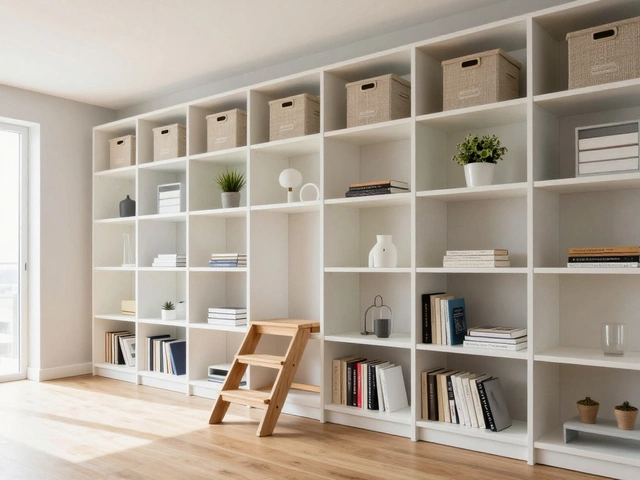
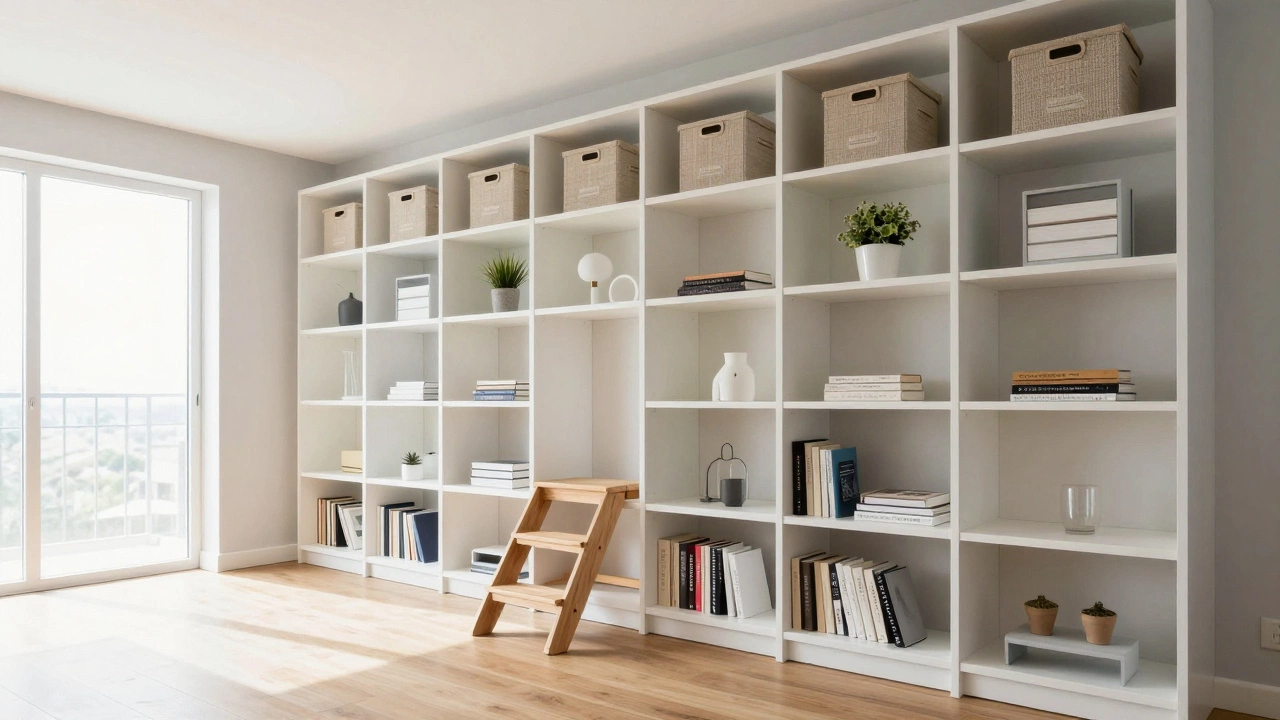
Most people stop thinking about storage at eye level. That's a huge mistake. Your walls are basically giant, unused shelves. Instead of a short dresser, why not install floor-to-ceiling shelving? This shifts the footprint from the floor to the wall.
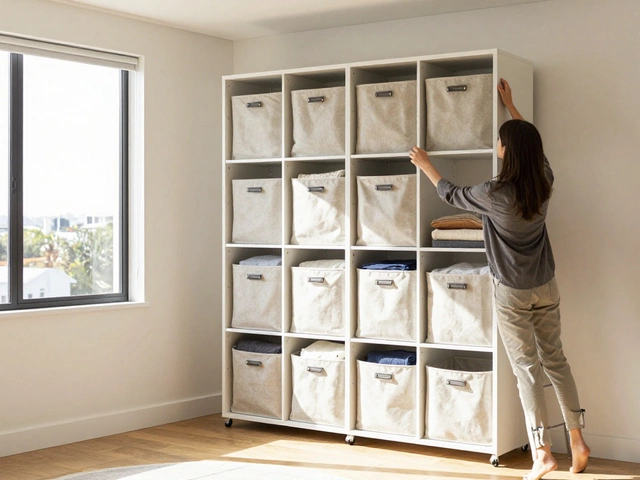
Consider Floating Shelves, which are wall-mounted brackets that support a horizontal surface without visible supports. They keep the floor clear, making the room feel airier. If you're dealing with a pantry or a laundry room, take your shelves all the way to the ceiling. Use a small step stool to reach the top items. In a typical 10-foot ceiling room, you're often leaving 2-3 feet of completely wasted air.
Don't forget the backs of doors. A simple over-the-door organizer can hold everything from cleaning supplies in the kitchen to shoes in the bedroom. It's a zero-footprint solution that turns a flat surface into a high-density storage zone.
Hidden Storage and Multi-Purpose Furniture
If you can't find more space, create it. This is where "stealth storage" comes in. Instead of a standard coffee table, look for an ottoman with a lift-top. You can hide blankets and gaming controllers inside while still having a place to set your drink.
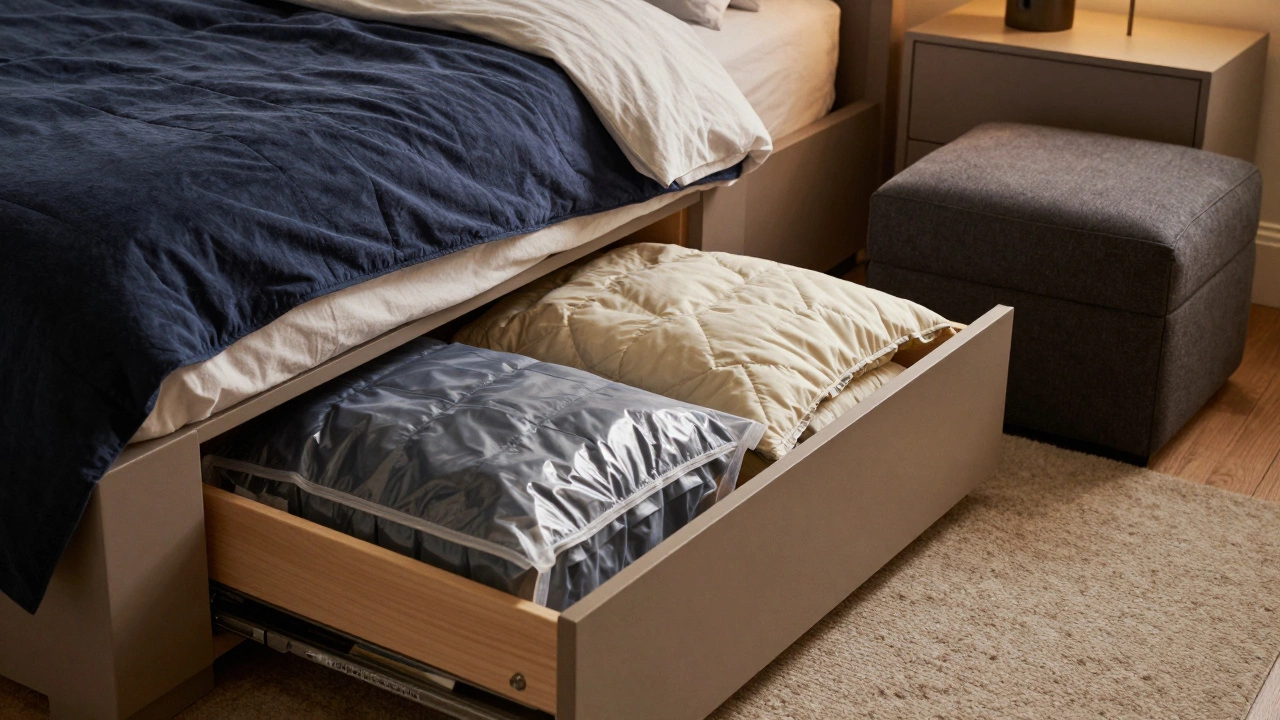
The space under your bed is a goldmine. Most beds have a void that just collects dust bunnies. Use Vacuum Storage Bags, which are airtight plastic containers that compress bulky items like winter coats and spare duvets using a vacuum cleaner. This can reduce the volume of your linens by up to 75%, allowing you to fit two years' worth of seasonal gear into a single under-bed drawer.
| Furniture Type | Storage Capacity | Primary Use | Space Impact |
|---|---|---|---|
| Standard Sofa | Low | Seating | High Footprint |
| Storage Sectional | High | Seating + Storage | Medium Footprint |
| Bed with Drawers | Very High | Sleeping + Storage | Low Extra Footprint |
| Nested Tables | Low | Versatile Surfaces | Very Low Footprint |
Mastering the Kitchen and Bathroom
These two rooms are usually the biggest disaster zones because they hold so many small, mismatched items. The secret here is "zoning." Group items by the task they perform. All your baking supplies should be in one spot, even if that means putting the flour in a high cabinet and the mixer in a lower one.
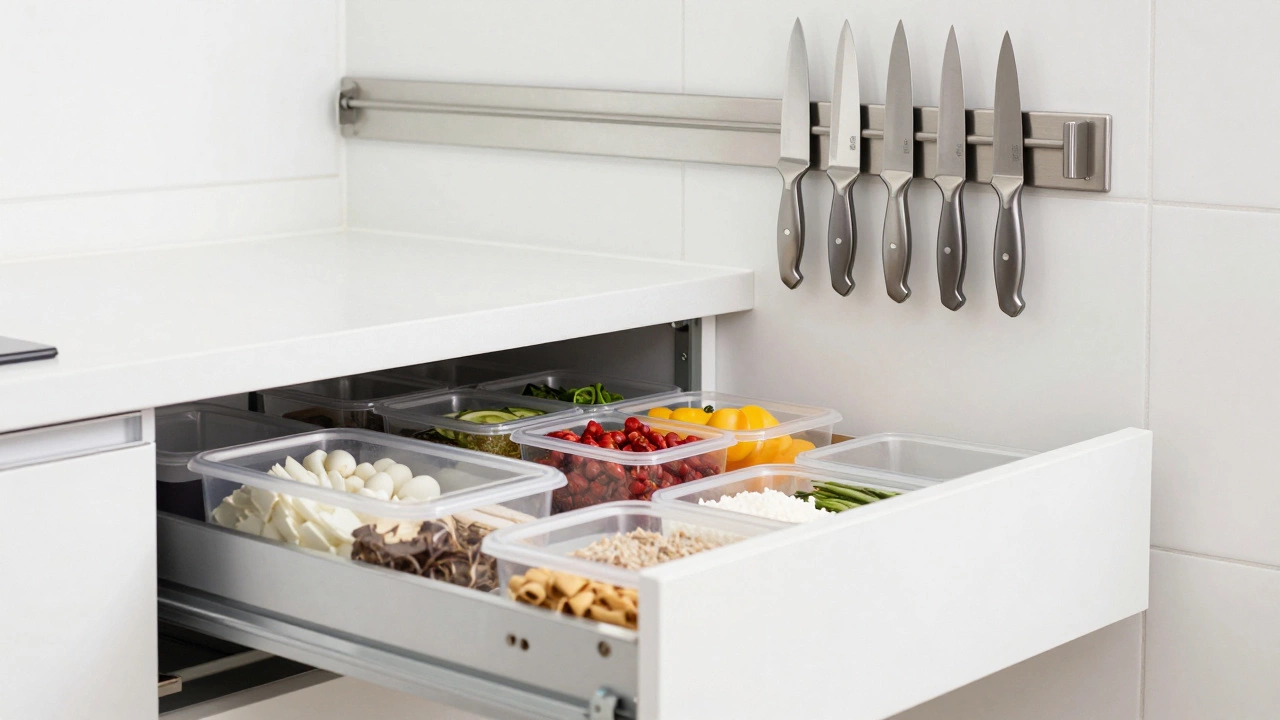
In the kitchen, use Magnetic Strips. Mounting a magnetic bar on the wall for knives or spice jars frees up precious counter space and drawer real estate. If you have deep cabinets where things get lost in the back, install pull-out sliders. It's much easier to organize a drawer that comes to you than to crawl into a cabinet to find a pot.
For the bathroom, think about the space above the toilet. A simple set of shelves there can hold extra towels, toilet paper, and skincare products. If your vanity is overflowing, use adhesive organizers on the inside of the cabinet doors to hold hair dryers, brushes, or toothpaste.
The Psychology of Maintaining Your Space
You can buy all the organizers in the world, but if you don't have a system for new things entering the house, the clutter will return. This is the "one-in, one-out" rule. For every new pair of shoes or kitchen gadget you bring home, one old item must leave. This forces you to evaluate if the new item is actually an upgrade.
Another pro tip is to use Transparent Containers. When you can see exactly what's inside a bin, you're less likely to buy a duplicate because you "couldn't find" the original. It also makes the process of putting things away much faster, which means you're more likely to actually do it.
Don't be afraid of the "junk drawer," but give it boundaries. Assign one small drawer to the random bits of life-batteries, stamps, loose change. Once that drawer is full, you're at capacity for junk. This prevents the chaos from spilling over into your main living areas.
Tackling the Closet Chaos
Closets often become a graveyard for clothes we "might" wear again one day. To make the most of this space, switch to slim velvet hangers. Traditional plastic hangers are bulky and waste inches of rod space. By switching, you can often fit 20-30% more clothing in the same area.
Use the "inverted hanger" trick: face all your hangers backward. When you wear an item, flip the hanger the right way. After six months, look at which hangers are still backward. Those are the clothes you don't actually like or need. Be ruthless. Removing the dead weight is the fastest way to create storage space without spending a dime.
What is the best way to organize a very small apartment?
Focus on multi-functional furniture and vertical space. Use a bed with built-in drawers, install shelves near the ceiling, and choose a dining table that can fold down when not in use. The key is to ensure every piece of furniture does at least two jobs.
How do I stop my storage bins from becoming messy?
Use a labeling system. Even a simple piece of masking tape with a marker helps. When everything has a designated "home" and a label, you are more likely to return the item to the correct spot rather than just tossing it on top of the pile.
Are vacuum bags safe for all types of clothing?
Most fabrics are fine, but avoid vacuum-sealing natural materials like down feathers or leather for long periods. Down can lose its loft (fluffiness) if compressed too tightly for years, and leather needs to breathe to prevent cracking.
What are the cheapest storage solutions for renters?
Tension rods are great for creating shelving in closets without drilling holes. Over-the-door organizers and adhesive hooks are also renter-friendly. Additionally, using under-bed plastic bins allows you to use "dead space" without making permanent changes to the home.
How often should I do a deep declutter?
A seasonal purge-once every three to six months-is most effective. This aligns with changing your wardrobe for the weather, making it the natural time to decide what stays for next year and what goes to charity.