Space Storage Calculator
Your Space Details
Your Results
Total Space Available: 0.00 m²
Current Storage Used: 0.00 m²
Potential Savings: 0.00 m²
Recommended Solutions
Vertical Storage
Install floating shelves (up to 1.5 sqm saved)
Multi-Functional Furniture
Bed with drawers (up to 0.8 sqm saved)
Hidden Spaces
Under stairs or under sink (up to 0.5 sqm saved)
Over-Door Organizers
For shoes and small items (0.3 sqm saved)
Living in a small space doesn’t mean giving up on storage. It means getting smarter about it. In Auckland, where apartments and townhouses are common and square footage is tight, people have learned how to turn every inch into usable space. You don’t need a big house to keep things organized-you just need the right system.
Start with what you already own
Before you buy anything new, take a hard look at what’s cluttering your space. Most people store things they don’t use, just because they don’t know where else to put them. A 2023 survey by New Zealand’s Consumer Protection Agency found that 68% of urban renters held onto items they hadn’t used in over a year. That’s not storage-that’s waste.Go room by room. Pull everything out. Sort into three piles: keep, donate, toss. Be brutal. If you haven’t worn that coat in two winters, let it go. If that toaster hasn’t seen bread since 2022, donate it. Clearing out creates breathing room and shows you exactly how much storage you actually need.
Use vertical space like a pro
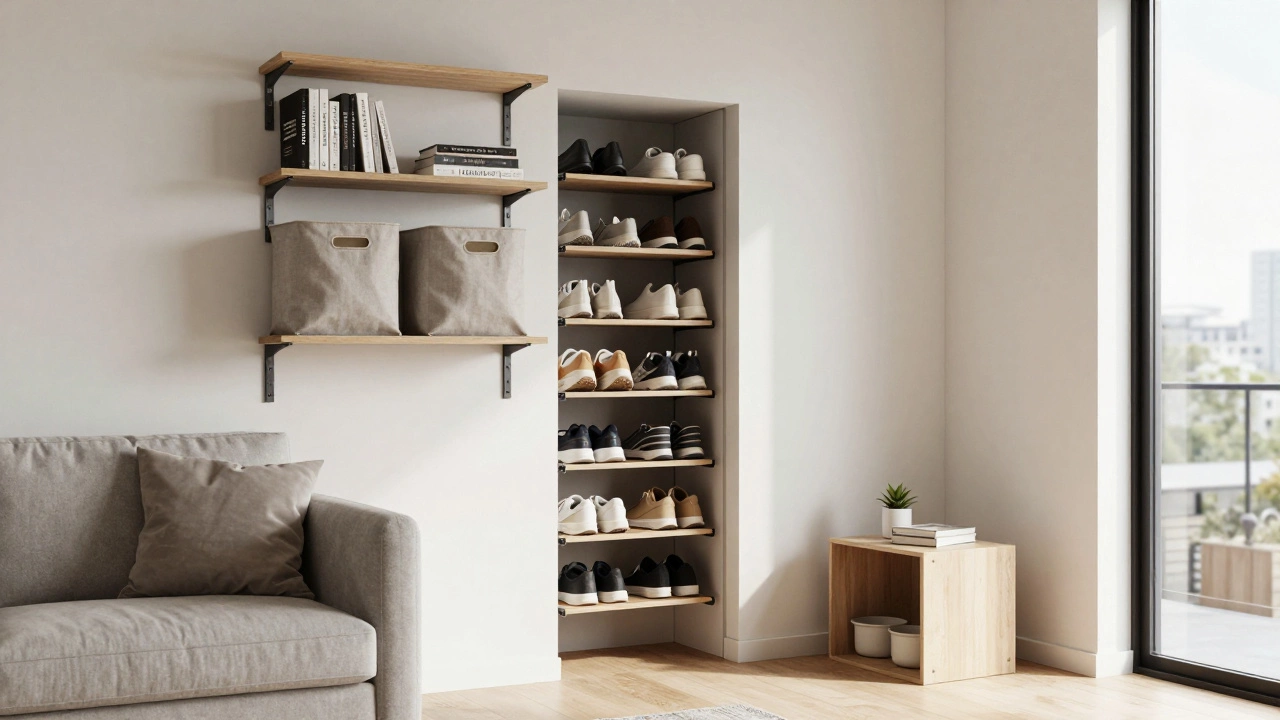
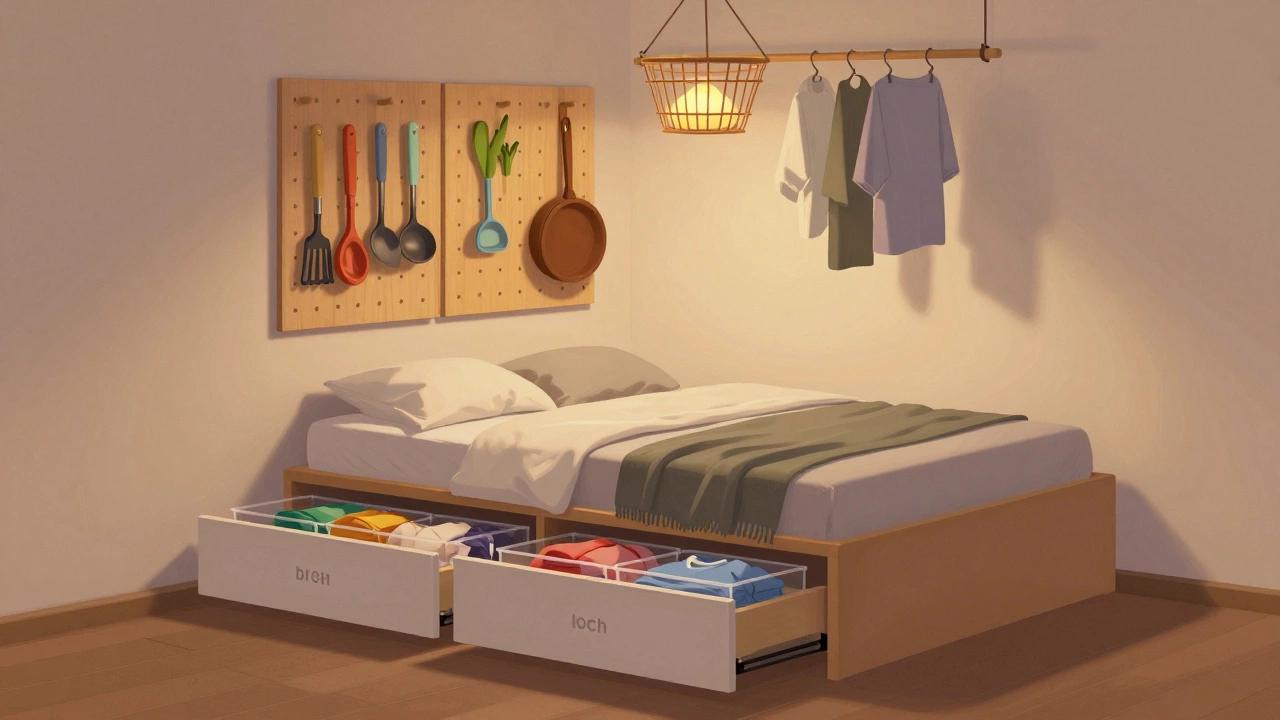
Floor space is precious. Ceiling space? Free. Walls are your best friends.Install floating shelves above doorways, beside windows, or even behind the bathroom door. They’re perfect for books, toiletries, or decorative bins. A 1.2-meter shelf can hold 20-30 books or 15 pairs of shoes-without touching the floor. For heavier stuff, use wall-mounted pegboards. Hang kitchen tools, gardening gear, or craft supplies. It’s like a visible checklist of what you own.
Don’t forget the backs of doors. Over-the-door organizers work for shoes, cleaning supplies, or even folded clothes. They’re cheap, easy to install, and don’t require drilling. In a 30-square-meter apartment, adding just three vertical storage zones can add the equivalent of an extra room’s worth of space.
Choose furniture that works double duty
Your couch shouldn’t just sit there. Your bed shouldn’t just be for sleeping. Look for pieces that store.A bed with built-in drawers underneath? That’s 400 liters of hidden storage. Perfect for off-season clothes, linens, or bulky winter gear. Ottomans with lift-top lids? Store blankets, board games, or even your vacuum cleaner. Coffee tables with shelves inside? Keep remotes, chargers, and magazines tucked away.
One Auckland designer, who works mostly with studio apartments, swears by modular units. A cube shelf can become a side table, a stool, or a storage box depending on how you stack it. You can move it around, reconfigure it, and use it for seating when guests come over. It’s not just storage-it’s flexible living.
Think inside-out: hidden compartments and underutilized spots
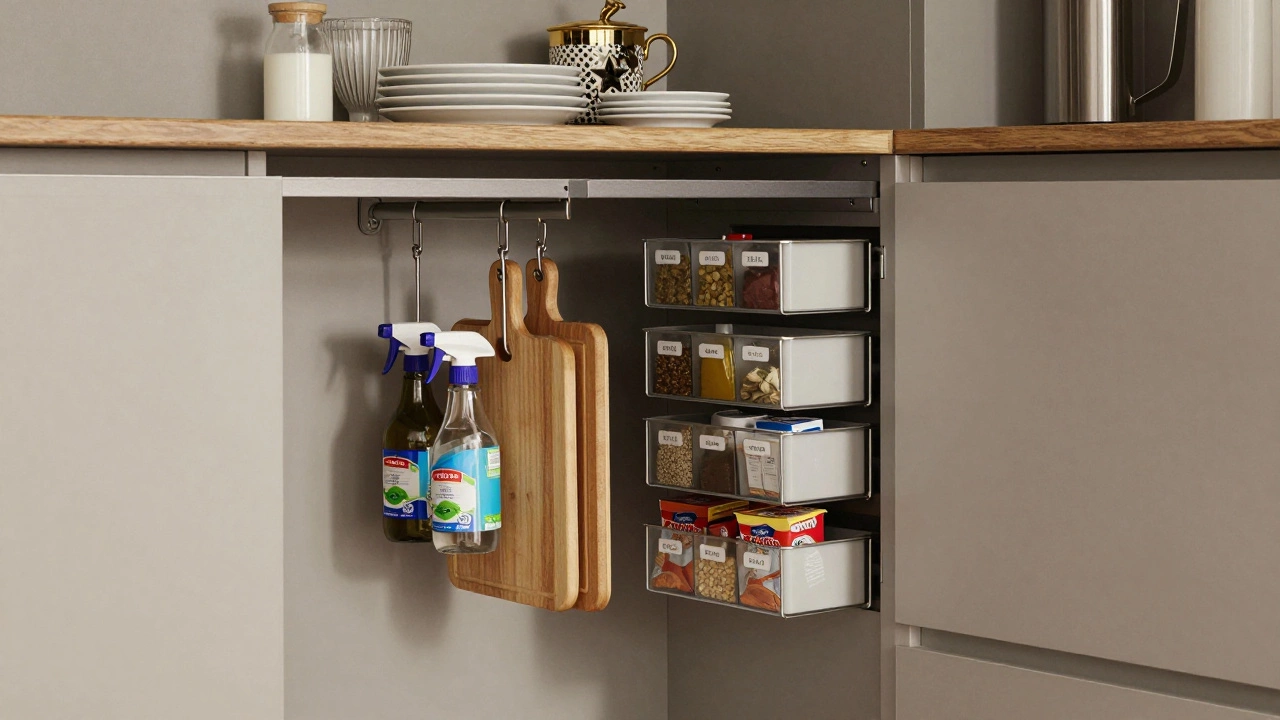
Some of the best storage spots are the ones no one thinks about.Under the stairs? In a townhouse, that’s a goldmine. Build pull-out drawers or install a mini closet. In a flat? Use the space under the sink. A sliding basket system turns a cramped cabinet into a deep storage zone for cleaning supplies.
Even the space above cabinets can be used. Add a narrow shelf for rarely used items like holiday dishes or extra paper towels. Use tension rods inside cabinets to hang spray bottles or cutting boards. Hang mugs on a rack inside a pantry door. These are tiny changes-but they add up.
One trick that works in kitchens: stackable bins inside deep cabinets. A 30cm deep cabinet can hold four layers of bins. Label them: baking, spices, snacks. No more digging through the back. Everything’s visible, easy to reach, and stays tidy.
Use bins and baskets-strategically
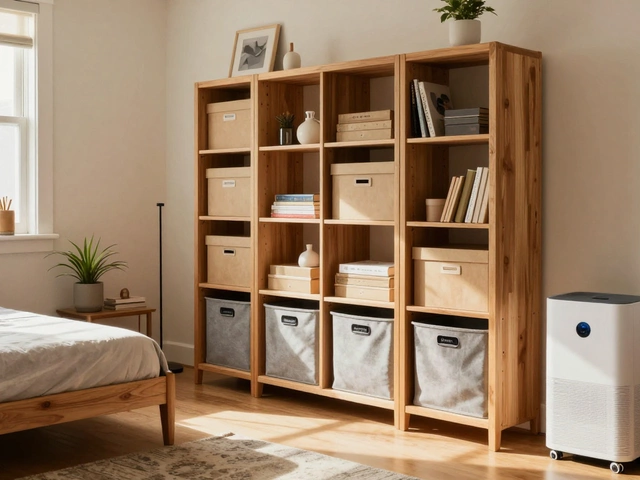
Storage isn’t just about shelves. It’s about containers.Clear plastic bins with lids are great for seasonal items. You can see what’s inside without opening them. Fabric bins? They soften the look of a room and hide clutter. Use them on open shelves, under beds, or in closets.
Size matters. Too big? You’ll fill them with junk. Too small? You’ll need ten of them. Stick to standard sizes: 40L, 60L, 80L. That way, they stack neatly and fit under beds or in closets without gaps. Uniform bins look intentional, not messy.
Color-code them. Blue for winter clothes, green for kitchen supplies, red for tools. It’s not just pretty-it’s functional. You find things faster.
Don’t forget the ceiling and corners
Ceilings aren’t just for lights. In small spaces, hanging storage is underrated.Install a ceiling-mounted bike rack if you ride. Use a hanging basket for laundry in the bathroom. In the kitchen, hang pots and pans from a ceiling rail. It clears counter space and makes cooking easier.
Corners are often wasted. A corner shelf unit or a triangular cabinet can turn a dead zone into usable storage. Even a simple corner floating shelf can hold plants, books, or a small stereo.
One trick from Japanese design: use sliding panels. A sliding door on a closet saves space compared to a swinging one. A sliding pantry door? Even better. No more bumping into open doors in tight hallways.
Keep it simple. Keep it visible.
The most effective storage systems are the ones you actually use. If it’s too hard to open, too heavy to lift, or too confusing to navigate-you won’t use it.Label everything. Even if it’s just a sticky note. You’ll thank yourself in six months when you’re looking for your winter gloves.
Keep frequently used items at eye level. Rarely used stuff? Put it up high or down low. Store your least-used things where you have to work to get them. That way, you’re less likely to grab them out of habit.
And never underestimate the power of a single hook. One hook on the back of a door can hold a robe, a bag, or your keys. That’s one less thing on the counter. One less thing to lose.
What to avoid
Don’t buy storage just because it looks nice. A fancy wooden chest that takes up half your living room? It’s not storage-it’s decoration with a lid.Avoid bulky furniture with no hidden compartments. Avoid too many open shelves. They look clean until they’re full of dust and clutter. Closed storage with doors or lids is always better in small spaces.
And don’t try to do everything at once. Pick one area-your closet, your kitchen, your entryway-and fix it. Then move to the next. Small wins build momentum.
| Storage Type | Best For | Space Saved | Cost |
|---|---|---|---|
| Wall-mounted shelves | Books, decor, toiletries | Up to 1.5 sqm | $20-$80 |
| Bed with drawers | Clothing, linens, seasonal items | Up to 0.8 sqm | $300-$800 |
| Over-door organizers | Shoes, cleaning supplies, small tools | 0.3 sqm | $15-$40 |
| Modular cube storage | Multiple uses: seating, storage, display | Up to 1 sqm | $100-$250 |
| Under-bed bins | Off-season clothes, luggage, bulky items | 0.5 sqm | $10-$30 per bin |
What’s next?
Start small. Pick one area-your entryway, your bathroom cabinet, your closet-and reorganize it this weekend. Use what you already have. Borrow bins from a friend if you need them. Don’t wait for the perfect solution. The perfect solution is the one you use.Storage in small spaces isn’t about buying more stuff. It’s about using what you have, differently. And once you see how much room you’ve gained, you’ll wonder why you didn’t start sooner.
What’s the most important thing to remember when building storage in a small place?
The most important thing is to prioritize visibility and accessibility. If you can’t see it or reach it easily, you won’t use it. Storage that’s hidden, hard to open, or confusing to navigate becomes clutter over time. Focus on solutions that let you find what you need quickly-without digging through piles.
Can I build storage without drilling holes?
Yes. There are plenty of non-permanent options: tension rods, over-the-door organizers, freestanding shelving units, adhesive hooks, and magnetic strips. Even heavy-duty adhesive strips can hold up to 5kg per strip if you use enough of them. For renters, these are the safest and most reversible choices.
How do I keep storage from looking messy?
Use closed containers, uniform bins, and labels. Open shelves look clean only if they’re perfectly curated-and that’s hard to maintain. Fabric bins, lidded boxes, and baskets hide clutter while adding texture. Stick to one or two colors or materials so everything feels intentional, not random.
Is it worth investing in custom storage solutions?
Only if you’re staying long-term and have a very specific layout. Custom built-ins are expensive and hard to move. For most people, modular systems and smart off-the-shelf products offer 90% of the benefit at 30% of the cost. Save custom solutions for permanent homes with unique layouts you can’t fix otherwise.
How often should I reorganize my storage?
Every season. As weather changes, so do your needs. Swap out winter coats for summer ones. Move holiday decor to the back. Check for items you haven’t used in six months. A quick seasonal reset keeps clutter from creeping back in. You don’t need to do a full overhaul-just 20 minutes every three months makes a big difference.