Deep Frying Pan: What Makes One Work Well and What to Avoid
When you reach for a deep frying pan, a heavy, high-sided cooking vessel designed to hold enough oil for full immersion frying. Also known as a deep fryer pot, it’s the tool that turns chicken, doughnuts, or fries into golden, crunchy bites—without splattering oil all over your stove. But not all deep frying pans are built the same. The wrong one can warp, leak, or turn your kitchen into a grease fire hazard.
The best cast iron frying pan, a durable, heat-retaining pan that builds natural nonstick seasoning over time lasts decades if cared for. It holds heat steady, so your food fries evenly instead of burning on the edges. But if you’re not into maintenance, a thick nonstick frying pan, a pan with a coated surface that prevents food from sticking and makes cleanup easy with a heavy aluminum base works too—just avoid metal utensils and high heat. The depth matters: look for at least 3 inches of side height to keep hot oil contained. Shallow pans? They’re not deep frying pans—they’re just risky.
Oil temperature is everything. Too cold, and your food soaks up grease. Too hot, and it burns before it cooks through. A good deep frying pan helps you control that by holding heat like a brick. That’s why thin, flimsy pans fail—they lose temperature the second you drop food in. Look for weight. If you can’t feel the heft, skip it. Also, avoid pans with plastic handles unless they’re heat-resistant up to 500°F. A metal handle or a stay-cool grip is safer.
Size matters too. A 10-inch pan is fine for small batches, but if you fry often, go 12 inches or more. Bigger surface area means more space for food, less crowding, and better results. And don’t forget the lid. It’s not just for storage—it helps trap steam during the first few minutes of frying, keeping things moist inside while the outside crisps.
People think you need a dedicated deep fryer. You don’t. A proper deep frying pan, a heavy, high-sided cooking vessel designed to hold enough oil for full immersion frying with a thermometer and a spider skimmer is all you need. Many of the best home cooks use nothing more. The key is matching the pan to your cooking style—not the other way around.
Below, you’ll find real-world tests and comparisons of the most common frying pans people actually buy. No fluff. Just what works, what breaks, and why.
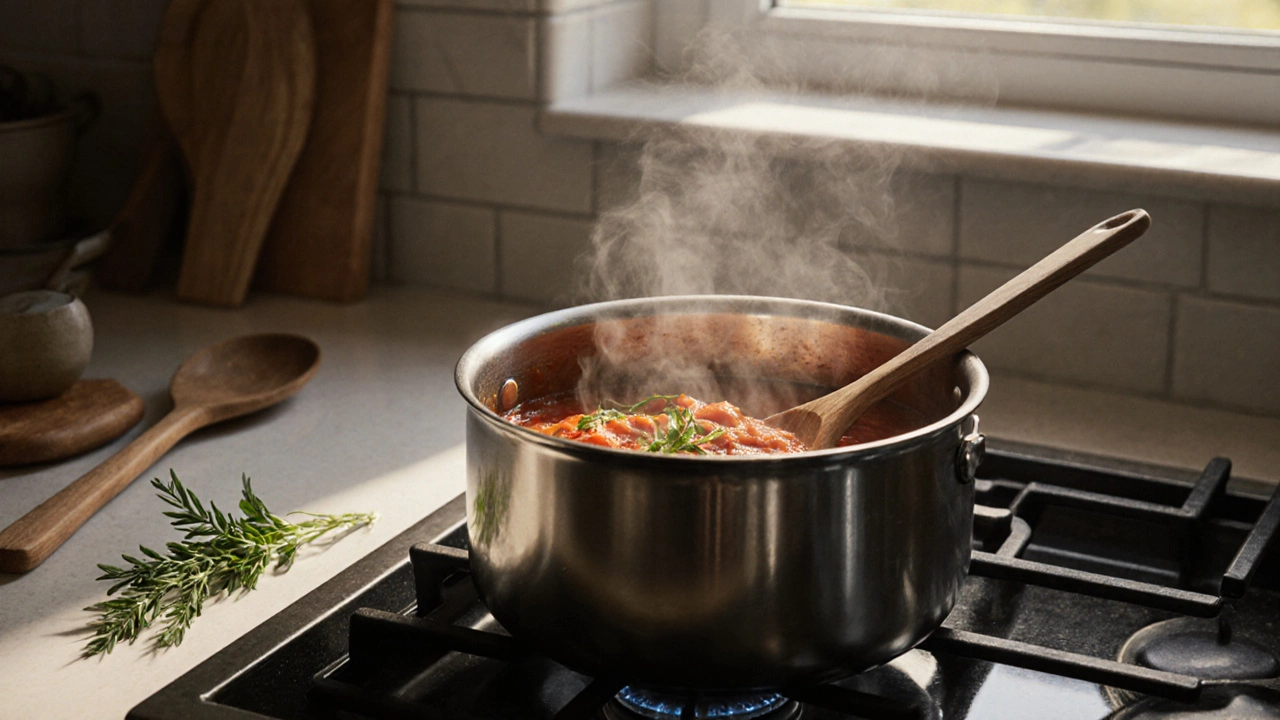
What Is a Deep Pan Called? Understanding the Types and Uses of Deep Pans in Cooking
A deep pan isn’t one thing-it’s a category. Learn what different types like saucepans, stockpots, and Dutch ovens are called, how to pick the right one, and what to avoid when cooking with deep pans.