One-Way Privacy Curtain Finder
Find the perfect balance between natural light and privacy. Answer three questions to get a tailored recommendation.
Your Window Situation
Your Ideal Solution
Calculating...
Why this works:
Select your options and click "Get Recommendation" to see which curtain type fits your lifestyle.
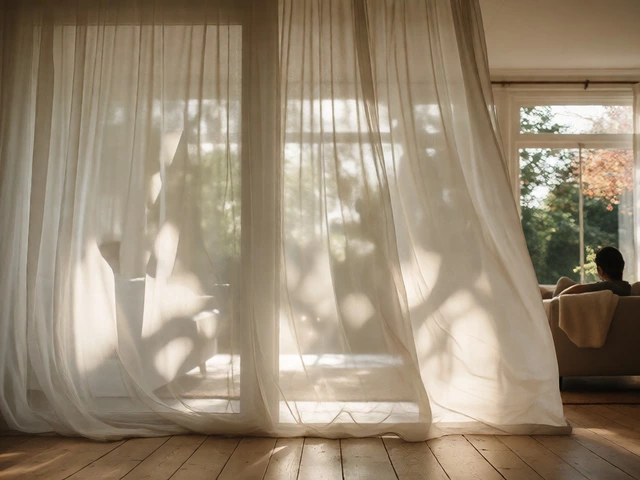
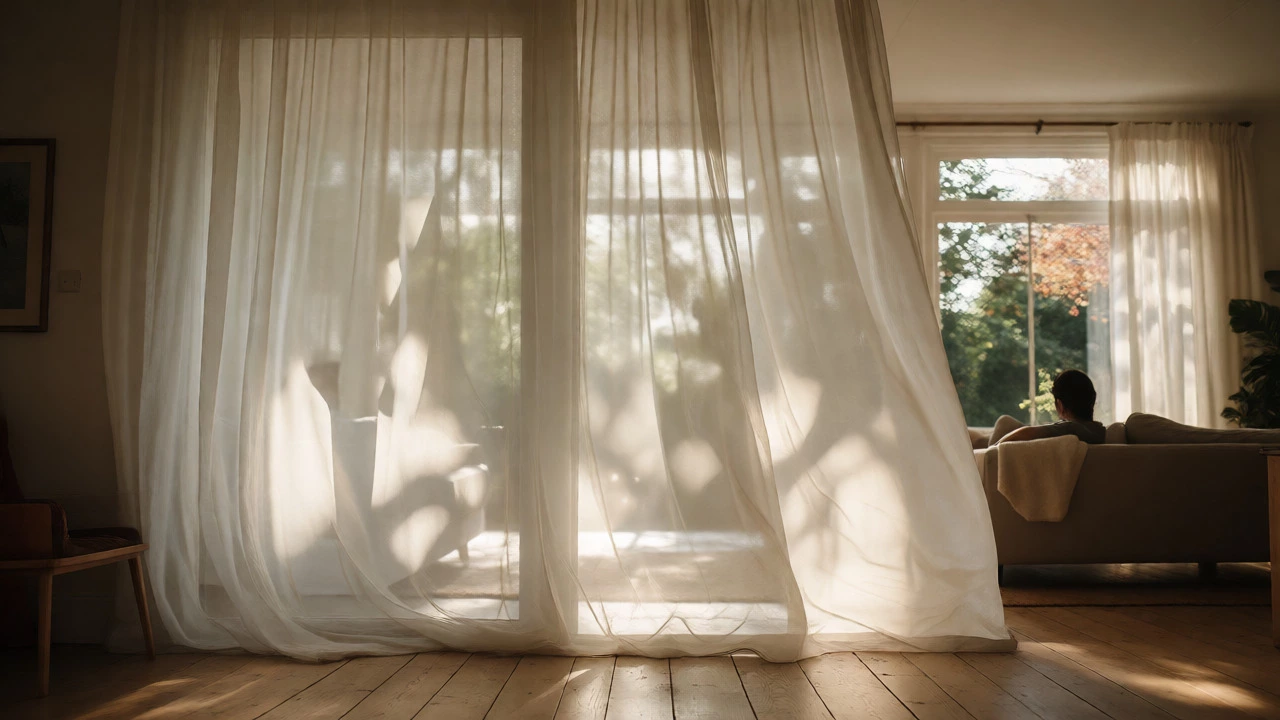
You want daylight flooding your living room, but you don’t want Mrs. Higgins from next door counting how many times you check your phone in a day. It’s a classic dilemma. You’re looking for that magical barrier where you can watch the rain fall or the kids play in the yard, yet nobody outside knows what you’re doing inside. So, what do you actually call these fabrics? The short answer is one-way privacy curtains, often made from specific types of sheer or reflective materials.
But here’s the catch: true one-way visibility isn’t just about the curtain itself. It’s a trick of light physics. If you buy the wrong fabric, you’ll either have a glowing fishbowl at night or a dark cave during the day. Let’s break down exactly what these curtains are, how they work, and which ones actually deliver on the promise of privacy without killing your natural light.
The Science Behind Seeing Out But Not In
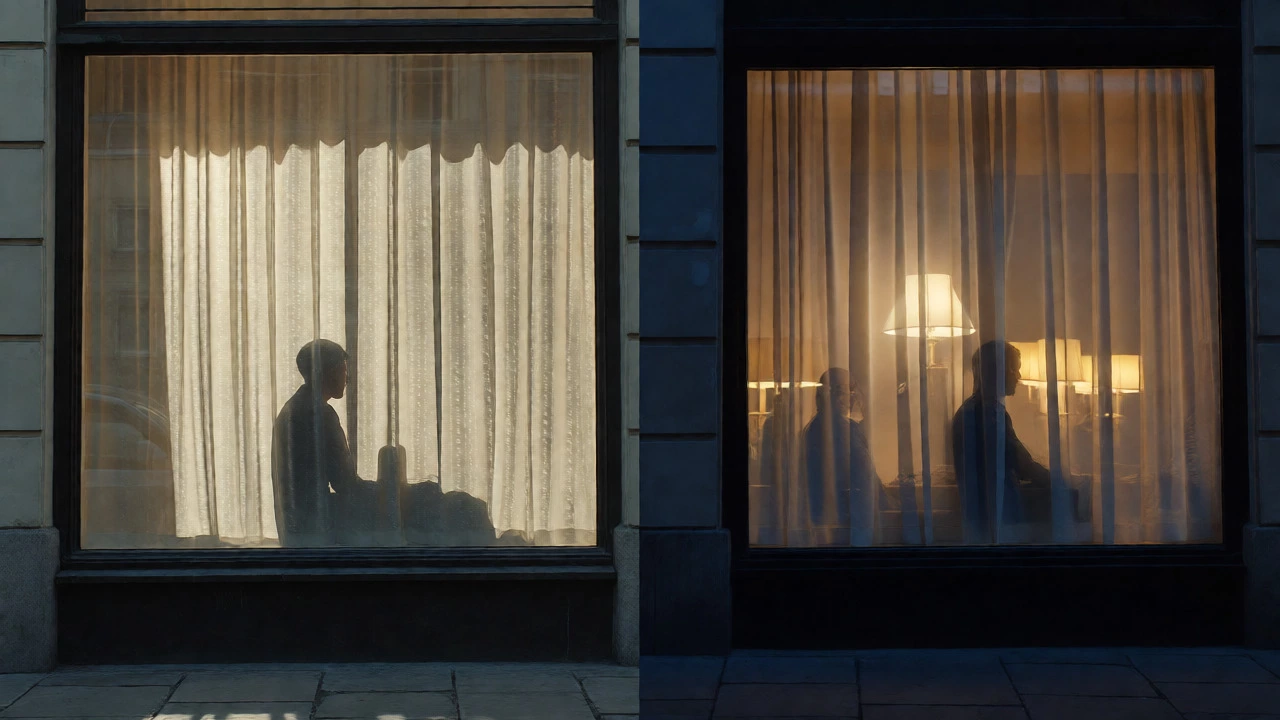
Before you rush to the store, you need to understand why this works. It’s not magic; it’s contrast. When the sun is out, the interior of your home is darker than the exterior. Your eyes adjust to the brightness outside, so when you look through a semi-transparent fabric, you see the bright world beyond. To someone outside, however, your home is dimmer. Their eyes adjust to the bright sunlight, making the darker interior details hard to distinguish against the illuminated fabric surface.
This effect flips after sunset. Once you turn on your indoor lights, the interior becomes brighter than the exterior. Suddenly, the "privacy" vanishes. Anyone walking by can see right into your living room, while you’re left staring at your own reflection. This is why relying solely on thin sheers for year-round privacy is risky. You need a strategy that accounts for both day and night cycles.
Common Names and Types of Privacy Curtains
When shopping, you’ll encounter several terms. Knowing them saves you time and money. Here are the main contenders:
- Sheer Curtains Lightweight, translucent fabrics like voile or lace that filter light while obscuring clear views during the day.
- Blackout Linings with Sheer Faces Double-layered drapes where the outer layer is sheer for daytime view-through, and the inner layer blocks light completely for nighttime privacy.
- Reflective Window Film A adhesive vinyl applied directly to glass, creating a mirror-like effect from the outside during the day.
- Day/Night Blinds (Zebra Blinds) Horizontal blinds with alternating opaque and transparent stripes that can be aligned to block or allow view-through.
While people often search for "curtains," the solution might actually be a blind or a film. However, if you are set on fabric, sheer curtains are your primary option for daytime transparency.
Sheer Curtains: The Daytime Champion
Sheer curtains are the most common answer to your question. They come in various weights and weaves. Voile is a popular choice because it’s airy and diffuses harsh sunlight beautifully. Lace adds texture and a bit more opacity, offering slightly better privacy during the day but potentially blocking more light.
Here’s the reality check: standard white sheers offer minimal privacy at night. If you have streetlights outside or bright indoor lamps, passersby will see silhouettes moving around. To fix this, you don’t necessarily need to ditch the sheers. You just need to pair them with something else.
| Curtain Type | Daytime View-Out | Daytime Privacy-In | Nighttime View-Out | Nighttime Privacy-In |
|---|---|---|---|---|
| Standard Sheer (Voile/Lace) | Excellent | Moderate | Poor | Low |
| Thick Textured Sheer | Good | High | Poor | Low |
| Sheer + Blackout Lining | Excellent | Moderate | Blocked | Total |
| Reflective Film | Good | High | Blocked | Total |
The Layering Hack: How to Get True All-Day Privacy
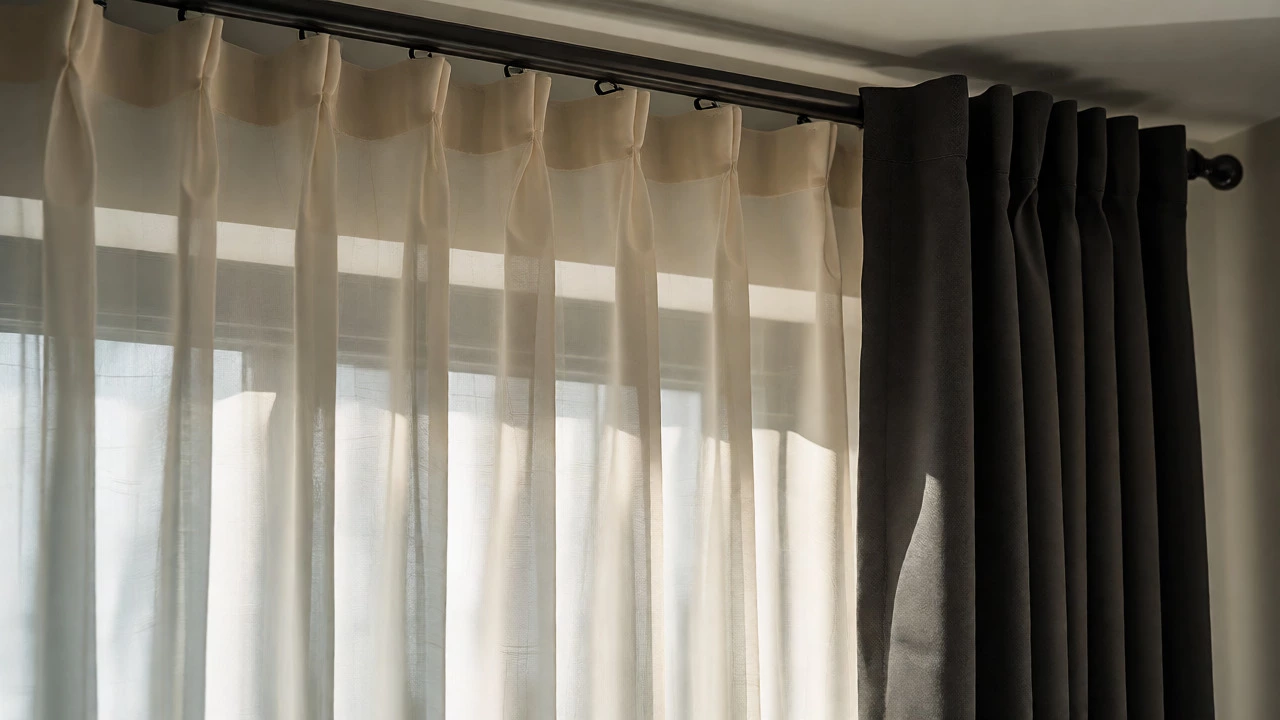
If you want to see out during the day and stay hidden at night without constantly adjusting blinds, layering is your best friend. This is a technique used by interior designers worldwide. You install a double curtain track or rod. On the front, hang your beautiful sheer curtains. On the back, hang heavier, opaque drapes-perhaps velvet, linen, or even a dedicated blackout curtain.
During the day, you keep the heavy drapes open and pull the sheers closed. You get the view-out effect and decent daytime privacy. At night, you close the heavy drapes. Now you have total darkness and complete privacy. The sheers remain as a decorative frame for the window, keeping the room feeling soft rather than boxed-in.
This method also improves insulation. In Auckland, where nights can get chilly even in summer, an extra layer of heavy fabric traps heat near the window, reducing energy costs for heating.
Alternative Solutions: Films and Smart Glass
Maybe you hate the hassle of opening and closing curtains every evening. That’s where technology steps in. Reflective window films are thin coatings applied to the exterior side of the glass that reflect sunlight, making the window appear like a mirror from the outside while remaining transparent from the inside.
These films are excellent for ground-floor apartments or homes facing busy streets. They provide high privacy during the day. However, they share the same flaw as sheers: at night, if your interior lights are brighter than the streetlights, you become visible again. Some advanced films claim to offer "day and night" privacy, but these often rely on tint levels that significantly reduce natural light entry, turning your room gray.
Then there’s Smart Glass (or switchable glass), which uses electricity to change from transparent to frosted instantly. This is the premium option. With a flip of a switch, you go from clear view to full privacy. It’s expensive and requires professional installation, but it solves the problem elegantly. If budget isn’t an issue, this is the ultimate "see out, not in" solution.
Choosing the Right Fabric Weight and Color
Not all sheers are created equal. The tighter the weave, the better the privacy. Look for fabrics described as "micro-sheer" or "textured sheer." These have irregular patterns or denser threads that distort the view from the outside more effectively than plain, smooth voile.
Color matters too. Light colors reflect more light, enhancing the daytime privacy effect. Dark-colored sheers absorb light, which can make them less effective at hiding you from prying eyes during the day because they don’t bounce as much ambient light back toward the observer. Stick to whites, creams, and pastels for maximum daytime concealment.
Also, consider the height. Floor-to-ceiling curtains create a larger visual barrier. Shorter cafe-style curtains leave gaps above and below, compromising privacy. For bedrooms and living rooms, always aim for full-length panels.
Installation Tips for Maximum Effect
Even the best curtains fail if installed poorly. Here’s how to ensure they perform:
- Mount High and Wide: Install the curtain rod well above the window frame and extend it beyond the sides. This minimizes light leaks and makes the window appear larger, improving the aesthetic while maximizing coverage.
- Use Adequate Fullness: Curtains should be gathered. Use a ratio of 1.5x to 2x the window width in fabric. Flat, unstretched curtains offer poor privacy and look cheap. Gathers create depth and distortion, helping obscure views.
- Check the Hem: Ensure the curtains touch the floor or pool slightly. Gaps at the bottom let people see under the curtain line.
- Secure the Sides: If using tie-backs during the day, ensure they don’t expose too much glass. Consider magnetic clips or holdbacks that keep the fabric taut across the entire pane.
A common mistake is buying curtains that are too narrow. If two panels only cover 80% of the window when closed, you’ve wasted money. Measure carefully before purchasing.
FAQ: Common Questions About One-Way Privacy
Do sheer curtains provide privacy at night?
Generally, no. At night, when indoor lights are on, sheer curtains become transparent from the outside. People can see into your room clearly. To maintain privacy at night, you must add a second layer of opaque curtains or blinds behind the sheers.
What is the difference between one-way mirror film and regular tint?
Regular tint simply darkens the glass, reducing glare and UV rays but offering limited privacy. One-way mirror film has a metallic coating that reflects light. During the day, it acts like a mirror to outsiders while allowing you to see out. Regular tint does not create this reflective barrier, so it offers less privacy during the day compared to mirror film.
Can I use blackout curtains if I want to see out during the day?
No, blackout curtains are designed to block light entirely. They are thick and opaque, so you cannot see through them. If you want to see out during the day, you need sheer or semi-sheer fabrics. Blackouts are best paired with sheers on a double track for nighttime privacy.
Are zebra blinds a good alternative to curtains?
Yes, zebra blinds (also known as day/night shades) are an excellent alternative. They consist of alternating sheer and solid horizontal bands. By aligning the sheer bands, you can see out while maintaining some privacy during the day. Aligning the solid bands provides full privacy and light control at night. They offer precise control but may lack the soft aesthetic of fabric curtains.
Does the color of the curtain affect privacy?
Yes, lighter colors generally provide better daytime privacy because they reflect more external light, making it harder for outsiders to see through. Darker sheers absorb light, which can make them more transparent from the outside during the day. However, dark opaque curtains are better for blocking internal light at night.
Final Thoughts: Balancing Light and Privacy
There is no single "perfect" curtain that works perfectly in all lighting conditions without adjustment. The term you’re looking for is one-way privacy curtains, but achieving true functionality requires understanding the interplay of light. For most homeowners, the sweet spot is a layered approach: elegant sheers for daytime view-through and robust blackouts or heavy drapes for nighttime secrecy.
Don’t settle for flimsy fabric that promises miracles. Invest in quality materials and proper installation. Whether you choose textured voiles, reflective films, or smart glass, prioritize the balance between enjoying your view and protecting your personal space. After all, your home should feel like a sanctuary, not a stage.