Mirror Habit Self-Assessment
Answer the following questions honestly to see where your mirror habits fall on the spectrum from healthy grooming to clinical concern.
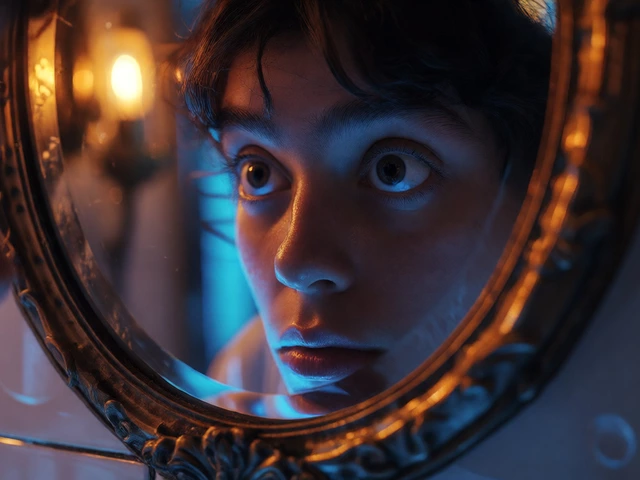
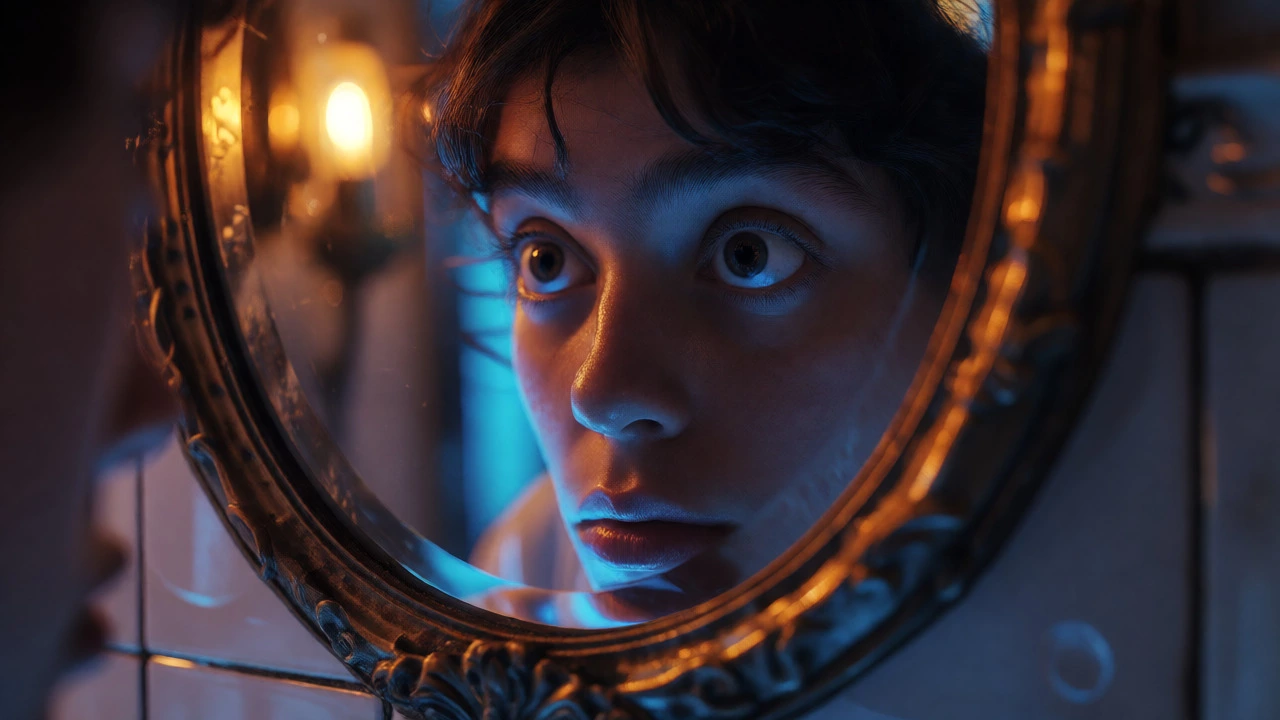
You catch your reflection in a shop window, adjust your hair, and keep walking. Normal. But what if you can't walk past a mirror without stopping? What if the sight of yourself triggers panic instead of pride? The question "What is an obsession with mirrors called?" pops up often because human behavior around reflective surfaces is surprisingly complex. It isn't just one thing. There's no single word that covers every weird mirror habit, but there are specific terms for the extremes: Catoptromania describes an abnormal attraction to or preoccupation with mirrors, while mirror phobia (spectrophobia) is its terrifying opposite.
Most people don't have a clinical condition. They have habits shaped by culture, anxiety, or vanity. But when looking in the mirror stops being a quick check and starts consuming your day, it crosses into psychological territory. This article breaks down the actual terms used by psychologists and historians, explains why we stare, and helps you figure out where your own mirror habits sit on the spectrum.
The Clinical Term: Catoptromania
If you're searching for the exact medical label for an obsession with mirrors, Catoptromania is the term. Derived from the Greek words katoptron (mirror) and mania (madness), it refers to an excessive fascination with one's own reflection. Historically, this wasn't always seen as a disorder; in some ancient cultures, staring into water or polished metal was a spiritual act. Today, however, mental health professionals view catoptromania through the lens of obsessive-compulsive behaviors or narcissistic traits.
It’s important to clarify: Catoptromania isn't listed as a standalone diagnosis in the current DSM-5 (the manual doctors use to diagnose mental disorders). Instead, it appears as a symptom or feature of other conditions. For example, someone with Body Dysmorphic Disorder (BDD) might exhibit catoptromanic behaviors-not because they love their look, but because they are compulsively checking for perceived flaws. Conversely, someone with Narcissistic Personality Disorder might stare because they derive self-worth from visual validation.
So, when someone asks, "Is there a name for loving my reflection too much?", the answer is nuanced. If it's harmless vanity, it's just narcissism. If it's compulsive, time-consuming, and distressing, it leans toward BDD or OCD-related behaviors labeled under the umbrella of catoptromania.
When Looking Becomes Avoidance: Spectrophobia
On the flip side of obsession is avoidance. Some people aren't obsessed with seeing themselves; they are terrified of it. This is called Spectrophobia, or mirror phobia. Unlike simple shyness, spectrophobia involves intense anxiety triggered by the presence of mirrors. People with this phobia might cover mirrors at home, avoid public restrooms, or feel dizzy and nauseous when forced to look at their reflection.
Why does this happen? Often, it stems from a distorted self-image. If you believe your reflection shows something monstrous or wrong, avoiding mirrors becomes a coping mechanism. Over time, this avoidance reinforces the fear. You never get used to seeing yourself, so the shock value remains high. Interestingly, severe cases of spectrophobia can coexist with catoptromania in different life stages-someone might obsess over their looks in youth and develop a phobia after a traumatic event changes their appearance.
| Behavior Type | Primary Emotion | Frequency | Impact on Daily Life |
|---|---|---|---|
| Healthy Grooming | Neutral/Satisfaction | 1-3 times daily | Negligible |
| Vanity/Narcissism | Pride/Pleasure | Frequent | Low (socially acceptable) |
| Catoptromania | Compulsion/Obsession | Excessive/Uncontrollable | Moderate to High (time loss) |
| BDD (Body Dysmorphia) | Anxiety/Shame | Compulsive Checking | High (distress) |
| Spectrophobia | Fear/Avoidance | Rare (Avoidant) | High (limiting) |
Psychological Roots: Why Do We Stare?
To understand the obsession, you have to look at the psychology behind self-recognition. Humans are one of the few species that pass the "mirror test"-we recognize ourselves in reflections. This cognitive ability is linked to self-awareness. When you stare at a mirror, you aren't just seeing pixels or glass; you're confirming your existence. Psychologists call this "self-objectification." In modern society, especially with the rise of selfie culture and video calls, this has intensified.
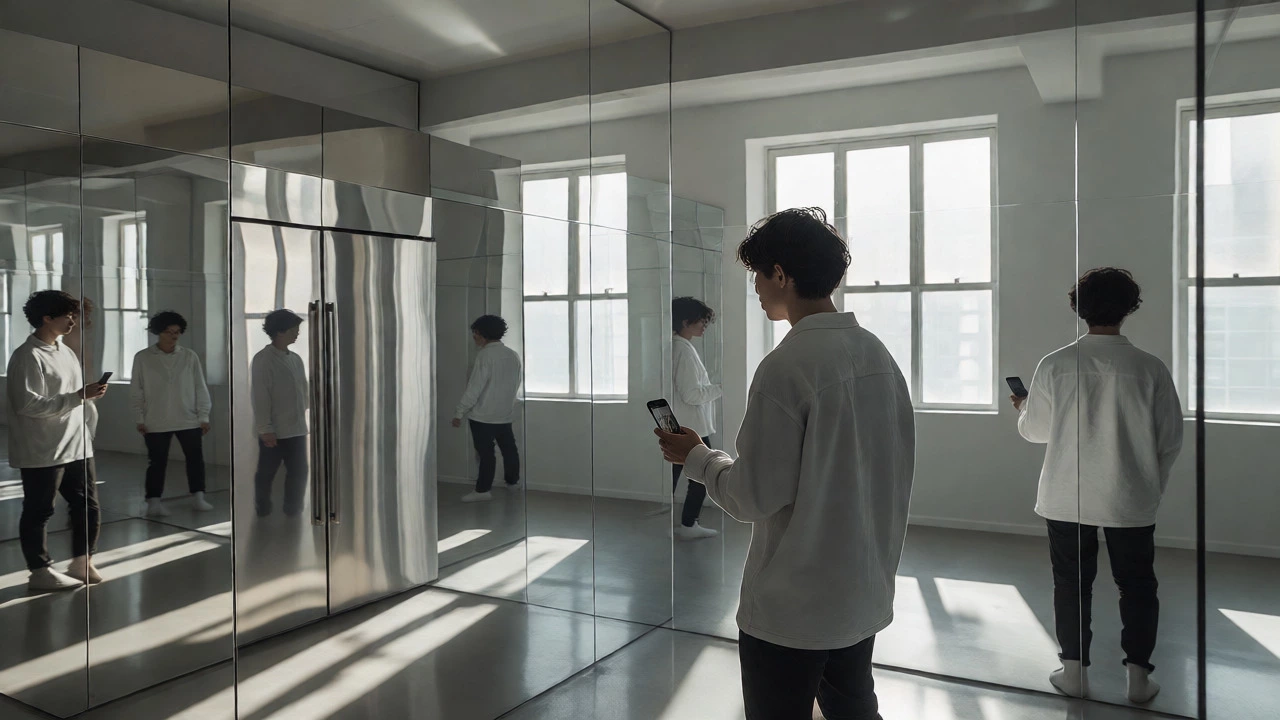
Consider the impact of digital mirrors. A smartphone front camera acts as a portable mirror. Many young adults report spending hours analyzing their digital reflections before posting online. This isn't necessarily catoptromania, but it feeds the same neural pathways. The brain seeks feedback loops: Look -> Evaluate -> Adjust -> Look again. When this loop gets stuck, you get the compulsive behavior associated with mirror obsession.
Another factor is lighting. Poor lighting in bathrooms or bedrooms can distort features, leading to repeated checks in better light. This creates a cycle of dissatisfaction. You see a flaw in bad light, fix it, check in good light, see another flaw, and repeat. Before you know it, twenty minutes have vanished. Is this an obsession? Maybe not clinically, but it's a behavioral trap worth breaking.

Cultural and Historical Context
The idea that mirror obsession is a modern problem is false. History is full of stories about dangerous reflections. In Victorian England, covering mirrors during mourning was common because it was believed the soul could get trapped in the glass. Superstitions like these show how deeply humans connect mirrors with identity and spirit.
In folklore, vampires cast no reflection, linking mirrors to the soul. Breaking a mirror brings seven years of bad luck-a belief rooted in Roman superstition about the body renewing itself every seven years. These cultural narratives shape our subconscious relationship with mirrors. Even today, many people feel uneasy looking into a dark mirror at night. This isn't phobia; it's primal instinct. Our brains struggle to process low-light images of faces, triggering alertness.
Art history also reflects this obsession. From Velázquez's "Las Meninas" to contemporary selfies, artists have used mirrors to explore duality. The mirror doesn't just reflect light; it reflects our desire to be seen. When that desire becomes overwhelming, it tips into pathology.
Signs Your Mirror Habit Might Be Unhealthy
How do you know if you've crossed the line from healthy grooming to unhealthy obsession? Here are concrete signs to watch for:
- Time Loss: You spend more than 15-20 minutes total per day checking your reflection, not including showering or dressing.
- Emotional Distress: You feel anxious, angry, or sad after looking in the mirror, rather than neutral or confident.
- Compulsive Re-checking: You leave the room and return multiple times to check the same detail (e.g., hairline, teeth).
- Avoidance Triggers: You avoid social situations because you're worried about how you'll look in unexpected mirrors.
- Distorted Perception: You focus intensely on minor imperfections that others don't notice or care about.
If three or more of these apply, it might be worth exploring further. Remember, context matters. An actor preparing for a role or a model doing fittings will naturally spend more time with mirrors. That's professional necessity, not obsession.
Breaking the Cycle: Practical Tips
You don't need therapy to reset your mirror habits unless the issue is severe. Small changes can help regain control.
- Set a Timer: Give yourself five minutes for morning grooming. When the timer goes off, you stop. No exceptions.
- Change the Lighting: Install warm, soft lighting in your bathroom. Harsh overhead lights exaggerate shadows and pores, fueling insecurity.
- Practice "Blind" Checks: Use a non-reflective surface (like a dark window) for quick checks. This reduces the intensity of self-scrutiny.
- Limit Digital Mirrors: Turn off the front camera preview when taking photos. Take the shot, then review once. Don't retake endlessly.
- Focus on Function: Remind yourself: "The mirror is a tool, not a judge." It helps you tie a tie, not define your worth.
For those with deeper issues, Cognitive Behavioral Therapy (CBT) is highly effective. CBT helps reframe negative thoughts about appearance. Instead of "I look terrible," you learn to observe, "My hair is messy today," without attaching emotional weight.
Related Concepts: Narcissism vs. Insecurity
People often confuse catoptromania with narcissism. While they overlap, they aren't identical. Narcissism is a personality trait characterized by grandiosity and a lack of empathy. A narcissist loves the mirror because it confirms their superiority. Someone with catoptromania driven by insecurity loves the mirror because it offers reassurance. One is outward-facing (look at me!), the other inward-facing (am I okay?).
Similarly, Body Dysmorphic Disorder (BDD) is distinct. BDD involves a preoccupation with perceived defects that are unnoticeable to others. The mirror is a torture device for someone with BDD, whereas it might be a playground for a narcissist. Understanding this distinction helps in choosing the right support. Narcissists rarely seek help for mirror obsession because they think they're fine. Those with BDD suffer silently.
What is the medical term for an obsession with mirrors?
The term is catoptromania. It comes from Greek roots meaning "mirror madness." While not a standalone diagnosis in modern manuals, it describes compulsive or excessive preoccupation with one's reflection, often linked to OCD or narcissistic traits.
Is looking in the mirror too much a sign of narcissism?
Not necessarily. Frequent mirror use can stem from vanity, anxiety, or professional needs. Narcissism involves a pattern of grandiosity and entitlement. If you check mirrors due to insecurity or compulsion, it may indicate Body Dysmorphic Disorder or anxiety rather than narcissism.
What is the fear of mirrors called?
The fear of mirrors is called spectrophobia or eisoptrophobia. People with this phobia experience intense anxiety when seeing their reflection and may go to great lengths to avoid mirrors in their environment.
Can mirror obsession be treated?
Yes. Treatment depends on the underlying cause. Cognitive Behavioral Therapy (CBT) is effective for both compulsive checking and avoidance behaviors. Addressing root causes like low self-esteem or trauma is key to long-term improvement.
Why do I stare at myself in the mirror?
Staring can be a form of self-soothing or reality testing. It helps confirm your identity and physical state. However, prolonged staring can become a habit loop reinforced by anxiety or curiosity about subtle facial changes.