Rug & Carpet Decision Helper
Confused about whether to buy a rug or carpet? Not sure which material fits your lifestyle? Answer these three questions to get personalized recommendations.
🏠 Rug vs. Carpet Verdict
🧶 Recommended Material
You walk into a store. You see a large piece of fabric on the floor. The sign says "Carpet." Your friend calls it a "rug." You call it a "mat." Who is right? Actually, everyone might be, depending on where you stand and who you ask. The word rug seems simple, but its meaning shifts based on size, material, and cultural context.
If you have ever felt confused about whether to buy a "area rug" or a "wall-to-wall carpet," this guide clears up the fog. We will look at the strict dictionary definition, the historical roots of the word, and the practical rules designers use today. By the end, you will know exactly what counts as a rug and why the distinction matters for your wallet and your style.
The Core Definition: Size Matters Most
At its most basic level, a rug is a floor covering that does not extend from wall to wall. This is the single biggest difference between a rug and a carpet. A carpet is installed permanently, attached to the subfloor with glue or tack strips. It covers the entire room. A rug sits on top of the existing floor-wood, tile, concrete, or even another carpet. It is movable. You can pick it up, roll it out, and take it with you when you move houses.
This mobility defines the object's function. Because rugs are not fixed, they serve different purposes than carpets. They define zones in open-plan spaces. They add warmth to cold stone floors without requiring renovation. They protect hardwood from scratches. If you can lift the corner and see the floor underneath, it is almost certainly a rug.
There is no universal size cutoff. In the United States, anything under 5x8 feet is often called a mat or runner. Anything larger becomes an area rug. In Europe, the term "carpet" is sometimes used loosely for any woven floor covering, regardless of installation method. Context is king here. If you order a "rug" online and receive a 9x12 foot piece, you haven't made a mistake. You have bought a large area rug.
Rug vs. Carpet: Clearing Up the Confusion
People use these words interchangeably in casual conversation, which causes real headaches when shopping. Imagine searching for "cheap carpet" and getting quotes for professional installation of broadloom rolls, only to realize you wanted a washable accent piece for your kitchen. Or vice versa: you want wall-to-wall coverage but accidentally buy a loose throw.
Here is how industry professionals distinguish them:
- Installation: Carpets are glued, stretched, or tacked down. Rugs are placed freely.
- Coverage: Carpets cover 100% of the floor area. Rugs cover a specific portion, leaving borders visible.
- Backing: Rugs usually have a non-slip backing or require a separate pad. Carpets rely on padding underneath the whole surface.
- Lifespan: Carpets last 5-15 years before needing replacement. High-quality rugs can last decades if rotated and cleaned properly.
| Feature | Rug | Carpet |
|---|---|---|
| Installation Method | Loose lay (movable) | Fixed (glued/tacked) |
| Floor Coverage | Partial (accent) | Full (wall-to-wall) |
| Maintenance | Spot clean, vacuum, rotate | Professional steam cleaning |
| Cost Structure | Piece price + optional pad | Square yard price + labor |
| Best For | Hardwood, tile, renters | Bedrooms, basements, comfort |
Notice the cost structure line. Buying a rug is usually cheaper upfront because you don't pay for installation labor. But buying multiple rugs to cover a large room can eventually exceed the cost of a single carpet. Always calculate total square footage before deciding.
A Brief History: From Persian Palaces to Modern Homes
The word "rug" likely comes from the Old Norse rogr, meaning "to hide" or "cover." Early rugs weren't just decoration; they were insulation. Before central heating, stone floors were freezing. Throwing a heavy wool weave over the ground trapped heat. It was survival technology disguised as art.
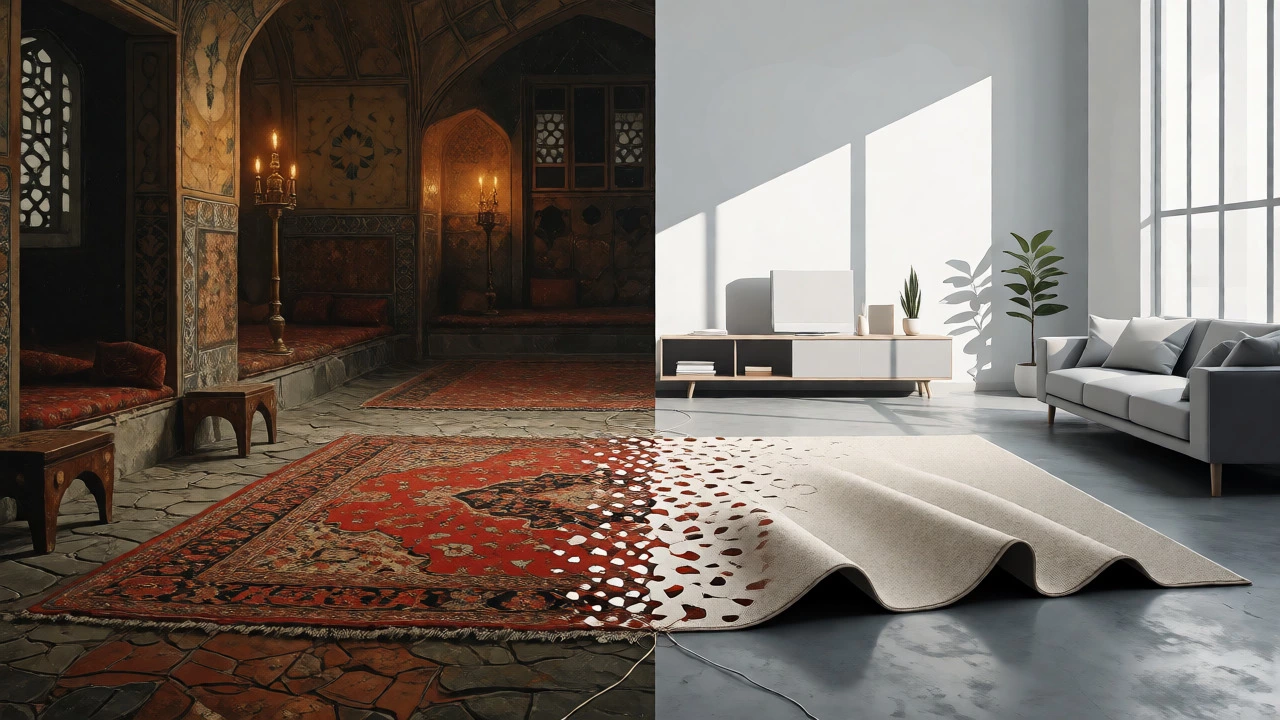
Historically, the finest rugs came from Persia (modern-day Iran), Turkey, and the Caucasus region. These were hand-knotted masterpieces passed down through generations. They were status symbols. Only the wealthy could afford them. Today, machine-made rugs have democratized access, but the prestige of handmade pieces remains.
In the 20th century, synthetic materials like nylon and polyester changed the game. Suddenly, rugs became stain-resistant and affordable. The modern "area rug" emerged as a standard interior design element, separating itself from the utilitarian "doormat" or the luxurious "Oriental rug." Now, we have everything from cheap polypropylene runners to heirloom-quality silk knots.
Types of Rugs: Not All Are Created Equal
When people ask "what does rugs mean," they often really mean "which type should I buy?" There are several categories, each with distinct attributes.
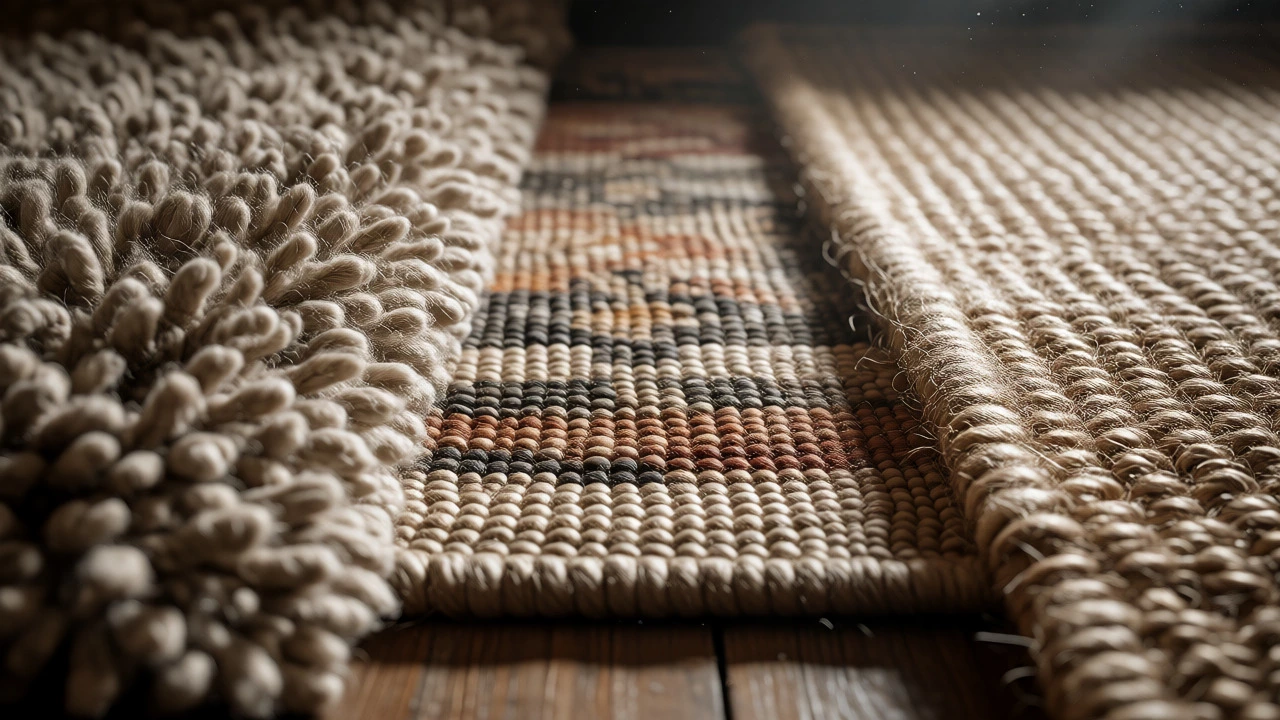
Area Rugs: These are the most common. Sizes range from small bathroom mats to massive living room centerpieces. Standard sizes include 5x8, 8x10, and 9x12 feet. They anchor furniture groups. For example, in a living room, the front legs of sofas should sit on the rug to create cohesion.
Runners: Long and narrow, typically 2x6 or 3x10 feet. You find these in hallways, kitchens, and entryways. They protect high-traffic paths from wear and tear. A good runner has a durable pile and easy-clean fibers.
Shag Rugs: Characterized by deep, soft piles (often 1.5 inches or more). They feel cozy underfoot but trap dirt easily. Best for low-traffic bedrooms or media rooms, not busy family halls.
Jute and Sisal: Natural fiber rugs. They bring texture and an organic vibe. However, they are rough. Walking barefoot on jute feels like walking on straw. They also absorb stains quickly. Use them in dry areas like dining rooms or studies, not bathrooms.
Flatweaves: Also known as kilims. These have no pile-they are thin and reversible. Great for layering under other rugs or in tight spaces where doors need to swing freely. They are lightweight and easy to hang on walls as tapestries.
Materials: What Are Rugs Made Of?
Material determines durability, comfort, and price. Here’s a quick breakdown of the most common options:
- Wool: The gold standard. Naturally stain-resistant, durable, and fire-retardant. Expensive but lasts forever. Ideal for high-traffic living areas.
- Cotton: Soft, washable, and affordable. Often used for flatweaves or braided rugs. Less durable than wool but great for kids' rooms due to easy maintenance.
- Nylon: Synthetic powerhouse. Extremely resilient against crushing and staining. Common in commercial settings and busy homes.
- Polyester: Soft and vibrant colors. Resists moisture well but can flatten over time. Budget-friendly option for decorative accents.
- Viscose (Rayon): Looks like silk but costs less. Beautiful sheen but terrible for spills. Water marks stay permanently. Keep away from pets and food zones.
Choosing the wrong material leads to frustration. Putting a viscose rug in a dining room guarantees disaster after the first glass of red wine. Putting a sisal rug in a bedroom might hurt your feet. Match the fiber to the room's function.
Why the Distinction Matters for Design
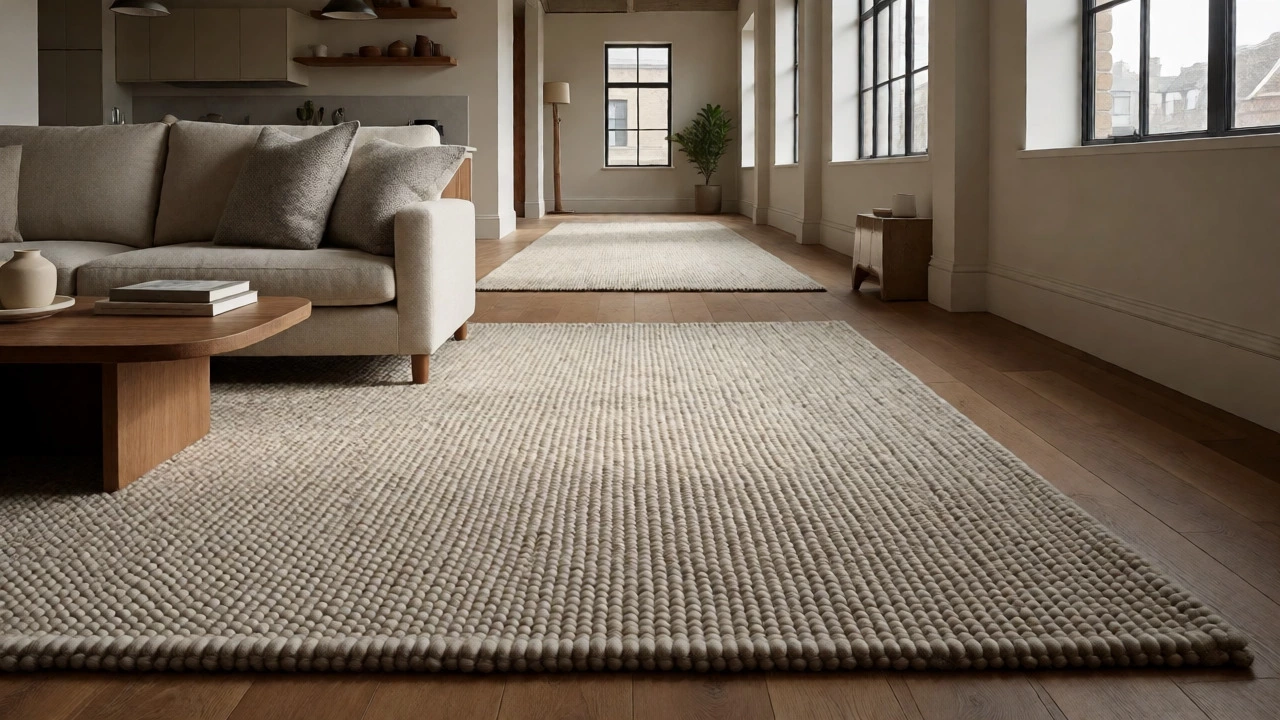
Understanding what constitutes a rug helps you design better spaces. Rugs are tools for visual zoning. In an open-concept loft, you might have a kitchen, dining area, and living room all in one big box. Three different rugs define three separate "rooms" without building walls.
Size placement rules are critical. Too small, and the rug looks like a postage stamp lost in a sea of floorboards. Too large, and it crowds the space. A common rule of thumb: In a living room, choose a rug large enough so that all furniture legs fit on it, or at least the front legs. In a dining room, the rug must extend at least 24 inches beyond the table edges so chairs remain on the rug when pulled out.
Color and pattern play roles too. Light-colored rugs make small rooms feel bigger. Dark rugs ground a space and hide dirt. Patterned rugs distract from messes. Knowing these effects lets you manipulate perception using just a rectangular piece of fabric.
Cultural Nuances and Regional Terms
Language varies by geography. In the UK, "carpet" often refers to any floor covering, including loose rugs, though "rug" is still used for smaller pieces. In Australia, the terms blur similarly. In India, "durrie" refers to a specific type of flat-woven cotton rug, while "carpet" implies thick pile.
Even within the US, regional dialects differ. In the Northeast, "throw rug" is common for smaller decorative pieces. In the South, "carpet" might refer to any textured floor covering, even if it's not installed. When shopping internationally, always check dimensions rather than relying on names. A "large rug" in one country might be a "runner" in another.
Also, consider religious contexts. Prayer rugs are specialized items designed for prostration during Islamic prayers. They have specific dimensions and orientation markers. Calling a prayer rug a "carpet" misses the functional intent entirely.
Common Mistakes When Buying Rugs
Don't let the confusion lead to bad purchases. Here are frequent errors shoppers make:
- Ignoring Pad Requirements: A rug without a pad slips. Slipping rugs cause accidents and wear unevenly. Always budget for a high-quality non-slip pad matched to your rug type.
- Underestimating Shedding: New wool rugs shed fibers for weeks. This is normal. Vacuum regularly, but avoid beater bars on vacuums for delicate weaves.
- Forgetting Sun Damage: Direct sunlight fades dyes. Rotate your rug every six months to ensure even fading.
- Buying Based on Color Alone: Screens lie. Order samples if possible. A "navy blue" rug might look black in your dim lighting.
Treat your rug as an investment. With proper care, it enhances your home's value and comfort. Neglect it, and it becomes a tripping hazard and a dust magnet.
FAQ
Is a rug considered furniture?
Technically, no. Furniture refers to movable objects intended to support human activities such as seating, eating, or sleeping. Rugs are classified as textiles or home accessories. However, in insurance policies and moving estimates, they are often grouped with furnishings because they are personal property, not structural elements like built-in cabinets.
Can I put a rug on top of a carpet?
Yes, absolutely. Layering a rug over carpet is a popular design technique. It adds color, texture, and definition to neutral wall-to-wall carpeting. Just ensure the bottom rug has a grippy backing so it doesn't slide around on the plush pile beneath it.
What is the difference between a rug and a mat?
Size and purpose primarily distinguish them. Mats are generally smaller (under 3x5 feet) and designed for specific utility, like wiping feet at an entrance or standing while cooking. Rugs are larger and primarily decorative or spatial-defining. However, there is overlap; a large doormat might be marketed as a runner rug.
Why are some rugs called "Oriental"?
"Oriental" is a traditional Western term referring to rugs originating from Asia, particularly the Middle East, Central Asia, and China. It denotes a style of weaving and design motifs rather than a precise geographic origin. Many experts now prefer specific terms like "Persian," "Turkish," or "Kashmiri" to avoid outdated generalizations.
Do rugs affect room acoustics?
Yes, significantly. Hard surfaces reflect sound, causing echoes. Rugs absorb sound waves, reducing noise levels and improving speech clarity. Thick, high-pile rugs offer the best acoustic dampening. If your home feels loud or echoey, adding rugs is one of the cheapest fixes.