Bedroom Space Calculator
Save Space Without Sacrificing Storage
Calculate how much floor space you gain by removing a traditional closet and discover creative ways to use the extra room.
Ever walked into a bedroom and thought, Where do I put my clothes? No closet. No built-in shelves. Just four walls and a bed. It’s more common than you think - and perfectly legal in most places. In fact, some of the most stylish homes in Auckland, New Zealand, and beyond are being built without traditional closets in the bedrooms. So, can a house have a bedroom without a closet? Yes. But should it? That’s where things get interesting.
It’s Not Against the Code
A lot of people assume you need a closet in every bedroom by law. That’s not true. Building codes in New Zealand, the U.S., Canada, and most of Europe don’t require a closet to classify a room as a bedroom. What they do require is a window for natural light and ventilation, a means of emergency exit, and a minimum floor area - usually around 7 square meters. That’s it. No mention of a closet.
Back in the 1950s, closets became standard because homes were smaller and storage was limited. But today, with open-plan living and minimalist trends, many homeowners are ditching the closet entirely. Architects in Wellington and Christchurch are designing bedrooms with floating shelves, freestanding wardrobes, or even built-in drawers under the bed. These aren’t hacks - they’re intentional design choices.
Why People Are Skipping the Closet
There’s a real shift happening in how we think about storage. A 2024 survey by the New Zealand Home Design Institute found that 38% of homeowners under 35 prefer open storage over enclosed closets. Why? Three big reasons:
- Space savings - A closet takes up 1.5 to 2 square meters. That’s enough room for a small desk, a reading nook, or extra storage elsewhere.
- Flexibility - A freestanding wardrobe can be moved, swapped, or upgraded. A built-in closet? Not so much.
- Aesthetics - Clean lines, open shelving, and visible storage look modern. Closed doors feel old-school.
Some people even say closets make rooms feel smaller. When you remove the door and frame, the room opens up. Light flows better. It feels airier. In Auckland’s smaller apartments and townhouses, that extra visual space matters.
How to Store Clothes Without a Closet
If you’re thinking of skipping the closet, you need a solid plan. Just tossing clothes on a chair won’t cut it. Here’s what works in real homes:
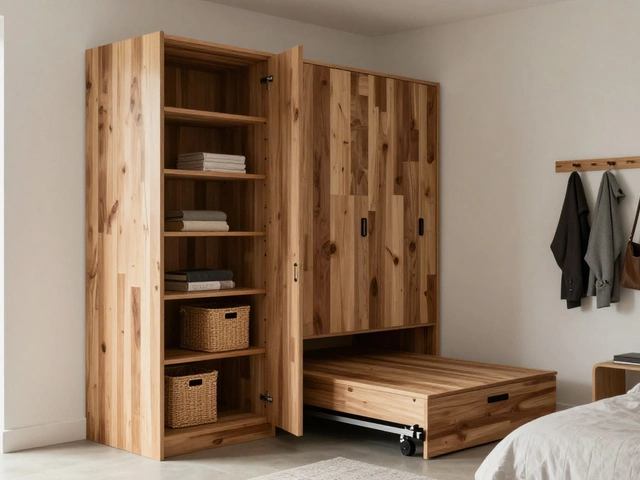
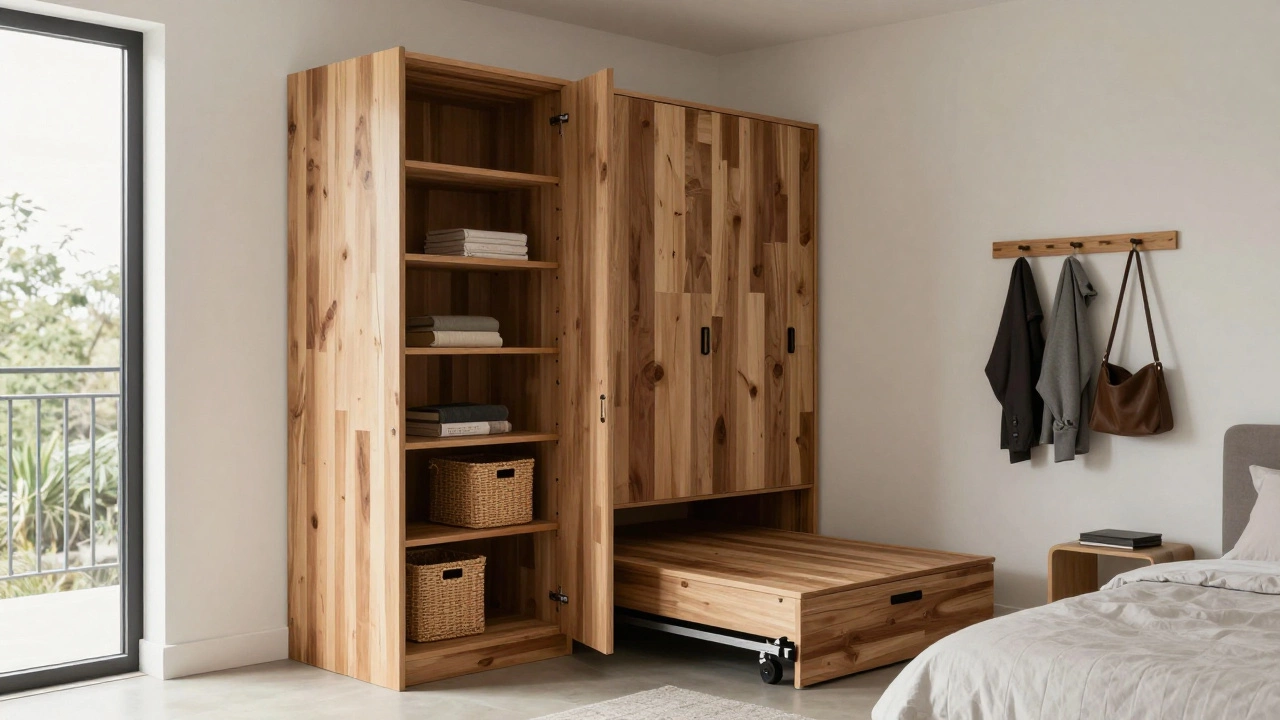
- Freestanding wardrobes - Choose tall, narrow units with full-length doors. They look like furniture, not storage. Brands like IKEA’s KUNGSBACKA or local makers in Dunedin offer sleek, solid wood options.
- Open shelving with baskets - Use wooden shelves with woven baskets for folded sweaters, jeans, and linens. It’s visual, organized, and easy to access.
- Under-bed storage - Roll-out drawers or lift-up beds with hydraulic lifts can hold 3-5 months’ worth of seasonal clothes. Add labeled bins and you’ve got a hidden system.
- Wall-mounted racks - For jackets, bags, or dresses, a simple wooden or metal rack with hooks keeps things visible and off the floor.
- Multi-functional furniture - A bench with hidden storage, or a dresser that doubles as a nightstand, adds function without clutter.
One client in Ponsonby replaced her closet with a 2.2-meter tall open wardrobe made from reclaimed timber. She added three tiers of shelves, two hanging rods, and a small mirror on the front. It cost less than $800 and now looks like a feature wall.
When a Closet Still Makes Sense
Not every bedroom should go closet-free. There are situations where a built-in closet is still the smartest move:
- Large wardrobes - If you own 50+ pairs of shoes, 20 coats, or a lot of formal wear, a closet with hanging space and drawers is more practical.
- Climate control - In humid areas like Northland or the Bay of Plenty, enclosed storage helps protect fabrics from mold and dust.
- Resale value - Buyers still expect closets. A 2025 real estate report in Auckland showed homes with at least one bedroom containing a closet sold 12% faster than those without.
- Family homes - Kids’ rooms benefit from enclosed storage. It keeps toys and clothes out of sight, and reduces mess.
So if you’re planning to sell in the next few years, or you have a growing family, don’t rule out a closet. But if you’re building for yourself, living minimally, or love design-forward spaces - you’ve got options.
Real Homes, Real Solutions
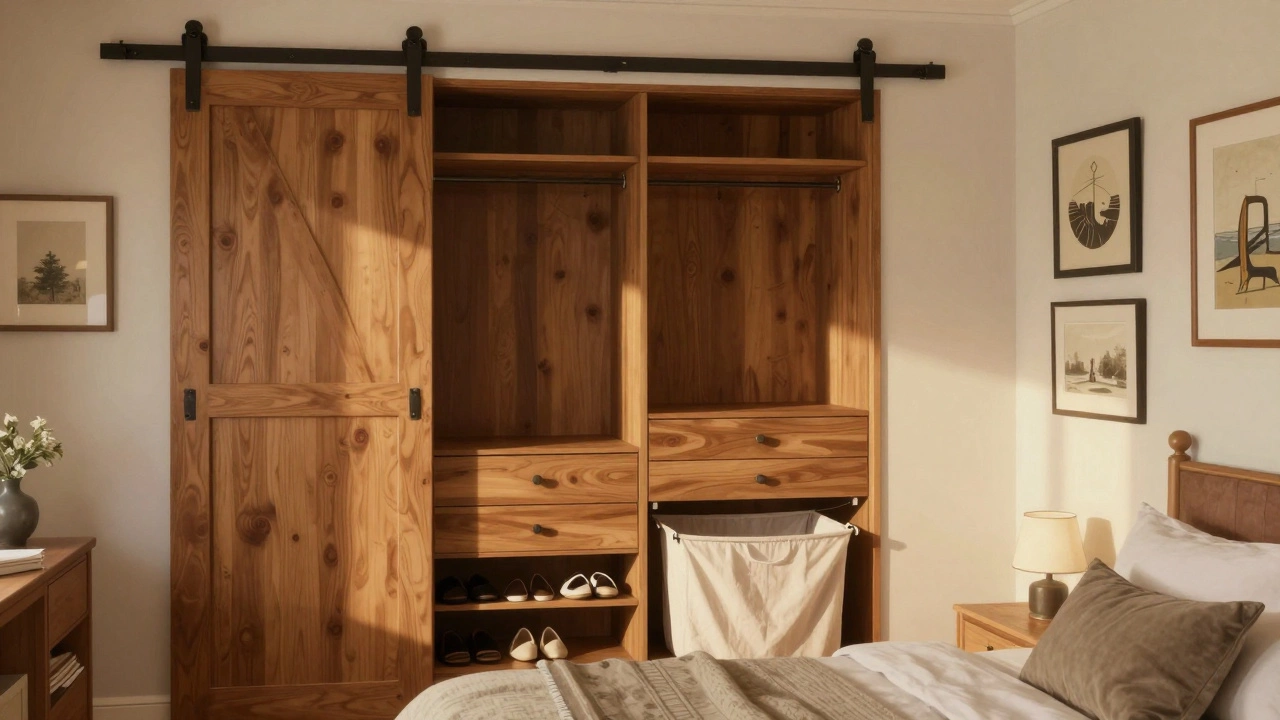
Take the 1920s bungalow in Grey Lynn that was renovated last year. The owners removed the tiny, awkward closet in the master bedroom and replaced it with a custom 3-meter long open wardrobe. Behind a sliding barn door, they installed: two hanging rods, four deep drawers, a shoe rack, and a pull-out laundry hamper. The wall behind it became a gallery space for framed art. The room feels bigger. More personal. More alive.
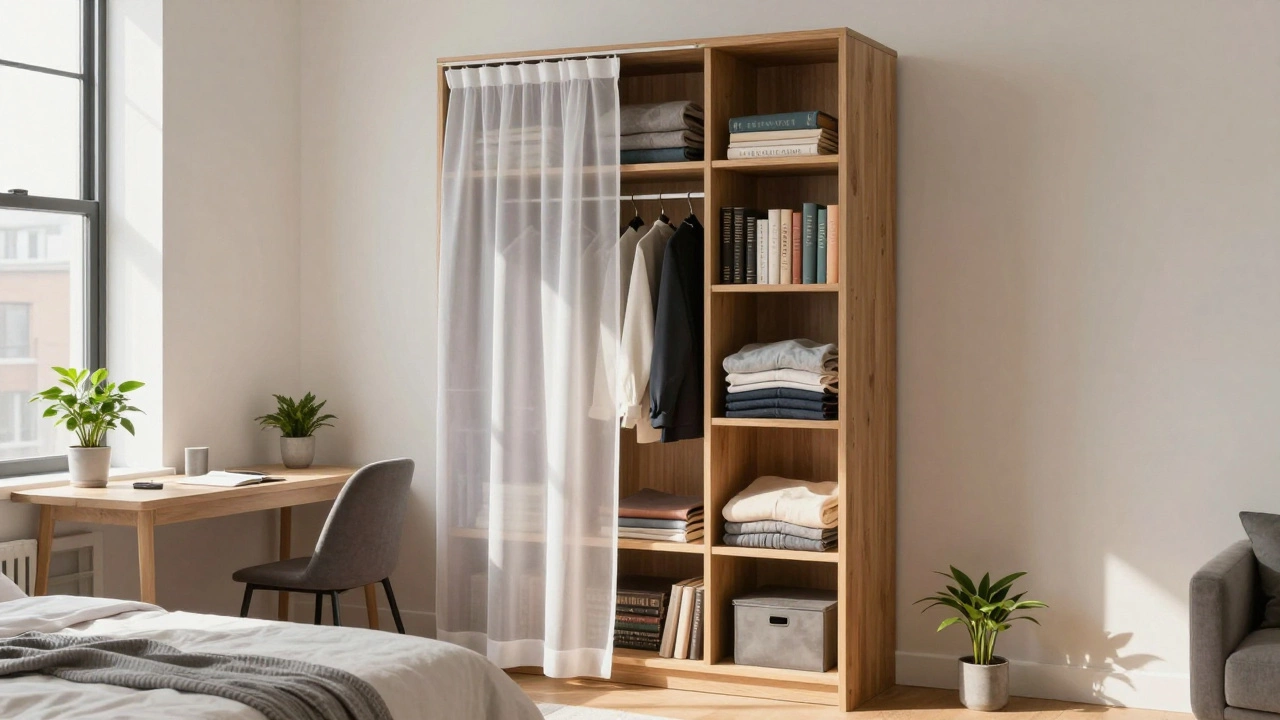
Another example: a studio apartment in Newmarket. The bedroom is a corner of the living area. Instead of a closet, the owner used a tall, narrow bookshelf with a curtain. Pull the curtain, and you’ve got a full wardrobe. Push it aside, and it’s a bookshelf. No wasted space. Zero clutter.
What Buyers Think
Yes, some buyers still expect closets. But tastes are changing fast. In 2025, real estate agents in Auckland report that younger buyers (25-38) are more impressed by clever storage than by a traditional closet. One buyer told an agent: “I’d rather have a great dresser than a dumb closet that eats up space.”
On the flip side, older buyers (55+) still associate closets with quality. If you’re targeting that group, include at least one closet - maybe in the main bedroom - and make the others smart and open.
Final Thought: It’s About Design, Not Rules
A bedroom without a closet isn’t a compromise. It’s a choice. And like any good design choice, it works only if it fits your life. If you hate hanging clothes, skip the rod. If you collect scarves and hats, use open shelves. If you live alone and move often, go freestanding.
The old rule - every bedroom needs a closet - was made for a different time. Today, storage is personal. It’s flexible. It’s part of your style. So yes, a house can have a bedroom without a closet. And if you do it right, you won’t miss it at all.
Is it legal to have a bedroom without a closet in New Zealand?
Yes, it’s completely legal. New Zealand building codes don’t require a closet for a room to be classified as a bedroom. The only requirements are a window for natural light and ventilation, a safe exit route, and a minimum floor area of 7 square meters.
Do I need a closet to sell my house?
Not necessarily, but it helps. Homes with at least one bedroom that includes a built-in closet sell 12% faster in Auckland’s current market, especially to families and older buyers. If you’re targeting younger buyers or minimalist lifestyles, smart open storage can work just as well - as long as it looks intentional and well-organized.
What’s the best alternative to a closet for a small bedroom?
A tall, narrow freestanding wardrobe with doors is the top pick. It saves floor space, looks like furniture, and keeps clothes out of sight. Pair it with under-bed drawers and wall hooks for maximum efficiency. Avoid open shelves unless you’re okay with visible clutter - they work best in very tidy spaces.
Can I convert a closet into extra space?
Absolutely. Many homeowners in Auckland are removing small, inefficient closets to create a reading corner, a vanity area, or extra shelving. Just make sure the room still meets bedroom standards (window, exit, size). You can always add a freestanding wardrobe nearby to replace the storage.
Are closetless bedrooms popular in New Zealand?
Yes, especially in urban areas like Auckland, Wellington, and Christchurch. New builds and renovations by younger homeowners increasingly skip traditional closets in favor of open storage, modular wardrobes, and multi-functional furniture. It’s part of a broader shift toward minimalist, flexible living.