Couch vs. Sofa Knowledge Quiz
Think you know the difference? Answer these questions to see how well you understand the nuances of furniture terminology.
You walk into a furniture store or scroll through an online catalog, and suddenly you're stuck in a semantic loop. Is it a couch? Is it a sofa? Do they mean the same thing, or are you about to buy the wrong piece of furniture for your living room? Here is the truth that most salespeople gloss over: in modern casual conversation, they are almost identical. But if you want to sound like someone who actually knows their way around a showroom-or if you are trying to match a specific style for a high-end interior project-there are subtle distinctions worth knowing.
The confusion isn't entirely your fault. The terms have evolved over centuries, crossing oceans and social classes. Today, couch and sofa are used interchangeably by 90% of homeowners. However, understanding the nuance helps you communicate better with designers, understand vintage listings, and choose pieces that fit your lifestyle rather than just your budget.
Quick Summary: Key Takeaways
- Etymology: "Sofa" comes from the Arabic word for bench; "Couch" comes from the French verb meaning "to lie down."
- Formality: Sofa is generally perceived as more formal or traditional; Couch is casual and relaxed.
- Structure: Sofas often imply matching armrests and back height; Couches can be more varied, including chaise lounges.
- Usage: Use "sofa" for formal settings or antique descriptions; use "couch" for everyday family rooms.
- Regional: In New Zealand and Australia, both terms are common, but "couch" dominates casual speech.
The Historical Roots: Why We Have Two Names
To understand the difference, we have to look at where these words came from. They didn't start as synonyms. They started as completely different types of seating.
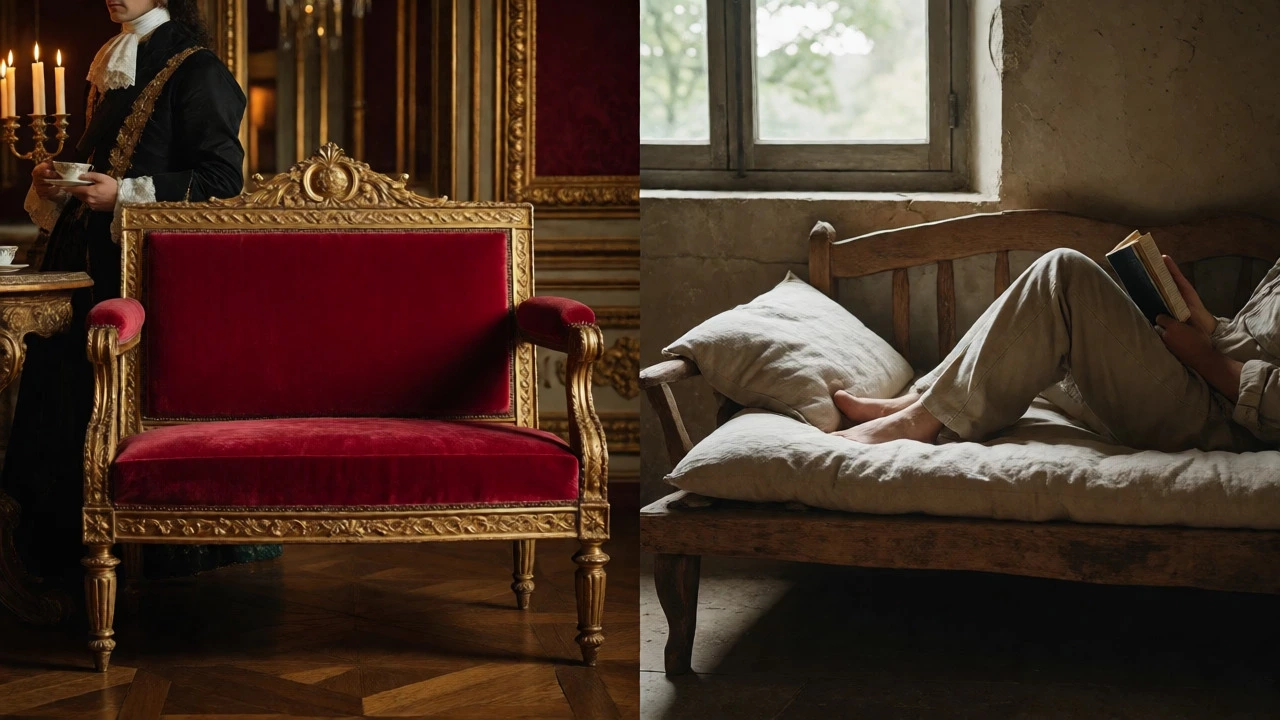
The word Sofa derives from the Arabic word "suffah," which referred to a wooden bench covered with cushions. It traveled through Turkey and Italy before landing in Europe in the late 17th century. Initially, a sofa was a luxury item reserved for royalty and the aristocracy. It was designed for sitting upright, displaying status, and hosting guests. Think of the elaborate, carved-wood pieces in Versailles. These were not places to nap; they were thrones without backs (or with low backs) meant for posture and prestige.
In contrast, the word Couch comes from the Old French word "coucher," meaning "to lie down". Historically, a couch was less about rigid structure and more about comfort and reclining. Early couches were often simpler frames designed for resting, reading, or even sleeping during the day. While sofas were for showing off, couches were for hanging out.
This historical divide explains why some people still feel a slight snobbery attached to the word "sofa." Calling a worn-out, stain-covered sectional a "sofa" feels pretentious to many. Calling a sleek, Italian leather three-seater a "couch" feels underwhelming. Language carries class baggage, and furniture names are no exception.
Structural Differences: Armrests and Backs
If you ask an interior designer, they might tell you there is a structural rule. Traditionally, a sofa has two equal armrests and a backrest that is roughly the same height as the arms. This symmetry creates a balanced, formal look. It fits neatly against a wall or in the center of a room without looking lopsided.
A couch, however, is looser with its definition. A couch might have one armrest higher than the other. It might have no armrests at all (like a divan). It might have a back that slopes down toward one end, making it perfect for curling up. If you see a piece of furniture that looks like it wants you to stretch out, it’s likely being called a couch. If it looks like it wants you to sit up straight and hold a teacup, it’s likely being called a sofa.
| Feature | Traditional Sofa | Traditional Couch |
|---|---|---|
| Armrests | Two symmetrical armrests | Variable; may have none or asymmetrical |
| Back Height | Matches armrest height | May slope or vary |
| Primary Function | Sitting upright, socializing | Reclining, relaxing, napping |
| Typical Material | Tight upholstery, velvet, wool | Leather, slipcovers, casual fabrics |
When to Use Which Term in Real Life
Does this distinction matter when you’re buying furniture in Auckland? Honestly, not much. If you walk into a shop and say, "I need a new couch," nobody will laugh at you. But using the right term can help narrow down what you actually want.
Use sofa when:
- You are describing a piece for a formal living room or reception area.
- You are shopping for antique or vintage furniture (e.g., "Victorian-era sofa").
- You want to emphasize elegance, structure, or tailoring.
- You are writing a property listing for a high-end home.
Use couch when:
- You are talking about a family room or media room.
- The piece has a chaise lounge or modular sections.
- You are emphasizing comfort, durability, or pet-friendliness.
- You are speaking casually with friends or family.
Consider the context of a movie night. You wouldn’t say, "Let’s gather on the sofa for the film," unless you were being ironic. You’d say, "Grab the couch," because the intent is relaxation, not performance. Conversely, if you are hosting a dinner party and guests are mingling, pointing to the "sofa" signals a space for polite conversation, not sprawling out with feet on the table.
Regional Variations: The Kiwi Perspective
Language is local. In the United States, "couch" is overwhelmingly the preferred term for everyday seating. "Sofa" sounds slightly British or formal. In the United Kingdom, "sofa" is the standard neutral term, while "settee" is also common in certain regions. "Couch" is understood but less frequently used in retail contexts.
Here in New Zealand, we blend influences. We hear "sofa" in marketing materials because it sounds premium. Retailers label their expensive lines as "Designer Sofas" and their affordable, durable lines as "Family Couches." But in daily conversation? Most Kiwis say "couch." It’s shorter, softer, and fits the laid-back culture. If you say "I’m going to sit on the sofa," your mates might tease you for sounding too serious. But if you say "I bought a new couch," it’s perfectly normal.
This regional shift affects how brands market products. Look at major NZ retailers. Their entry-level models are often described as "comfy couches," while their top-tier Italian imports are labeled "luxury sofas." The product might be structurally identical-a three-seater with arms-but the naming convention dictates the price tag and the perceived value.
Beyond Words: The Rise of Sectionals and Modulars
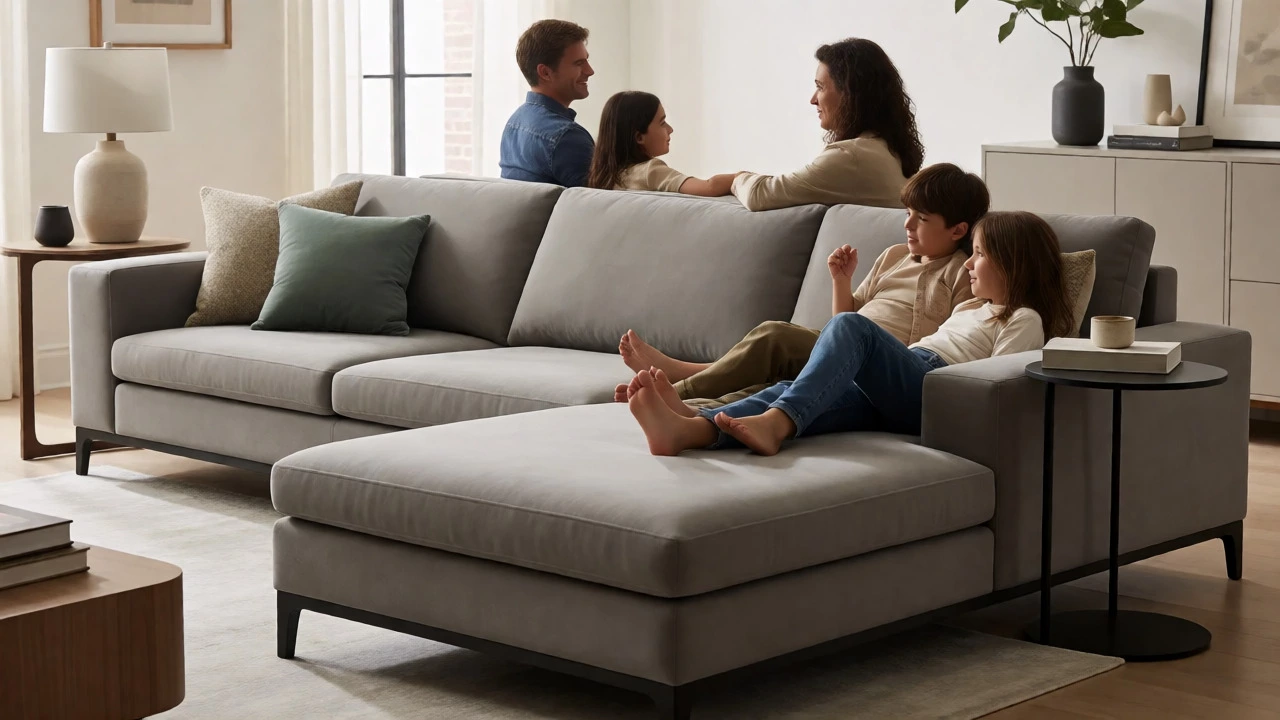
The debate between couch and sofa is becoming obsolete because of new furniture formats. Enter the Sectional a large, multi-piece seating arrangement that typically includes a corner unit and extends along two walls. Sectionals defy the old rules. They don’t have uniform armrests. They aren’t strictly for sitting upright. Are they couches? Yes. Are they sofas? Technically, yes.
Because sectionals blur the line, the industry has stopped caring about the strict definitions. You’ll see "Sectional Sofa" and "Sectional Couch" used interchangeably on the same product page. This linguistic freedom reflects how we live now. Our homes are smaller, our families are blended, and our entertainment habits involve streaming services, not tea parties. We need flexible seating that adapts to us, not rigid furniture that demands we adapt to it.
If you are shopping today, ignore the label. Focus on the specs. Measure your space. Check the seat depth (deeper seats are better for lounging/couch vibes; shallower seats are better for upright/sofa vibes). Test the cushion firmness. The name on the box matters less than whether you can sink into it after a long week.

Common Misconceptions About Furniture Terminology
People often confuse other terms with couch and sofa, leading to mismatched expectations.
Settee: Often used in the UK and Australia, a settee is essentially a small sofa, usually designed for two people. It’s smaller and more compact. Don’t call a massive L-shaped sectional a settee; it will confuse everyone.
Divan: A divan traditionally has no back or arms, or sometimes just a headboard-like back at one end. It’s purely for lying down. If you buy a "divan bed," you’re getting a storage base, not necessarily a upholstered seat.
Futon: In Japan, a futon is a mattress. In the West, a futon is a foldable frame that converts from a couch to a bed. It’s rarely called a sofa, though it serves the same function. Using the word "futon" implies budget and versatility, not luxury.
Understanding these nuances prevents disappointment. If you order a "loveseat" expecting a full-sized sofa, you’ll be surprised by the size. If you expect a "chaise" to have two arms, you’ll be confused by its single-sided design.
How to Choose the Right Name for Your Listing
If you are selling furniture online, keywords matter. Since users search for both terms, you should include both in your description. For example: "Comfortable grey fabric sofa, perfect as a family couch for the living room." This covers both search intents.
For buyers, use the term that matches your aesthetic goal. Want a clean, modern look? Search for "modern sofa." Want something cozy and lived-in? Search for "casual couch." The algorithms pick up on these associations, curating results that align with your visual preferences.
Final Thoughts: Embrace the Ambiguity
Don’t stress about getting the terminology wrong. Language evolves, and furniture terms are fluid. The important thing is that you get a comfortable place to sit. Whether you call it a couch, a sofa, a settee, or a throne, if it supports your spine and suits your style, you’ve made a good choice.
Next time you’re at a dinner party and someone asks, "Is that a nice sofa?", you can smile and say, "It’s a couch, but I treat it like a sofa." It shows you know the difference, but you’re not bound by it. That’s the mark of true confidence in any room.
Is there a functional difference between a couch and a sofa?
Functionally, no. Both serve as upholstered seating for multiple people. The difference is primarily linguistic and stylistic. A sofa traditionally implies a more structured, formal design with symmetrical arms, while a couch suggests a more relaxed, versatile piece suitable for reclining. However, modern manufacturing blurs these lines significantly.
Which term is more popular in New Zealand?
In casual conversation, "couch" is more commonly used in New Zealand due to its informal tone. However, "sofa" is prevalent in retail marketing, high-end furniture stores, and formal contexts. Both terms are widely understood and accepted across the country.
Can I use the words couch and sofa interchangeably?
Yes, for all practical purposes, you can use them interchangeably. In everyday speech and most commercial contexts, they refer to the same type of furniture. Only in very specific design or antique appraisal circles might a distinction be enforced based on historical construction methods.
What is a settee?
A settee is a small sofa, typically designed to seat two people. The term is more common in the UK and parts of Australia. It implies a smaller footprint and often a more decorative or antique style compared to a standard three-seater sofa or couch.
Why do some people prefer saying 'sofa'?
Some people prefer "sofa" because it sounds more sophisticated or professional. It is associated with formal interiors and high-quality craftsmanship. Others find "couch" too casual or sloppy. Personal preference often depends on regional upbringing and the social context in which the speaker grew up.