Mirror Style Finder
Not sure which mirror fits your space? Answer three quick questions to get a personalized recommendation based on 2026 design trends.
Recommended Style:
Best For
Pro Tip
You walk into a room and the first thing you notice isn't the sofa or the rug-it's the light. And nothing manipulates light quite like a mirror. But here is the kicker: the mirror hanging on your wall from five years ago might be dating your entire space. In 2026, we aren't just looking for something to check our hair; we are looking for art that reflects us.
If you've been scrolling through Pinterest or walking into high-end showrooms lately, you've probably noticed a shift. The era of the perfectly symmetrical, chrome-plated rectangle is fading fast. What's replacing it? A mix of raw textures, soft curves, and tech-infused functionality. Let's break down exactly what is trending right now, why it works, and how you can pick one that doesn't look like a mistake.
The Rise of Organic and Irregular Shapes
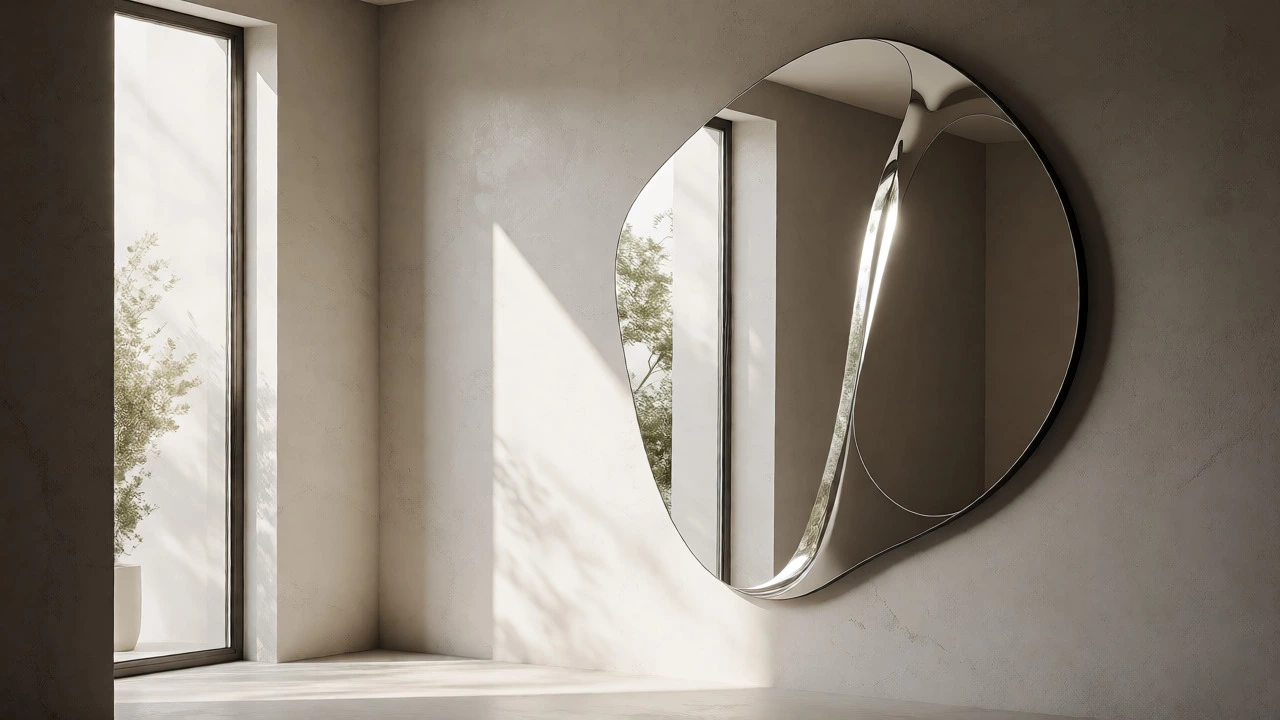
Forget straight lines. If there is one dominant trend in organic mirrors, it is the rejection of geometry. We are seeing an explosion of free-form, pebble-like, and cloud-shaped designs. This isn't just about being trendy; it’s about psychology. Sharp angles can feel aggressive in a living space, while curves soften the visual noise.
Think of the blob mirror. It sounds silly, but these asymmetrical pieces are everywhere. They work because they don’t demand attention with rigid borders. Instead, they blend into the wall, creating a window-like effect that feels more natural. You’ll see these framed in matte black metal, brushed brass, or even left frameless for a floating illusion.
- Best for: Modern minimalist homes or spaces that need a focal point without bulk.
- Pro Tip: Don't center them. Hang an irregular mirror off-center to create dynamic tension in the room.
Antique and Vintage Revival
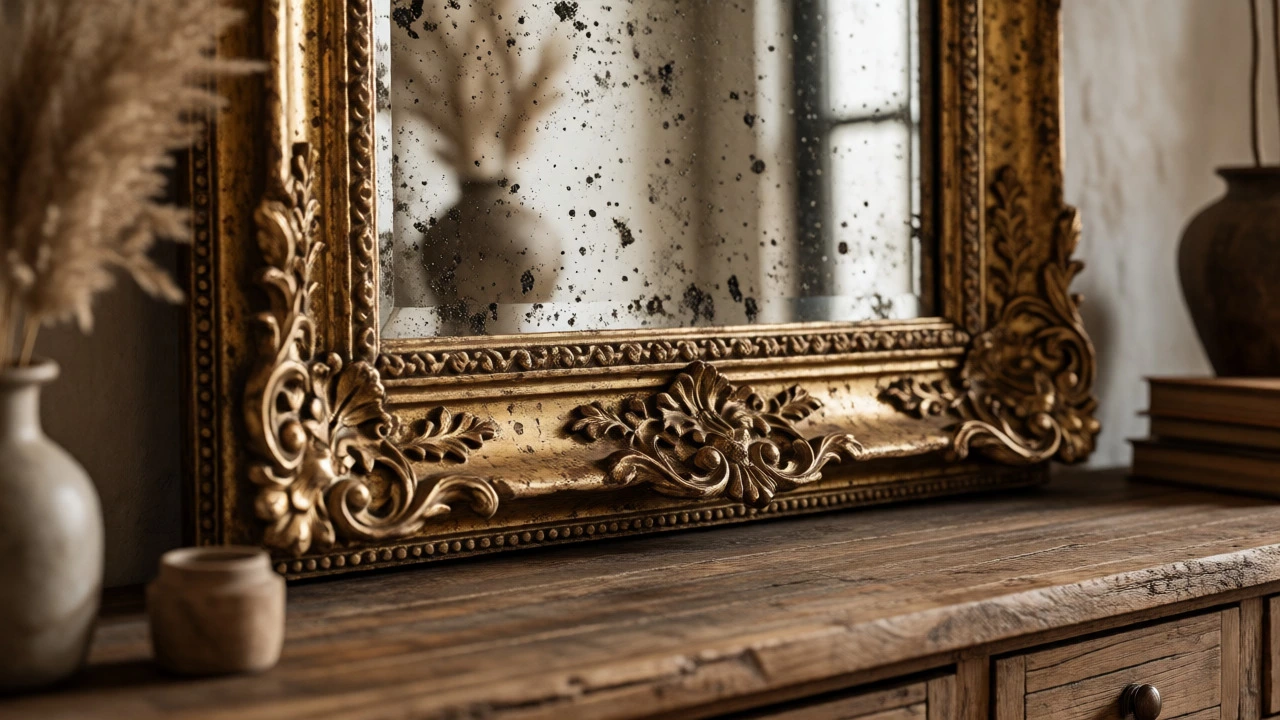
Sustainability is driving design choices more than ever. People are tired of mass-produced perfection. Enter the antique mirror. We’re talking about pieces with character-wooden frames with worn edges, mercury glass with intentional spots, or gilded gold leaf that has seen better days (and looks better for it).
This trend aligns with the broader "Grandmillennial" and "Cottagecore" aesthetics that have evolved into something more sophisticated. A vintage mirror tells a story. It adds depth and history to a sterile modern apartment. When you buy secondhand, you’re also getting quality craftsmanship that new manufacturing often skips. Look for solid wood frames rather than particle board. The weight of the piece matters; a heavy, old-world mirror feels substantial and grounded.
| Feature | Antique/Vintage Mirror | Modern Minimalist Mirror |
|---|---|---|
| Aesthetic | Warm, textured, historical | Clean, sleek, futuristic |
| Material | Wood, gilt, mercury glass | Metal, frameless glass, acrylic |
| Best Room | Living room, entryway | Bathroom, hallway |
| Maintenance | High (requires gentle cleaning) | Low (easy wipe-down) |
LED and Smart Technology Integration
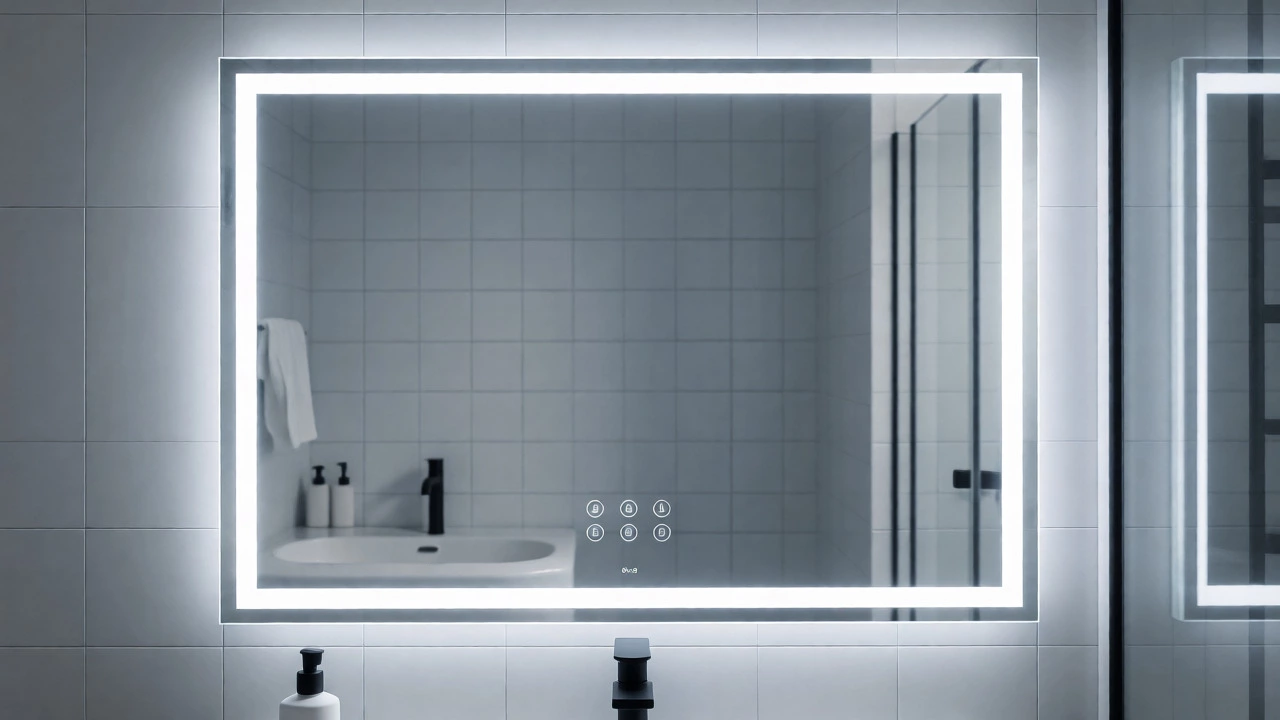
Technology hasn't just changed our phones; it’s changed our bathrooms. LED mirrors are no longer a luxury reserved for Hollywood dressing rooms. They are becoming standard in high-end renovations. Why? Because lighting makes or breaks your morning routine.
Traditional overhead bathroom lights cast shadows under your eyes and nose. An LED mirror provides front-facing, shadow-free illumination. Many models now come with touch sensors, anti-fog features, and color temperature controls. You can switch from warm white for relaxing baths to cool daylight for makeup application. Some even integrate Bluetooth speakers or digital clocks.
But beware: not all LEDs are created equal. Cheap ones flicker or have poor color rendering. Look for a CRI (Color Rendering Index) of 90+ if you care about true-to-life colors. Also, ensure the IP rating is suitable for wet zones (IP44 or higher) if it’s going near a shower.
Framed Statements: Rattan, Wicker, and Natural Materials
Biophilic design-the idea of bringing nature indoors-is still strong. While organic shapes cover the form, natural materials cover the texture. Rattan mirrors and wicker-framed pieces are huge right now. They add warmth and tactile interest to cold, concrete, or tile-heavy spaces.
This trend works exceptionally well in coastal, bohemian, or Scandinavian interiors. A round rattan mirror above a console table instantly softens the vibe. It’s less formal than gold or silver, making guests feel at ease. Just be careful with placement in very humid areas unless the material is properly sealed. New Zealand’s damp winters can warp untreated wood or rot cheap wicker over time.
How to Choose the Right Mirror for Your Space
Buying a mirror isn't just about picking a shape you like. It’s about function and flow. Here is a quick checklist before you swipe your credit card:
- Measure the Wall: Leave at least 4-6 inches of breathing room around the mirror. If it’s above furniture, it should be slightly narrower than the piece below it.
- Check the Reflection: Stand where you will actually use it. Does it reflect a messy corner? A blank wall? Or does it bounce light from a window? Bad reflection = bad purchase.
- Consider the Frame Weight: Heavy antique mirrors need proper anchors. Drywall alone won’t hold a 20kg oak-framed piece. Use toggle bolts or hit a stud.
- Test the Glass Quality: Low-quality mirrors distort images at the edges. Look for flat glass, not curved or warped. Distortion causes headaches and makes you look weird.
Common Mistakes to Avoid
We’ve all seen it: the giant mirror that swallows the room, or the tiny sliver that serves no purpose. One major error is ignoring scale. A small mirror in a large empty wall looks accidental, like you forgot to hang the big one. Conversely, a massive mirror in a cramped hallway can make the space feel claustrophobic if it doesn’t open up the view.
Another pitfall is matching everything too perfectly. If your coffee table, lamps, and rug are all mid-century modern, don’t get a mid-century modern mirror. Mix eras. Pair a sleek LED mirror with a rustic wooden dresser. Contrast creates interest.
Final Thoughts on Style Longevity
Trends fade. That neon pink frame you loved in 2023 might feel dated by 2028. However, certain styles have staying power. Round mirrors, arched tops, and simple rectangular frames are classics. If you want a mirror that lasts ten years, stick to neutral frames (black, white, brass, walnut) and timeless shapes. Save the wild, trendy shapes for smaller accent pieces you can swap out easily.
Ultimately, the best mirror is the one that makes you feel good when you look into it. Whether that’s a dusty antique from an estate sale or a smart LED panel from a tech store, trust your gut. Light changes everything. Choose wisely.
Are round mirrors still in style in 2026?
Yes, absolutely. Round mirrors remain a staple because they soften angular rooms and fit well in tight spaces. While irregular organic shapes are trending, the classic circle never really goes out of fashion due to its versatility and ability to reflect light evenly.
Should I choose an LED mirror or a traditional one?
Choose an LED mirror if you need functional task lighting for grooming or makeup. Traditional mirrors are better for decorative purposes where ambiance matters more than utility. For bathrooms, LED is superior for visibility; for living rooms, traditional frames offer more stylistic flexibility.
How high should I hang a mirror?
The general rule is to hang the center of the mirror at eye level, which is typically 57 to 65 inches from the floor. If hanging above furniture, leave 4 to 6 inches of gap between the top of the furniture and the bottom of the mirror frame to prevent a crowded look.
What is the most popular mirror shape right now?
Organic, free-form shapes are currently the most popular trend. These include blob-like, pebble-inspired, and asymmetric designs that move away from strict geometric rectangles and circles. Arched mirrors are also seeing a significant resurgence as part of the vintage revival trend.
Can I put a mirror opposite a bed?
This depends on personal preference and cultural beliefs like Feng Shui. Some people find reflecting themselves while sleeping unsettling or disruptive. Others love the sense of expanded space. If you do place one opposite the bed, ensure it doesn’t directly reflect clutter or sharp corners pointing at the sleeper.


