Storage Solution Finder
Find Your Perfect Storage Solution
Answer a few questions about your space and challenges, and get personalized recommendations for storage solutions that work for you.
What's your biggest storage challenge?
Which room needs attention?
What's your current space size?
Your Personalized Storage Solution
Recommended Storage Solution
Why This Works For You
Quick Implementation Tip
When people talk about storage solutions, they’re not just referring to closets or boxes. They’re talking about how you make your space work for you-how you keep things out of the way without losing access to them, how you turn chaos into calm, and how you stop wasting time hunting for your keys, tools, or winter coats. Storage solutions aren’t luxury add-ons. They’re the quiet backbone of a functional home.
It’s Not About Having More Space-It’s About Using What You Have
A lot of people think they need a bigger house to solve clutter. But that’s not the real issue. The problem is how space is organized. A 500-square-foot apartment with smart storage can feel more open than a 2,000-square-foot home stuffed with random piles. Storage solutions are designed to match your habits, not your square footage.
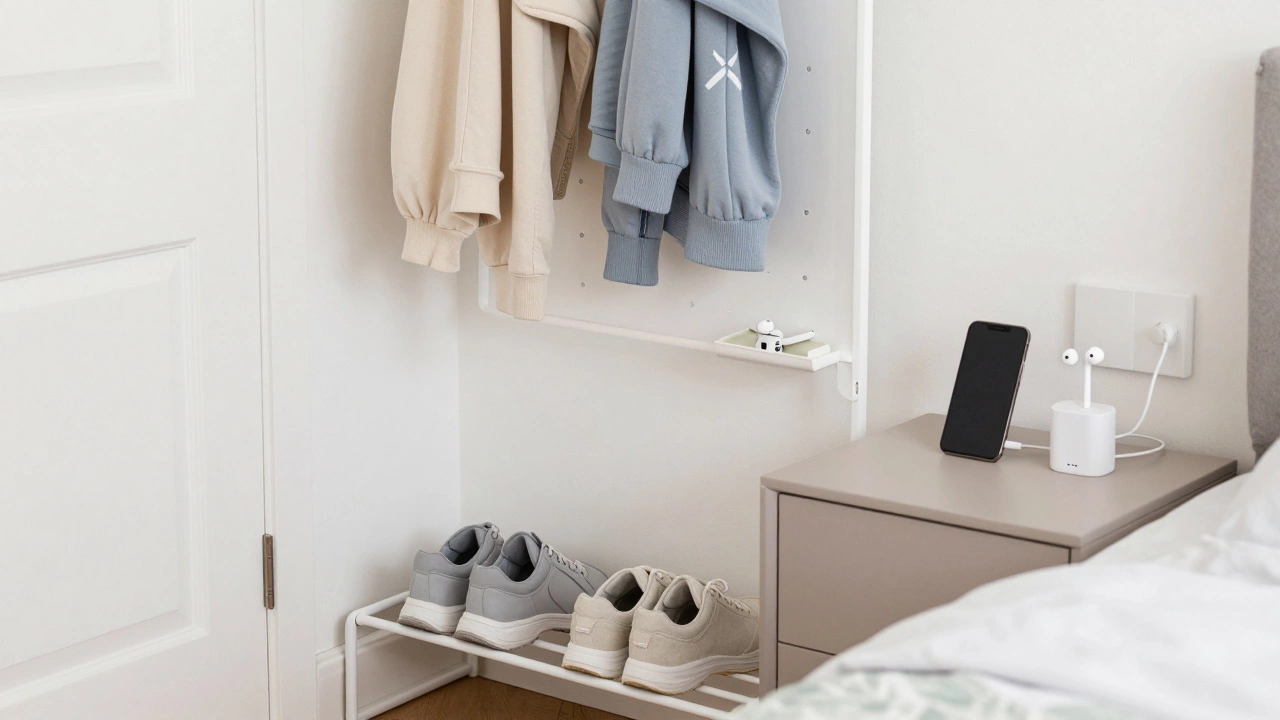
Think about your morning routine. Where do you keep your shoes? Your phone charger? Your gym clothes? If you’re digging through a pile every day, you’re not saving time-you’re wasting it. A simple shoe rack by the door, a charging station on the nightstand, or a hanging organizer behind the bedroom door cuts down minutes of frustration. Those are storage solutions in action.
Types of Storage Solutions You’re Already Using (Without Realizing It)
Not all storage looks like cabinets or bins. Some of the most effective solutions are hidden in plain sight:
- Under-bed drawers - Turn dead space under your mattress into extra room for seasonal clothes or linens.
- Magnetic strips - Hold knives, tools, or metal-backed makeup brushes on the wall instead of cluttering your counter.
- Over-the-door organizers - Perfect for bathrooms (toiletries), closets (scarves), or kids’ rooms (toys).
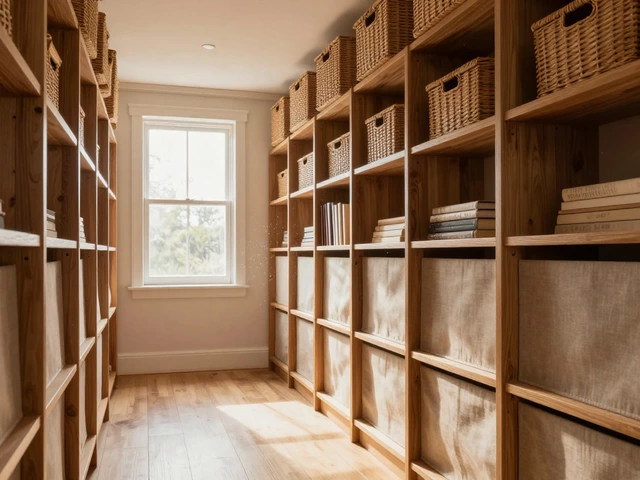
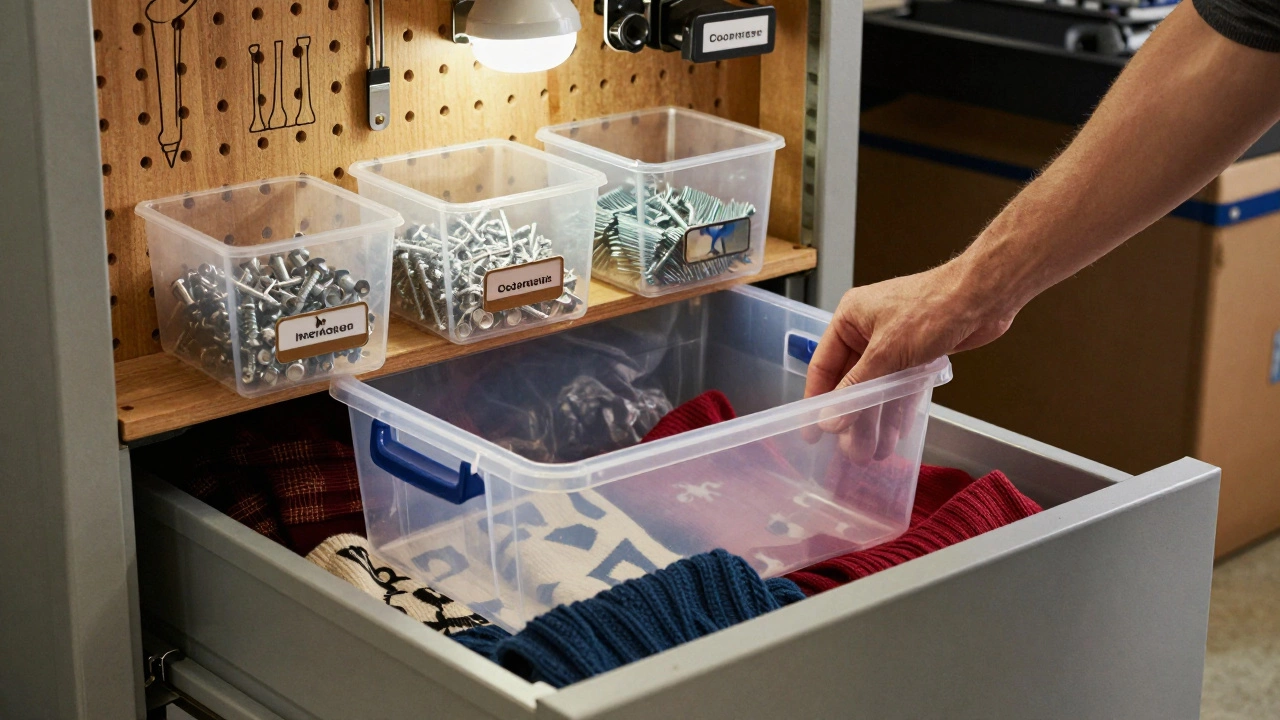
- Stackable bins with labels - No more guessing what’s inside. Clear bins and labels turn storage into a system, not a mystery.
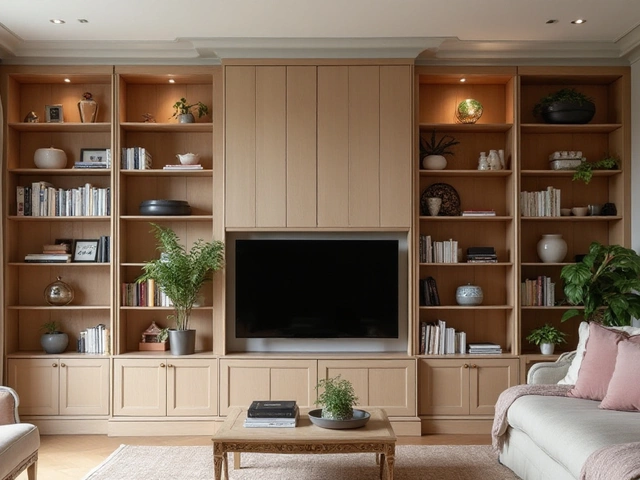
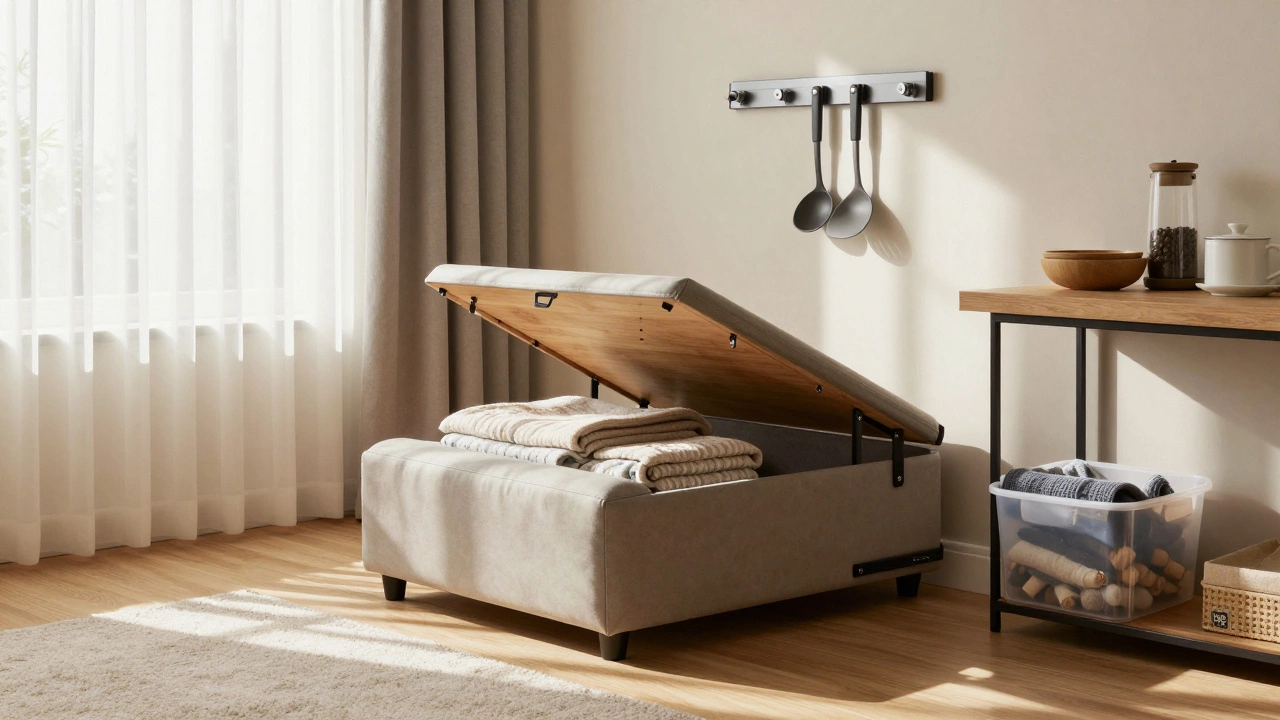
- Furniture with built-in storage - Ottomans that open up, beds with drawers, coffee tables with shelves. These aren’t just pieces of furniture-they’re storage in disguise.
These aren’t fancy gadgets. They’re practical fixes that cost little and save a lot of hassle. You’ve probably used one or two already. The difference between success and failure isn’t the product-it’s whether you’ve made storage part of your daily rhythm.
Why Most Storage Systems Fail (And How to Avoid It)
People buy storage bins, install shelves, and then wonder why everything’s messy again in three weeks. Why? Because they treated storage like a one-time project, not an ongoing habit.
Here’s what usually goes wrong:
- Buying without planning - You grab a set of bins because they’re on sale, but they don’t fit your drawers or shelves. Now you’ve spent money and created a new problem.
- Storing things you don’t use - That box of holiday decorations from 2018? You haven’t opened it in five years. Keep only what you use, need, or love.
- No system for putting things back - If there’s no clear spot for your tools, chargers, or kids’ toys, they’ll end up on the counter. Storage only works if everything has a home.
The fix? Start small. Pick one area-your junk drawer, your coat closet, your bathroom cabinet. Empty it completely. Sort what stays, what goes, and what you don’t even remember owning. Then, choose one storage solution that fits what’s left. Don’t overcomplicate it. A single basket, a single shelf, a single hook can be enough to reset the whole system.
Storage Solutions for Different Rooms-Real Examples
Every room has its own storage challenges. Here’s how real people handle them:
Kitchen
Instead of stacking pots and pans in a deep cabinet, use a pull-out rack. It lets you see everything at once. Hang utensils on a wall bar so you don’t have to dig through a drawer. Keep spices in a rotating tray on the counter-no more searching for cumin at 8 p.m. while making dinner.
Bathroom
Use a mirrored cabinet with internal shelves. It hides toothpaste, meds, and hair tools while giving you a full-length mirror. Add a shower caddy that sticks to tiles with suction cups-no drilling needed. Store extra toilet paper under the sink in a slim basket.
Home Office
Keep cables organized with a cable management box. Use a vertical file holder for papers instead of letting them pile on the desk. Store printer paper in a rolling cart under the desk-out of sight but easy to reach.
Garage or Workshop
Install pegboards with outlines of tools. When you hang a wrench back in its shape, you know instantly if it’s missing. Use clear plastic bins on shelves for nails, screws, and small parts. Label them with a marker-no more opening ten boxes to find a single screw.
Storage Isn’t Just for Homes-It’s for Life
Storage solutions aren’t just about physical stuff. They’re about reducing mental load. When you don’t have to think about where things are, your brain has more room for what matters-relationships, work, rest.
Think of storage like a digital desktop. If you have 500 open tabs and a thousand files scattered across folders, your computer slows down. Same with your home. Too much clutter, even if it’s "organized," creates invisible stress. A clean, logical storage system gives you back mental space.
People who live with less clutter report lower stress levels, better sleep, and more time for hobbies. That’s not magic. It’s design. It’s choosing the right bins, the right shelves, the right habits-and sticking with them.
How to Know If Your Storage Solution Is Working
Here’s a simple test: Can you find what you need in under 10 seconds? Can you put it back without thinking? If the answer is yes, you’ve got a good system. If it takes longer, or if you’re avoiding the space because it’s a mess, it’s time to adjust.
Don’t wait for a big cleaning day. Do a five-minute reset every Sunday. Put things back where they belong. Toss anything broken or unused. That’s all it takes to keep storage working for you-not against you.
Storage Solutions Are Personal
There’s no one-size-fits-all answer. What works for a family of four with three kids and a dog won’t work for a single person who travels every month. Your storage should reflect your life, not a Pinterest board.
Ask yourself:
- What do I reach for every day?
- What do I hate searching for?
- Where do I always leave things?
Answer those honestly, and your storage solution will write itself.
Are storage solutions only for small homes?
No. Storage solutions are for every home, no matter the size. In fact, larger homes often have more hidden clutter because there’s more space to hide things. Smart storage helps you use every inch efficiently, whether you live in a studio or a five-bedroom house.
What’s the cheapest storage solution I can start with today?
A set of clear plastic bins from a dollar store, some masking tape, and a marker. Use them to organize a junk drawer, a closet shelf, or under the sink. Label everything. That’s it. You’ve created a system for under $10.
Do I need to buy branded storage products?
No. Branded products like The Container Store or IKEA bins can be helpful, but they’re not necessary. Many people use shoeboxes, old jars, baskets from thrift stores, or even repurposed cereal boxes. What matters isn’t the brand-it’s whether the container fits your space and your habits.
How often should I reorganize my storage?
Once a season is enough for most people. Spring and fall are good times to swap out seasonal items and check what’s no longer needed. But don’t wait for a big cleanup-do five-minute resets weekly. That keeps things from piling up again.
Can storage solutions help with anxiety or stress?
Yes. Studies show that clutter increases cortisol levels-the body’s main stress hormone. A tidy, predictable environment reduces mental overload. When you know where things are, your brain doesn’t have to work as hard. That’s why people feel calmer after organizing-even if they didn’t throw anything away.
What Comes Next?
Start with one drawer. One shelf. One corner. Pick a spot that drives you nuts. Spend 15 minutes clearing it out. Put back only what you use. Find a simple container that fits. Label it. Done. That’s your first storage solution. You don’t need to overhaul your whole house. Just make one space work better. Then do the next. Slowly, without stress, your home will start to feel lighter-and so will you.