Rug Quality Inspector
Use this interactive tool to inspect a rug in the store or at home. Check each feature as you verify it. If you fail two or more checks, proceed with caution.
-
Backside Clarity
Pattern is clearly visible from the back. No glue, latex, or canvas backing hiding the weave. -
Knot Density (KPSI)
Appropriate density for use case (e.g., >60 for durability, >120 for fine detail). Count knots in a 1-inch square. -
Pile Resilience
Press palm into pile; it springs back quickly. Feels resilient, not flat or plastic-y. -
Fringe Integrity
Fringe is continuous with the warp threads (structural), not sewn on later. Pull gently to test strength. -
Color Stability
Rub white cloth firmly on dark areas. No significant dye transfer. Natural abrash (variation) is acceptable/good. -
Flat Shape
Lies perfectly flat on hard surface. No curling corners, rippling, or parallelogram distortion. -
Neutral Smell
Smells earthy, clean, or neutral. No strong chemical/VOC odor, mustiness, or excessive mothball scent.
Inspection Score
Quick Reference
- Hand-Knotted: Best value & longevity
- Tufted: Budget friendly, shorter life
- Silk: Delicate, avoid high traffic
- Wool: Durable, natural stain resistance
You walk into a shop, see a stunning pattern, and the price tag makes your wallet cry. Is it worth it? Or is it just a pretty face with zero substance? Most people buy rugs based on looks alone, then regret it six months later when the pile flattens or the colors bleed. Here is the truth: you can tell a good rug by checking its bones, not just its skin.
The hand-knotted rug is the gold standard of floor coverings. It is a textile created by tying individual knots onto warp threads, resulting in a dense, durable structure that improves with age. Unlike machine-made alternatives, these rugs are built to last generations, often becoming more valuable as they wear in rather than out.
Flip It Over: The Back Tells All
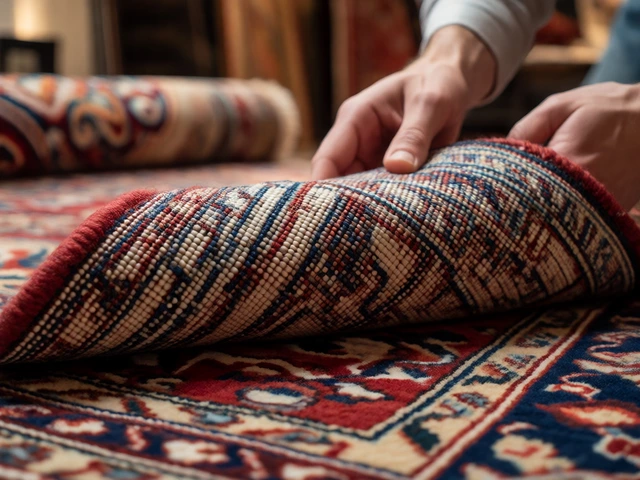
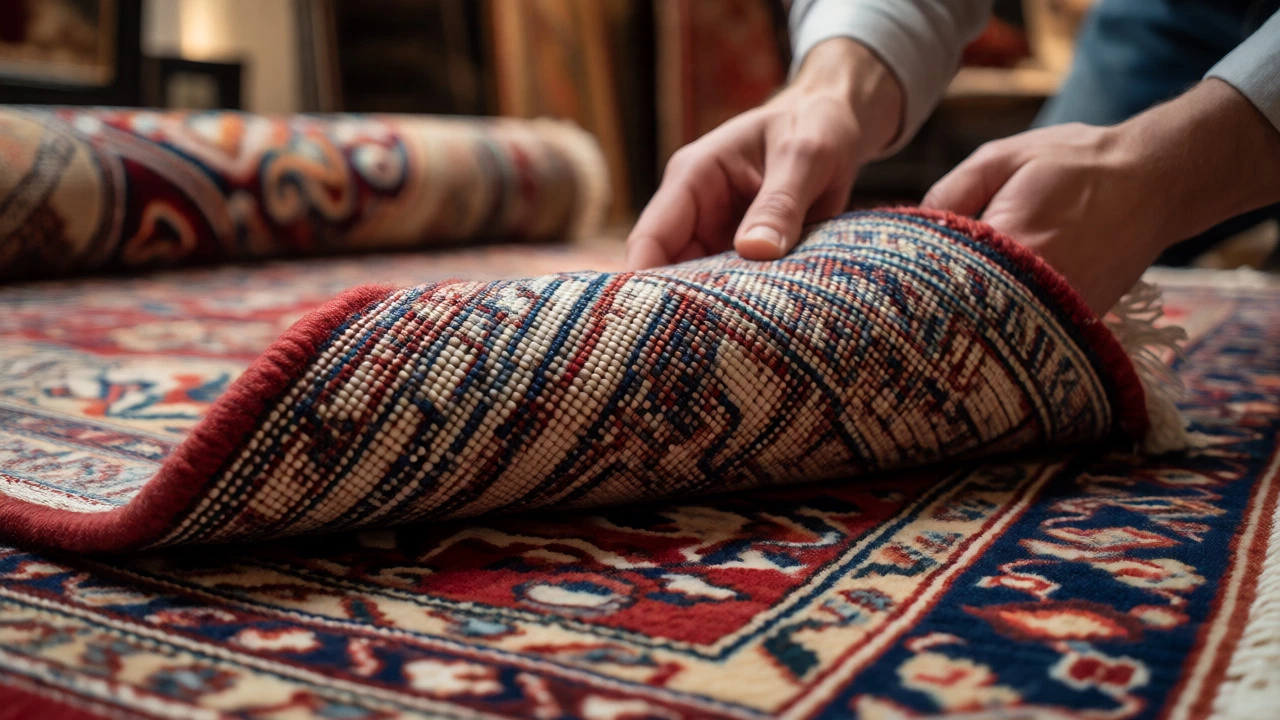
This is the single most effective test you can do in a store. Pick up the corner. Look at the back. If it looks like a blurry mess of glue and latex, put it down. You want clarity. On a high-quality hand-knotted rug, the design on the front should be clearly visible on the back. This happens because each knot is tied individually around the warp threads. There is no backing material hiding the construction. If you see a white canvas-like fabric glued to the bottom, it is likely a tufted rug. Those are fine for low-traffic areas, but they don’t have the longevity of a true woven piece.
Count the Knots (KPSI)
Density equals durability. In the rug world, we measure this using KPSI-knots per square inch. Think of it like thread count in sheets. Higher numbers mean tighter weaving, which means the rug holds its shape better and resists crushing under furniture legs.
- Under 60 KPSI: Coarse. Usually tribal or nomadic styles. Durable but rough texture.
- 60-120 KPSI: Standard for good household rugs. Balanced between detail and toughness.
- 120-300 KPSI: Fine. Intricate patterns. Often used in formal living rooms.
- 300+ KPSI: Museum grade. Silk or ultra-fine wool. Delicate. Treat it like art.
To check this, use a ruler. Count the number of vertical and horizontal knots in one inch, then multiply them. If you get 80 vertical and 80 horizontal, you have 6,400 knots per square foot, or roughly 45 KPSI. Wait, let me correct that common math error. It is simply the product of knots per linear inch horizontally multiplied by vertically. So 80 x 80 = 6,400 knots per square foot? No. KPSI is knots per square inch. If there are 10 knots across and 10 knots down in a one-inch square, that is 100 KPSI. Keep it simple: count within a one-inch grid.
Touch the Pile: Wool vs. Synthetic
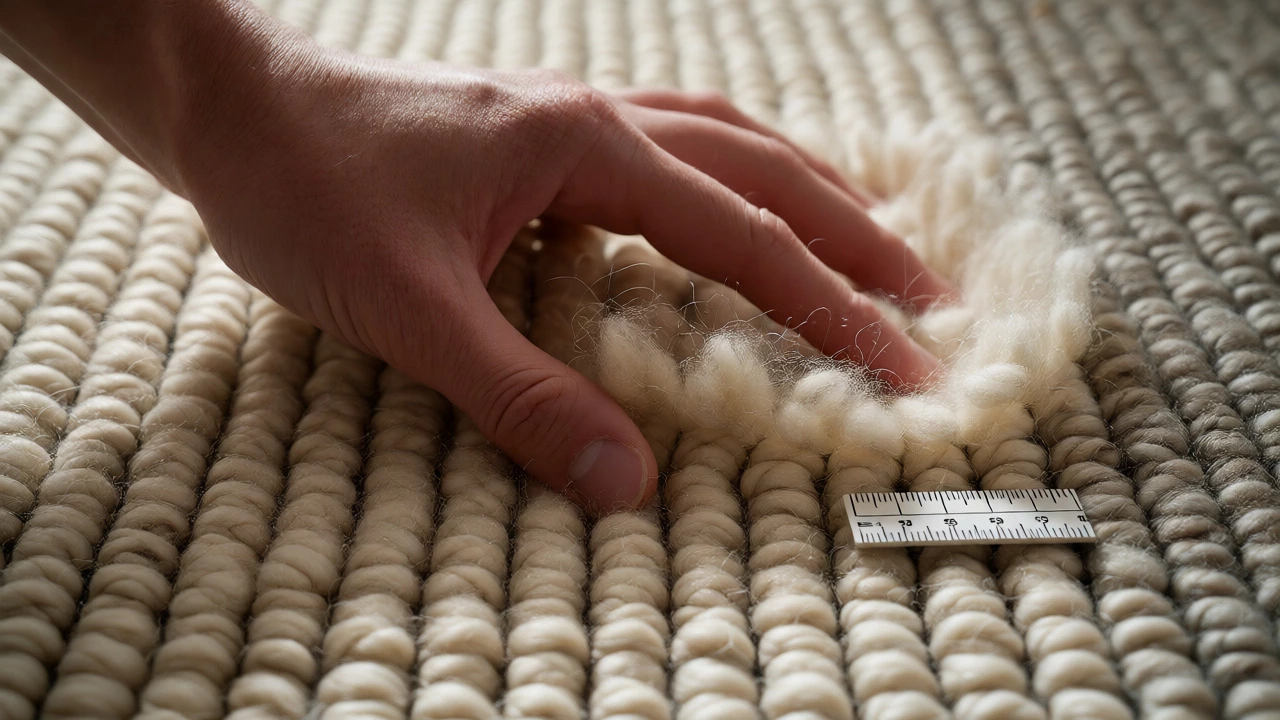
Fiber choice dictates how the rug ages. New Zealand wool is a premium natural fiber known for its lanolin content, which provides natural stain resistance and elasticity. I live here in Auckland, so I know this stuff firsthand. Our sheep produce some of the best carpet-grade wool in the world. When you press your palm into a good wool rug, it springs back. It feels soft but resilient. Synthetic fibers like polypropylene feel plastic-y. They might look bright initially, but they flatten permanently under heavy traffic and attract static electricity.
Here is a quick burn test if you can sneak a tiny snip from an inconspicuous edge. Real wool smells like burning hair and turns to ash. Synthetics smell like chemicals and melt into a hard bead. Don’t try this on silk; it behaves differently, smelling like burnt feathers.
Check the Fringe and Selvedges
The fringe isn’t just decorative. It’s the end of the warp threads. On a genuine hand-knotted rug, the fringe is part of the rug’s structural integrity. Pull gently on a few strands. If they come loose easily, the weave is weak. The selvedges (the finished sides) should be tightly wrapped with cotton or wool cord. If the edges are fraying or the wrapping looks loose, the rug will unravel over time. Ask the seller: "Is the fringe continuous with the rug?" If they say yes, great. If they say it was sewn on later, be wary.
Inspect the Colors: Natural vs. Chemical
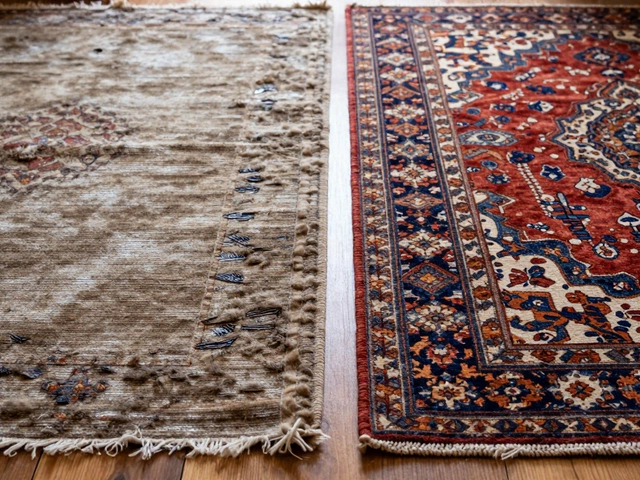
Look closely at the color transitions. Do they look slightly uneven or "abrash"? That is actually a good sign in traditional rugs. Abrash refers to slight variations in dye lots, common in naturally dyed wool. Chemical dyes tend to be flat and uniform. While chemical dyes are stable, natural dyes derived from madder root, indigo, or walnut husks offer depth and richness that synthetics struggle to mimic. However, ensure the colors don’t rub off. Rub a white cloth firmly against a dark area. If the cloth comes away heavily stained, the dyeing process was poor, and your socks will pay the price.
Smell Test: What Does It Smell Like?
A brand-new synthetic rug often reeks of volatile organic compounds (VOCs). It smells like a factory. A good wool rug smells earthy, clean, or neutral. If it smells musty, it may have been stored damp, risking mold spores deep in the pile. If it smells strongly of mothballs, ask why. Sometimes sellers mask storage odors. Trust your nose. Your home shouldn’t smell like a chemistry lab.
| Feature | Hand-Knotted | Tufted | Machine-Made |
|---|---|---|---|
| Backside Appearance | Clear mirror image of front | Cloth backing + Latex glue | Uniform grid pattern |
| Lifespan | 50+ years | 3-7 years | 5-10 years |
| Value Retention | Holds or increases value | Depreciates quickly | Low resale value |
| Price Point | High ($$$) | Medium ($$) | Low ($) to Medium ($$) |
Why Shape Matters More Than You Think
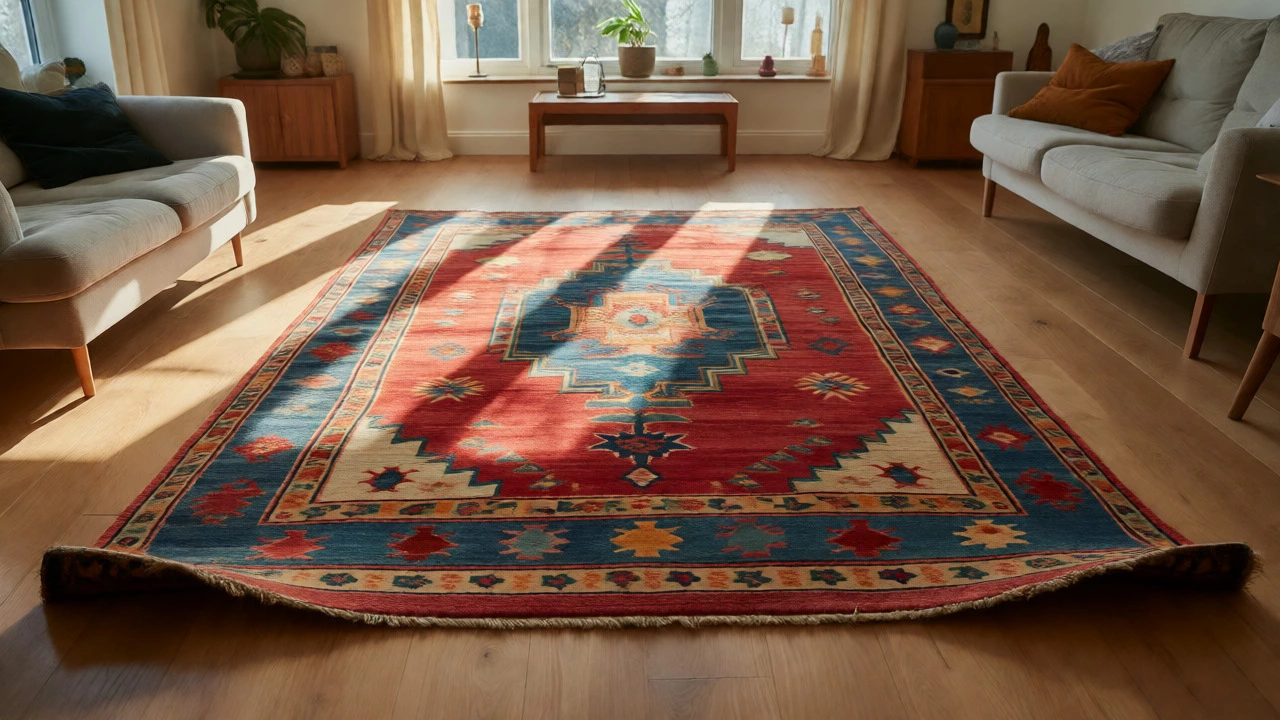
Lay the rug flat on a hard surface. Walk around it. Does it ripple? Does one corner lift? A well-made rug lies perfectly flat. If it curls at the corners after being rolled for weeks, the tension during weaving was uneven. This is a manufacturing flaw. You cannot fix it easily. It will always trip you or bunch up under tables. Check for straight lines too. Hold the rug up to a window or light source. Are the borders parallel? If the rectangle looks like a parallelogram, the loom tension was inconsistent. This affects how it fits in your room layout.
Consider the Traffic Zone
Not every rug needs to be museum-grade. If you are buying for a hallway or entryway, you need abrasion resistance. Tight knots and short pile work best here. For a bedroom, where feet touch it first thing in the morning, prioritize softness. Long-pile shaggy rugs feel luxurious but trap dirt and are harder to clean. Match the construction to the function. Buying a delicate silk runner for a dog-filled living room is a recipe for disaster.
Ask About Origin and Age
Where was it made? Persia (Iran), Turkey, Afghanistan, and Pakistan produce distinct styles. Persian rugs often feature intricate floral medallions. Turkish rugs might show geometric kilim patterns. Afghan rugs are known for bold, graphic designs and robust wool. Knowing the origin helps verify authenticity. Also, ask about age. A "new" antique rug might be chemically aged to look old. Real antiques have natural patina-softened edges, slight wear in high-traffic paths, and faded but harmonious colors. Fake aging often looks uniform and dusty.
The Final Inspection Checklist
Before handing over your credit card, run through this mental list:
- Backside: Clear pattern visible? No glue?
- Knots: Dense enough for the intended use?
- Fringe: Integrated, not sewn on?
- Pile: Springs back when pressed?
- Colors: No bleeding on white cloth?
- Shape: Lies flat without curling?
- Smell: Neutral, not chemical?
If it passes all seven, you likely have a keeper. If it fails two or more, keep looking. A rug is a long-term investment. Taking ten minutes to inspect it now saves you from replacing it in three years.
What is the difference between hand-tufted and hand-knotted rugs?
Hand-knotted rugs involve tying individual knots around warp threads, creating a durable, reversible structure with no backing. Hand-tufted rugs involve punching yarn into a pre-woven canvas, then gluing a backing to hold it together. Hand-knotted rugs last decades longer and hold value better, while hand-tufted rugs are cheaper but prone to shedding and flattening.
How many knots per square inch indicate a high-quality rug?
Generally, 80 to 120 knots per square inch (KPSI) indicates a good quality residential rug. Anything above 120 KPSI is considered fine or semi-antique quality, suitable for detailed patterns. Below 60 KPSI is typical for coarse tribal weavings, which are durable but less refined. Remember, density also depends on the type of wool and the intended use.
Can I tell if a rug has natural dyes just by looking?
Not always definitively, but you can look for subtle variations in color tone known as abrash. Natural dyes rarely produce perfectly uniform blocks of color due to batch differences. Chemical dyes tend to be flatter and more consistent. However, modern chemical dyes can mimic natural tones well. A professional appraisal or UV light test is needed for certainty, but visual irregularities are a strong hint of natural origins.
Why does my new rug smell bad?
A strong chemical odor usually indicates the presence of Volatile Organic Compounds (VOCs) from adhesives, backing materials, or synthetic fibers. This is common in mass-produced machine-made or tufted rugs. High-quality natural wool rugs typically have little to no smell. If the odor persists after airing out for several days, consider returning the rug, as prolonged exposure to VOCs can affect indoor air quality.
Are expensive rugs always better quality?
No. Price reflects brand, rarity, design complexity, and merchant markup, not just physical quality. A mid-priced hand-knotted wool rug can outlast a cheaply made designer rug. Always inspect the physical attributes-knot density, fiber type, and construction-rather than relying solely on the price tag or label.