Ever bought a rug that looked great in the store, only to have it flatten, shed, or smell weird after a month? You’re not alone. The difference between a cheap rug and an expensive one isn’t just about price-it’s about how it’s made, what it’s made from, and how long it’ll last in your home. If you’ve ever wondered why one rug costs $80 and another costs $800, the answer lies in the details most people never see.
Materials Make the Difference
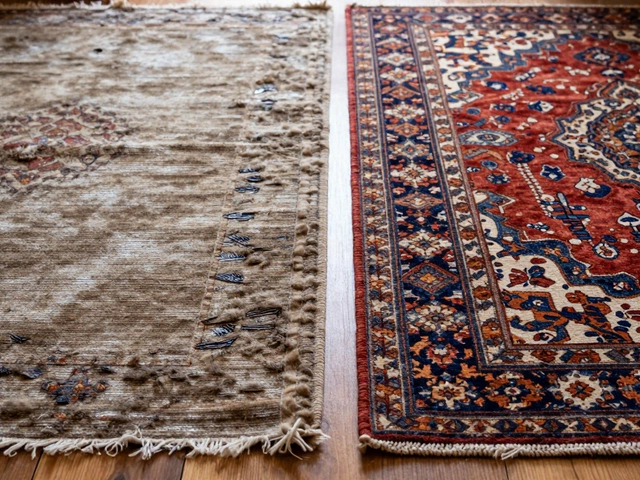
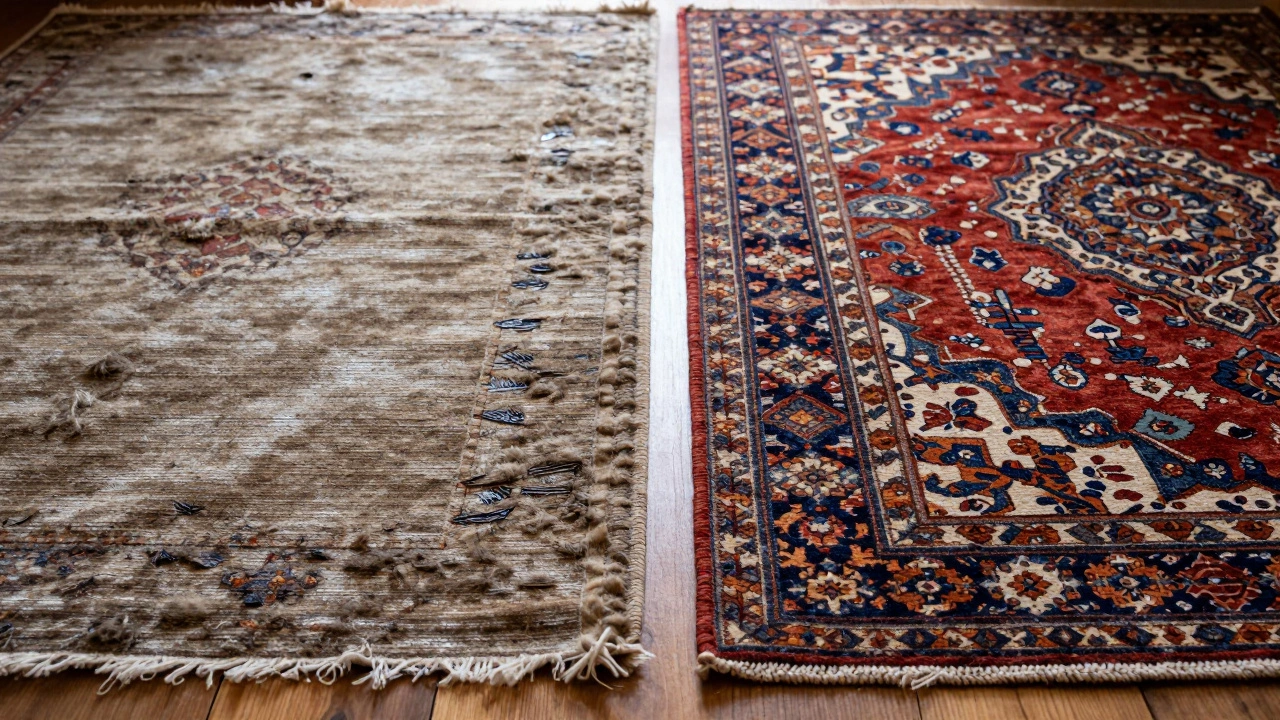
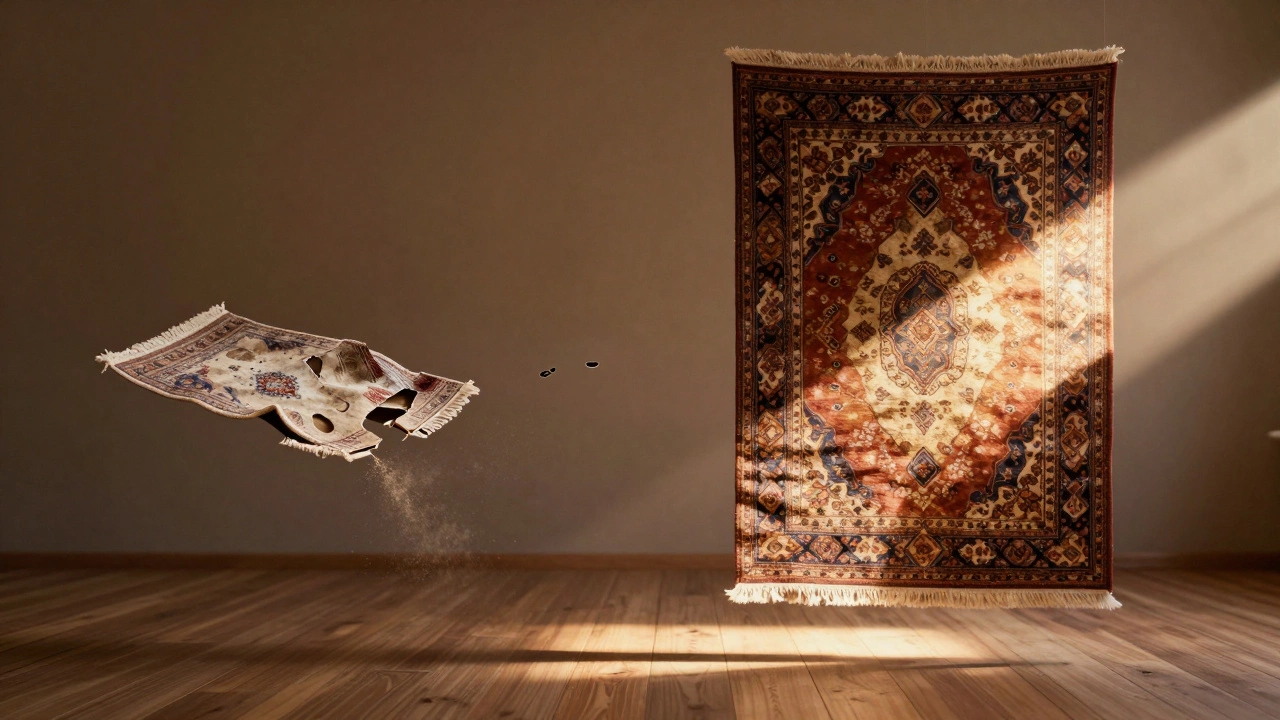
Cheap rugs are usually made from synthetic fibers like polypropylene, polyester, or nylon. These materials are cheap to produce, easy to machine-weave, and often treated with chemicals to mimic the look of wool or silk. They’re fine for high-traffic areas like hallways or kids’ rooms, but they don’t breathe. In humid climates like Auckland, they trap moisture and can start to smell. After a year or two, they start to look flat, faded, or even shiny in spots where people walk.
Expensive rugs, on the other hand, are often made from natural fibers-wool, silk, cotton, or even jute. Wool is the most common in high-end rugs because it’s durable, naturally stain-resistant, and has memory. That means if you push something heavy on it, like a chair leg, it bounces back. Silk adds a subtle sheen and incredible detail, often used in fine Persian or Oriental rugs. Cotton is used for the foundation in many handwoven rugs because it’s strong and holds dye well. Natural fibers age gracefully. They soften over time, develop a patina, and can last decades-if not centuries.
How It’s Made: Machine vs. Hand-Knotted
Most cheap rugs are machine-made. You’ll see them stacked in big-box stores or sold online with free shipping. They’re produced in factories, sometimes overseas, with high-speed looms that can churn out thousands of rugs a day. The knots are uniform, the patterns are repetitive, and the edges are often stitched or glued. There’s no variation, no soul.
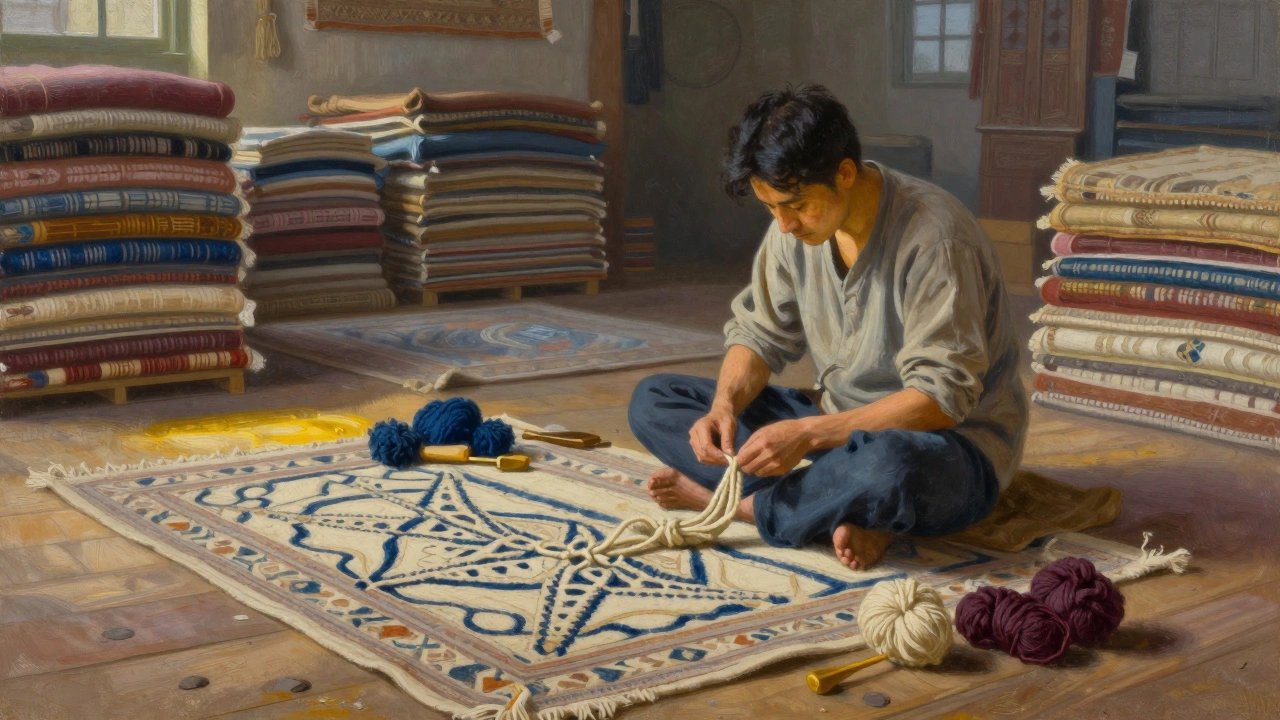
Expensive rugs are often hand-knotted. This means a single artisan ties each knot by hand, one at a time. A small 5x8 rug can take 3 to 6 months to complete. A larger, more detailed piece might take over a year. The number of knots per square inch is a direct indicator of quality. A cheap rug might have 50-80 knots per square inch. A high-end Persian rug can have 500-1,000. More knots mean finer detail, richer patterns, and a denser, more durable pile.
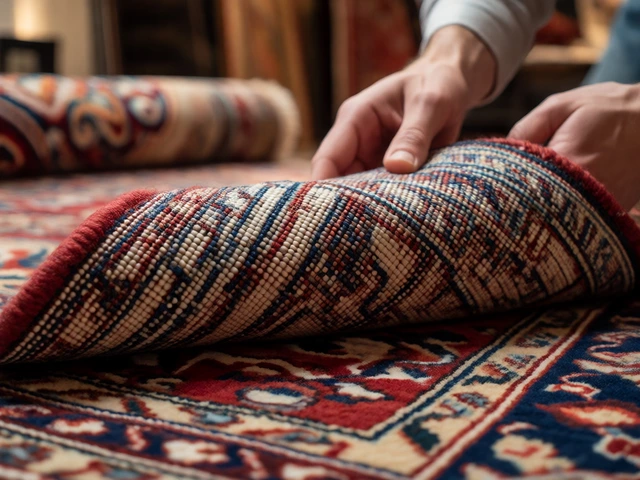
You can tell the difference by flipping the rug over. On a machine-made rug, the back looks like a printed image-clean, uniform, and flat. On a hand-knotted rug, you’ll see individual knots, slight variations in color, and the pattern mirrored but not perfectly identical on the back. That’s not a flaw-it’s proof it was made by human hands.
Color and Dye: Synthetic vs. Natural
Cheap rugs use chemical dyes. These are fast, cheap, and produce bright, consistent colors. But they fade quickly in sunlight. You’ve probably seen rugs near windows that look bleached on one side-those are usually synthetic-dyed. They also tend to bleed when wet, which is a nightmare if you ever need to clean them.
Expensive rugs often use natural dyes made from plants, insects, or minerals. Indigo, madder root, walnut husks, and cochineal insects are all traditional sources. These dyes are slower to apply and vary slightly from batch to batch. That’s why no two hand-dyed rugs are exactly the same. The colors deepen over time instead of fading. They develop a warm, earthy tone that synthetic dyes can’t replicate. A rug dyed with natural indigo might start as a deep blue and turn into a soft, silvery gray after 20 years of light exposure. That’s not wear and tear-it’s character.
Construction and Durability
The foundation of a rug matters. Cheap rugs often have a thin, flimsy backing made of jute or synthetic mesh. It can rot, stretch, or tear over time, especially if you have hardwood floors. The edges might unravel or curl up after a few years.
Expensive rugs have a strong, tightly woven cotton or wool foundation. The warp and weft threads are spun and twisted to handle tension. The edges are reinforced with overlocking or hand-sewn selvedges. This means the rug won’t fray or stretch. You can roll it up, store it for years, and unroll it again without damage.
Also, the pile height tells a story. Cheap rugs often have a long, loose pile that sheds fibers for months. You’ll find bits of fuzz on your socks. Expensive rugs have a shorter, tightly packed pile that feels dense underfoot. It doesn’t shed because the fibers are anchored deep into the foundation. You can vacuum it weekly without worrying about damage.
Long-Term Value
A $100 rug might seem like a bargain. But if it looks worn out after two years, you’ve spent $50 a year on it. A $1,200 rug that lasts 20 years? That’s $60 a year. And if it’s hand-knotted and made with natural materials, it might actually increase in value. Antique Persian rugs regularly sell for more than their original price. Some collectors pay $50,000+ for a single rug.
Even if you don’t plan to resell it, an expensive rug adds something a cheap one never can: permanence. It becomes part of your home’s story. It doesn’t just cover the floor-it anchors the room. It’s the thing people notice when they walk in. It’s the one you never replace.
What to Look For When You Shop
Here’s how to spot quality without being an expert:
- Check the back. If it looks printed, it’s machine-made. If you see knots, it’s hand-knotted.
- Rub your hand over the surface. Does it feel soft and dense? Or thin and plasticky?
- Smell it. A chemical odor? That’s synthetic material. A faint wool or earthy scent? That’s natural.
- Ask about the material. If they say “polyester” or “polypropylene,” it’s cheap. If they say “hand-spun wool” or “natural dyes,” it’s worth considering.
- Look at the edges. Are they neatly bound? Or just stitched with a sewing machine? Hand-finished edges last longer.
When a Cheap Rug Makes Sense
Let’s be real-not everyone needs a $2,000 rug. If you’re renting, have young kids or pets, or just want to change your decor every few years, a good-quality synthetic rug is fine. Look for ones labeled “low-pile,” “stain-resistant,” and “UV-treated.” These will hold up better than the flimsy ones.
But don’t mistake convenience for value. A cheap rug that falls apart in a year isn’t saving you money-it’s costing you time, effort, and peace of mind.
Final Thought: It’s Not About Price-It’s About Purpose
The real difference between a cheap rug and an expensive one isn’t the sticker price. It’s the intention behind it. A cheap rug is meant to be temporary. An expensive rug is meant to be kept. One is a commodity. The other is a craft. One fades. The other endures.
If you’re putting down a rug that’s going to be walked on daily, seen every morning, and remembered every time someone visits your home-why settle for anything less than the best?