Cheap Rug: What to Know Before You Buy
When you’re looking for a cheap rug, a low-cost floor covering that fits your space without breaking the bank. Also known as budget rug, it’s not about skipping quality—it’s about choosing smart. A cheap rug doesn’t have to mean flimsy, faded, or full of synthetic chemicals. In fact, many affordable rugs today are made with durable fibers like nylon or polypropylene, designed to handle pets, kids, and high traffic. The trick isn’t finding the lowest price—it’s finding the right balance between cost and longevity.
What you avoid matters just as much as what you buy. rug materials, the fibers used to weave the rug, directly affect how long it lasts and how safe it is for your home. Also known as rug fibers, they include everything from wool to cheap polyester blends. Skip rugs made with low-grade acrylic or vinyl backing—they crack, peel, and trap dust. Instead, look for rugs with latex or jute backing, which hold up better over time. And don’t assume a thick rug is a good rug. Some thick rugs are just padded with cheap foam that flattens in weeks. Real durability comes from tight weaving and strong fibers, not just height.
durable rug, a rug that stays intact, retains color, and resists wear even under heavy use. Also known as long-lasting rug, it’s often made from nylon, wool, or high-density polypropylene can last 5 to 10 years—even on a budget—if you pick the right one. Check the pile density: if you can see the backing when you part the fibers, it’s too loose. Look for rugs labeled "machine-washable" or "stain-resistant"—those are signs the manufacturer built it to handle real life. And size? Don’t just go by eye. Measure your space. A rug that’s too small makes a room feel broken up. A rug that’s too big can be a tripping hazard. The sweet spot? Leave 12 to 18 inches of floor showing around the edges.
rug sizing, the dimensions of a rug that determine how it fits in a room and interacts with furniture. Also known as rug dimensions, it’s one of the most overlooked factors in buying. A 5x8 rug works for a living room with a sofa and two chairs. A 8x10 fits a larger space with a full seating group. In bedrooms, a rug should extend at least 18 inches past both sides of the bed. Getting this wrong wastes money—even if the rug itself is cheap. And don’t forget about padding. A thin rug pad isn’t just for comfort—it prevents slipping and reduces wear on the rug’s backing.
People think cheap means disposable. But the best budget rugs aren’t thrown away after two years—they’re cleaned, reused, and passed along. That’s why so many of the posts below focus on what actually holds up: which fibers survive pets, which weaves resist fading in sunlight, and how to spot a rug that’s been made to last. You don’t need to spend $500 to get a rug that lasts. You just need to know what to look for.
Below, you’ll find real-world tests, buyer warnings, and smart picks for rugs that perform well without the premium price. No fluff. No hype. Just what works in actual homes.
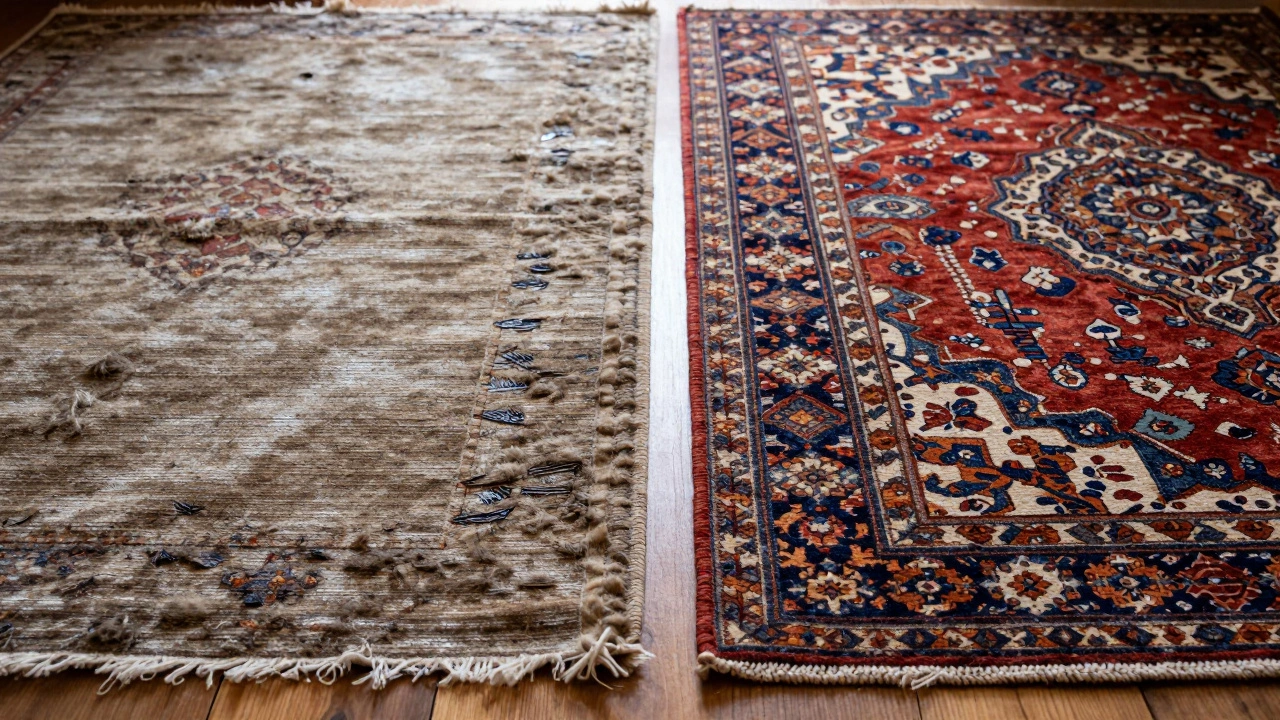
What Is the Difference Between a Cheap Rug and an Expensive Rug?
The difference between a cheap rug and an expensive rug comes down to materials, craftsmanship, and longevity. Learn what makes a rug worth the investment and how to spot quality before you buy.