Expensive Rug: What Makes a Rug Worth the Price and What to Avoid Instead
When you see a price tag of £500 or more on a rug, you might wonder: expensive rug, a floor covering priced significantly higher than average due to materials, craftsmanship, or origin. Also known as a luxury rug, it’s not just about looks—it’s about how long it lasts, how it feels underfoot, and whether it holds up to daily life. The truth? Many expensive rugs are overpriced because of branding, not quality. But some truly are worth every pound—if you know what to look for.
The real value in a high-end rug comes down to three things: rug material durability, how well the fibers resist wear, fading, and shedding over time, hand-knotted construction, a technique where each knot is tied by hand, creating tighter, longer-lasting patterns, and natural fibers, like wool, silk, or cotton that breathe, resist static, and age gracefully. A wool rug made in Nepal by skilled artisans can last 50 years. A synthetic rug labeled "luxury" from a big-box store might look nice for a season, then flatten, fade, and shed plastic fibers into your home. You’re not paying for prestige—you’re paying for materials that won’t fall apart when your dog runs across it or your kids spill juice on it.
What makes a rug expensive isn’t the brand name on the tag. It’s the density of knots per square inch, the origin of the wool, whether the dyes are plant-based or chemical, and how much labor went into making it. A machine-made rug with a fancy name can cost as much as a handwoven one—but won’t last a tenth as long. And if you’re buying a rug for a high-traffic area like a hallway or living room, skipping durability means replacing it sooner—and spending more over time.
There’s also the hidden cost of cheap imitations: they trap dust, off-gas chemicals, and don’t hold up to cleaning. That’s why people who’ve owned both a budget rug and a true high-end one say the same thing: "I wish I’d spent more upfront." You don’t need to buy the most expensive rug on the shelf. But if you’re spending over £300, you should know exactly what you’re paying for—and why.
Below, you’ll find real-world tests and honest breakdowns of what makes rugs last—or fall apart. From the fibers you should never buy to the construction details that signal quality, these posts cut through the marketing noise and show you what actually matters in a rug that’s meant to stay for years, not seasons.
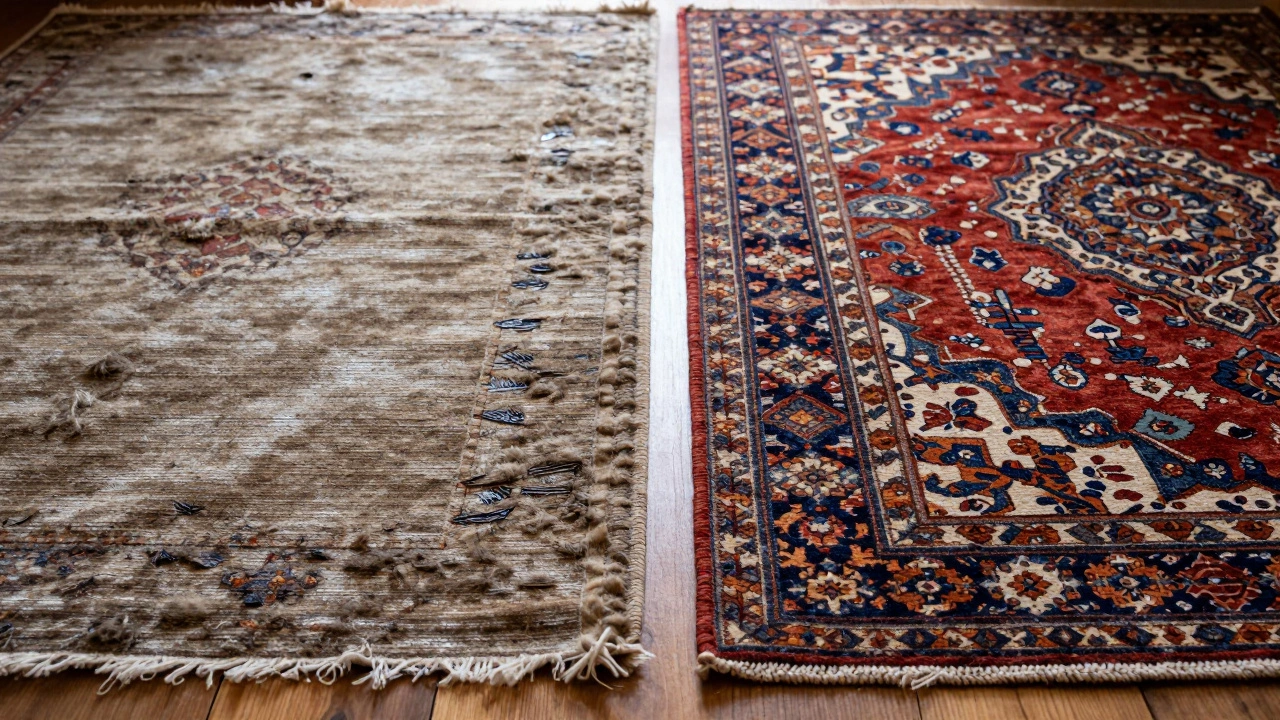
What Is the Difference Between a Cheap Rug and an Expensive Rug?
The difference between a cheap rug and an expensive rug comes down to materials, craftsmanship, and longevity. Learn what makes a rug worth the investment and how to spot quality before you buy.