Rug Safety: What Makes a Rug Safe for Homes with Kids, Pets, and Elderly
When you think about rug safety, the measures and features that prevent slips, trips, and falls on floor coverings. Also known as non-slip flooring safety, it's not about how soft or stylish a rug is—it's about whether it stays put underfoot. A beautiful rug that slides around is a hazard, not an upgrade. Every year, thousands of home accidents involve rugs that aren’t secured properly, especially in kitchens, hallways, and bathrooms. For families with young kids, aging parents, or pets, rug safety isn’t optional—it’s essential.
The real issue isn’t the rug itself, but how it’s installed. A rug pad, a non-slip layer placed under a rug to prevent movement and provide cushioning. Also known as anti-slip underlay, it is the single most effective way to improve rug safety. Studies show that rugs without pads are up to 8 times more likely to cause falls. Even a thin foam or rubber pad can make a huge difference. It doesn’t need to be expensive—just right for the floor type and rug weight. And it’s not just about slipping. A good pad also reduces noise, protects your floor, and makes the rug feel more comfortable under bare feet.
Then there’s the material. Rugs with long, loose fibers can be tripping hazards for toddlers or people with limited mobility. A low-pile rug made from tightly woven synthetic fibers like nylon or polypropylene is far safer than a fluffy shag. Texture matters too—smooth, flat surfaces are easier to walk on, especially with socks or slippers. For homes with pets, avoid rugs with tassels or fringe that can get caught on claws. And if you’ve got someone using a cane or walker, the rug should be flush with the floor, with no raised edges or curling corners.
Location plays a role too. A rug in a dry living room is one thing. A rug in a bathroom or kitchen? That’s a different story. Water turns even a well-padded rug into a slick surface. Look for rugs labeled as moisture-resistant or designed for wet areas. Some even come with built-in drainage or quick-dry backing. Don’t assume a rug is safe just because it’s labeled "non-slip"—check if that claim is backed by real testing, not just marketing.
And don’t forget the basics: keep rugs clean. Dirt and dust can make even a secure rug slippery. Vacuum regularly. Spot-clean spills fast. And check the edges—curling corners are one of the most common causes of falls. A little adhesive tape or a corner grip can fix that in seconds.
What you’ll find below isn’t a list of the prettiest rugs on the market. It’s a collection of real-world guides that cut through the noise. You’ll learn how to spot a truly safe rug, what to avoid when shopping for one, how to test a rug’s grip before you buy, and why the cheapest option might cost you more in the long run. Whether you’re outfitting a nursery, helping an aging parent, or just tired of tripping over your own floor covering, these posts give you the facts—not the fluff.
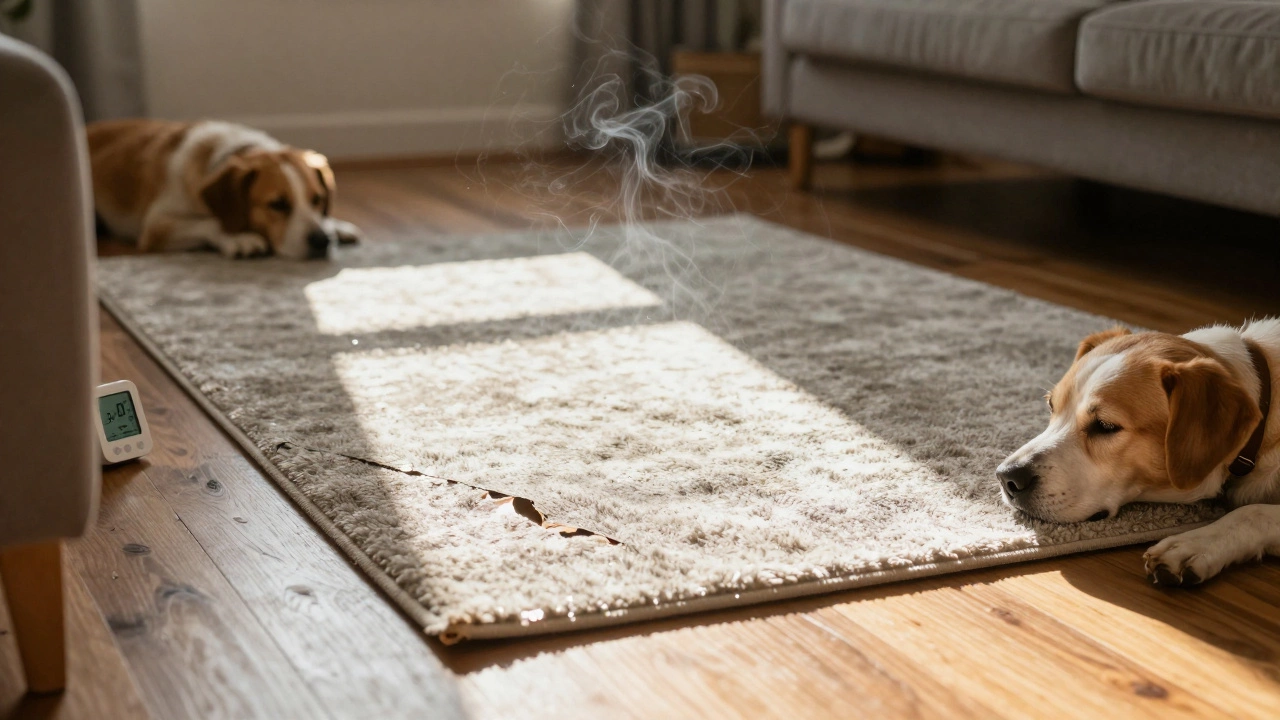
What Rug Material Should I Avoid? Top 5 Risky Fibers to Skip
Avoid these 5 risky rug materials that can harm your health, damage floors, or fall apart fast. Learn what to skip and what to buy instead for safer, longer-lasting rugs.