Rug Material Risk Checker
Enter the material composition of your rug (e.g., "polypropylene", "acrylic blend", "80% wool 20% nylon")
Enter rug material to check for risks
If you’ve ever bought a rug only to regret it a few months later, you’re not alone. Many people pick rugs based on looks or price, then end up with something that sheds like a dog in spring, smells like chemicals, or falls apart after one vacuum pass. The truth? Not all rug materials are created equal. Some are outright dangerous for your health, your home, or your wallet. Here’s what to avoid - no fluff, no marketing spin, just what actually happens when you bring these fibers into your space.
1. Low-Quality Polypropylene (Olefin)
Polypropylene rugs look great in catalogs. They’re cheap, stain-resistant, and come in bright colors. But if you’ve ever stepped on one barefoot after it’s been sitting in the sun, you know the problem: it gets hot. Really hot. And not just uncomfortable - it can off-gas formaldehyde and other VOCs, especially in warm rooms or underfloor heating. In Auckland’s humid summers, that smell doesn’t fade. It lingers.
These rugs are often made with cheap backing glue that breaks down within a year. You’ll start seeing bubbles, peeling edges, or even whole sections lifting off the floor. They’re fine for patios or garages - but not for your living room, bedroom, or anywhere kids or pets spend time. The American Lung Association warns that prolonged exposure to VOCs from synthetic rugs can trigger asthma and headaches. If your new rug smells like a new car or plastic wrap, walk away.
2. Polyester (Especially Cheap Grades)
Polyester rugs are everywhere. Big-box stores love them because they’re easy to mass-produce and look soft at first glance. But here’s the catch: polyester fibers are made from petroleum, and low-grade versions are prone to crushing, matting, and static buildup. Walk across one in winter and you’ll get zapped every time you touch a doorknob.
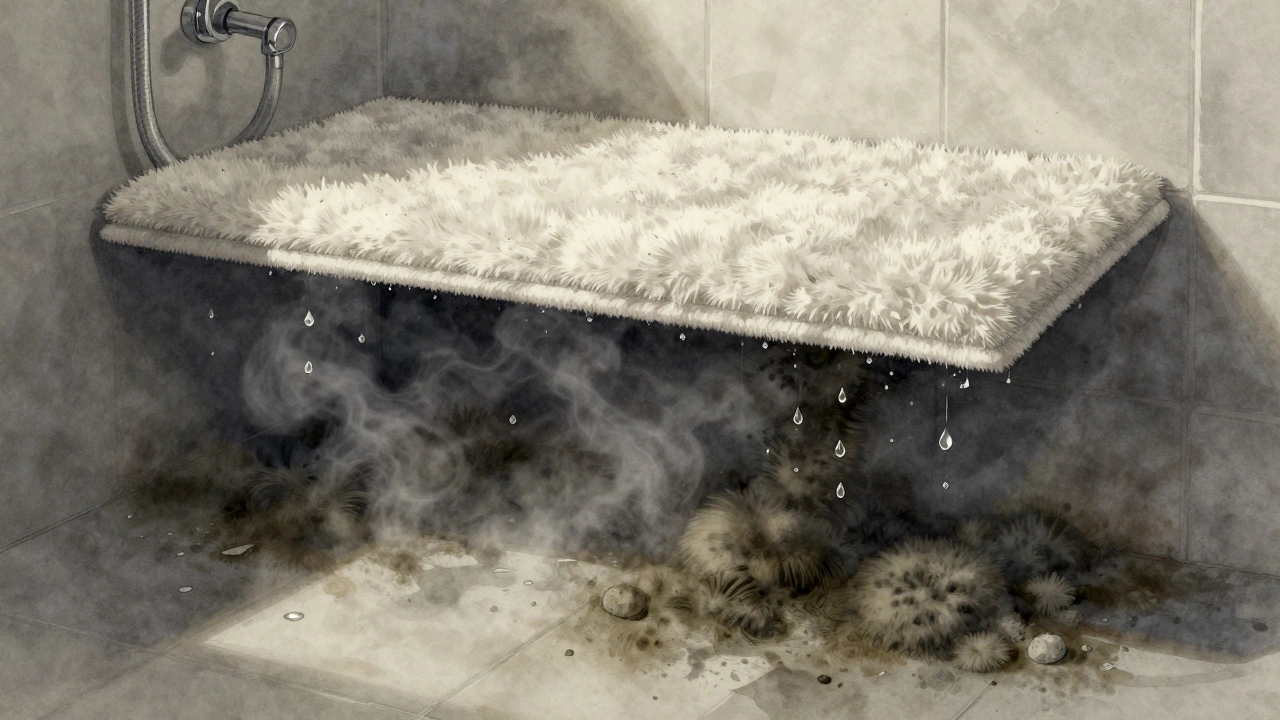
Worse, polyester doesn’t breathe. It traps moisture, which means mold and mildew grow underneath - especially on concrete floors or in bathrooms. I’ve seen rugs in Wellington homes that looked fine on top but had black, fuzzy patches underneath after just six months. That’s not just ugly - it’s a health risk. Mold spores from hidden growth can circulate through your HVAC system and make allergies worse.
And don’t be fooled by terms like "premium polyester." If it’s under $50 for a 5x8 rug, it’s junk. It will flatten in high-traffic areas within months and look like it’s been dragged across gravel.
3. Acrylic (The Fake Wool)
Acrylic is marketed as "wool-like" - and that’s exactly the problem. It’s not wool. It’s plastic fibers designed to mimic the look, but it lacks the durability, breathability, or natural resilience of real wool. Acrylic rugs shed like crazy. You’ll find clumps of fibers in your socks, your cat’s fur, and your vacuum bag within weeks.
They also attract static electricity. In dry climates like parts of Canterbury or Otago, that means constant clinging and uncomfortable shocks. More importantly, acrylic melts under heat. If you drop a lit candle, a hot iron, or even a curling iron on it, it doesn’t just burn - it melts into a sticky, toxic blob. I’ve seen one homeowner’s acrylic rug turn into a plastic puddle after a child knocked over a space heater. The fumes were strong enough to make the whole house smell like a factory fire.
Acrylic rugs are okay for temporary use - a kid’s playroom for a year, maybe. But if you want something that lasts, this isn’t it.
4. Nylon with Poor Backing
Nylon is actually one of the better synthetic fibers - strong, durable, and stain-resistant. But here’s the trap: many cheap nylon rugs use flimsy, non-woven backings that disintegrate over time. You get a rug that looks fine on top, but the backing crumbles like old cardboard. That means it won’t lie flat. It curls at the edges. It slips. And when it does, it becomes a tripping hazard.
I’ve tested five nylon rugs under $100 in my own home. Three had backing that started flaking after three months. One left black dust on my hardwood floor every time I walked over it. That dust? It’s tiny plastic particles from the backing breaking down. Not only is it messy - it’s a microplastic hazard. These particles end up in your air, your food, even your bloodstream over time.
If you want nylon, go for one with a latex or jute backing. Avoid anything labeled "non-slip backing" unless it’s clearly stated as rubber or natural fiber. If the product description doesn’t mention backing material, assume it’s low-grade.
5. Blended Rugs with Unknown Fibers
Here’s the sneaky one: rugs labeled "blended" or "premium blend" with no breakdown of what’s inside. These are often 70% polyester, 20% nylon, 10% acrylic - all low-grade, all cheap. The label doesn’t tell you how much of each, or where it’s made. That’s intentional.
Many of these rugs come from factories with lax environmental and safety standards. They’re treated with flame retardants that contain PFAS - the same chemicals linked to liver damage, thyroid issues, and cancer. The U.S. Consumer Product Safety Commission has flagged dozens of imported rugs for unsafe chemical levels in the last two years. Most were sold under generic brand names with no traceable origin.
Always check the tag. If it says "100% wool," that’s good. If it says "polyester blend," dig deeper. If it says nothing at all - walk away. No reputable brand hides fiber content. If they’re not transparent, they’re not trustworthy.

What to Look for Instead
Not all synthetics are bad. High-quality wool, cotton, jute, and sisal are naturally safe, breathable, and long-lasting. Wool rugs naturally resist dust mites and mold. Cotton rugs are washable and non-toxic. Jute and sisal are biodegradable and don’t off-gas.
If you need something durable for high-traffic areas, go for wool with a natural latex backing. For kitchens or bathrooms, choose tightly woven cotton or looped jute. For a soft feel underfoot, go for organic cotton or wool blends. You’ll pay more upfront - but you won’t need to replace it every two years.
How to Check Before You Buy
- Smell it. If it smells like plastic, chemicals, or new carpet, skip it.
- Check the label. Look for fiber percentages. If it’s vague or missing, don’t buy.
- Test the backing. Peel back a corner. If it’s flimsy, powdery, or looks like glue, walk away.
- Ask about certifications. Look for OEKO-TEX Standard 100 or GreenGuard Gold - these mean low chemical emissions.
- Buy from local makers or brands that disclose sourcing. New Zealand-made rugs often have stricter standards than imported ones.
There’s no shortcut for quality. A rug is one of the biggest textile investments in your home. Don’t let a low price blind you to long-term risks - to your health, your floors, and your peace of mind.