Bedding Type Calculator
Select your climate and allergy preferences to see recommendations.
When you walk into a store and see rows of bedding, it’s easy to get confused. You see flat sheets, fitted sheets, pillowcases, comforters, duvets, and quilt covers. But if you strip it all down, there are really only two types of bedding: sheets and duvets. Everything else is just a variation or accessory of these two.
Sheets: The Foundation of Your Bed
Sheets are what directly touch your skin. They’re the layers you sleep on top of and under. There are three main parts to a sheet set: the fitted sheet, the flat sheet, and the pillowcases.
The fitted sheet has elastic corners that stretch over your mattress. It stays put, even when you toss and turn. Most people use this as their bottom layer. It’s the only sheet you really need to keep clean every week.
The flat sheet lies on top of the fitted sheet. In colder climates, people often tuck it under the mattress at the foot of the bed to keep it in place. In warmer places, it’s used as a light cover-no duvet needed. You can sleep under just a flat sheet in summer and still feel cool.
Pillowcases are simple-they slip over your pillows. Most people change them every week, just like sheets. Some people use two pillowcases per pillow, especially if they sleep on their side and the pillow shifts a lot.
Sheets come in different materials: cotton, linen, bamboo, and microfiber. Cotton is the most common. A good cotton sheet has a thread count between 200 and 400. Anything higher doesn’t mean better quality-it just means the threads are finer. Linen is cooler and lasts longer, but it wrinkles easily. Bamboo feels silky and is naturally antibacterial. Microfiber is cheap and wrinkle-resistant, but it doesn’t breathe well.
Duvets: The Warmth Layer
The second type of bedding is the duvet. A duvet is a soft, fluffy insert that goes inside a duvet cover. People often call it a comforter, but technically, a comforter is stitched and doesn’t need a cover. A duvet is meant to be removable and washable.
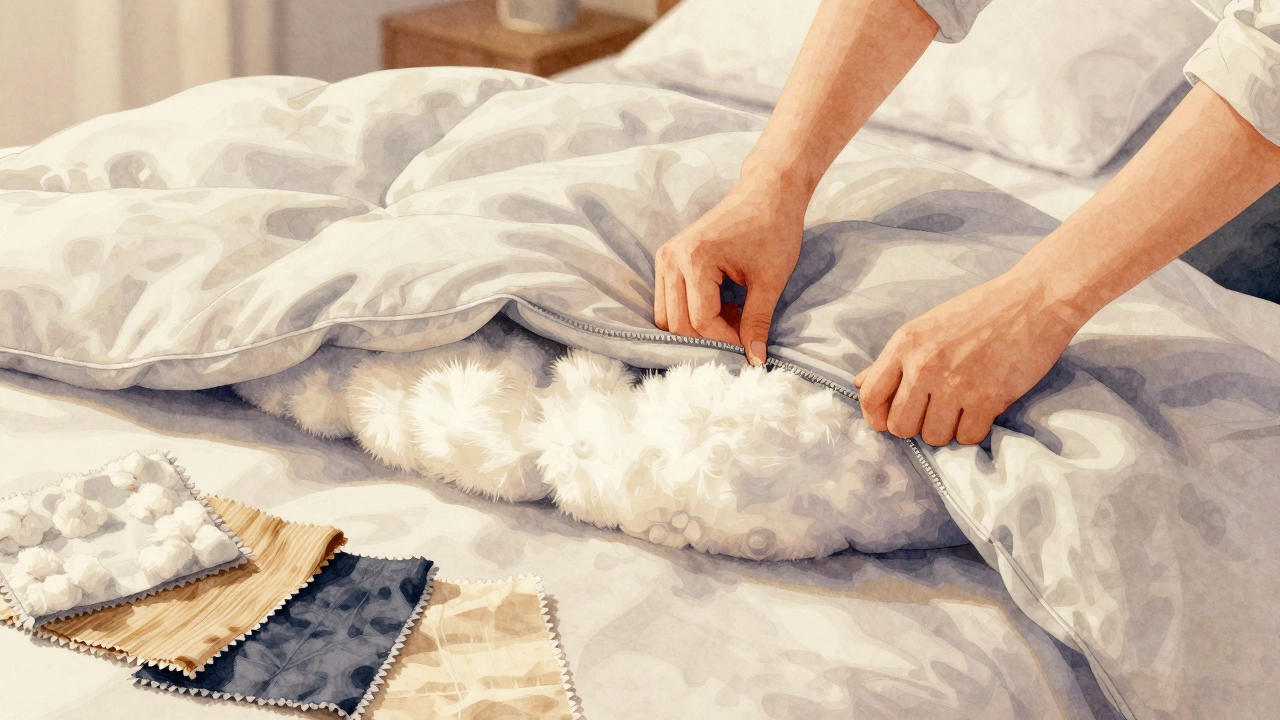
The duvet cover is like a giant pillowcase for your duvet. It zips or buttons shut and protects the insert from sweat, oils, and dust. You can change the cover as often as you want-weekly, monthly, or seasonally-without washing the heavy insert. That’s why duvets are so popular: they’re easy to maintain.
Duvets come with different fill types: down, synthetic, wool, and cotton. Down is the lightest and warmest. It’s made from the soft under feathers of ducks or geese. But if you’re allergic or vegan, synthetic fills (like polyester) are a great alternative. They’re cheaper, hypoallergenic, and hold their shape well. Wool duvets are naturally temperature-regulating-they keep you warm in winter and cool in summer. Cotton-filled duvets are breathable but not as warm, so they’re best for mild climates.
Fill power matters for down duvets. It measures how much space one ounce of down takes up. Higher fill power means more warmth with less weight. A fill power of 600 is good. 700+ is premium. For most people, a 650 fill power down duvet or a 100% polyester fill is enough for year-round use.
Why These Two Types Work Together
Sheets and duvets are designed to do different jobs. Sheets handle hygiene and comfort against your skin. Duvets handle warmth and insulation. Together, they make your bed easy to care for and adaptable to seasons.
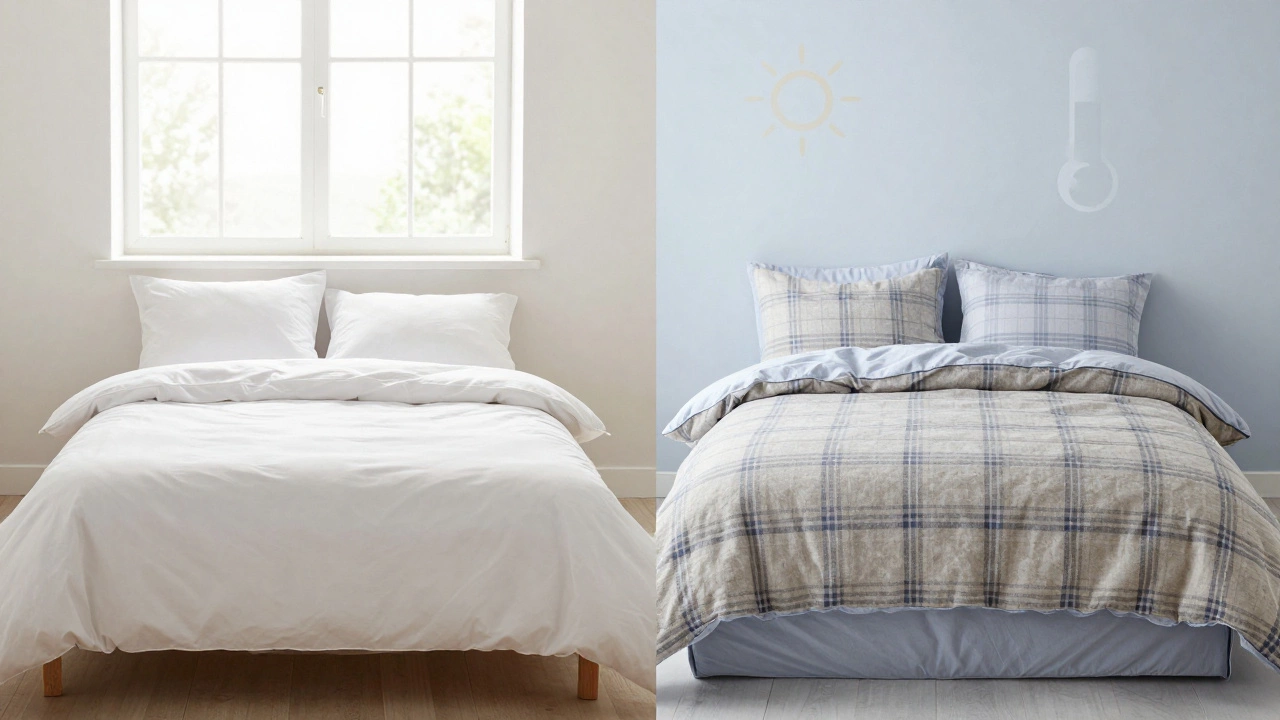
In summer, you can skip the duvet and just use a flat sheet. In winter, you add a warm duvet and maybe even a flannel fitted sheet. You don’t need to buy a new bedspread every season. Just swap the duvet cover for a heavier fabric like flannel or velvet.
Many people think they need a top blanket or a quilt. But if you have a good duvet, you don’t. Quilts are often too thin and don’t trap heat well. They’re decorative more than functional. A duvet with a cover does the same job better.
What You Don’t Need
You don’t need a bed skirt. You don’t need a mattress pad unless your mattress is lumpy. You don’t need multiple layers of blankets. Most people overcomplicate their beds.
Here’s what you actually need:
- One fitted sheet
- One flat sheet (optional, depending on climate)
- Two pillowcases
- One duvet insert
- One duvet cover
That’s it. That’s all you need for a comfortable, clean, and easy-to-maintain bed. Anything else is decoration or tradition.
Real-Life Example: A Kiwi Bed
In New Zealand, winters are damp and chilly, but summers are warm. Most Kiwi homes use a 10.5 tog wool duvet with a cotton cover. They pair it with a 200-thread-count cotton fitted sheet and two cotton pillowcases. In summer, they remove the duvet and sleep under just the flat sheet. No extra blankets. No quilts. No heated blankets. Just clean sheets and a simple duvet.
This setup works because it’s practical. It doesn’t require special care. It’s affordable. And it lasts for years.
How to Choose
When buying sheets, look for 100% cotton or linen. Avoid blends unless you’re on a tight budget. For duvets, pick the fill based on your climate and allergies. If you live in a cold house, go for down or wool. If you’re hot-natured, choose a lighter synthetic or cotton fill.
Don’t get tricked by marketing. A ‘luxury’ 800-thread-count sheet isn’t better than a 300-thread-count one. It’s just more expensive. And a ‘king-size’ duvet doesn’t mean it’s warmer-it just means it’s bigger.
Test the feel. Rub a corner of the sheet between your fingers. If it feels rough or plastic-y, skip it. Good sheets feel soft but substantial. Good duvets should feel light but warm when you drape them over your arm.
Final Tip: Wash and Rotate
Wash your sheets every week. Wash your duvet cover every two weeks. Wash your duvet insert once or twice a year-unless it’s labeled machine washable. Then follow the label.
Rotate your duvet cover every few months. If you always sleep on the same side, the filling will clump. Fluff it daily and turn it end-to-end every season.
Keep a spare set of sheets and a spare duvet cover on hand. That way, you never have to sleep on dirty bedding while waiting for laundry.
That’s the whole system. Two types of bedding. Simple. Smart. Effective.