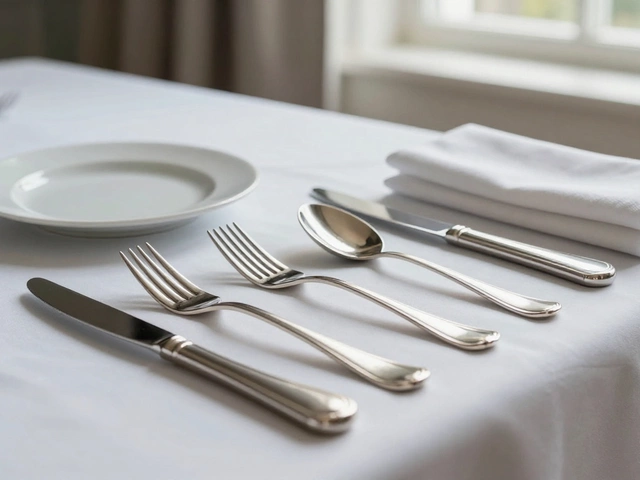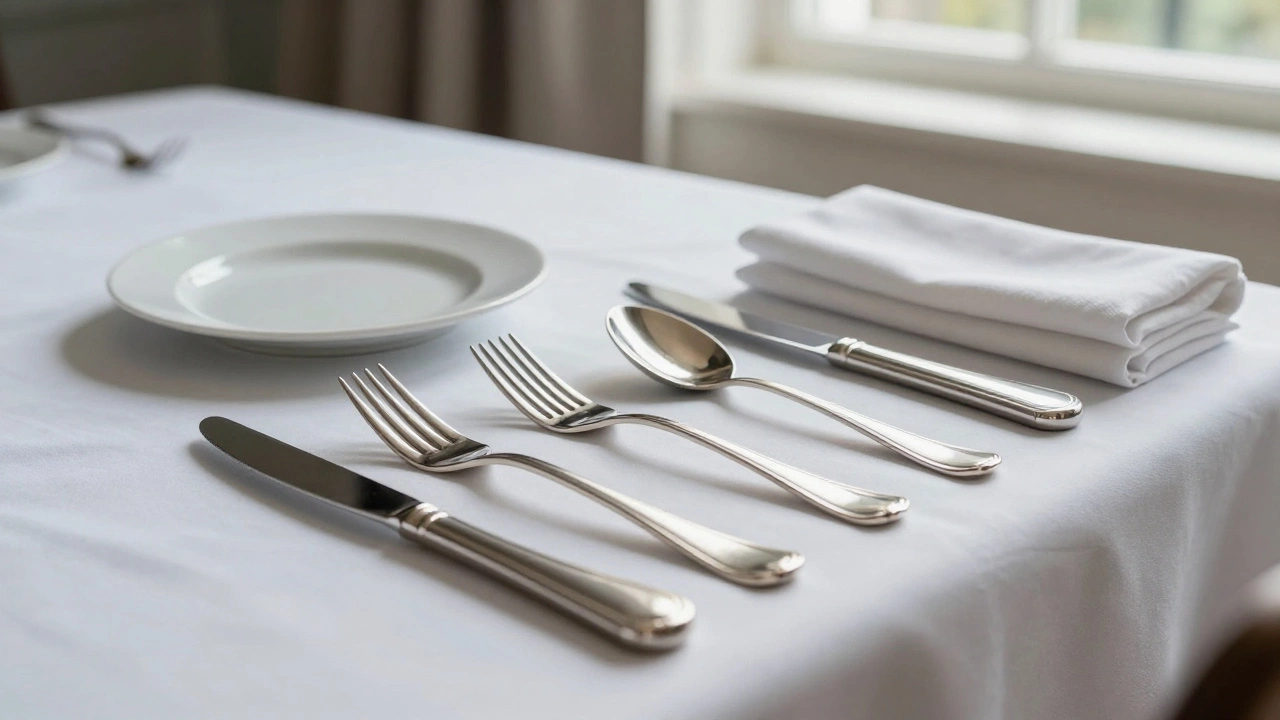
Ever sat down at a dinner table and wondered what you’re actually calling that set of knife and fork in front of you? It’s not just "utensils." That’s too vague. And it’s definitely not "silverware" unless it’s actually made of silver-which most aren’t anymore. So what’s the right word?
The Simple Answer: Cutlery
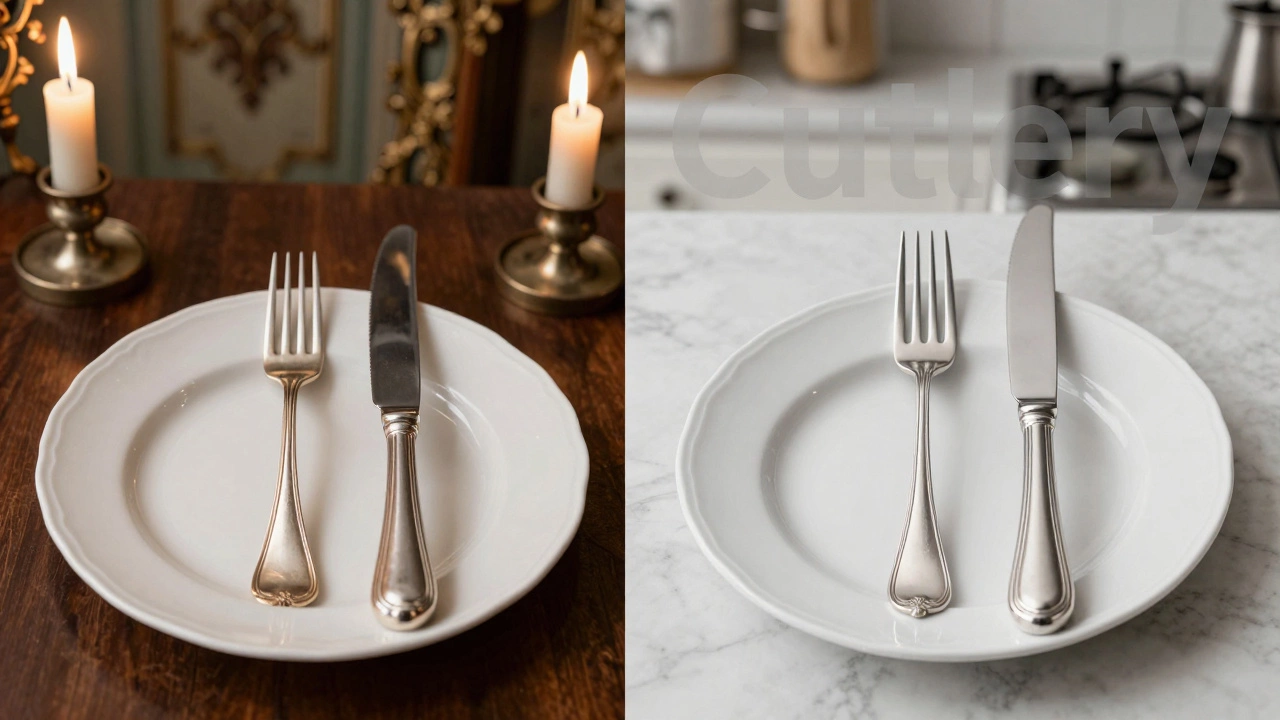
The correct term for a knife, fork, and spoon used for eating is cutlery. It’s not just a fancy word. It’s the standard term used across the UK, Australia, Canada, and much of Europe. In the U.S., people often say "silverware," but that’s a misnomer. Most modern cutlery is made of stainless steel, not silver. Even so, "silverware" stuck around because of history.
Here’s the breakdown:
- Knife - for cutting food
- Fork - for spearing and holding food
- Spoon - for scooping and stirring
Together, these three make up the basic place setting of cutlery. Add a dessert spoon and butter knife, and you’ve got a full formal set.
Why Do Americans Say "Silverware"?
Back in the 1800s, silver was the go-to material for high-quality dining tools. Wealthy households used solid sterling silver forks and knives. When stainless steel became popular in the early 1900s, manufacturers kept the same names. People didn’t stop calling it "silverware" just because the metal changed. It became a cultural habit.
Today, if you walk into a Walmart in Ohio and ask for "cutlery," the associate might look at you funny. But if you ask for "silverware," they’ll hand you a box of stainless steel forks and knives. That’s the U.S. version of the word.
What About "Tableware"?
"Tableware" is broader. It includes everything on the table: plates, bowls, glasses, napkins, and yes-cutlery. So while cutlery is part of tableware, not all tableware is cutlery. Think of it like this:
- Tableware = everything you use to eat off of or with at the table
- Cutlery = only the eating tools: knife, fork, spoon
If you’re shopping for a new dinner set, you’ll find sections labeled "tableware" that include both dishes and cutlery. But if you’re replacing just the forks and knives? You’re buying cutlery.
There’s More Than Just the Basics
Modern dining has more tools than just knife, fork, and spoon. Ever seen a fish fork? A salad fork? A butter knife? A dessert spoon? These aren’t extras-they’re part of a full place setting.
Here’s what a formal place setting includes:
- Meat knife (large, sharp edge)
- Fish knife (blunt edge, for delicate fish)
- Dinner fork (standard size)
- Salad fork (smaller, tines often wider)
- Dessert fork (smaller still, sometimes with a spoon)
- Dinner spoon
- Teaspoon
- Dessert spoon
- Butter knife (small, blunt)
Most homes don’t use all of these daily. But if you’re hosting a formal dinner, you need them. And yes-they’re all still called cutlery.
What About Plastic or Wooden Utensils?
Even if your fork is made of bamboo or your knife is plastic (like at a picnic), they’re still cutlery. The term isn’t about material-it’s about function. A plastic fork is still a fork. A wooden spoon is still a spoon. They’re just lightweight or disposable versions of cutlery.
That’s why you’ll see "disposable cutlery" on packaging at grocery stores. The word "cutlery" covers all materials. "Utensil" works too, but it’s too broad. A spatula is a utensil. A whisk is a utensil. But they’re not cutlery.
How to Use the Right Word
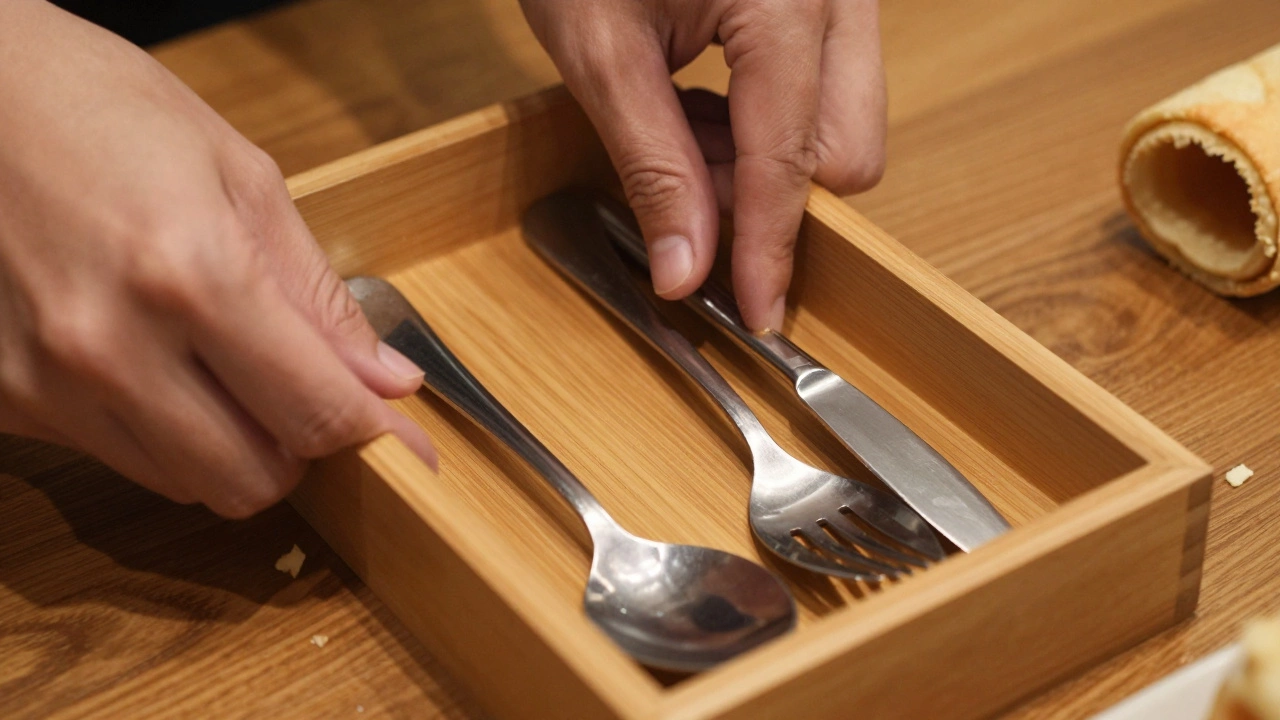
Here’s a quick guide:
- Use cutlery if you’re talking about knives, forks, and spoons-no matter the material. This is correct everywhere.
- Use silverware only if you’re in the U.S. and you’re okay with using a term that’s technically outdated. It’s still widely understood.
- Use tableware when you mean plates, cups, glasses, and cutlery together.
- Avoid utensils if you’re being specific. It’s too general.
Want to sound precise? Say "cutlery." It’s accurate, internationally recognized, and not misleading. If you’re in the U.S., you’ll still hear "silverware"-but now you’ll know why.
Why This Matters
It might seem silly to care about the name of a fork and knife. But language shapes how we shop, how we communicate, and how we understand the world around us. If you’re buying a new set online, typing "knife and fork set" might bring up 50 results. Typing "cutlery set" brings you directly to the right category. Same for writing a menu, ordering for a restaurant, or even explaining table settings to a child.
Knowing the right word helps you avoid confusion. It also shows you understand the difference between function and tradition. You don’t need to call it "silverware" just because everyone else does. You can choose the accurate term-and you should.