Ever bought new sheets, a duvet cover, or a fitted bedspread and felt like something was off? Maybe they felt stiff, looked wrinkled, or just didn’t feel as soft as you expected. That’s not a defect-it’s the bedding period.
What Exactly Is a Bedding Period?
The bedding period is the time it takes for new bedding to soften, relax, and adapt to your body and sleeping habits. Think of it like breaking in a new pair of shoes. Right out of the box, they’re crisp and unyielding. After a few wears, they mold to your feet and feel natural. Bedding works the same way.
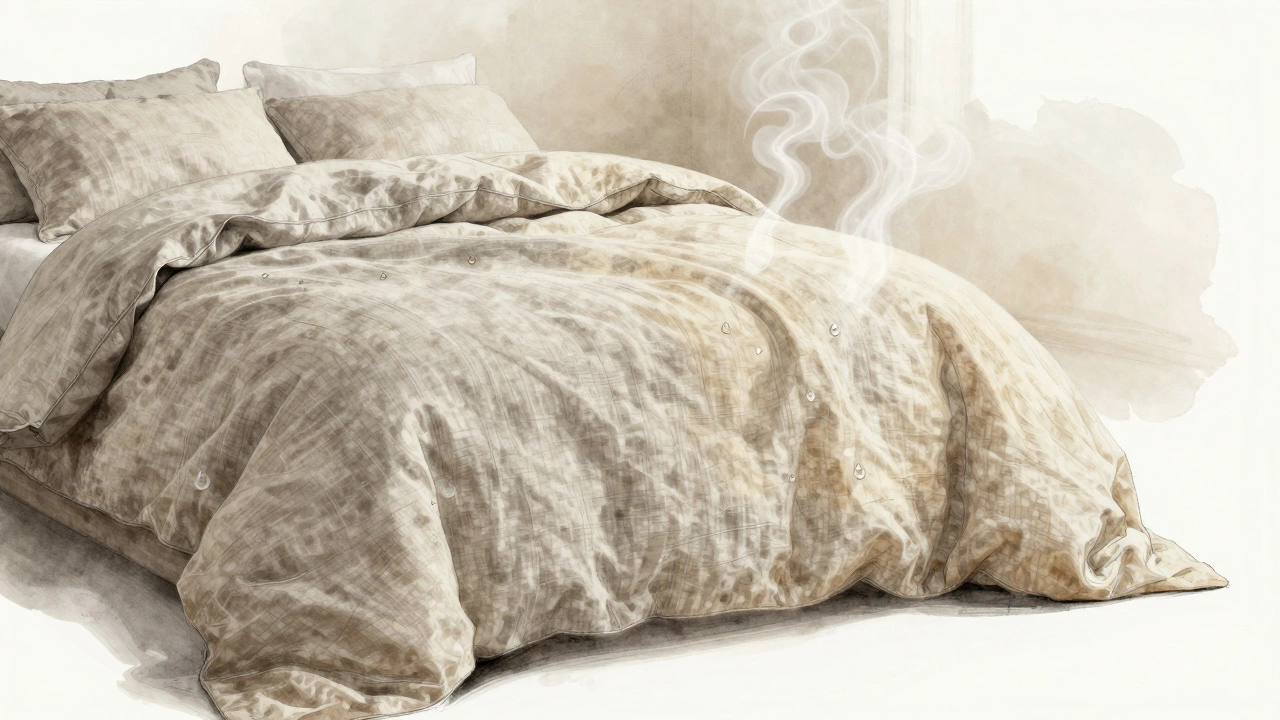
Most high-quality cotton, linen, or bamboo bedding starts off with a tight weave and chemical finishes from manufacturing. These finishes keep fabrics looking fresh on store shelves but make them feel less comfortable at first. The bedding period lets those finishes wash out, fibers relax, and the material begin to breathe the way it was meant to.
How Long Does the Bedding Period Last?
It varies by material, but most people notice a real difference after 3 to 7 washes. Here’s a rough breakdown:
- Cotton (percale or sateen): 3-5 washes. You’ll feel the softness start to build after the first wash, but full comfort usually hits around the third.
- Linen: 5-10 washes. Linen starts stiff and gets better with every wash. It can take weeks to feel truly luxurious, but the payoff is worth it.
- Bamboo or TENCEL: 2-4 washes. These fabrics soften quickly because they’re naturally smooth and absorbent.
- Microfiber: 1-2 washes. These are already soft out of the package, so the bedding period is minimal.
Don’t rush it. Skipping washes or using harsh detergents can delay the process. The goal isn’t to speed it up-it’s to let the fabric do its job.
Why Does Bedding Need a Break-In Period?
It’s not just about comfort. The bedding period serves a few practical purposes:
- Removes manufacturing residues: Starch, silicone coatings, and dye fixatives are applied during production to prevent wrinkles and color fading. These can make sheets feel slippery or scratchy. Washing them off improves breathability and skin contact.
- Allows fiber relaxation: Tight weaving during production stresses the threads. Washing and drying lets them unwind slightly, increasing softness and drape.
- Improves moisture management: New fabrics can trap heat. After a few washes, fibers open up, letting sweat evaporate faster-critical for temperature regulation during sleep.
- Enhances durability: Washing new bedding gently before heavy use helps identify weak seams or stitching issues early. It’s like a stress test for your sheets.
Skipping the bedding period doesn’t break your sheets, but it does rob you of their full potential. You’re not just buying fabric-you’re investing in sleep quality.
How to Speed Up the Bedding Period (Without Damaging It)
You don’t need to wait months for softness. Here’s how to help your bedding settle in faster-safely:
- Wash before first use: Always wash new bedding on a gentle cycle with cold or lukewarm water. Use a mild detergent-no fabric softeners. Softeners coat fibers and block moisture absorption.
- Add white vinegar: Half a cup of white vinegar in the rinse cycle helps dissolve chemical residues without leaving odor. It’s natural, cheap, and effective.
- Dry on low heat or air-dry: High heat can shrink fibers or set wrinkles. Air-drying preserves softness and reduces wear. If you use a dryer, toss in a clean tennis ball to fluff the fabric.
- Use the right detergent: Avoid detergents with optical brighteners or heavy fragrances. They leave residue that makes bedding feel stiff over time. Look for hypoallergenic or plant-based options.
- Don’t overload the washer: Give bedding room to move. Overcrowding prevents thorough rinsing and leads to uneven softening.
After three washes, your bedding should feel noticeably different. If it doesn’t, check the thread count. Anything above 600 is often misleading-real softness comes from fiber quality, not number.
What Happens If You Skip the Bedding Period?
Nothing catastrophic. But you might experience:
- Sheets that feel scratchy or clingy
- Increased static or wrinkling
- Reduced breathability, leading to overheating
- Shorter lifespan due to trapped chemicals
Some people think their bedding is “low quality” when it’s just unbroken-in. I’ve seen clients return perfectly good sheets because they didn’t know about the bedding period. A simple wash cycle changed everything.
Signs Your Bedding Has Fully Settled
Once the bedding period is complete, you’ll notice:
- Softness that feels natural, not slippery
- Sheets that drape smoothly over the mattress without bunching
- Less wrinkling after sleep
- Improved temperature control-you’re not waking up sweaty or cold
- A subtle, natural scent (no chemical smell)
When you roll into bed and it just feels right? That’s the bedding period doing its work.
Bedding Period vs. Break-In Period: Is There a Difference?
Not really. Some brands use “break-in period” to sound more technical. But they mean the same thing: the time it takes for new bedding to go from factory-fresh to sleep-ready.
The term “bedding period” is more accurate because it’s not just about breaking something-it’s about letting something settle into its true form. It’s a transformation, not a wear-down.
What About Mattress Pads or Toppers?
Yes, they go through the same process. Memory foam toppers might smell odd at first-that’s off-gassing, not the bedding period. Washable covers on toppers, however, need the same 3-5 washes to soften. Don’t skip washing them either.
Real-World Example: A New Zealand Sleep Story
Last winter, a customer in Auckland bought a set of 400-thread-count Egyptian cotton sheets. She returned them after a week, saying they felt like sandpaper. I asked if she’d washed them. She hadn’t. We walked through the steps: cold wash, vinegar rinse, air-dry. Two weeks later, she sent a photo of her bed-sheets perfectly rumpled, smiling face in the background. “I didn’t know it was supposed to feel like this,” she said.
That’s the bedding period. It’s not magic. It’s science. And it’s free.
Final Tip: Keep a Bedding Journal
Next time you buy new bedding, write down the date you washed it for the first time. Note how it felt after each wash. After three washes, you’ll know exactly how your favorite fabric behaves. You’ll start recognizing quality faster-and avoid buying stuff that won’t ever soften.
The bedding period isn’t a flaw. It’s a feature. And once you understand it, you’ll never settle for stiff sheets again.
How long does the bedding period last for cotton sheets?
Most cotton sheets take 3 to 5 washes to fully soften. You’ll notice improvement after the first wash, but the real comfort comes around the third or fourth cycle. Avoid fabric softeners-they coat fibers and slow down the process.
Can I skip washing new bedding before using it?
You can, but you shouldn’t. New bedding often has chemical finishes from manufacturing that can irritate skin or reduce breathability. Washing removes these residues and helps the fabric perform as intended. It’s a simple step that improves comfort and longevity.
Why do my new sheets feel stiff even after washing?
Stiffness after washing usually means you’re using the wrong detergent or drying on too high heat. Harsh detergents leave residue, and high heat can shrink fibers. Try switching to a mild, fragrance-free detergent and air-dry or use low heat. Also, check the fabric type-linen naturally takes longer to soften than cotton.
Does thread count affect how long the bedding period lasts?
Not really. Thread count is often marketing hype. A 300-thread-count sheet made from long-staple cotton will soften faster and feel better than a 600-thread-count sheet made from short fibers. Focus on fiber quality-like Egyptian, Pima, or Supima cotton-not the number.
Do linen sheets take longer to soften than cotton?
Yes. Linen starts very stiff and can take 5 to 10 washes to reach its signature soft, relaxed drape. But once it does, it’s one of the most comfortable fabrics for sleep-breathable, durable, and naturally temperature-regulating. Patience pays off with linen.
Is the bedding period the same for mattress protectors?
Only if the protector has a fabric cover. Waterproof layers don’t soften, but the outer cotton or bamboo layer does. Wash it once before use to remove manufacturing residues. If it’s all plastic or vinyl, there’s no bedding period-just off-gassing, which fades in a few days with ventilation.