Interactive Trick Mirror Simulator
Adjust the sliders below to see how changing the curvature of a mirror affects the shape of your reflection. This simulates the optical principles described in the article.
Optical Analysis
Neutral reflection. No distortion applied.
Standard bathroom mirror.
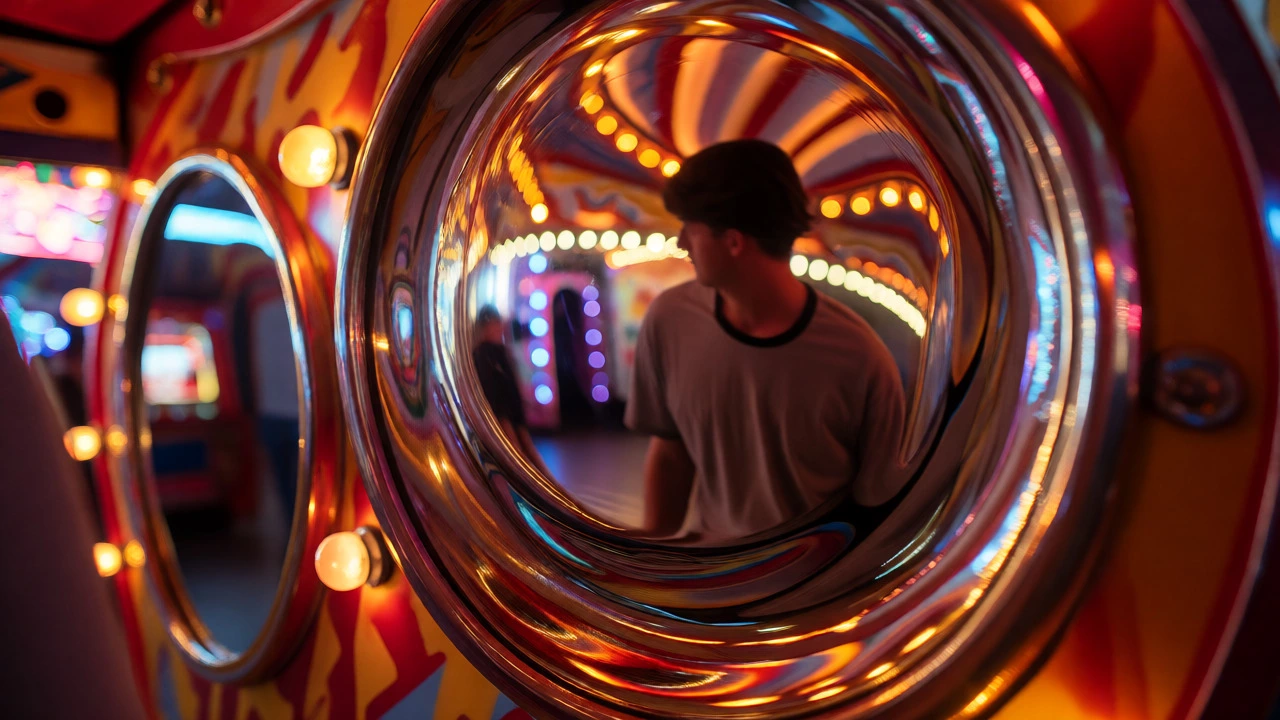
You walk into a carnival or an old-timey photo booth, step in front of a glass panel, and suddenly you’re ten feet tall. Or maybe you’ve shrunk to the size of a hobbit. Your face looks like it’s been melted by a heat gun, or your head is enormous while your legs are tiny sticks. You laugh, you pose, you take a selfie. But have you ever stopped to wonder what is trick mirror actually doing to light? It isn’t magic, and it isn’t Photoshop. It’s geometry.
A trick mirror is simply a piece of reflective glass that has been shaped so its surface curves away from being flat. This curvature bends the path of light reflecting off your body, stretching some parts and squashing others. Unlike a standard bathroom mirror, which gives you a faithful, 1:1 copy of reality, a trick mirror plays fast and loose with perspective. If you’ve ever tried to figure out why your reflection looked so weird, you’re asking the right question. Let’s break down exactly how these distortions happen, why they look the way they do, and where you can find them beyond the arcade.
The Basic Physics of Curved Glass
To understand a trick mirror, you first need to forget everything you know about flat mirrors. A flat mirror reflects light at the exact same angle it hits the surface. If a ray of light comes from your nose, bounces off the glass, and hits your eye, your brain calculates that the image is directly behind the glass. Simple. Trick Mirror is a type of curved mirror designed to produce distorted reflections by altering the path of reflected light through concave or convex surfaces. Also known as a funhouse mirror, it relies on the principles of optics rather than digital manipulation. When you curve that glass, the angles change. Light rays hitting different parts of the curve bounce back at different speeds and directions. This creates a distortion because your brain still assumes the mirror is flat. It tries to reconstruct a straight-line image from curved data, resulting in the stretched or squashed figures we see in amusement parks.
There are two main types of curvature used here: concave and convex. Think of a spoon. The inside of the bowl is concave (curving inward). The outside of the bowl is convex (bulging outward). Both distort images, but in opposite ways. Concave mirrors tend to magnify objects if you stand close enough, often flipping the image upside down if you move too far away. Convex mirrors shrink everything and widen your field of view, making you look smaller and farther away than you really are.
Anatomy of Distortion: How Shapes Change Size
Most people think a "tall" mirror just stretches you vertically. That’s half true. To make someone look tall and thin, manufacturers don’t just pull the glass up. They compress it horizontally. Imagine taking a rubber sheet and pinching it left-to-right while pulling it top-to-bottom. That’s essentially what happens to the light waves. The horizontal compression makes your waist look narrower, while the vertical stretch elongates your torso and legs.
Conversely, to make someone look short and wide, the mirror does the reverse. It expands horizontally and compresses vertically. This is why you might look like a cube when you step into certain sections of a funhouse. The distortion isn’t uniform across the whole surface, either. Many high-end trick mirrors use complex, irregular curves-sometimes called "free-form" surfaces-to create specific effects. For example, a section of glass might bulge out in the middle to make your head look huge, then dip down to make your shoulders disappear entirely.
Here’s a quick breakdown of common shapes and their effects:
- Vertical Stretch: Makes you look taller and thinner. Achieved by curving the mirror so horizontal lines are compressed.
- Horizontal Stretch: Makes you look wider and shorter. Achieved by expanding horizontal lines.
- Bulge Effect: A convex section in the center magnifies whatever is closest to it (usually your face) while shrinking the background.
- Dip Effect: A concave section in the center minimizes the central feature, making your nose or forehead look tiny.
- Wave Pattern: Alternating curves create a wavy, rippled effect, often used to mimic water reflections.
Where Trick Mirrors Are Hiding in Plain Sight
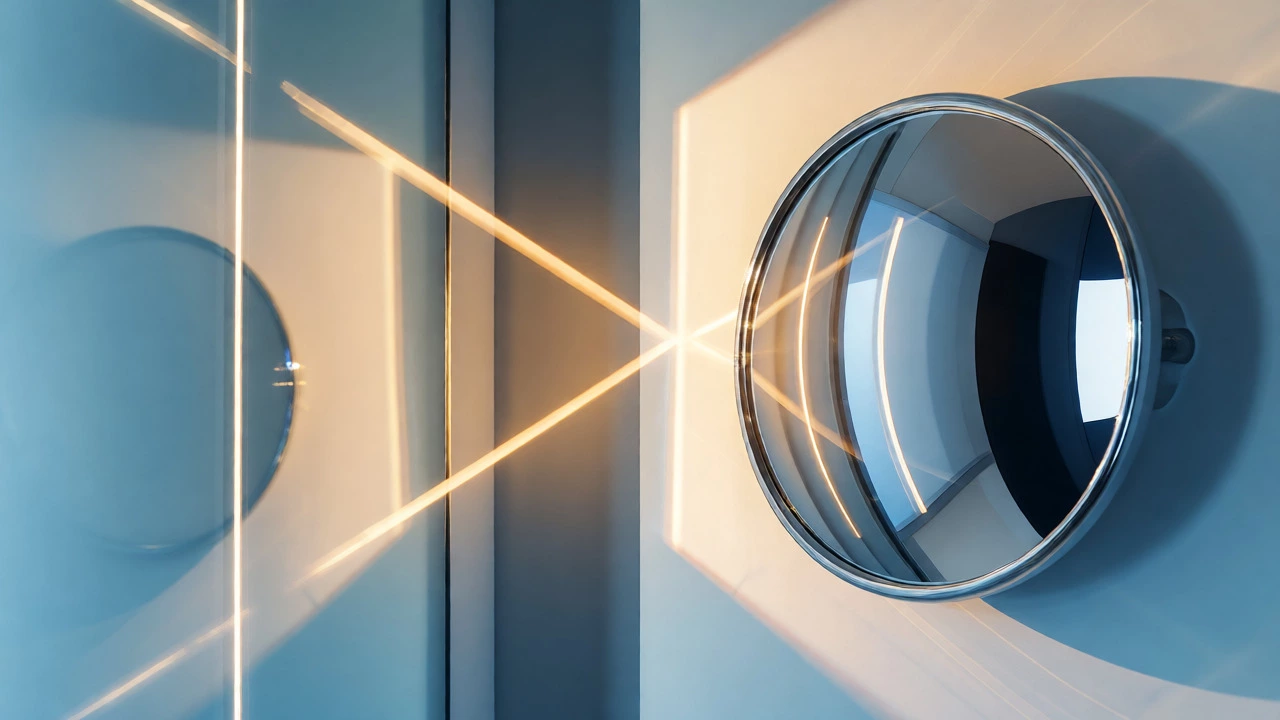
You probably assume trick mirrors belong only in haunted houses or boardwalk arcades. But they are everywhere once you start looking. Have you ever noticed how security mirrors in convenience stores make you look like a tiny ant? That’s a convex mirror. It’s not trying to be funny; it’s trying to show the clerk more floor space. Because it shrinks the image, it allows a wider angle of view without needing a massive piece of glass.
Car side-view mirrors also play this game. Most passenger-side mirrors are slightly convex. If you look closely, there’s usually a warning label that says, "Objects in mirror are closer than they appear." Why? Because the convex shape pushes objects further back visually, giving you a broader view of traffic but misleading your depth perception. Without that warning, you might misjudge the distance of a car coming up behind you.
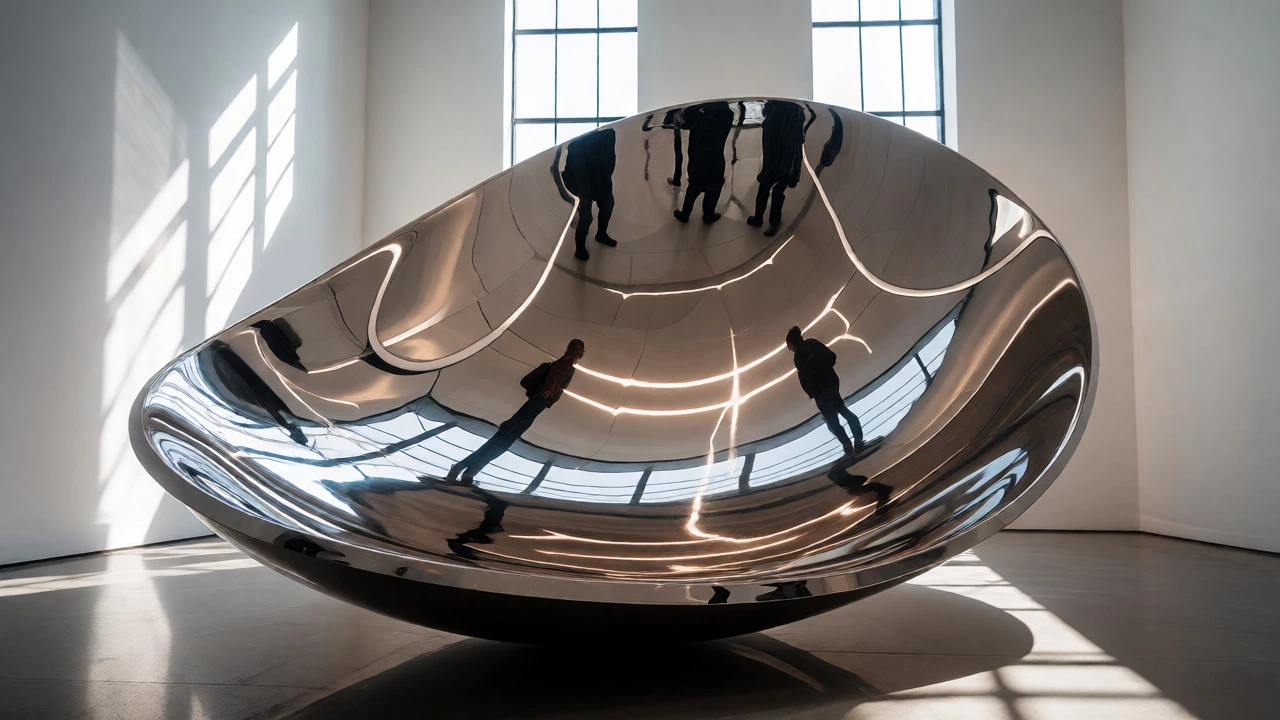
Even in home decor, you’ll find subtle versions of this technology. Some decorative wall mirrors have a slight wave or ripple built into the frame or the glass itself. These aren’t always intended to distort your face, but they do soften edges and blur imperfections. In art installations, artists like Anish Kapoor use highly polished, curved stainless steel to create immersive, warped environments that function exactly like giant, room-sized trick mirrors.
| Mirror Type | Shape | Primary Effect | Common Use Case |
|---|---|---|---|
| Plane Mirror | Flat | True reflection, no distortion | Bathrooms, dressing rooms |
| Convex Mirror | Bulges outward | Shrinks image, widens view | Security, car side-mirrors |
| Concave Mirror | Caves inward | Magnifies image (if close) | Makeup mirrors, telescopes |
| Trick Mirror | Irregular/Curved | Stretches or squashes selectively | Fairgrounds, art exhibits |
Why Do We Find Them Funny?
It’s easy to dismiss trick mirrors as silly toys, but there’s actual psychology at play. Human beings are wired to recognize faces and bodies instantly. We have mental models for what a "normal" human proportion looks like. When a trick mirror violates those proportions-giving you a giant head and stick arms-it triggers a cognitive mismatch. Your brain knows it’s you, but your eyes say otherwise. This conflict creates surprise, which often resolves into laughter.
There’s also a social component. In a group setting, seeing your friend transformed into a caricature breaks down social barriers. It’s a shared absurdity. You can’t help but compare your distorted selves. Plus, since the distortion is temporary and reversible, it feels safe. You’re not permanently changed; you’re just playing with light. This low-stakes experimentation with identity is part of why they remain popular in tourist spots and family entertainment centers.
Interestingly, the humor depends on the severity of the distortion. Too little, and it’s boring. Too much, and it becomes grotesque rather than funny. The best trick mirrors hit a sweet spot where the distortion is obvious but recognizable. You still know who you are, but you look ridiculous enough to share on Instagram.
Buying One for Your Home: What to Look For
So, you want one for your hallway or man cave. Before you click "buy," consider a few things. Not all trick mirrors are created equal. Cheap ones often use plastic film over a curved base, which can yellow over time or peel at the edges. Glass is heavier and more fragile, but it maintains clarity and reflectivity for decades.
Check the curvature profile. Some mirrors are uniformly curved (like a cylinder), which creates consistent stretching. Others are complexly shaped, creating chaotic warps. Decide which vibe you want. Do you want everyone to look tall and elegant (vertical stretch)? Or do you want chaos and confusion (wave pattern)?
Also, think about lighting. Curved mirrors catch light differently than flat ones. A poorly lit trick mirror can look murky or dark because the curve scatters light away from the viewer. Ensure you have ambient light hitting the mirror indirectly. Direct spotlighting can create harsh glare spots that ruin the effect.
Finally, measure your space. Trick mirrors are often larger than they appear because the distortion needs surface area to work. A small 12-inch square won’t give you much drama. You generally need at least a full-length format to see significant body distortion. If you’re mounting it on drywall, use proper anchors. These things are heavy, especially if they’re made of thick glass.
Troubleshooting Common Issues
If you already own one and it’s not working right, check the alignment. If the mirror is tilted forward or backward, the distortion will shift unexpectedly. Sometimes, dust or fingerprints on a curved surface are more noticeable because the light catches them at odd angles. Clean it with a microfiber cloth and glass cleaner, but avoid spraying directly onto the frame if it’s wooden.
Another issue is "hotspots." If your mirror has a very sharp curve, it might focus light like a lens, creating bright patches that blind you. This is rare in modern manufacturing but possible in older or DIY setups. Moving the light source usually fixes this.
Do trick mirrors change your actual height?
No, your physical dimensions remain unchanged. The mirror only alters the path of light reaching your eyes, creating a visual illusion of height or width. Your shadow and real-world measurements stay the same.
Are trick mirrors bad for your eyes?
Generally, no. However, prolonged staring at highly distorted images can cause mild disorientation or motion sickness in sensitive individuals, similar to VR sickness. Taking breaks prevents this.
Can I install a trick mirror myself?
Yes, but handle with care. Curved glass is under tension and can shatter if dropped or struck. Use appropriate wall anchors rated for the weight, and ensure the surface is level before hanging.
Why do some trick mirrors flip my image upside down?
This happens with concave mirrors when you stand beyond the focal point. The light rays cross over each other before reflecting back to your eyes, inverting the image vertically.
How do I clean a curved mirror without streaks?
Use a lint-free microfiber cloth and a vinegar-water solution. Spray the cloth, not the mirror, to prevent liquid from seeping into the backing. Wipe in circular motions following the curve.
Next time you step in front of a warped glass panel, remember: it’s just physics having a laugh at your expense. Whether you’re buying one for your entryway or just giggling at a fairground, understanding the mechanics makes the experience even better. Now go find a curved surface and see how much taller you can pretend to be.