Kitchenware Synonym Selector
Select the primary function of the item you are describing to find the most accurate synonym.
Cooking Food
Heating on stovetops or in ovens (pans, pots)
Baking
Oven-only containers (trays, molds)
Handheld Prep
Manipulating food by hand (spoons, whisks)
Serving & Eating
Plates, bowls, cutlery
Electric Appliances
Motorized helpers (toasters, blenders)
General/Unknown
Broad category or mixed items
Select a category above to see recommended terminology.
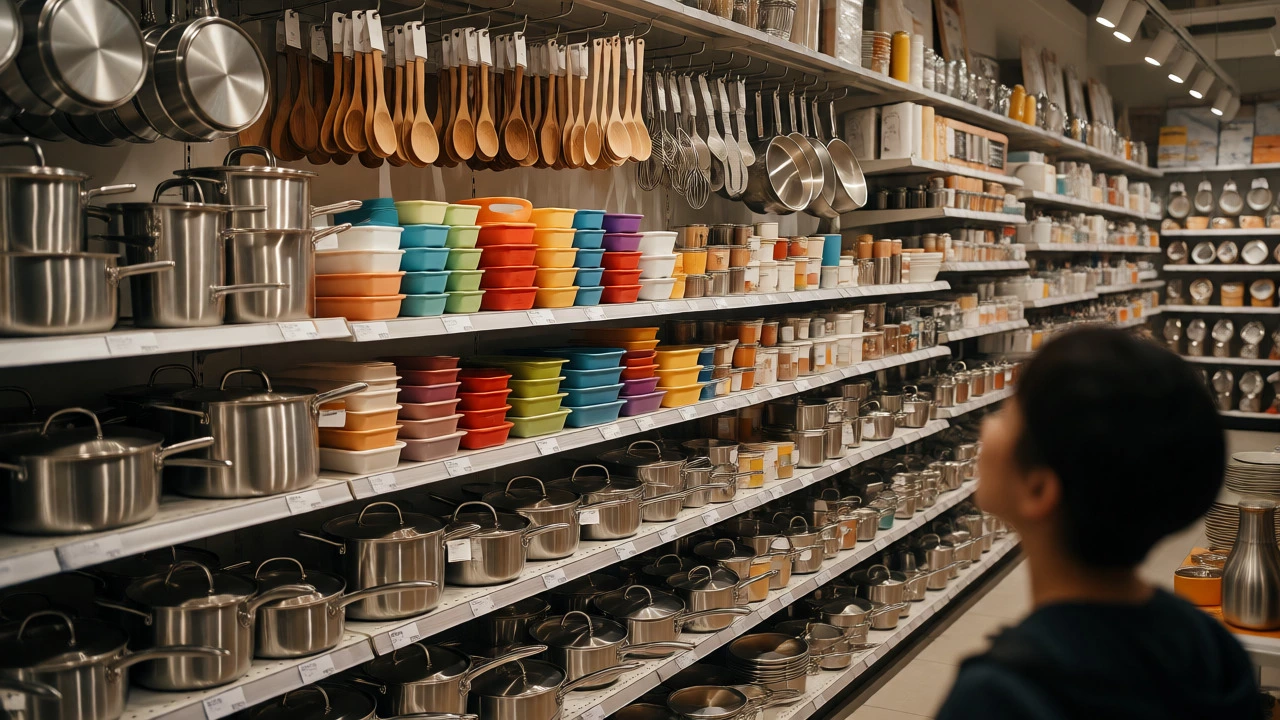
You are standing in the aisle of a large home goods store, staring at a wall of spatulas, whisks, and ladles. You need to tell a friend what you bought, or maybe you are writing a product description that needs to sound professional but not robotic. You type "what is a word for kitchenware" into your search bar because the single word feels too broad, yet specific terms like "spatula" feel too narrow. The truth is, there isn't just one synonym. English offers a rich tapestry of terms depending on whether you are talking about the metal pots, the wooden spoons, or the electric gadgets.
Most people use kitchenware as an umbrella term, but it often causes confusion when mixed with "cookware." If you say you are buying kitchenware, some might think you mean plates and bowls (tableware), while others assume pots and pans. To fix this, we need to break down the language by function. Are you cooking? Serving? Storing? Each action has its own precise vocabulary that makes your communication sharper and more accurate.
The Umbrella Terms: When General Works Best
Sometimes you don't need precision; you need coverage. If you are describing a gift set or a general category of items, using broad terms prevents you from listing every single fork and knife. The most common alternative to kitchenware is kitchen essentials. This phrase implies necessity rather than luxury. It tells the listener that these are the basic tools required to prepare food, such as knives, cutting boards, and mixing bowls.
Another strong option is culinary tools. This sounds slightly more professional and is often used in contexts involving serious cooking or hobbyist chefs. Unlike "kitchen stuff," which is vague and informal, "culinary tools" suggests that the items have a specific purpose in the craft of cooking. Use this if you want to elevate the tone of your writing without getting too technical.
For retail or inventory purposes, housewares is frequently used. However, be careful here. Housewares can include cleaning supplies, laundry baskets, and bathroom mats. If you are strictly talking about food preparation, housewares might be too wide a net. But if you are organizing a garage sale and selling everything non-food related, it fits perfectly.
Cookware vs. Bakeware: The Material Difference
This is where most people trip up. People often use "cookware" and "kitchenware" interchangeably, but they refer to different things. Cookware specifically refers to vessels used for heating food on a stove or oven. Think saucepans, frying pans, stockpots, and woks. These items are defined by their ability to withstand high heat and transfer temperature.
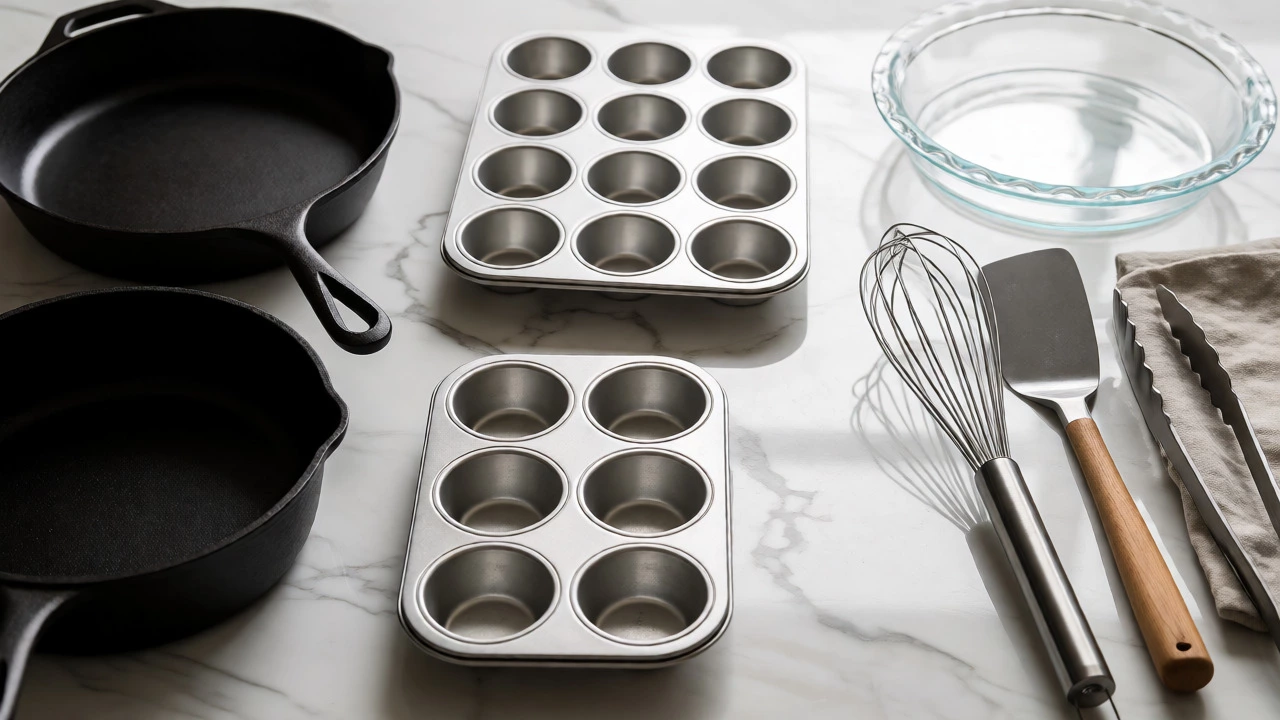
Bakeware, on the other hand, consists of containers used primarily in ovens for baking. This includes sheet pans, muffin tins, cake molds, and pie dishes. While both cookware and bakeware involve heat, the distinction matters because materials differ. Cookware often uses stainless steel or cast iron for stovetop durability. Bakeware frequently uses aluminum or silicone for even oven heating. If you are looking for a synonym for kitchenware that focuses on the cooking process, choose "cookware" only if you mean pots and pans. If you mean trays and molds, use "bakeware."
| Category | Primary Function | Common Examples | Key Materials |
|---|---|---|---|
| Cookware | Heating food on stovetops | Frying pan, saucepan, wok | Stainless steel, cast iron, copper |
| Bakeware | Baking in ovens | Sheet pan, loaf pan, tart dish | Aluminum, glass, silicone |
| Utensils | Manipulating food | Spatula, whisk, tongs | Wood, plastic, nylon, wood |
| Tableware | Serving and eating | Plates, bowls, cutlery | Porcelain, ceramic, silver |
Utensils and Tools: The Handheld Helpers
If you are holding something in your hand while cooking, it is likely a utensil or a tool. The word "utensil" comes from the Latin *usus*, meaning use. In modern English, kitchen utensils refers to handheld implements used to prepare, serve, or eat food. This excludes heavy machinery like blenders or ovens.
There is a subtle difference between "utensil" and "tool." A utensil is generally passive-it helps you move food around. A spoon is a utensil. A tool often implies a mechanical advantage or a specific task completion. A corkscrew is a tool. A garlic press is a tool. Using "tools" can make your list sound more active. For example, "I bought new kitchen tools" sounds like you are ready to work, whereas "I bought new kitchen utensils" sounds like you are stocking a drawer.
Within this category, you can get very specific. Instead of saying "cooking things," use terms like "prep tools" for knives and peelers, or "serving ware" for ladles and serving spoons. Precision here helps buyers understand exactly what they are getting. If you are selling a whisk online, calling it a "mixing tool" is okay, but "balloon whisk" is better. However, if you need a collective noun for a set of five different mixing devices, "whisking tools" or simply "whisks" works fine.
Small Appliances: The Electric Category
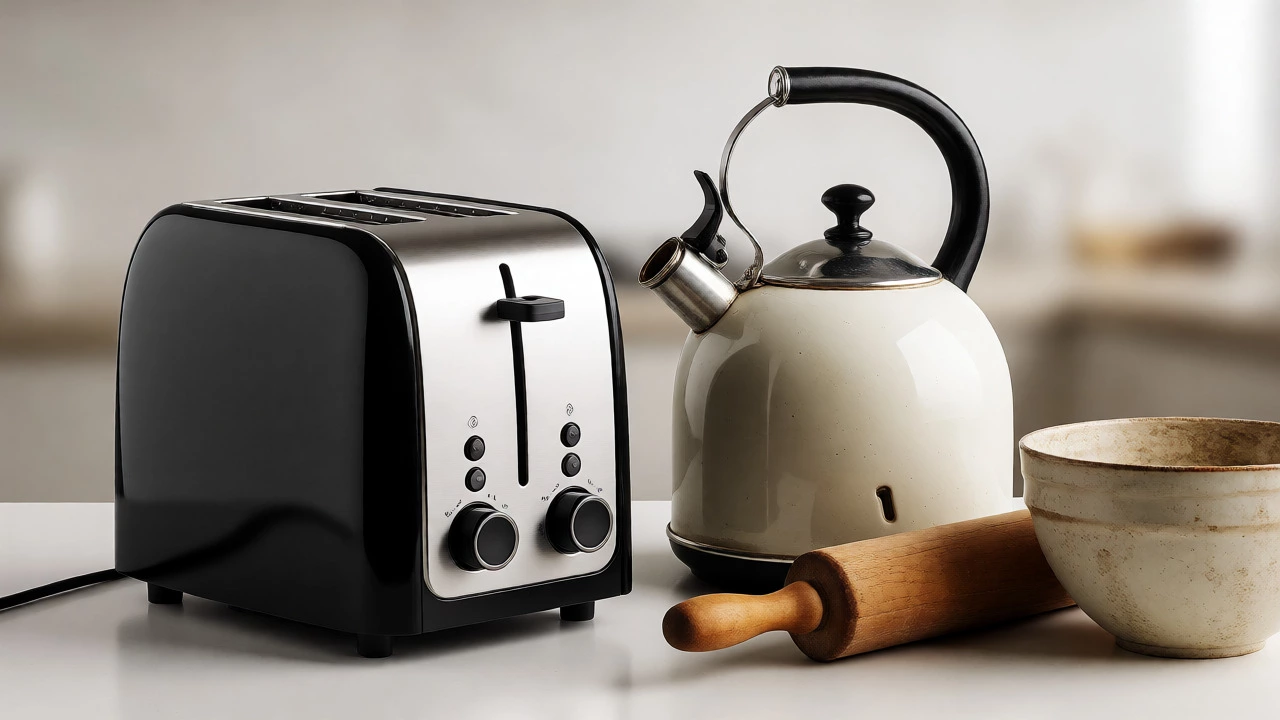
Kitchenware traditionally implies manual items, but modern kitchens are full of electricity. Items like toasters, kettles, and coffee makers occupy a gray area. Technically, they are appliances, not ware. "Ware" usually suggests durable goods made of metal, ceramic, or wood. An appliance contains motors and circuits.
However, in casual conversation, many people lump small appliances under the kitchenware banner. If you are writing a blog post titled "Top 10 Kitchenware Gifts," including a toaster is acceptable. But if you are organizing a warehouse, keep them separate. Use the term small kitchen appliances to distinguish these motorized helpers from manual pots and pans. This distinction protects you from confusion. No one expects a blender to fit in a dishwasher rack designed for plates.
When describing these items, focus on their utility. Are they for breakfast? Call them "breakfast appliances." Are they for health-conscious users? Try "smoothie makers" or "food processors." Specificity sells. "Kitchen gadget" is another popular synonym here. Gadgets imply novelty or specialized functions. A standard kettle is an appliance. A smart kettle that boils to specific temperatures is a gadget.
Context Matters: Formal vs. Informal Language
Your choice of words depends heavily on who you are talking to. If you are speaking to a chef, "mise en place tools" might resonate. If you are talking to your neighbor, "stuff for the kitchen" is perfectly fine. Avoid overly formal jargon unless necessary. Saying "I require culinary apparatus" sounds unnatural in most social settings.
In marketing copy, avoid negative connotations. Words like "clutter" or "junk" should be avoided unless you are criticizing bad products. Instead, use positive framing. "Essential gear," "must-have accessories," and "premium fixtures" all suggest value. Conversely, if you are decluttering, terms like "excess" or "redundant items" help justify throwing things away.
Consider regional differences too. In the UK, "crockery" is often used for plates and cups, while "cutlery" refers specifically to forks, knives, and spoons. In the US, "flatware" is the preferred term for cutlery. If you are writing for an international audience, stick to universally understood terms like "dinnerware" or "eating utensils" to avoid confusion.
How to Choose the Right Synonym
So, how do you pick the right word? Start by identifying the primary function of the item. Is it heated? Use cookware or bakeware. Is it held in the hand? Use utensils or tools. Does it plug into the wall? Use appliances. Is it for eating? Use tableware or dinnerware.
Next, consider the tone. Are you writing a scientific review? Use "equipment" or "apparatus." Are you writing a lifestyle blog? Use "essentials" or "favorites." Finally, check for ambiguity. If you say "kitchen items," does the reader know if you mean sponges or sauté pans? Probably not. Add an adjective. "Cleaning items" versus "cooking items" clarifies instantly.
Remember that language evolves. New products create new names. Air fryers didn't exist twenty years ago, so we invented the term. Today, we have sous-vide machines and dehydrators. Don't be afraid to use the specific name of the device if it is well-known. Most people know what an "air fryer" is. They might not know what a "rapid air circulation oven" is, even though it's technically more accurate. Clarity beats correctness every time.
Is cookware the same as kitchenware?
No, they are not the same. Kitchenware is a broad umbrella term that includes everything used in a kitchen, from plates to pots to blenders. Cookware is a subset of kitchenware that specifically refers to vessels used for cooking food on a stove or in an oven, such as pans and pots. All cookware is kitchenware, but not all kitchenware is cookware.
What is the difference between utensils and tools?
In a kitchen context, utensils are typically handheld items used to manipulate food during preparation or serving, like spoons, spatulas, and whisks. Tools often imply a mechanism or a specific task-completion function, such as a peeler, grater, or opener. While the terms are often used interchangeably, "tool" suggests active engagement, while "utensil" suggests assistance.
Can I use "housewares" instead of "kitchenware"?
You can, but it is less precise. Housewares is a broader retail category that includes kitchen items, but also cleaning supplies, storage bins, and sometimes bathroom accessories. If you want to be specific to food-related items, stick with kitchenware, cookware, or tableware. Use housewares only when referring to a wider range of household goods.
What is a fancy word for kitchen items?
If you want a more sophisticated term, try "culinary instruments," "gastronomic tools," or "kitchen apparatus." However, be cautious with overly formal language in everyday conversation, as it can sound pretentious. "Culinary essentials" strikes a good balance between professional and accessible.
Are small appliances considered kitchenware?
Technically, no. Small appliances are distinct from traditional kitchenware because they contain electrical components and motors. Traditional kitchenware refers to non-mechanical items like pots, pans, and utensils. However, in casual conversation and some retail categories, they are often grouped together under the broader label of kitchen equipment or goods.


