Bedding Fire Safety Class Comparison Tool
Understanding Bedding Fire Safety Classes
This tool compares fire safety classes for bedding materials. The higher the class, the greater the fire resistance. Class D is the minimum requirement in regulated markets.
Class D
Minimum safety standard
Class C
Better protection than Class D
Class B
Significant flame resistance
Class A
Maximum fire resistance
Class D Bedding Details
Minimum fire safety standard for bedding
Key Feature: Self-extinguishes within 10 seconds when flame source is removed
Where to use:
- General household bedding (sheets, pillowcases, duvet covers)
- Products meeting basic regulatory requirements
Which Class Should You Choose?
For general use
Class D is acceptable for most households
For vulnerable people
Children, seniors, or people with limited mobility
Consider upgrading to Class C or B for extra protection
For maximum safety
Hospitals, care homes, or aircraft
Class A is required in these environments
When you buy new sheets or a duvet cover, you probably check the fabric, thread count, or color. But have you ever looked for a fire safety rating? In many countries, including New Zealand and across the EU, bedding must meet strict fire safety standards - and that’s where class D bedding comes in.
What does class D mean for bedding?
Class D is a fire performance rating assigned to textiles under European standard EN 1101-1 and similar national regulations. It doesn’t mean the bedding is flammable - it means it has passed basic tests for resistance to ignition from small flames. Think of it like a seatbelt in your car: it’s not designed to stop a crash, but it reduces risk if something goes wrong.
Class D is the lowest of four main fire safety classes for bedding (D, C, B, A), with A being the highest. Class D bedding can still catch fire if exposed to a strong flame - like a candle or cigarette - but it’s required to self-extinguish quickly once the flame source is removed. That’s the key: it doesn’t keep burning on its own.
In New Zealand, while there’s no national law requiring fire ratings on bedding, many retailers follow EU standards because they import most of their products from Europe. If you see a label that says ‘Class D’, it’s there for a reason - and you should know what it means before you buy.
Why does fire safety matter in bedding?
Bedding fires are more common than you think. According to the New Zealand Fire and Emergency Service, nearly 1 in 5 residential fires start in bedrooms. Most of these involve bedding, pillows, or mattresses that ignite from smoking materials or faulty electrical devices.
Here’s a real example: in 2023, a household in Dunedin lost their bedroom to a fire started by a dropped cigarette. The mattress and sheets were made of synthetic fibers that melted and spread the flame rapidly. The family escaped unharmed, but the house was damaged beyond repair. Investigators later found the bedding had no fire safety label - it was imported without compliance testing.
Class D bedding doesn’t prevent fires. But it gives you critical seconds - time to wake up, get out, or put out the fire before it spreads. That’s why even low-risk products like pillowcases and fitted sheets are tested.
How is class D bedding tested?
Manufacturers test bedding using a small flame source - usually a 20mm gas flame - applied to a fabric sample for 15 seconds. After the flame is removed, the material must:
- Stop flaming within 10 seconds
- Not burn more than 50mm in length
- Not drip molten material that ignites cotton wool below
These tests are done in controlled labs, not at home. The results are then labeled on the product tag or packaging. You won’t find this info on the price tag - you need to check the care label or manufacturer’s website.
Some brands skip this testing to cut costs. Others use flame-retardant chemicals to pass. But even if the fabric passes, those chemicals can break down over time - especially after repeated washing. That’s why a Class D rating isn’t a lifetime guarantee.

What’s the difference between class D and higher ratings?
Class D is the minimum acceptable level for most bedding sold in regulated markets. But not all bedding is created equal.
Here’s how the classes compare:
| Class | Ignition Resistance | Typical Use | Flame Spread |
|---|---|---|---|
| Class D | Basic resistance to small flames | Sheets, pillowcases, duvet covers | Self-extinguishes quickly |
| Class C | Higher resistance, limited flame spread | Bedspreads, decorative throws | Slower burn, less dripping |
| Class B | Significant flame resistance | Hotel bedding, public spaces | Very slow spread, minimal smoke |
| Class A | Highest resistance, non-combustible | Hospitals, care homes, aircraft | Does not ignite |
Most home bedding is Class D because it’s affordable and meets legal minimums. But if you’re buying for a child’s room, an elderly relative, or a rental property, consider upgrading to Class C. It’s often only 10-15% more expensive and gives real peace of mind.
What materials are used in class D bedding?
Class D doesn’t tell you what the fabric is - only how it behaves near fire. So you could have:
- Cotton blends with flame-retardant coatings
- Polyester with built-in fire inhibitors
- Viscose treated with chemicals
- Even organic cotton - if it’s been chemically treated to pass
That’s the catch. Many people assume natural fibers like cotton are safer. But untreated 100% cotton burns easily - faster than many synthetics. A Class D rating means the fabric has been modified, whether through chemical treatment or fiber blending.
If you’re sensitive to chemicals or prefer natural products, look for bedding labeled ‘non-toxic flame retardant’ or ‘halogen-free’. Some brands now use phosphorus-based treatments instead of chlorine or bromine chemicals. These are less harmful to health and the environment.

How to spot class D bedding when shopping
You won’t see ‘Class D’ on the front of the box. You need to dig a little.
- Check the care label - it’s usually sewn into the seam or hem.
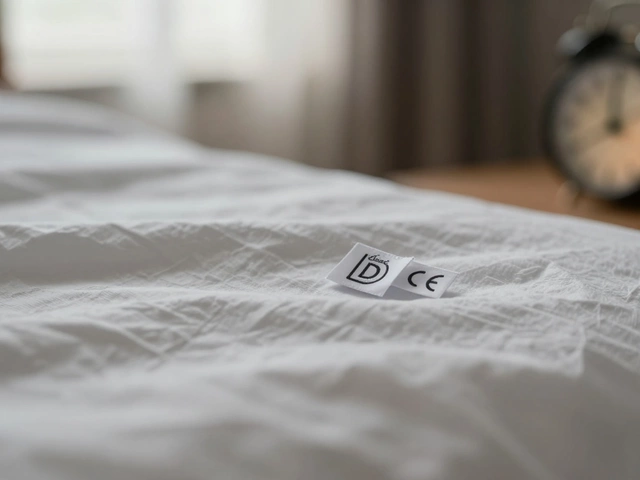
- Look for the CE mark (common on EU-made products) - this means it meets European safety standards.
- Search the brand’s website for ‘fire safety’, ‘compliance’, or ‘regulations’.
- If you can’t find any mention of fire ratings, assume it’s not tested - or not compliant.
Some discount stores sell bedding without any safety labeling. That’s not illegal everywhere - but it’s risky. In New Zealand, if a product causes injury due to lack of safety info, the retailer can be held liable.
What to do if your bedding isn’t class D
If your current bedding doesn’t have a fire rating, don’t panic. But do take action.
- Replace old bedding every 2-3 years - wear and washing reduce fire resistance.
- Never smoke in bed - this is the #1 cause of bedding fires.
- Keep candles, heaters, and electronics away from the bed.
- Install smoke alarms in every bedroom - and test them monthly.
If you’re buying new, choose Class D or higher. It’s a small cost for a big safety upgrade. You wouldn’t buy a car without brakes - don’t buy bedding without fire safety.
Is class D bedding enough for kids or seniors?
For children, elderly people, or anyone with limited mobility, Class D is the bare minimum. These groups need more time to react in a fire. Their skin is more sensitive to burns. And they may not wake up quickly if smoke or heat builds up.
Many hospitals and aged care facilities in New Zealand use Class B or even Class A bedding. If you’re caring for someone vulnerable, consider upgrading. You can find Class C bedding from brands like Linen House, Bed Bath & Beyond, or even local NZ makers like The Bedding Co. - often at similar prices to big-box store options.
It’s not about fear. It’s about smart choices. Your bedding touches you every night. It should protect you - not just look nice.