Curtain Width Calculator
Measure Your Window
Results & Recommendations
Total Rod Width Needed: inches
For :
Extend inches beyond each side
Pro Tip: Install rod inches above window frame for maximum height illusion.
Getting curtains to look right isn’t just about color or fabric-it’s about how far they extend past the window. Too short, and your window looks smaller. Too wide, and they drag or bunch awkwardly. The right width makes your window feel bigger, your room more balanced, and your space instantly more polished.
Why curtain width matters more than you think
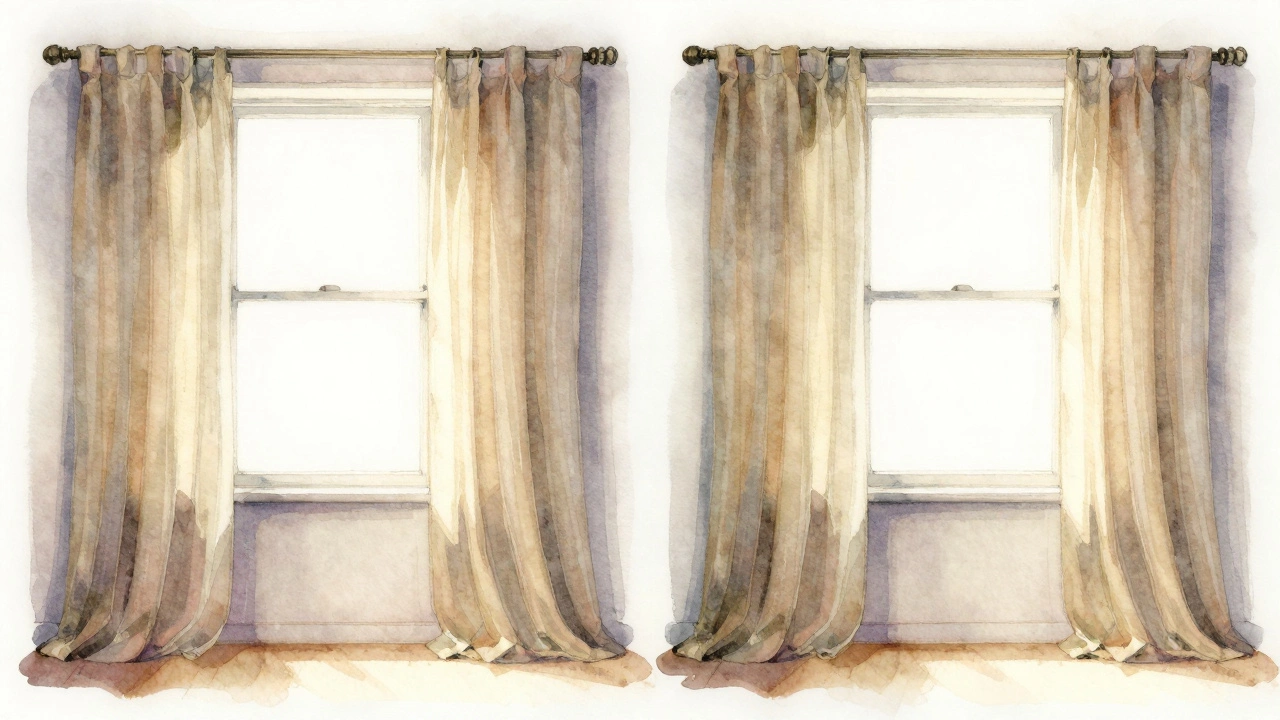
Most people focus on curtain length-floor-length, puddled, or just above the sill-but ignore width. A curtain that’s too narrow creates a tight, cramped look. It makes the window feel like an afterthought, not a feature. The goal isn’t just to cover the glass. It’s to frame it like a picture.
Think about it: when you walk into a room, your eye naturally follows the lines. Curtains that stop right at the window frame tell your brain, ‘This is the edge.’ Curtains that extend beyond that edge say, ‘This space goes further.’ That illusion of width is why designers always recommend going wider than the window.
The golden rule: extend curtains 6 to 12 inches past each side
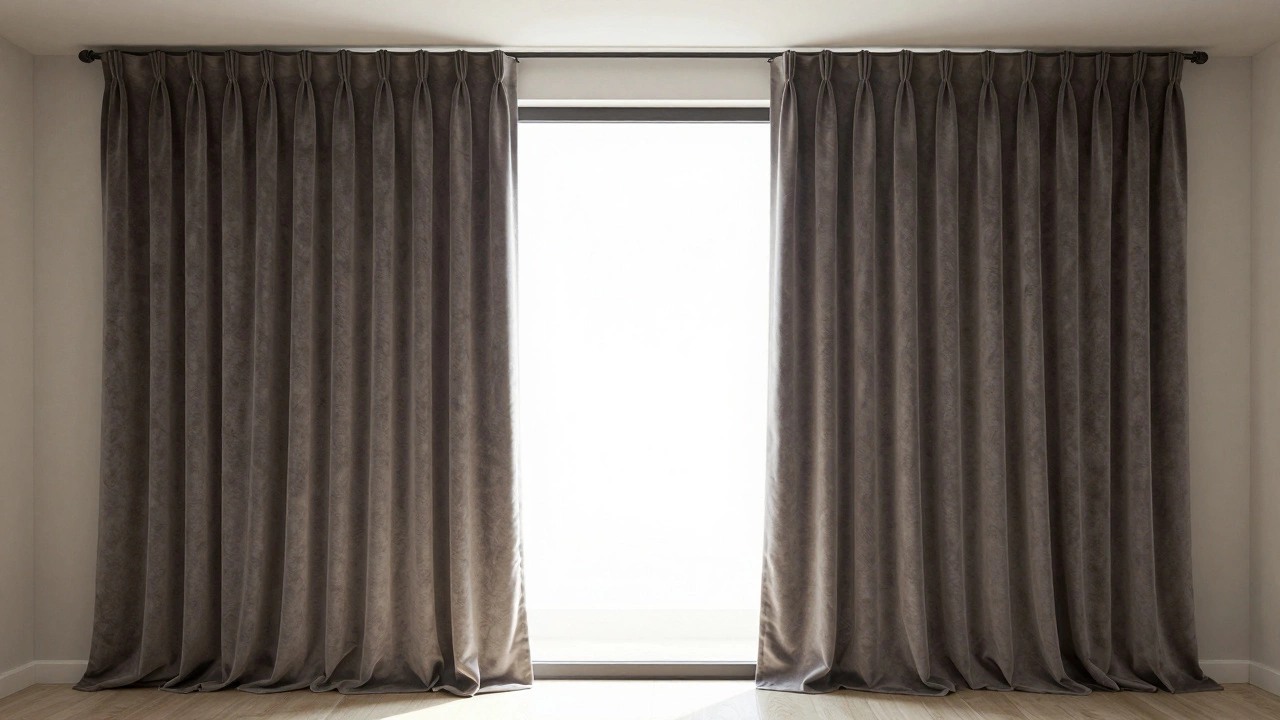
The standard recommendation is to extend curtains at least 6 inches beyond the window frame on each side. That’s 12 inches total extra width. But if you want a more dramatic, high-end look, go for 12 inches on each side-24 inches total.
Why this range? Here’s what happens at each point:
- 6 inches per side: Clean, modern, subtle. Works well in small rooms or with lightweight fabrics like linen. Enough to avoid a boxed-in feel without overwhelming the space.
- 12 inches per side: Bold, luxurious, classic. Ideal for larger windows, formal rooms, or when you want the curtains to feel like a statement. This is what you’ll see in high-end homes and showrooms.
- Less than 6 inches: Makes the window look smaller. Curtains appear stuck to the frame. Common mistake in budget installations.
For example, if your window is 36 inches wide, your curtain rod should be installed at least 48 to 60 inches wide. That’s 6 to 12 inches on each side. Don’t just measure the window-measure the wall space you have to work with.
How to measure correctly (step by step)
Most people guess. That’s why curtains end up too narrow. Here’s how to get it right:
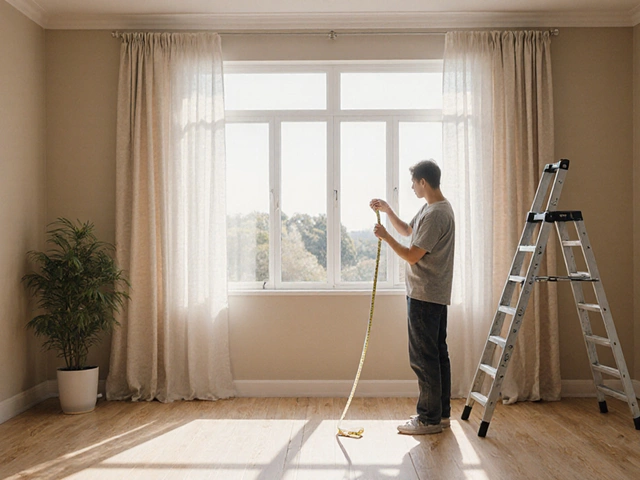
- Measure the exact width of your window frame-from inside edge to inside edge.
- Decide how much extra you want: 6 inches or 12 inches per side.
- Add that to your window width. For a 40-inch window with 10 inches extra per side: 40 + 20 = 60 inches.
- Choose a curtain rod that matches or slightly exceeds that total width. Don’t buy a rod that’s too short and try to stretch the curtains.
- Mount the rod 4 to 6 inches above the window frame. This lifts the visual height and makes the window feel taller.
Pro tip: If you’re using a tension rod, make sure it’s rated for the width you need. Most tension rods max out at 48 inches. For anything wider, go for a fixed rod with brackets.
What about curtains that don’t cover the whole window?
Some people install curtains only over the glass, leaving the trim exposed. That’s fine if you have beautiful woodwork or architectural details. But if your window frame is plain or outdated, covering it completely with curtains is the smarter move.
When curtains extend past the frame, they hide the edges of the wall and create a clean, uninterrupted flow. It’s especially helpful in older homes with uneven or painted-over trim. The curtain becomes the frame-not the window itself.
How fabric and style change the rules
Not all curtains behave the same. Heavy velvet will hang differently than thin cotton. Here’s how fabric affects width:
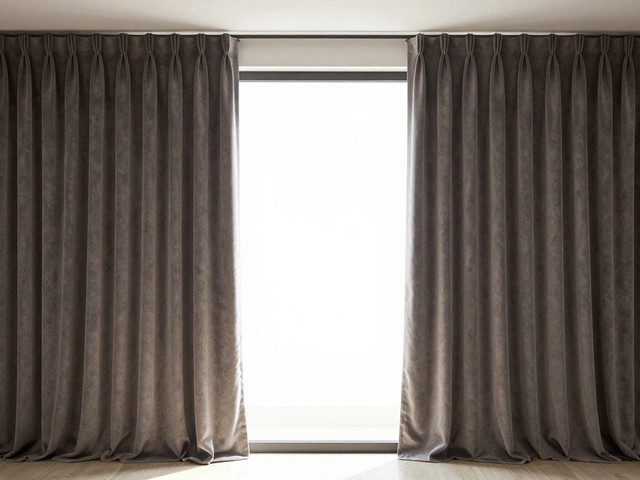
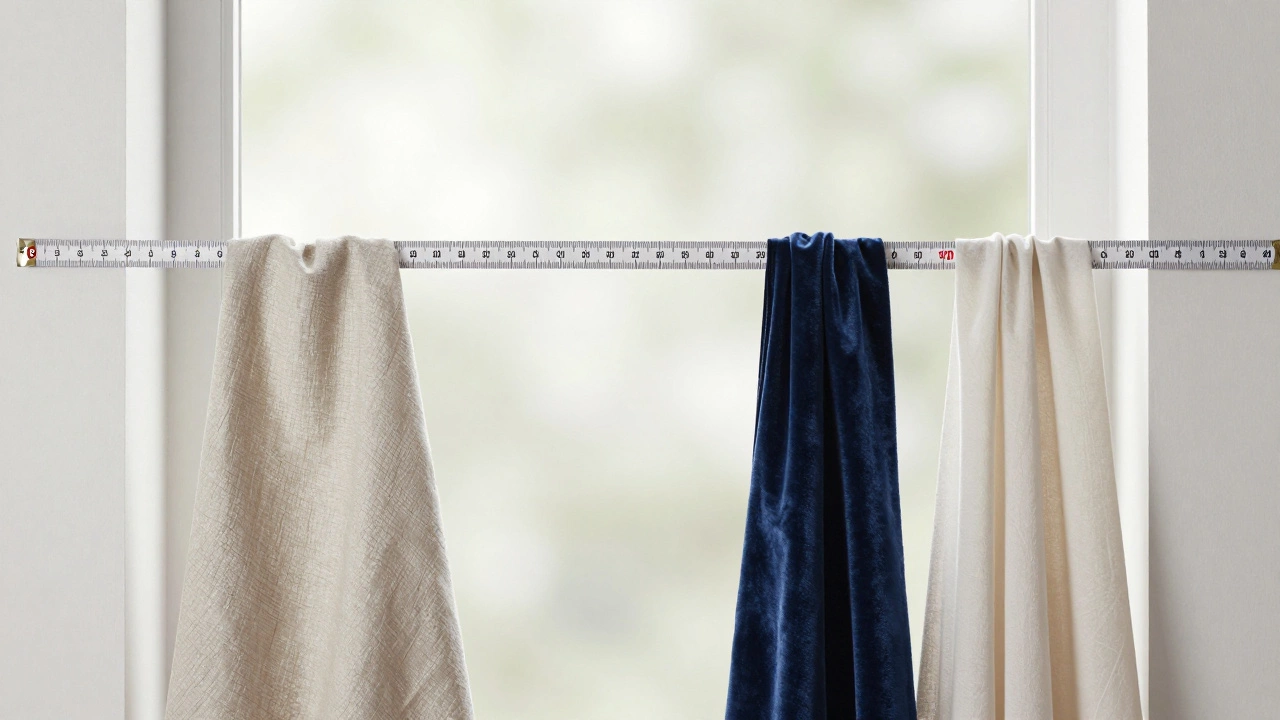
- Heavy fabrics (velvet, blackout, damask): These drape heavily and need more width to flow naturally. Go for 12 inches per side minimum. Less than that, and they’ll look stiff and awkward.
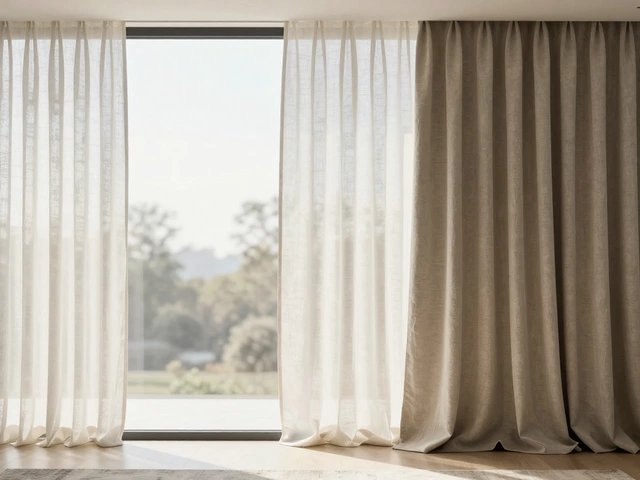
- Light fabrics (sheer, linen, cotton): These hang softly and can work with 6 inches per side. But if you want them to pool slightly when open, go wider. Light fabrics need room to move.
- Double-layer curtains (sheer + blackout): Each layer should extend the same amount. If the blackout panel is too narrow, the sheer underneath will peek out when open, breaking the illusion.
Also, avoid patterns that are too busy if you’re going for a clean look. A large floral or geometric print can get chopped off awkwardly if the curtain is too narrow. Solid or subtle textures work better when you want the width to be the star.
Common mistakes and how to fix them
You’d be surprised how often people get this wrong. Here are the top three mistakes-and how to avoid them:
- Mistake 1: Mounting the rod too low or too close to the window. Fix: Mount the rod higher (4-6 inches above the frame) and extend it past the sides. Instantly makes the room feel taller and wider.
- Mistake 2: Buying curtains based on window size, not rod size. Fix: Always buy curtains based on the rod width, not the window. A 50-inch curtain won’t cover a 60-inch rod. You’ll end up with gaps on the sides.
- Mistake 3: Thinking ‘more fabric = better.’ Fix: Too much width can make curtains look bulky and messy. Stick to the 6-12 inch rule. If you want fullness, add more panels-not more width. Two panels of 50 inches each look better than one panel of 100 inches.
One real-life example: In a small Auckland apartment, someone installed 48-inch curtains on a 36-inch window with the rod right at the frame. The result? The curtains looked like afterthoughts. When they moved the rod 10 inches out on each side and added 60-inch panels, the window looked twice as big. The room felt more open, even though nothing else changed.
What if your wall space is limited?
Not every room has room for 12 inches of extra width. Maybe you have a door next to the window, or a radiator underneath. That’s okay.
Do the best you can. Even 3 to 4 inches past the frame helps. It’s better than nothing. If you can’t extend the rod, consider mounting the curtains slightly wider than the window, even if it means the rod sticks into the wall a bit. A little overlap is better than a gap.
Another trick: Use a continuous rod that runs across multiple windows. If you have two side-by-side windows, mount one long rod across both. It creates a unified look and makes the whole wall feel wider.
Final tip: Test before you buy
Before you spend money on fabric or hardware, tape a piece of string or masking tape to your wall to mark where the curtain rod will go. Step back. Look at it from across the room. Does it feel balanced? Does it frame the window like you want? Move the tape in or out. Try different widths.
This takes five minutes. It saves you from buying curtains that look off after installation. Trust me-this step is worth it.
There’s no magic number that works for every room. But if you stick to extending curtains 6 to 12 inches past each side, you’ll avoid the most common mistakes. And you’ll get that effortless, professional look-without hiring an interior designer.
Should curtains touch the floor when measuring width?
No. Curtain width and length are separate measurements. Width is how far the curtains extend past the window sides. Length is how far they hang down-from rod to floor, sill, or pool. You can have wide curtains that end at the sill, or narrow ones that puddle on the floor. Focus on width for framing, length for style.
Can I use one wide curtain panel instead of two?
Technically yes, but it’s not recommended. One panel will create a heavy, unbalanced look when open. It won’t stack neatly to the side, and you’ll have a large gap on the opposite side. Two panels, even if they’re thinner, open more cleanly and look more intentional.
Do blackout curtains need more width than regular ones?
Yes. Blackout fabric is heavier and less flexible. If you don’t give it enough width, it won’t drape smoothly and will look stiff. Always go with at least 12 inches per side for blackout curtains. Less than that, and you’ll see gaps when they’re closed.
What if my window is asymmetrical or oddly shaped?
For odd shapes-like bay windows or arched tops-measure the widest point and extend the rod evenly on both sides. You don’t need to follow the exact shape of the window. The goal is to create a clean, rectangular frame around it. The curtain rod doesn’t have to match the window’s outline.
Is it okay to have curtains wider than the wall?
Only if the wall is long enough to support the rod. If your wall is 8 feet wide and your window is 4 feet, extending 12 inches on each side (total 6 feet) is fine. But if you try to go wider than the wall, the rod will stick out into the room or hit a corner. That looks awkward. Always measure your wall space before buying the rod.
Next steps: What to do now
Grab a tape measure. Find your window. Measure its width. Add 12 inches to each side. That’s your target rod size. Now check your wall space-do you have room? If yes, buy the rod. If not, go with 6 inches per side. Then pick curtains that match that width-not the window size.
Don’t wait until you’re in the store to figure this out. Do it now. It’s the easiest way to upgrade your space without spending a dime on new furniture.