
Bedding Size Up Calculator
Enter Your Measurements
All measurements in centimeters (cm). Check your tags or use a tape measure.
Analysis Results
Fitted Sheet Status
Description goes here.
Duvet Fit Status
Description goes here.
Pillow Case Status
Description goes here.
There is nothing more frustrating than waking up to find your sheets have slipped off the mattress or your duvet hanging awkwardly short on one side. It ruins the aesthetic of your bedroom and, worse, it ruins your sleep. If you are standing in the aisle staring at a tag that says "Queen" but wondering if you should grab a "King" instead, you are not alone. This is one of the most common dilemmas in home decor.
The short answer? Yes, often you should size up. But it depends entirely on what part of the bedding you are buying. Sizing up a fitted sheet can lead to a baggy mess, while sizing up a duvet cover can transform your bed into a cozy sanctuary. Let’s break down exactly when to stick to the standard size and when to go one step up for better comfort and style.
Understanding Standard Bed Sizes
Before we talk about sizing up, we need to agree on what the labels actually mean. Bedding manufacturers use standardized dimensions, but these can vary slightly depending on where you live. In New Zealand and Australia, sizes are often measured in centimeters, while the US uses inches. The UK has its own quirks too.
| Size Name | Width (cm) | Length (cm) | Notes |
|---|---|---|---|
| Single | 90 - 108 | 188 - 203 | Varies by region; NZ singles are often 108cm wide. |
| Double | 135 - 140 | 188 - 203 | Often called "Full" in the US. |
| Queen | 153 - 160 | 203 | The most popular size for couples. |
| King | 183 - 190 | 203 | US Kings are wider; NZ/AU Kings are longer. |
| Super King | 200 - 210 | 203 - 210 | Luxury size, common in master bedrooms. |
Always measure your actual mattress before buying. Manufacturers cut corners sometimes. A "Queen" mattress might be 153cm wide, but another brand might make theirs 155cm. That small difference can cause your fitted sheet to snap or slide off. Use a tape measure from corner to corner. Check the width, the length, and crucially, the depth.
Fitted Sheets: Stick to Your Size
When it comes to fitted sheets, sizing up is usually a mistake. A fitted sheet needs to hug your mattress tightly to stay in place. If you buy a Queen fitted sheet for a Double mattress, it will be too loose. It will bunch up under your hips, creating uncomfortable wrinkles that dig into your skin. Worse, it will likely slip off the corners during the night.
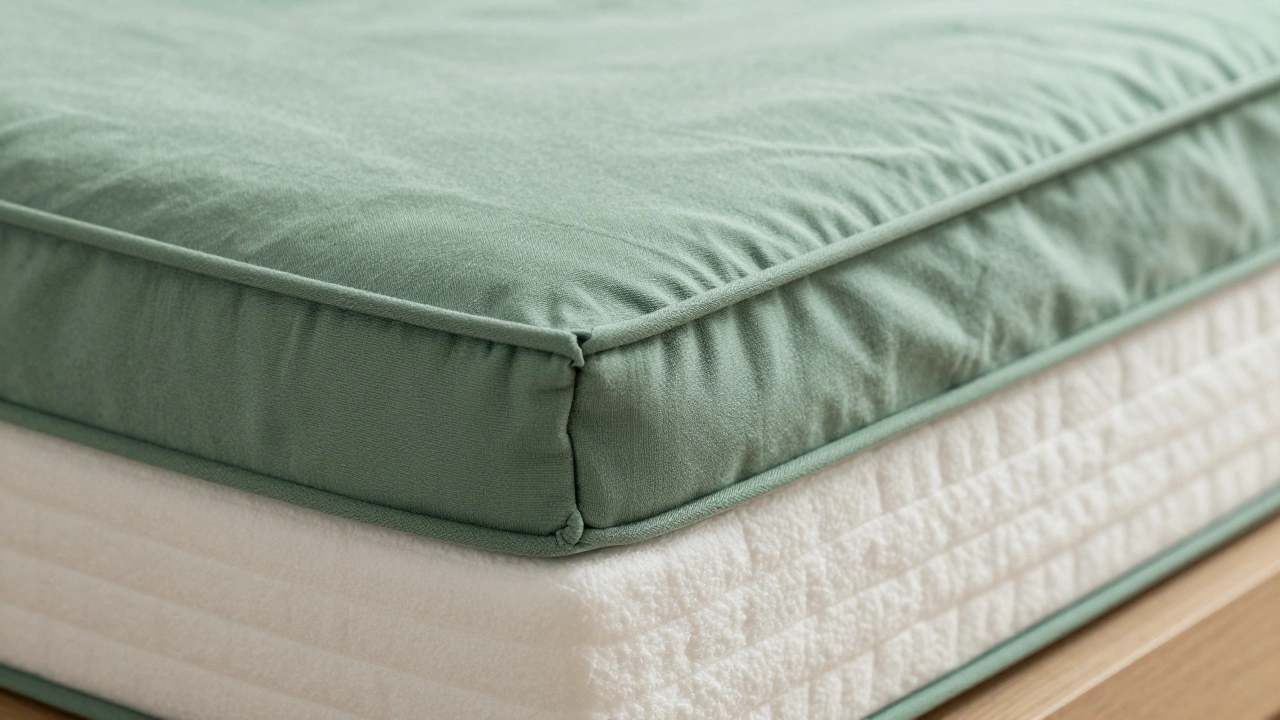
The key factor here is mattress depth. Modern mattresses are thicker than they used to be. Memory foam and hybrid mattresses often measure 30cm or more in height. Old-style spring mattresses might only be 20cm tall. If you buy a standard fitted sheet for a deep mattress, the elastic band won’t reach the other side.
- Shallow Pocket: Fits mattresses up to 25cm deep.
- Deep Pocket: Fits mattresses up to 30-35cm deep.
- Extra Deep Pocket: Fits mattresses over 35cm deep.
If your mattress is thick, do not buy a larger sheet size. Buy a "deep pocket" version of your exact mattress size. This ensures a snug fit without excess fabric. Look for sheets with strong elastic bands that run around the entire perimeter, not just the corners. Corner-to-corner elastic holds the sheet much better than traditional corner-only designs.
Duvet Covers: Definitely Size Up
This is where sizing up makes all the difference. A duvet cover that matches your duvet insert exactly will look tight and boxy. It will restrict the movement of the filling, making it feel stiff and less warm. When you toss and turn, the duvet will pull away from the cover, leaving you cold on one side and hot on the other.
Most experts recommend adding 10-15cm to both the width and length of your duvet insert when choosing a cover. For example, if your duvet is 200x200cm, a 220x240cm cover is ideal. This extra space allows the filling to loft properly. Loft is what traps heat and provides insulation. Without room to expand, the fibers get compressed and lose their insulating power.
Sizing up also improves aesthetics. A duvet that drapes slightly over the sides of the bed looks luxurious and intentional. It creates a layered look that hides the mattress and any messy edges underneath. Think of it like wearing a jacket. A tailored jacket fits well, but a coat that is slightly oversized looks more stylish and comfortable. Your bed should look inviting, not clinical.
Pillows: One Size Does Not Fit All
Pillowcases are tricky because pillow sizes vary wildly. Standard pillows, Queen pillows, and King pillows all have different dimensions. Using a standard case on a Queen pillow leaves gaps. The pillow slips out, and the case looks wrinkled and unmade. Always match the pillowcase to the specific pillow size.
However, you can play with sizes for decorative effect. Many people use smaller Euro sham pillows (usually 65x65cm) against the headboard and larger sleeping pillows in front. This creates visual interest. Just ensure the sleeping pillows are the right size for the cases. If you prefer a fluffier look, consider buying pillow inserts that are slightly larger than the cases. This mimics the effect of sizing up duvet covers, giving the pillows a plump, hotel-like appearance.
The Impact of Mattress Toppers
If you use a mattress topper, you must account for its thickness. A topper adds significant height to your bed. A 5cm memory foam topper on a 25cm mattress creates a 30cm total depth. A standard shallow-pocket sheet will fail here. You need a deep-pocket sheet.
Some people try to cheat by using a larger sheet size to accommodate the extra height. Do not do this. The sheet will still be too wide for the mattress surface. Instead, invest in high-quality deep-pocket sheets designed for thick beds. Some brands offer "universal fit" sheets with extra-long elastic, which can work for various depths within a specific size range.
Regional Differences Matter
Living in Auckland means you likely follow Australian or New Zealand sizing standards. These differ from US and UK sizes. A US Queen is narrower than an AU/NZ Queen. A US King is shorter than an AU/NZ Super King. If you buy bedding online from international retailers, check the metric dimensions carefully. Do not rely on the name alone.
For instance, a "UK Double" is often the same size as an "AU Single." Confusing these leads to ill-fitting sheets. Always verify the width and length in centimeters. If the retailer only provides inches, convert them accurately. 1 inch equals 2.54 centimeters. Rounding errors can cost you comfort.

Material Stretch and Shrinkage
The fabric type affects how the bedding fits. Cotton sheets shrink after washing. If you buy a sheet that fits perfectly dry, it might become tight after the first wash. High-quality cotton blends often include a small percentage of elastane or polyester to allow for stretch. This gives you some forgiveness in fit.
Linen bedding behaves differently. Linen relaxes and softens over time, becoming slightly looser. It does not shrink as dramatically as cotton. If you love linen, you might want to buy a size that fits snugly at first, knowing it will loosen up. However, for fitted sheets, it is safer to stick to the correct size and rely on deep pockets rather than hoping for stretch.
When to Size Up: A Quick Checklist
To simplify your decision-making, use this checklist:
- Fitted Sheets: Never size up. Match the mattress size exactly. Choose deep pockets for thick mattresses.
- Duvet Covers: Size up by 10-15cm in width and length for better loft and drape.
- Pillowcases: Match the pillow size exactly. Use larger inserts for a fluffier look.
- Flat Sheets: Can size up slightly for easier tucking and more coverage, especially if you share the bed.
- Mattress Protectors: Must fit the mattress size exactly. They rely on tight elastic to stay in place.
Remember, the goal is comfort and ease. If you spend every morning fixing your sheets, something is wrong. Properly sized bedding stays in place, keeps you warm, and makes your bed look beautiful with minimal effort.
Common Mistakes to Avoid
One major error is assuming all "Queen" sizes are identical. As mentioned, regional variations exist. Another mistake is ignoring the weight of the duvet. A heavy winter duvet needs a sturdy cover with strong stitching. A lightweight summer duvet can handle a thinner, more delicate fabric. Sizing up a heavy duvet in a thin cover can cause seams to burst. Ensure the fabric weight matches the duvet fill weight.
Also, avoid buying cheap elastic. The lifespan of your fitted sheet depends on the quality of the elastic band. Cheap elastic loses tension quickly, leading to slipping sheets. Invest in sheets with reinforced corners and high-quality elastic bands. It is worth the extra cost for long-term comfort.
Can I use a King duvet cover on a Queen bed?
Yes, this is a popular trick for achieving a luxurious, draped look. A King duvet cover will hang significantly lower on a Queen bed, covering the mattress completely and reaching towards the floor. Just ensure your duvet insert is large enough to fill the cover adequately, or add extra filler to prevent shifting.
Why are my fitted sheets always coming off?
This usually happens because your mattress is deeper than the sheet's pocket depth. If your mattress is over 25cm thick, standard sheets may not have enough elastic tension to hold on. Switch to deep-pocket or extra-deep-pocket sheets designed for thicker mattresses.
How much bigger should a duvet cover be than the duvet?
Aim for 10-15cm extra in both width and length. This allows the filling to move freely and loft properly, ensuring even warmth distribution. It also prevents the cover from feeling tight and restrictive, which can damage the fabric over time.
What is the difference between NZ and US bedding sizes?
NZ and Australian sizes tend to be longer and sometimes wider than US sizes. For example, a NZ King is longer than a US King. Always check the specific measurements in centimeters rather than relying on the size name to avoid fit issues.
Should I size up my pillowcases?
No, the case should match the pillow size exactly to keep it secure. However, you can buy pillow inserts that are slightly larger than the case to create a plumper, more voluminous look. This is different from buying a larger case for a smaller pillow, which results in wrinkles and slippage.