Rug Placement & Size Calculator
Enter Your Details
Your Recommendation
Enter your room details to see the best rug placement strategy.
You’ve just bought that perfect area rug, but now you’re staring at your living room with a question mark hanging over your head: should the rug go under the sofa? It’s one of those interior design dilemmas that seems simple until you try it. Put it wrong, and your space looks cramped or disjointed. Get it right, and the whole room feels anchored and intentional.
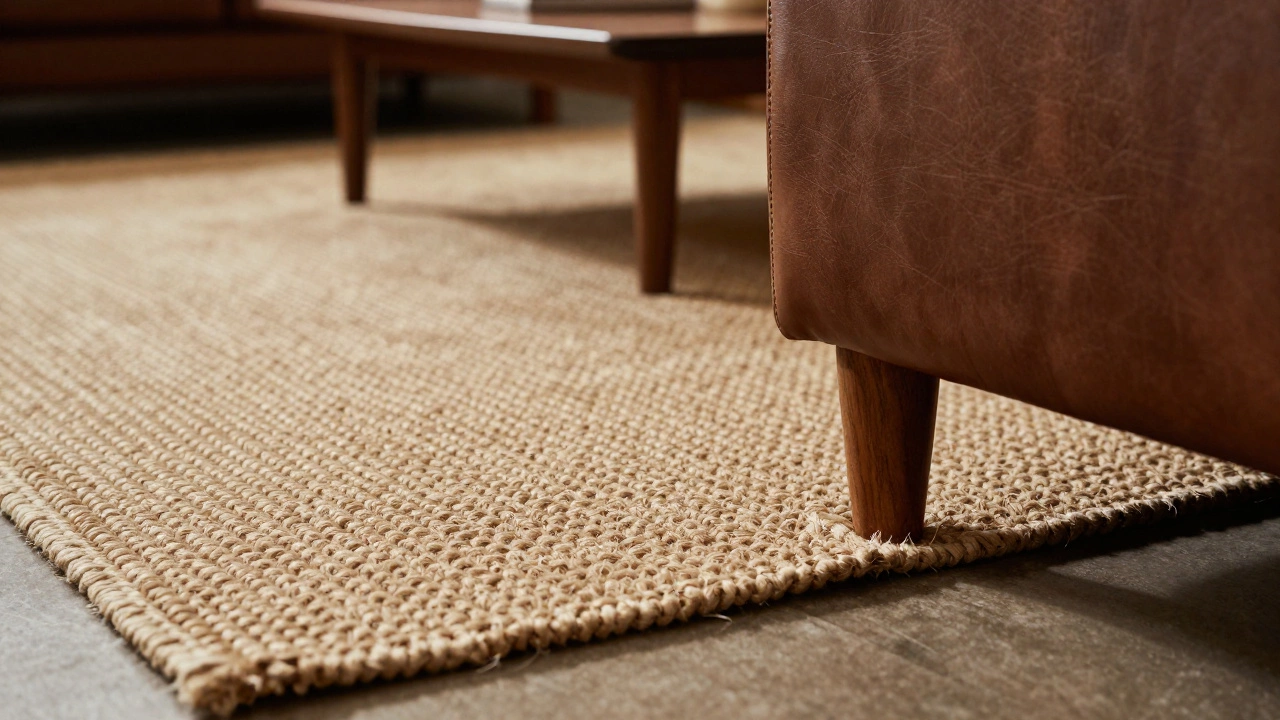
The short answer is yes-most of the time, rugs should go under the front legs of the sofa. But there are exceptions depending on your room shape, furniture style, and personal taste. Let’s break down why this matters, how to do it correctly, and when you might want to break the rules.
Why Front Legs Matter Most
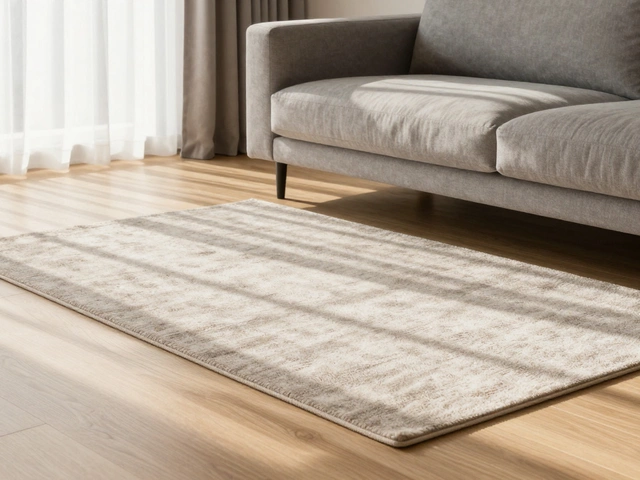
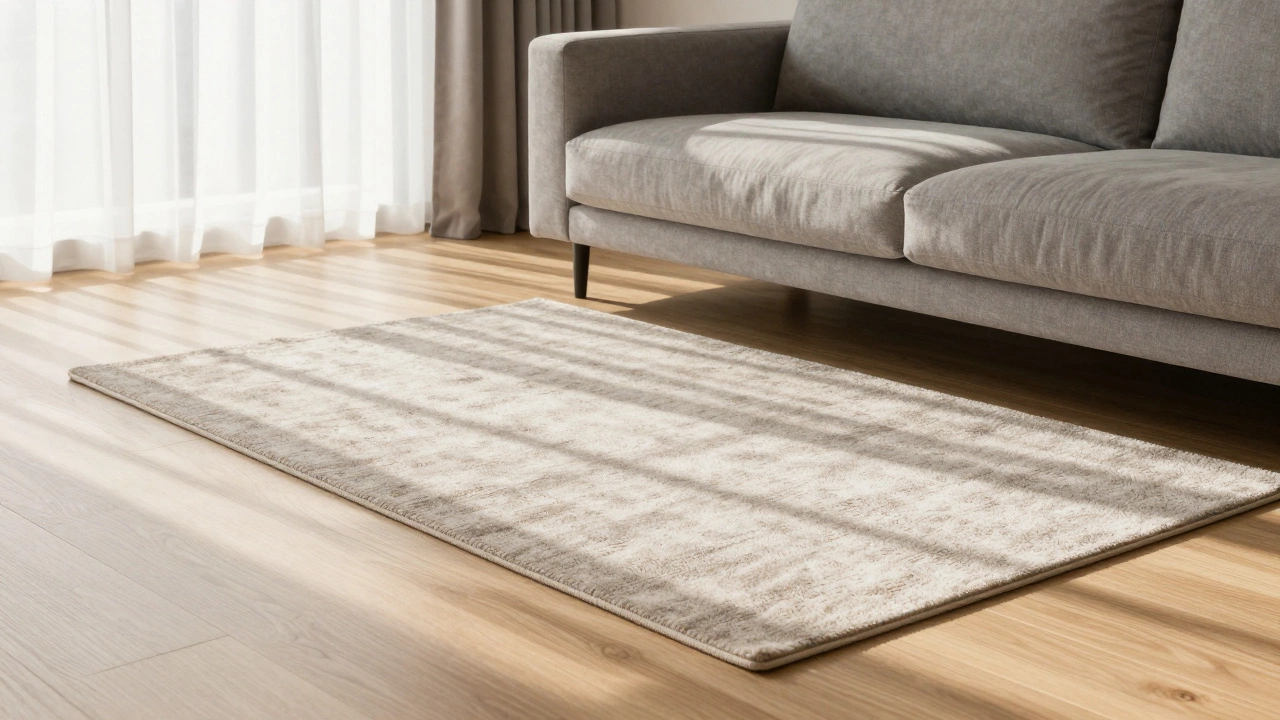
When designers talk about anchoring furniture, they mean creating visual stability. A rug acts as a foundation for your seating arrangement. If all four legs of your sofa sit on the rug, it creates a cohesive zone that defines the conversation area. This is especially important in open-plan living spaces where walls don’t naturally separate functions.
What happens if only back legs touch the rug?
This creates a floating effect where the sofa appears disconnected from the rest of the room. It can make small spaces feel even smaller because the eye isn't guided through the entire seating group.
Think of your living room rug like a stage platform. Actors (your furniture) need enough floor space to move naturally without stepping offstage. When front legs stay on the rug while back legs extend beyond, you maintain continuity between zones while still defining boundaries.
- All legs on rug = maximum cohesion
- Front legs only = balanced definition
- No legs on rug = potential disconnect
Room Size Dictates Your Options
Your room dimensions play a huge role in deciding whether full coverage makes sense. In smaller rooms (square meters), putting an oversized rug under everything can overwhelm the space. You'll lose precious breathing room around edges, making navigation awkward.
| Room Size | Ideal Rug Coverage | Minimum Clearance |
|---|---|---|
| Small (<15m²) | Front legs only | 10-15cm border |
| Medium (15-25m²) | All legs possible | 15-20cm border |
| Large (>25m²) | Full coverage recommended | 20-30cm border |
Larger rooms benefit from bigger rugs because they help define distinct areas within expansive floors. Without adequate coverage, large spaces can feel empty and uninviting. Conversely, tiny rugs in big rooms look lost and insignificant.
In Auckland homes with typical two-story layouts, many living rooms fall into the medium category. Here, you have flexibility. Measure carefully before purchasing. Leave at least fifteen centimeters of bare flooring visible around the perimeter. This prevents the "carpet bomb" effect where nothing else gets attention.
Sofa Style Changes Everything
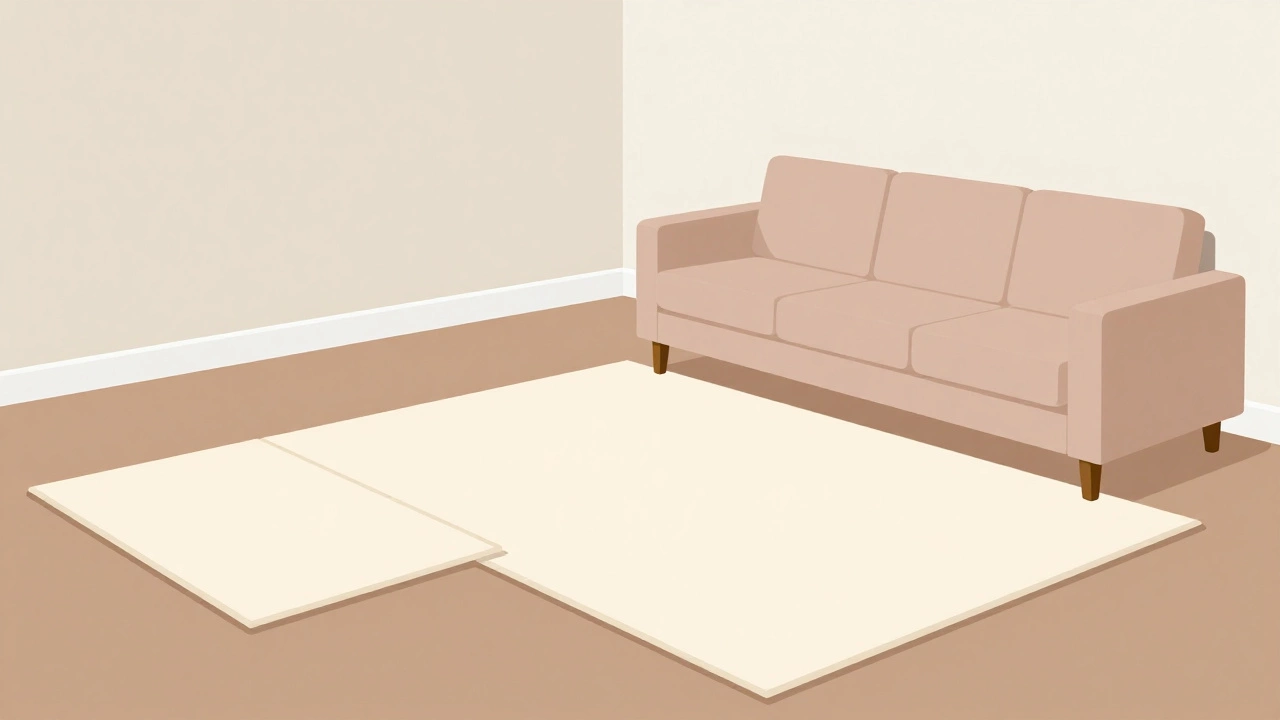
Not all sofas behave the same way visually. Low-profile sectional couches demand different treatment than high-backed traditional pieces. Consider these factors:
- Leg height: Sofas with raised legs create natural separation between furniture and floor. These work beautifully with partial rug coverage since shadows add depth.
- Base type: Platform-style bases without visible legs require more careful planning. Full coverage often works better here to avoid tripping hazards.
- Color contrast: Light-colored rugs paired with dark sofas create strong focal points. Ensure sufficient exposure so neither element dominates completely.
If your sofa has chunky wooden legs, leaving them partially exposed adds texture variation. Thin metal legs disappear easily against patterned backgrounds, so positioning becomes less critical. Always test arrangements temporarily using painter's tape outlines before committing permanently.
Common Mistakes People Make
I see the same errors repeatedly during home visits across New Zealand. Avoid these pitfalls:
- Rug too small: Never choose a rug smaller than your coffee table footprint plus surrounding clearance. Tiny centerpieces undermine larger investments elsewhere.
- Ignoring traffic flow: Walk through your planned setup multiple times. Do people stumble over corners? Adjust accordingly.
- Mismatched proportions: Long narrow hallways need runner-style solutions rather than square formats. Match shapes logically.
- Forgetting maintenance: Dark fabrics show dust differently than light ones. Choose materials suited to household activity levels.
One client recently replaced her worn Persian-style carpet with a modern geometric print. She positioned it incorrectly initially, resulting in constant vacuuming struggles around chair wheels. Moving it six inches solved both aesthetic and practical issues simultaneously.
Alternative Approaches Worth Considering
Sometimes conventional wisdom doesn't fit unique situations. Try these alternatives:
| Strategy | Best For | Considerations |
|---|---|---|
| Layering | Ectlectic styles | Requires secure non-slip pads |
| Zonal division | Open plans | Needs clear boundary lines |
| Floating island | Statement pieces | Works best with low-profile items |
Layering involves placing a smaller decorative rug atop a larger neutral base. This technique allows frequent changes without replacing expensive foundations entirely. Just ensure proper padding underneath to prevent slipping accidents.
Zonal division uses separate rugs to mark distinct functional areas within single large spaces. Reading nooks, entertainment centers, and dining sections each get their own identity markers. Consistent color palettes tie disparate elements together harmoniously.
Material Selection Impacts Durability
Wherever you place your rug, material choice affects longevity significantly. Wool remains popular due to resilience and natural stain resistance. Synthetic blends offer affordability alongside easy cleaning properties. Natural fibers like jute provide rustic charm but require protective treatments against moisture damage.
High-traffic zones near entryways deserve reinforced backing systems. Look for products rated specifically for heavy use environments. Cheaper options fray quickly under regular footfall, ruining otherwise beautiful designs prematurely.
Remember that sunlight exposure accelerates fading regardless of location. Rotate seasonal decorations regularly to distribute wear evenly across surfaces. Professional cleaning every twelve months extends lifespan considerably compared to DIY methods alone.
Can I put a rug under my TV stand instead?
Absolutely! Media units benefit greatly from grounding via rugs too. Just ensure cables remain accessible and heat vents aren't blocked by thick pile heights.
How do I know if my rug is big enough?
Measure diagonally from corner to corner of your main seating cluster. Add thirty centimeters extra on all sides for comfortable movement buffers. Anything less risks feeling cramped.
Should outdoor-rated rugs work indoors?
Yes, provided aesthetics match your decor goals. Outdoor varieties excel in spill-prone households thanks to quick-drying synthetic constructions designed for weather resistance.
What about pet-friendly considerations?
Opt for tightly woven patterns hiding embedded fur effectively. Avoid loose shag textures trapping claws easily. Enzyme cleaners handle organic stains better than standard detergents.
Is machine washing safe for most indoor rugs?
Only check manufacturer labels first. Many delicate hand-knotted pieces suffer irreversible shrinkage or distortion when subjected to industrial drum agitation cycles.
Do runners replace rectangular area rugs entirely?
No, they serve complementary purposes primarily along pathways connecting major zones. Use rectangles for stationary gathering spots requiring broader coverage areas.
How often should I rotate my rug orientation?
Every three to six months depending upon usage intensity. Sunlight direction shifts gradually throughout seasons affecting fade patterns unevenly otherwise.
Can layered rugs cause fire hazards?
Rarely if properly installed with flame-retardant underlays meeting local safety standards. Regular inspections catch fraying insulation problems early preventing escalation risks.
Are custom-sized rugs worth additional costs?
Definitely for irregularly shaped rooms needing precise fits. Standard sizes leave awkward gaps compromising overall harmony despite higher initial price tags involved.
What colors complement grey upholstery best?
Warm earth tones terracotta ochre mustard yellow inject vibrancy balancing cool undertones present inherently within charcoal slate blue-grey fabric selections commonly available today.