Plastic Tableware Resin Code Checker
Check Your Plastic Tableware
Identify the resin code on the bottom of your cups or plates to see if they're recyclable.
Results
Select a resin code to check recyclability.
Ever grabbed a stack of plastic cups and plates for a backyard party, only to realize you don’t actually know what they’re called? You’re not alone. Most people just say "plastic cups" or "party plates," but there’s more to it than that. These items have specific names based on their design, material, and use - and knowing them helps you make smarter choices at the store, reduce waste, or even recycle right.
What’s the Official Term for Plastic Cups and Plates?
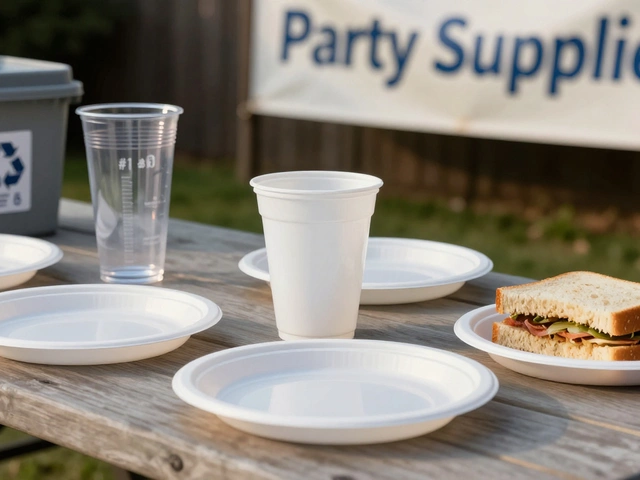
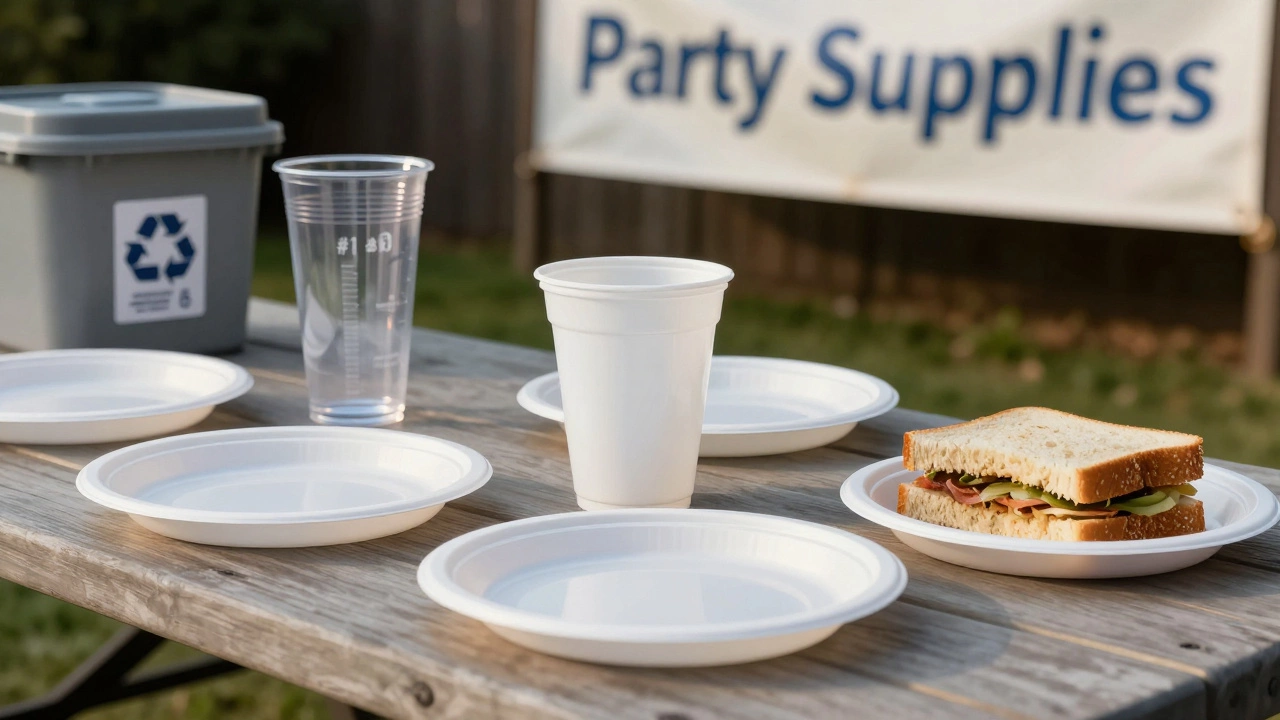
The broad, technical term for plastic cups and plates is disposable tableware. This category includes anything meant to be used once and thrown away - no washing, no reuse. But within that, there are subtypes with distinct names.
Plastic cups? They’re often called polystyrene cups if they’re rigid and clear, or polypropylene cups if they’re flexible and slightly opaque. You’ll see these at gas stations, picnics, or hospital cafeterias. Plates? Most are made from polypropylene or polystyrene, too, but they’re usually labeled as party plates or disposable dinner plates in stores.
There’s also a big difference between injection-molded and thermoformed plastic tableware. Injection-molded items - like sturdy, thick plastic cups - are made by pumping melted plastic into a mold. They’re durable, reusable in theory, but still marketed as disposable. Thermoformed items - like flimsy, lightweight plates - are pressed from sheets of plastic. These are meant for one use only. You can tell the difference by the thickness and texture: if it bends easily and feels thin, it’s thermoformed.
Common Names You’ll Hear in Stores
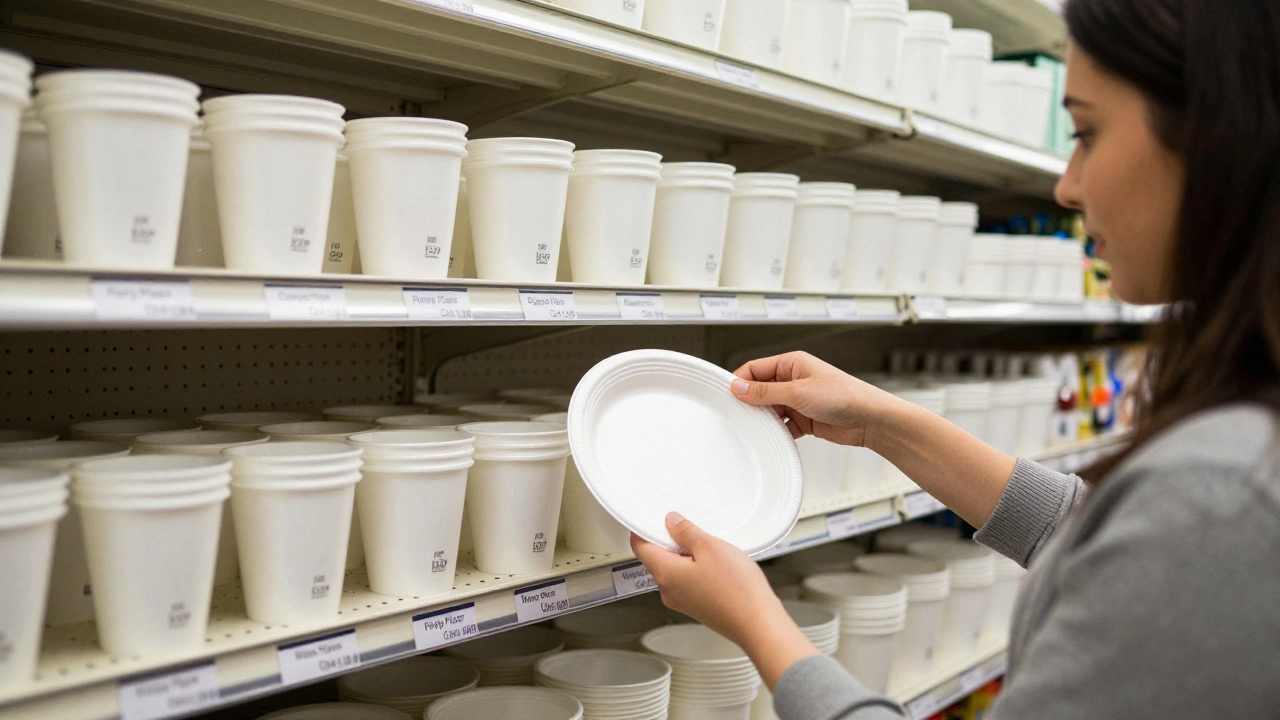
When you walk into a party supply store or a bulk warehouse, you won’t see "disposable tableware" on the shelf. You’ll see labels like:
- Party plates - Usually 9-inch, round, and slightly curved to hold food without bending. Often sold in packs of 50 or 100.
- Competition cups - Tall, narrow plastic cups used at sporting events or food fairs. Typically hold 16 oz.
- Wine tumblers - Short, wide plastic cups with a slight rim, designed to mimic wine glasses. Popular at outdoor weddings.
- Styrofoam plates - A brand name that stuck. Technically, these are expanded polystyrene (EPS) plates. They’re lightweight, insulating, and common at barbecues.
- Takeout containers - Not always cups or plates, but often grouped with them. These include clamshells, rectangular boxes, and lidded containers.
Don’t be fooled by "eco-friendly" labels. Many products labeled "biodegradable" or "compostable" are still plastic - just made from cornstarch or PLA (polylactic acid). These are called plant-based disposables. They look like regular plastic but break down under industrial composting conditions. If you toss them in your home bin? They’ll sit there for years.
Why the Name Matters: Recycling and Waste
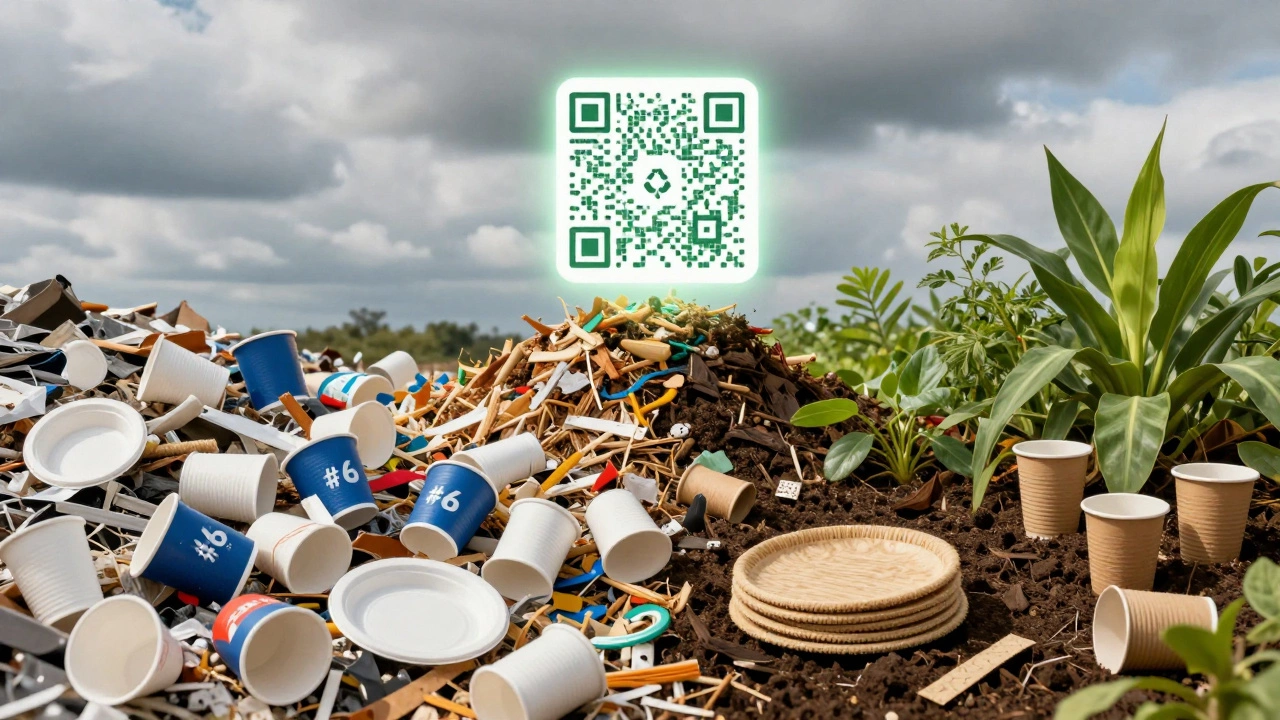
Here’s the thing: calling them "plastic cups" doesn’t tell you if they’re recyclable. Most curbside programs don’t accept #6 polystyrene (Styrofoam) or #5 polypropylene unless your city has special facilities. In 2025, only 12% of single-use plastic tableware in the U.S. got recycled - the rest ended up in landfills or waterways.
Manufacturers use different resin codes to identify plastic types. Look at the bottom of the cup or plate - you’ll see a triangle with a number inside:
- #5 (PP) - Polypropylene. Often recyclable in larger cities. Used in reusable-looking cups and plates.
- #6 (PS) - Polystyrene. Hard to recycle. Common in foam plates and cups. Banned in 12 U.S. states as of 2025.
- #1 (PET) - Polyethylene terephthalate. Used in clear plastic cups. Recyclable in most areas.
Knowing the resin code helps you sort waste correctly. If you’re hosting an event, choose #1 or #5 over #6. It makes a difference.
What’s Replacing Traditional Plastic Tableware?
Since 2020, bans on single-use plastics have spread across North America and Europe. Cities like San Francisco, Toronto, and Paris have outlawed #6 polystyrene entirely. So what’s replacing it?
- Bagasse plates - Made from sugarcane fiber. Sturdy, compostable, and microwave-safe. Used by restaurants like Chipotle and Starbucks.
- Paper with PLA lining - Looks like plastic-coated paper. Holds liquids without leaking. Must be composted in industrial facilities.
- Bamboo fiber cups - Lightweight, natural look. Not truly compostable unless uncoated. Often marketed as "eco" but can be misleading.
Some companies now make reusable plastic tableware from recycled ocean plastic. These are labeled as "recycled-content" and often come with a QR code showing their origin. They’re not disposable - but they’re still plastic.
How to Choose the Right One
When you’re buying for a party, picnic, or office event, ask yourself:
- Will it hold hot food? - Avoid thin thermoformed plates. Go for #5 polypropylene or bagasse.
- Will it hold liquids? - Look for sealed rims and thicker walls. #1 PET cups handle cold drinks best.
- Do you have composting? - If yes, choose certified compostable (look for BPI logo).
- Are you in a city with plastic bans? - Skip #6 polystyrene. Use paper or bagasse instead.
For casual backyard gatherings, recycled #5 polypropylene plates are the sweet spot: durable, affordable, and widely recyclable. For upscale events, compostable bagasse plates look more elegant and feel more natural.
Myths About Plastic Tableware
Let’s clear up some confusion:
- Myth: "Biodegradable" means it breaks down in your backyard. Truth: Only industrial composting (140°F, 60 days) breaks down plant-based plastics. In a landfill? Same as regular plastic.
- Myth: "Eco-friendly" plastic is better for the planet. Truth: All single-use items create waste. Reusable is always better - even if it’s plastic.
- Myth: All plastic cups are the same. Truth: A #1 PET cup and a #6 Styrofoam cup have totally different recycling paths and environmental impacts.
The bottom line? The name tells you more than you think. "Styrofoam cup" isn’t just a brand - it’s a material warning. "Bagasse plate" isn’t just a buzzword - it’s a promise of compostability. Knowing the terms helps you choose better - and push for change.
What’s Next?
By 2027, the U.S. expects to ban all single-use plastic tableware nationwide. More cities are already moving toward mandatory composting. The names we use today - "party plates," "Styrofoam cups," "disposable tableware" - might soon be outdated.
Next time you buy plastic cups, check the resin code. Ask if they’re recyclable. Choose reusable if you can. And if you must use disposables? Know exactly what you’re holding - and why it matters.
Are plastic cups and plates recyclable?
It depends on the type of plastic and your local recycling rules. Cups and plates made from #1 (PET) and #5 (polypropylene) are often accepted in curbside programs. But #6 (polystyrene, aka Styrofoam) is rarely recyclable and banned in many cities. Always check your city’s guidelines - and rinse items before recycling.
What’s the difference between polystyrene and polypropylene plates?
Polystyrene (#6) is rigid, lightweight, and often white or foam-like. It’s cheap but hard to recycle and can’t handle hot food well. Polypropylene (#5) is more flexible, slightly translucent, and holds heat better. It’s more durable, often recyclable, and used in higher-quality disposable tableware.
Are compostable plates really better for the environment?
Only if they’re composted properly. Plates made from cornstarch or sugarcane (bagasse) break down in industrial composting facilities - but not in home bins or landfills. If you don’t have access to commercial composting, they’re just another form of waste. Reusable plates still have the lowest environmental impact overall.
Why do some plastic cups say "not microwave safe"?
Many plastic cups, especially those made from polystyrene (#6) or thin polypropylene, can warp, melt, or release chemicals when heated. Even if a cup looks sturdy, the manufacturer may not have tested it for microwave use. Always look for a microwave-safe symbol - usually a wavy line or a small microwave icon on the bottom.
Can I reuse plastic cups and plates?
Technically, yes - but it’s not recommended. Single-use plastics aren’t designed for repeated washing. Over time, they crack, trap bacteria, and may leach chemicals, especially when exposed to heat or dish soap. If you do reuse them, avoid hot food and hand-wash gently. For safety, stick to reusable items like glass, stainless steel, or ceramic.
Next time you reach for a plastic cup or plate, pause for a second. Look at the number on the bottom. Ask yourself: Do I really need this? Is there a better option? The answers might surprise you - and change how you host, eat, and live.