Sofa Budget & Quality Estimator
Your Situation
Recommended Budget Range
Value Analysis
For standard daily use over 7 years, a Middle Market sofa offers the best balance of comfort and durability. Look for hardwood frames and high-resilience foam.
Walking into a furniture store or scrolling through online catalogs can feel like walking into a minefield of prices. You see a sleek three-seater for $300, then another that looks almost identical for $2,500. Which one is the scam? Which one is the steal? The truth is, there isn't one single "correct" number. However, understanding what you are actually paying for-materials, construction, and longevity-can help you set a realistic budget that doesn't break the bank or your back.
If you want a piece of furniture that survives daily use, pets, and kids without sagging into a heap after two years, you need to look beyond the sticker price. This guide breaks down exactly how much you should spend based on your lifestyle, the materials used, and where you shop.
The Three Tiers of Sofa Pricing
To figure out your budget, it helps to understand the market landscape. Sofas generally fall into three distinct price tiers, each with specific pros and cons regarding durability and comfort.
| Tier | Price Range (USD) | Lifespan | Best For |
|---|---|---|---|
| Budget | $400 - $900 | 1-3 years | Guest rooms, college dorms, short-term rentals |
| Middle Market | $1,000 - $2,500 | 5-10 years | Daily family use, primary living spaces |
| Premium/High-End | $2,500 - $6,000+ | 15+ years | Heirloom pieces, heavy daily use, design-focused homes |
The budget tier often uses engineered wood frames and lower-density foam. These seats might look great in photos but tend to lose their shape quickly. The Middle Market is the sweet spot for most households, offering solid hardwood frames and higher-resilience foam at a reasonable cost. Finally, the premium tier involves hand-tied springs, top-grain leather, or high-performance fabrics that resist stains and wear.
How to Calculate Your Personal Sofa Budget
Your ideal budget depends less on trends and more on your specific situation. Ask yourself these questions before you start shopping:
- Who will sit on it? If you have small children who spill juice or dogs that jump up and down, you need durable, stain-resistant fabric. This pushes you toward the middle or premium tier because cheap fabrics rip and stain easily.
- How long will you keep it? If you plan to move in three years, a $800 sofa is fine. If this is your forever home, investing $2,000+ saves money in the long run by avoiding replacement costs.
- Where does it go? A sunroom sofa needs UV-resistant fabric to prevent fading. A basement den might prioritize comfort over aesthetics, allowing for cheaper options.
A good rule of thumb: Never spend more than 10% of your total furniture budget on a single sofa unless it’s the centerpiece of your home. For most people, a budget between $1,200 and $1,800 offers the best balance of quality and value.
What Drives Up the Cost? Understanding Materials
When you see a huge price difference between two similar-looking sofas, it’s usually about what’s hidden inside. Here’s what adds value-and cost-to a sofa.
Frame Construction
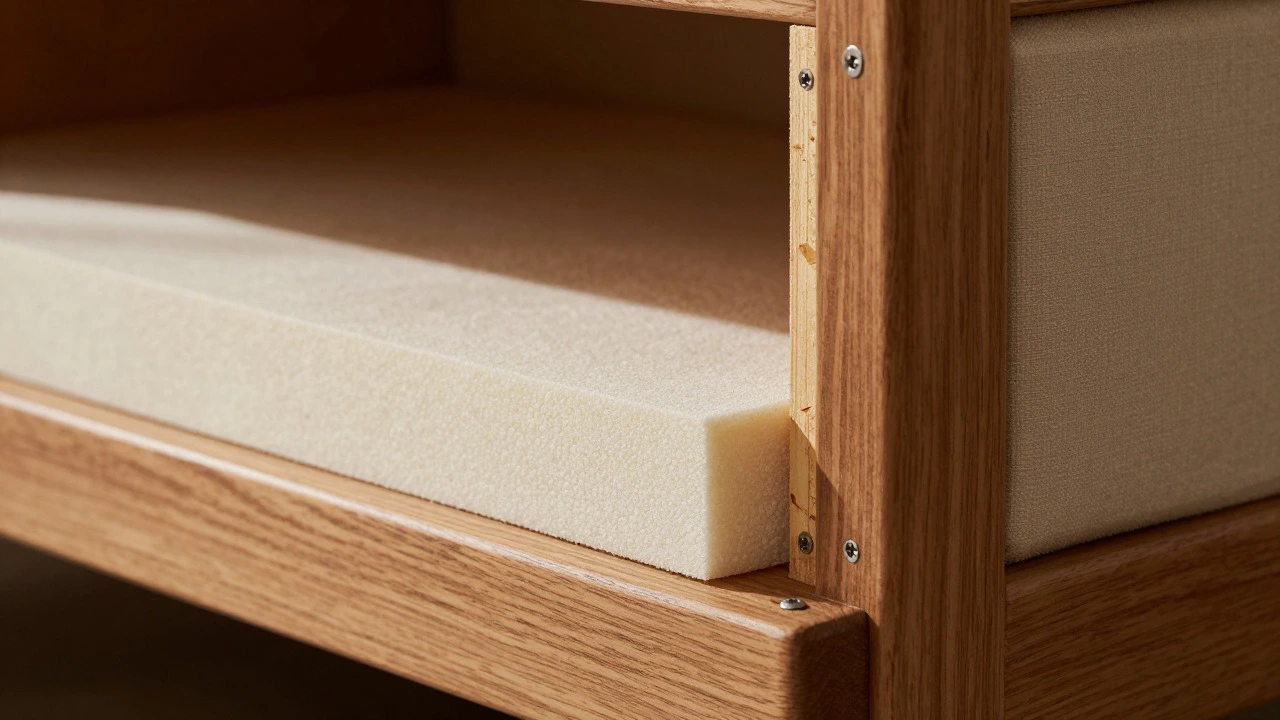
The frame is the skeleton. Cheap sofas use particleboard or softwoods like pine, which warp and crack under stress. Look for kiln-dried hardwoods like oak, maple, or ash. Kiln-drying removes moisture, preventing the wood from shrinking or expanding with humidity changes. A well-built frame with corner-blocked joints can last decades.
Filling and Cushions
This is where comfort lives. There are three main types of cushion fill:
- Polyurethane Foam: The most common. Density matters here. Look for foam density of 1.8 lbs/ft³ or higher for seating cushions. Lower density foam flattens quickly.
- Down Feathers: Luxurious and soft, but they require fluffing daily and can hold allergens. Often mixed with foam for structure.
- High-Resilience (HR) Foam: Bouncier and more durable than standard polyurethane. It resists sagging and maintains its shape longer.
Fabric Choices
Fabric isn’t just about looks; it’s about performance. Rub Count is a measure of fabric durability, indicating how many times the fabric can be rubbed back and forth before showing wear. For light residential use, aim for 15,000 rubs. For heavy use (families with kids/pets), look for 30,000+ rubs. Performance fabrics like Crypton or Sunbrella offer stain resistance and easy cleaning, which justifies a higher price tag if you hate dry cleaning bills.
Where to Shop Without Overspending
Not all retailers are created equal. Knowing where to look can save you hundreds of dollars.
- Online Direct Brands: Companies like Article, AllModern, or Wayfair cut out the middleman. They often offer better materials for the same price as big-box stores. However, you can’t sit on them first, so check return policies carefully.
- Big-Box Stores: IKEA and Target offer great budget options. Their modular sofas are perfect for renters. While not built to last 20 years, they are stylish and affordable for short-term needs.
- Local Furniture Makers: Supporting local artisans can give you custom sizing and higher-quality craftsmanship. Prices vary, but you often get better customer service and repair options.
- Outlet Centers: Many high-end brands have outlet stores where you can find discontinued models or floor samples at 30-50% off. Just inspect for damage before buying.
Hidden Costs to Factor Into Your Budget
The sticker price is rarely the final price. Don’t forget to account for these additional expenses:
- Delivery Fees: White-glove delivery (where they bring it in, assemble, and remove packaging) can cost $100-$300. Standard curbside drop-off is cheaper but requires you to move the sofa yourself.
- Assembly: Some sofas come partially assembled. If you’re not handy, factor in an hour or two of your time or hire a helper.
- Cleaning Supplies: If you buy a fabric sofa, invest in a good upholstery cleaner or a steam cleaner early on. Preventative care extends the life of the fabric.
- Protection: Consider a slipcover or throw blankets for high-wear areas. This protects the investment and allows you to refresh the look later without replacing the whole sofa.

Signs You Should Spend More
While saving money is smart, skimping in certain areas leads to regret. Upgrade your budget if:
- You have allergies: Cheap foams and fabrics can harbor dust mites. Hypoallergenic materials cost more but improve indoor air quality.
- You need specific dimensions: Standard sizes don’t fit every room. Custom sizing ensures proper flow and comfort, avoiding the need to rearrange your entire living space.
- You value sustainability: Eco-friendly materials like organic cotton, recycled steel springs, and FSC-certified wood cost more but reduce environmental impact.
Red Flags: When a Low Price Means Trouble
Be wary of sofas that seem too good to be true. Here are warning signs that a cheap sofa will fail you:
- No information on frame material: If the website doesn’t specify the wood type, it’s likely particleboard or softwood.
- Vague fabric details: Terms like "polyester blend" without rub counts or stain resistance claims suggest low durability.
- Short warranty: A reputable brand stands behind its product. Warranties of less than one year on the frame indicate low confidence in longevity.
- Heavy reliance on sales pressure: High-pressure tactics often mask poor quality. Take your time to research.
Maintaining Your Investment
Once you’ve bought your sofa, proper care extends its life significantly. Vacuum regularly to remove dirt that grinds into fibers. Rotate cushions every few months to ensure even wear. Blot spills immediately-never rub, as this pushes the liquid deeper into the fabric. For leather sofas, condition every six months to prevent cracking.
Setting a good budget for a sofa isn’t about finding the cheapest option or splurging on the most expensive. It’s about aligning your spending with your lifestyle, usage patterns, and long-term goals. By understanding the materials, construction, and hidden costs, you can make a confident purchase that brings comfort and style to your home for years to come.
Is a $500 sofa worth it?
A $500 sofa can be worth it for temporary situations like a guest room, college apartment, or short-term rental. However, expect a lifespan of only 1-3 years. These sofas often use lower-quality foam and engineered wood frames, which may sag or break under heavy daily use. If you need a primary sofa for a family, consider increasing your budget to at least $1,000 for better durability.
What is the average cost of a new sofa in 2026?
In 2026, the average cost of a new sofa ranges from $1,000 to $2,500 for a standard three-seater. Budget options start around $400-$600, while high-end designer sofas can exceed $5,000. Prices vary significantly based on materials, brand reputation, and whether you buy online or in-store.
How do I know if a sofa is high quality?
Look for a kiln-dried hardwood frame (oak, maple, ash), corner-blocked joints, and high-resilience foam with a density of at least 1.8 lbs/ft³. Check the fabric rub count; 15,000+ is good for light use, 30,000+ for heavy use. Sit on the sofa-if it feels sturdy and returns to shape quickly, it’s likely well-made. Also, check for a comprehensive warranty covering the frame and cushions.
Should I buy a sofa online or in-store?
Buying online often provides better prices and a wider selection, especially from direct-to-consumer brands. However, you miss the chance to test comfort. If buying online, choose retailers with generous return policies (e.g., 30 days free returns). In-store shopping allows you to assess comfort and build quality firsthand, which is valuable for expensive purchases.
What is the best fabric for a sofa with pets?
Microfiber, leather, and performance fabrics like Crypton or Sunbrella are excellent choices for pet owners. Microfiber is tight-woven, resisting claws and hiding hair. Leather is easy to wipe clean and doesn’t absorb odors. Performance fabrics are treated to repel stains and liquids, making cleanup simple. Avoid loose weaves like linen or velvet, which trap hair and snag easily.