🍽️ Formal Place Setting Simulator
(Appetizer)
(Main)
(Soup/Salad)
(Main Knife)
(Dessert)
Current Status
Click a slot to begin placing utensils.
Step 1: Place the Salad Fork (Outer Left).
Ever looked at your place setting and wondered if there’s a specific word for the pair of utensils you use most? It’s a question that pops up more often than you’d think, especially when trying to order matching sets or describe a half-finished meal. While we have precise names for individual items like the fork or spoon, the combination itself has a few answers depending on context.
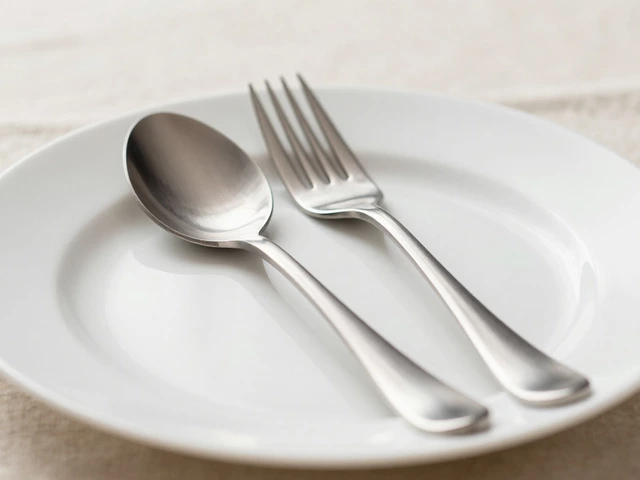
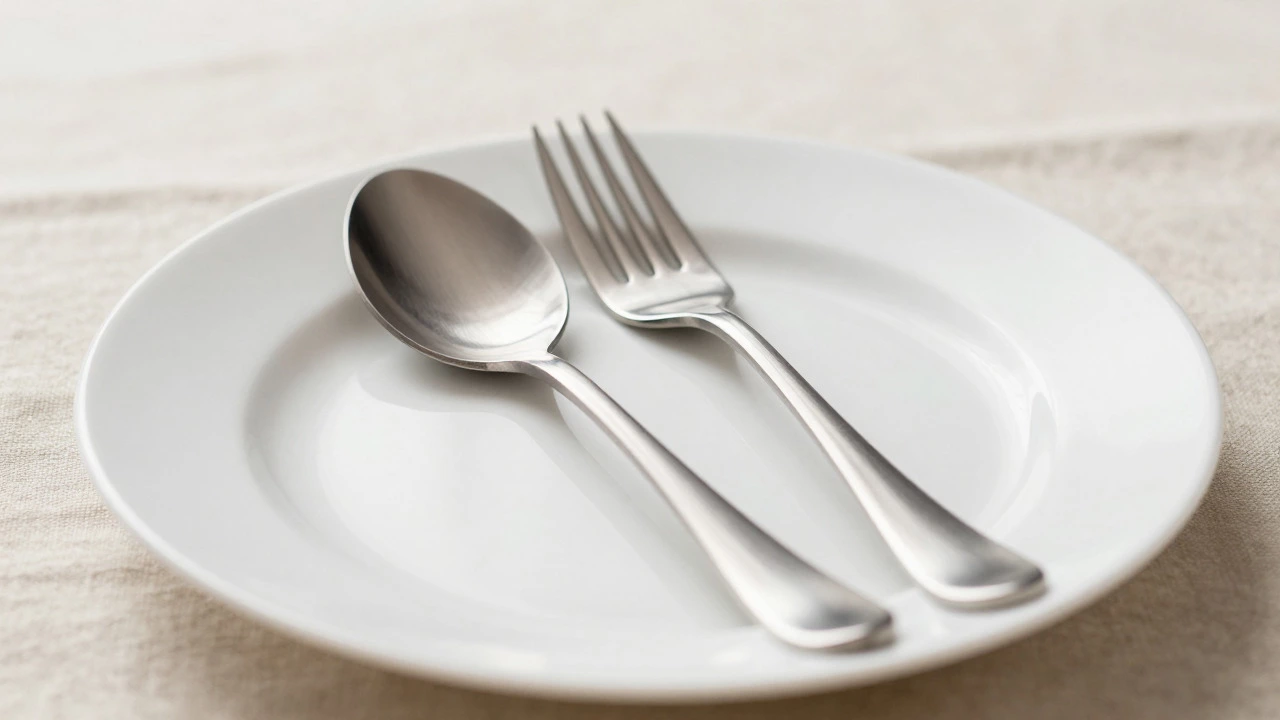
The short answer is that a spoon and fork together are simply called cutlery or tableware. However, in formal dining contexts, they might be referred to as part of a place setting. There isn’t a single, unique compound word in standard English that exclusively means “one spoon plus one fork” the way “knife and fork” sometimes gets grouped under “silverware.” But understanding the nuances helps you navigate menus, shop smarter, and talk about dining with confidence.
Why We Don’t Have a Single Word for This Pair
English is full of compound words for paired objects. Think of “eyeglasses,” “trousers,” or “scissors.” So why not “spoonfork”? It’s because these two tools serve distinct primary functions that rarely merge into a single identity. A Fork is primarily used for spearing, holding, and lifting food, while a Spoon is designed for scooping liquids, soft foods, and serving.
In contrast, a knife and fork often work in tandem during the main course of a Western meal, which is why “knife and fork” is a common phrase. A spoon and fork, however, are usually swapped out between courses. You might use a fork for pasta and then switch to a spoon for soup. Because their usage is sequential rather than simultaneous, language didn’t evolve a specific portmanteau for them. Instead, we rely on broader categories.
The Correct Terms: Cutlery vs. Silverware vs. Flatware
If you’re shopping online or talking to a waiter, using the right term matters. Here’s how the main terms break down:
- Cutlery: This is the most accurate general term for eating utensils, including knives, forks, and spoons. It comes from the word “cut,” reflecting the original focus on knives, but it now encompasses all metal eating implements.
- Silverware: Historically, this referred to utensils made of silver. Today, it’s a colloquial term for any metal cutlery, regardless of material. If you say, “I need new silverware,” everyone knows you mean forks, spoons, and knives.
- Flatware: This is a technical term used by manufacturers and retailers. It refers specifically to flat pieces of metalware-meaning no bowls (like a soup spoon) and no blades (like a knife). Wait, actually, flatware includes spoons and forks but excludes knives because knives have thickness. It’s a bit counterintuitive, but it’s the industry standard for categorizing non-knife utensils.
So, if you want to buy just the spoon and fork without the knife, you’d look for a “flatware set” or specify “forks and spoons” within a cutlery collection.
Formal Dining: Place Settings and Service Styles
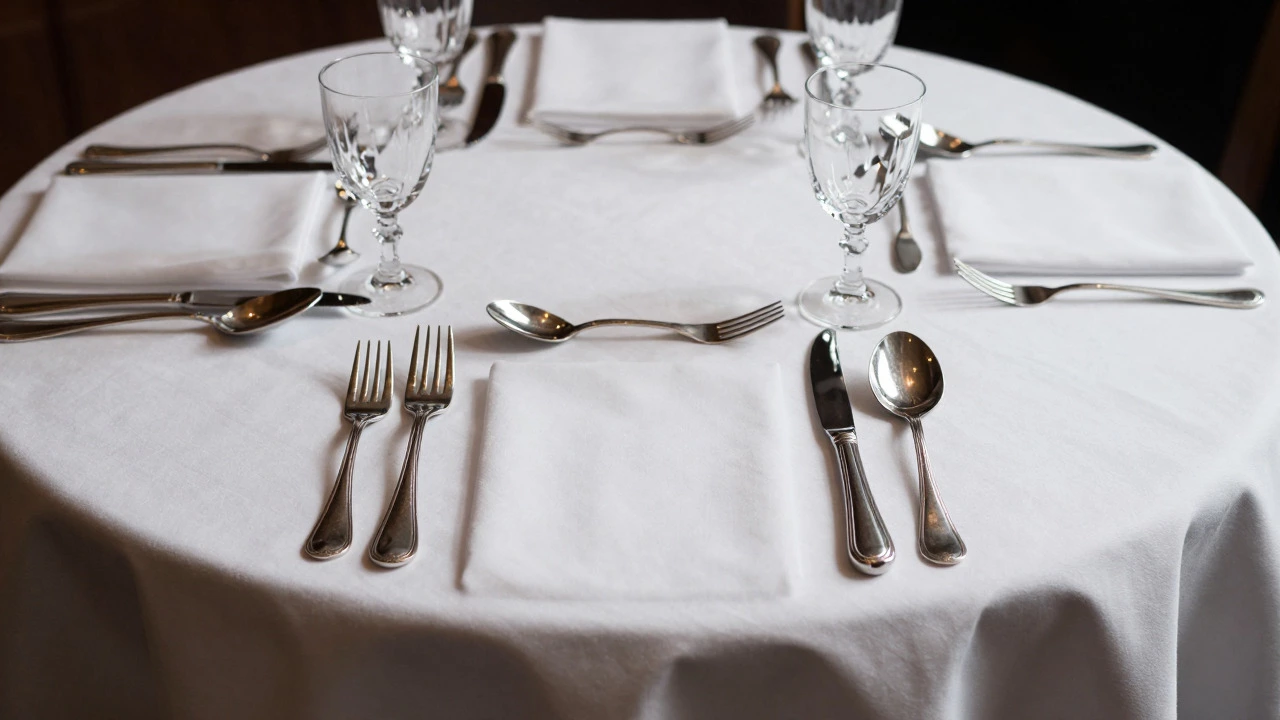
In fine dining, the arrangement of utensils tells you exactly what’s coming. This is where the concept of a place setting becomes crucial. A place setting is the complete arrangement of plates, glassware, and cutlery for one person.
When you see multiple forks and spoons laid out, each has a specific role:
- Dinner Fork: The largest fork, placed to the left of the plate. Used for the main course.
- Soup Spoon: Placed to the right of the plate, above the dinner knife. Used for soups or stews.
- Salad Fork/Spoon: Smaller utensils placed outside the dinner fork/knife. Used for appetizers.
In this context, a “spoon and fork together” aren’t really a unit; they are separate components of a larger system. For example, you wouldn’t say, “Please bring me the spoon-fork for the salad.” You’d ask for the “salad utensils.” This distinction is important if you’re hosting a formal dinner and want to avoid awkward phrasing.
Regional Differences and Slang
Language varies by region, and so does our relationship with utensils. In some parts of the world, the spoon is the dominant utensil, making the fork secondary. In others, like much of Europe, the fork and knife are the core pair, and the spoon is reserved for specific dishes.
In casual conversation, people might use slang terms. For instance, in some households, the small spoon and fork combo used for desserts might be jokingly called the “sweet set” or “dessert duo.” But these aren’t standard terms. You won’t find them in a dictionary, but they’re useful for internal family communication or among close friends who share the same quirks.
It’s also worth noting that in Australian and New Zealand English (where I’m writing from), we tend to be very direct. If you need a spoon and fork, you just ask for both. We don’t overcomplicate it with fancy terminology unless we’re in a high-end restaurant.
Shopping Tips: How to Describe Your Needs
Whether you’re buying for a new home or replacing broken pieces, knowing how to describe what you want saves time. Here are some practical tips:
- For a Full Set: Ask for a “16-piece cutlery set” or “24-piece flatware set.” These typically include 4 of each type: dinner fork, salad fork, dinner knife, soup spoon, and teaspoon.
- For Just Spoons and Forks: Look for “flatware” sections. Specify “dinner forks” and “soup spoons” separately if you don’t need knives.
- For Material: Be clear about stainless steel, silver-plated, or gold-plated. “Silverware” can be misleading if you expect actual sterling silver, which is much more expensive.
Pro tip: Check the weight of the utensils. High-quality cutlery feels substantial in your hand. Cheap sets feel flimsy and can bend easily. If you’re investing in long-term use, spend a little more on solid stainless steel with a brushed finish.
Common Misconceptions About Utensil Names
There are a few myths floating around. One is that “crockery” includes cutlery. It doesn’t. Crockery refers to ceramic items like plates, bowls, and mugs. Cutlery is metal. Glassware is for drinking. Keeping these three categories straight helps when organizing your kitchen or describing a complete table setup.
Another misconception is that “spork” is a real word for a spoon-fork hybrid. Yes, the spork exists-it’s a plastic utensil with tines on one side and a bowl on the other, often found in fast-food containers. But it’s not a traditional dining utensil, and it certainly doesn’t refer to having both a separate spoon and fork on your table.
How to Use These Terms in Conversation
Next time you’re at a restaurant or hosting a dinner party, try using these terms naturally. Instead of saying, “Do we have the thing for soup?” say, “Could we get an extra soup spoon?” Or if you’re setting the table, say, “Let’s arrange the place settings with the dinner forks on the left and the soup spoons on the right.”
Using precise language shows attention to detail and makes communication smoother. It’s a small thing, but it adds up to a more polished dining experience.
Frequently Asked Questions
Is there a specific word for a spoon and fork set?
No, there is no single standard English word for a spoon and fork together. They are generally referred to as part of "cutlery," "silverware," or "flatware." In retail, you might find them sold as a "flatware set" if knives are excluded.
What is the difference between cutlery and silverware?
Cutlery is the correct technical term for all eating utensils, including knives, forks, and spoons. Silverware is a colloquial term that originally referred to utensils made of silver but now commonly means any metal cutlery. In modern usage, they are often interchangeable, but cutlery is more precise.
Why is it called flatware if it includes spoons?
Flatware refers to utensils that are relatively flat compared to knives, which have significant thickness due to the blade. While spoons have a bowl, they are still considered flatware in the industry because they lack a cutting edge. The term distinguishes them from knives, which are categorized separately.
What should I call the small spoon and fork for dessert?
These are typically called "dessert spoons" and "dessert forks." They are smaller than dinner utensils and are placed above the plate in formal settings. You can refer to them collectively as "dessert utensils" or "dessert cutlery."
Does the order of spoons and forks matter on the table?
Yes, in formal dining, utensils are arranged based on the order of service. You work from the outside in. The outermost fork is for the first course (usually salad), and the innermost fork is for the main course. Similarly, the outermost spoon is for soup or salad, and the innermost is for the main course if applicable. This ensures you always pick up the correct utensil for each dish.